
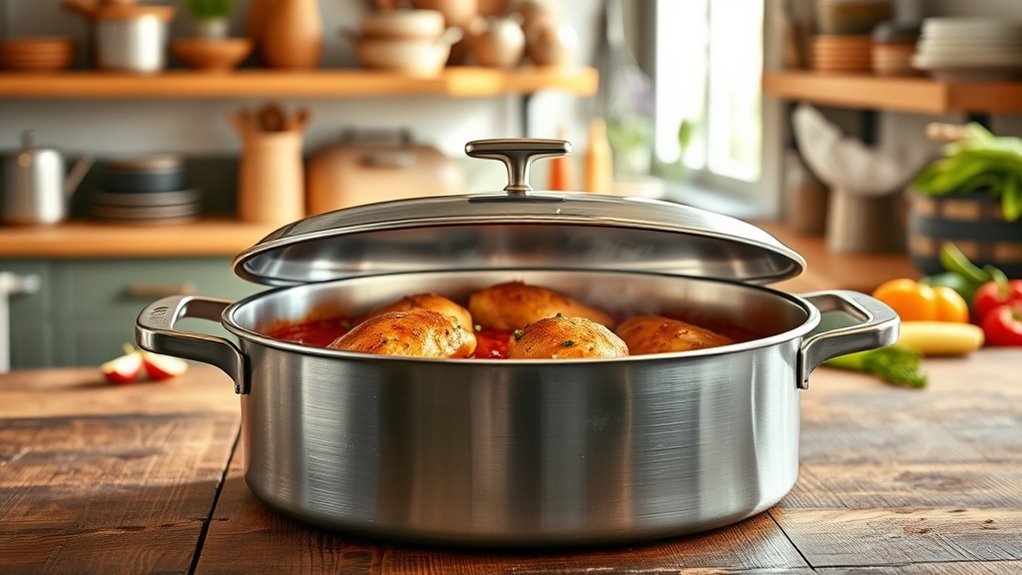
What is a braiser? It is a wide, shallow pot with straight or gently sloped sides and a tight-fitting lid. It is built to sear food on the stovetop, then cover it and cook it slowly in a small amount of liquid, either on the burner or in the oven. If a Dutch oven and a skillet had a child, this is what it would look like.
This guide explains what a braiser is, what the parts do, and how it differs from the pans it gets compared with. For cooking steps and dish ideas, see our guides to what a braiser is used for and what you can cook in one.
Braiser at a Glance
| Feature | Typical braiser |
|---|---|
| Shape | Wide and shallow, usually 2 to 3 inches deep |
| Sides | Straight or gently sloped, so you can stir and flip food easily |
| Lid | Heavy and tight-fitting, often with ridges or spikes that return moisture to the food |
| Common materials | Enameled cast iron, bare cast iron, clad stainless steel, ceramic-coated aluminum |
| Typical size | Roughly 3 to 5 quarts for home use (check the maker’s listing) |
| Heat sources | Gas, electric, and induction if the base is magnetic; oven-safe within the maker’s limits |
| Best at | Searing, braising, simmering, and serving from the pot |
What Is a Braiser and How Does It Work?
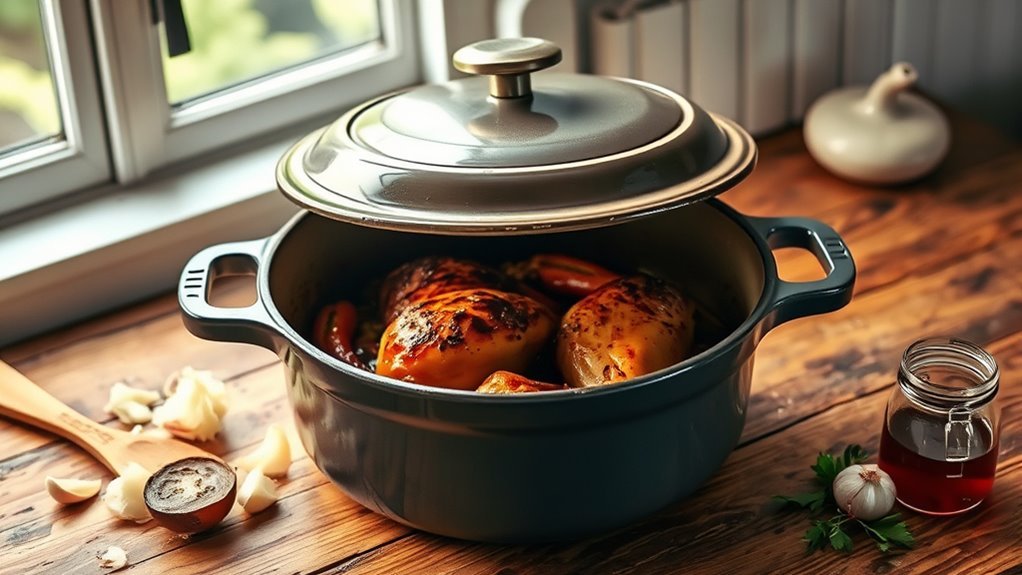
Braising is a two-step method. First you brown the food in a little fat over medium-high heat to build flavor. Then you add a modest amount of liquid, cover the pot, and cook gently until the food is tender.
The braiser’s shape suits both steps. The wide base lets you brown meat in a single layer instead of crowding it, which matters because crowded food steams rather than browns. The low sides let moisture evaporate when the lid is off, so you can reduce the cooking liquid into a sauce without moving it to another pan.
Once the lid goes on, the heavy cover traps steam. Many braiser lids have ridges or small spikes on the underside so condensation drips back over the food. That keeps tough cuts moist while their connective tissue slowly softens.
The Main Parts of a Braiser
- Wide base: gives you room to sear and holds food in one layer.
- Short, gently sloped walls: make it easy to turn food with a spoon or tongs and let steam escape when uncovered.
- Heavy lid: holds in moisture. Some lids are domed to fit taller items, such as a whole chicken.
- Two loop handles: help you lift a heavy pot. Always use oven mitts, because the handles heat up in the oven.
- Interior surface: enameled cast iron is common and does not need seasoning. Bare cast iron does, as covered in our guide to seasoned cast iron.
Braiser vs Dutch Oven, Sauté Pan and Skillet
People often ask whether they need a braiser if they already own a Dutch oven. The pans overlap, but their shapes favor different jobs.
| Pan | Shape | Strongest at | Weaker at |
|---|---|---|---|
| Braiser | Wide, shallow, tight lid | Searing in one layer, braising pieces of meat or vegetables, reducing sauces | Deep soups, big batches, deep-frying, boiling pasta |
| Dutch oven | Taller, narrower, heavy lid | Soups, stews, bread baking, large roasts, deep-frying | Fast evaporation and wide browning surface |
| Sauté pan | Straight sides, flat base, lid | Sautéing, shallow braises, pan sauces | Usually lighter, so less even low-and-slow heat |
| Skillet | Shallow, flared sides, usually no lid | Quick searing and frying | Holding liquid, covered long cooks |
In short, a Dutch oven is the better choice when you need depth, and a braiser is better when you need surface area. If you cook for one to four people and make a lot of chicken thighs, short ribs or braised vegetables, a braiser can be a good fit. If you want one heavy pot for everything, a Dutch oven covers more ground.
What to Look for When Choosing a Braiser
- Size: a 3 to 4 quart braiser suits most couples and small families. Go larger for entertaining or batch cooking, but remember that bigger pans are heavy and need more storage space.
- Material: enameled cast iron holds heat well and goes from stove to table. Clad stainless steel is lighter and does not chip. Check that any cast iron or ceramic model is rated for your cooktop.
- Induction: the base must be magnetic. A simple magnet test works, and our guide to telling if cookware is induction-ready explains it.
- Lid fit: a snug lid is the whole point. Press down gently and check it does not rock.
- Oven limits: lids and knobs often have a lower temperature rating than the pot itself, so read the maker’s instructions.
- Weight: a full cast iron braiser can be heavy. Check the listed weight if you have wrist or shoulder problems.
How to Care for a Braiser
- Preheat gradually over low to medium heat rather than high, which protects enamel.
- Let the pot cool before washing. Cold water on a very hot enameled pan can cause damage.
- Hand wash with warm water, mild soap and a soft sponge or nylon scrubber. Many manufacturers say enameled pieces are dishwasher-safe, but hand washing keeps the finish looking better for longer, so follow your maker’s care page.
- For stuck-on bits, simmer a little water in the pan or soak it, then use baking soda and a non-scratch pad.
- Use wood, silicone or nylon utensils to protect the surface. If the maker permits metal, still avoid scraping hard.
- Dry bare cast iron right away and rub on a thin coat of oil. For more detail, read how to care for a cast iron pan.
Related Guides
- Braiser pan quick facts, sizes and materials
- What a braiser is used for, with step-by-step braising
- The difference between pots and pans
Frequently Asked Questions
Do you really need a braiser?
No. A Dutch oven or a deep lidded skillet can handle most braises. A braiser is worth considering if you often cook chicken thighs, short ribs or vegetables in a single layer and like reducing a sauce in the same pan, because its wide base browns food better than a tall pot.
What is the difference between a braiser and a Dutch oven?
A braiser is wider and shallower, which gives you more browning surface and faster evaporation. A Dutch oven is taller and narrower, so it holds more liquid and suits soups, stews, bread baking and deep-frying. Both have heavy lids and often come in enameled cast iron.
What is the difference between a skillet and a braiser?
A skillet has low flared sides and usually no lid, so it is best for quick searing and frying. A braiser has a heavy tight-fitting lid and a bit more depth, so it can hold braising liquid and cook food slowly after browning it.
What size braiser should I buy?
Most home cooks do well with roughly 3 to 4 quarts for two to four people and about 5 quarts for larger families or batch cooking. Sizes vary by brand and are measured differently, so check the stated capacity and diameter against your burner and storage space.
Conclusion
A braiser is a wide, shallow, lidded pan for browning food and then cooking it gently in a little liquid. It is not essential, but it does one job very well. Choose it for surface area and sauce reduction, and choose a Dutch oven when you need depth.
