Using a steamer saucepan is a straightforward way to cook healthy meals while retaining flavor and nutrients. You’ll find it’s easy to set up and requires minimal effort. By mastering the basics, you can create delicious dishes that impress without the fuss. Ready to learn how to get started with your steamer saucepan? Let’s explore the essentials to guarantee your steaming experience is both efficient and enjoyable.
What Is a Steamer Saucepan and How Does It Work?
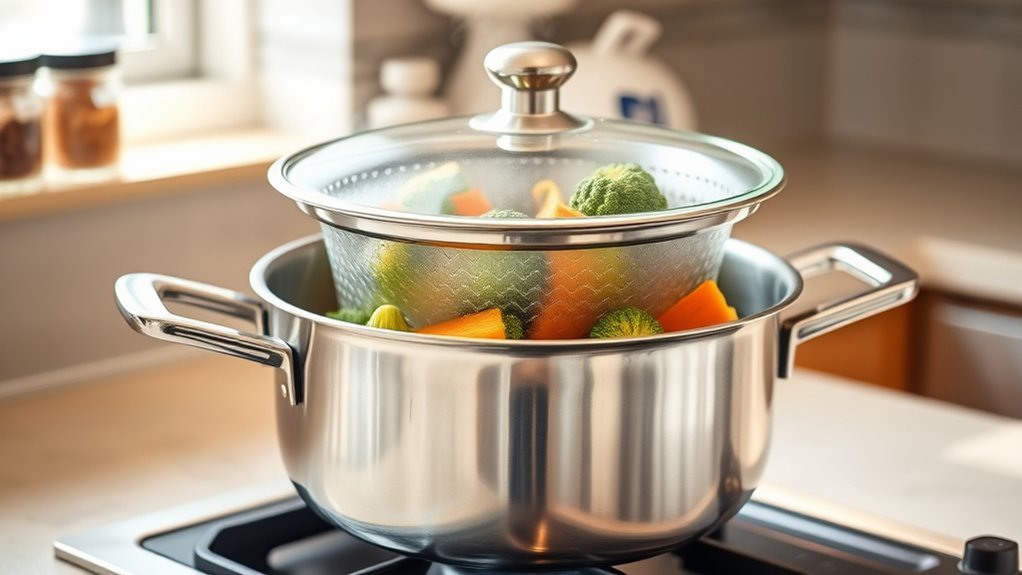
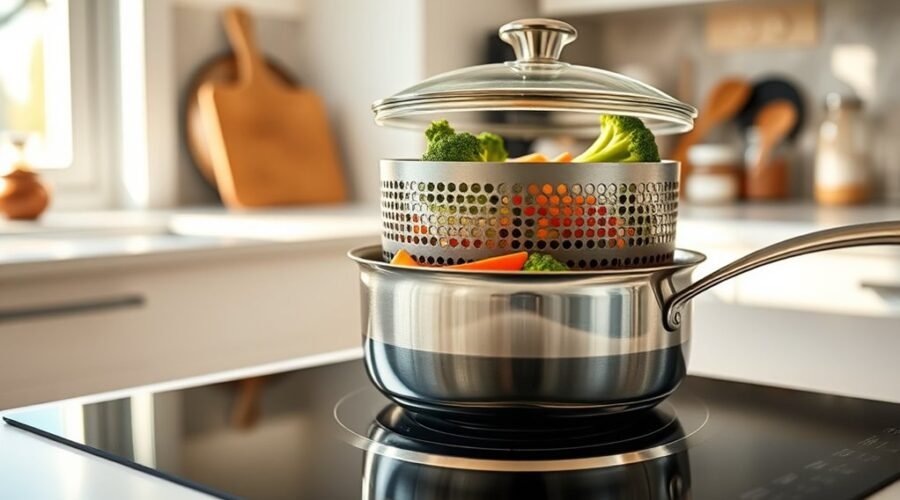
A steamer saucepan is an indispensable kitchen tool designed to help you cook food while preserving its flavor and nutrients. It consists of a pot with a fitted steaming basket that allows steam to circulate around your food, ensuring even cooking.
To use it, you typically fill the pot with 2-3 inches of water, making sure it doesn’t touch the food in the basket. The lid plays a significant role, trapping steam inside to cook your meals thoroughly while keeping those essential nutrients intact.
Fill the pot with 2-3 inches of water, ensuring it doesn’t touch the food, and let the lid trap steam for nutritious cooking.
This versatile steamer can handle a variety of foods, from vegetables and seafood to dumplings, enhancing their natural flavors without needing added fats.
Plus, cleanup is a breeze; most components are dishwasher-safe or can be washed with warm soapy water.
Embrace the steamer saucepan, and elevate your cooking while enjoying healthier, more flavorful meals!
Must-Have Tools for Effective Steaming
For successful steaming, having the right tools at your fingertips makes all the difference. A quality large pot is essential; it should include a tight-fitting lid to trap the steam effectively, ensuring even cooking and moisture retention.
Pair it with a snug steamer basket that fits inside the pot without touching the water. This setup allows steam to circulate freely, cooking your food perfectly without boiling it.
As you prepare, fill the pot with 2-3 inches of water, making sure it stays below the food in the steamer basket. This prevents the food from boiling, which can ruin its texture and flavor.
Keep an eye on the water level during cooking, adding more if necessary to maintain consistent steam. With these must-have tools, you’re well on your way to achieving perfectly steamed dishes that retain their vibrant colors and nutrients.
Step-By-Step: Filling Your Steamer With Water
To get started, fill your steamer saucepan with 2-3 inches of water—this amount guarantees steam without soaking your food.
Use a measuring cup for accuracy, as it helps maintain consistent cooking times.
Don’t forget to check your steamer’s instructions for any specific water level recommendations to optimize your setup.
Water Volume Guidelines
When filling your steamer saucepan, aim for 2-3 inches of water. This guarantees the water doesn’t touch the food in the basket, preventing sogginess while allowing steam to circulate effectively.
Follow these water volume guidelines to generate the steam needed for ideal internal temperature during cooking. If you plan to steam for longer than 30 minutes, be prepared to refill the water to maintain steam production.
For electric steamers, always check the maximum fill line to avoid overflow. While steaming, keep an eye on the water level and add more if it evaporates.
Using distilled water can enhance your steamer’s performance and longevity, maximizing the benefits of steaming for healthier meals.
Proper Steaming Setup
Setting up your steamer saucepan is vital for achieving perfectly cooked meals. Start by filling it with 2-3 inches of fresh, clean water to create sufficient steam without submerging your food.
Verify this water level is below the steamer basket to prevent direct contact, which allows for even cooking. Bring the water to a rolling boil before adding your food in the steamer basket; this guarantees immediate steam production, essential for ideal steaming times.
Once your food’s in, cover the saucepan tightly with a lid to trap the steam inside. This proper steaming setup maximizes cooking efficiency, letting you enjoy delicious, perfectly steamed dishes in no time.
Happy steaming!
Prepare Your Food for Steaming: Tips and Techniques
Before you steam, make sure to wash your fruits and vegetables thoroughly to remove any dirt or pesticides.
Cut them into uniform sizes for even cooking—this way, everything steams perfectly.
Don’t forget to add herbs or spices for a flavor boost while you prepare!
Food Preparation Essentials
Preparing your food for steaming is essential for achieving the best flavor and texture. Here are some tips to elevate your steaming experience:
- Wash all fruits and vegetables under cold water to eliminate dirt and pesticides, ensuring safety.
- Cut produce into uniform sizes for even cooking. Smaller pieces steam faster, giving you a perfectly tender result.
- For added flavor, season your food with herbs or spices. You can sprinkle them directly on the food or mix them into the steaming water.
Additionally, remove tough parts like stems or skins to enhance texture.
Consider marinating or seasoning your food before steaming to infuse deeper flavors, transforming your dish into a delightful culinary experience!
Cutting Techniques for Uniformity
When you cut your vegetables into uniform sizes, you guarantee even cooking during steaming, which is essential for achieving that perfect texture. Aim for pieces around 1-2 inches; smaller cuts cook faster and more thoroughly.
Use a sharp knife for precise cuts to maintain the structural integrity of your food and prevent bruising. For round vegetables like carrots, slice them into rounds or half-moons to guarantee consistent thickness, promoting even steam penetration.
When preparing leafy greens, remove tough stems and chop the leaves into similarly sized pieces to avoid uneven cooking.
A mandoline slicer can be a game-changer for achieving consistent thickness in items like zucchini or potatoes, enhancing both steaming results and presentation.
How to Arrange Food in the Steamer Basket
To achieve perfectly steamed food, it’s essential to arrange items in the steamer basket thoughtfully. Proper arrangement enhances steam circulation and helps retain nutrients, so follow these simple steps:
- Single Layer: Always arrange food in a single layer. This guarantees even cooking and allows steam to flow freely around each piece.
- Uniform Sizes: Cut larger items into uniform sizes. This ensures consistent cooking times, as smaller pieces cook faster than larger ones.
- Strategic Placement: Place denser foods, like root vegetables, at the bottom and lighter foods, such as leafy greens, on top. This optimizes cooking efficiency and prevents overcrowding.
For delicate foods, consider using parchment paper or a silicone mat to prevent sticking.
Steaming Times and Troubleshooting: Avoiding Common Mistakes
After arranging your food thoughtfully in the steamer basket, understanding steaming times and troubleshooting common issues becomes essential for achieving perfectly cooked meals.
Different foods require different steaming times; for instance, vegetables typically steam for 5-10 minutes, while fish may take about 10-15 minutes, depending on thickness. Layer denser foods, like carrots, on the bottom and lighter ones, like broccoli, on top for even cooking.
Keep an eye on water levels, ensuring there’s always 1-2 inches in the pot to prevent burning. Check periodically to avoid running dry.
A common mistake is overcrowding the steamer basket, which leads to uneven cooking and longer steaming times. Uniformly cutting your food pieces helps achieve consistent results, so don’t rush this step.
How to Check for Doneness?
How can you tell if your food is perfectly steamed? Here are some easy ways to check for doneness:
- Visual Appeal: Look for vibrant colors; veggies should be bright and meats should have a nice hue.
- Texture Test: Use a fork or knife. If it easily pierces the food, it’s likely done.
- Temperature Check: For meats, use a food thermometer—165°F (74°C) for poultry and 145°F (63°C) for fish.
Typically, vegetables take about 5-15 minutes to steam, depending on size.
If you need to check for doneness and find your food isn’t quite there, don’t worry! Just steam for an additional 1-3 minutes, then check again.
This way, you can enjoy perfectly cooked dishes and get your food quickly. Embrace the liberation of steaming, and savor the ease of cooking!
How to Clean and Maintain Your Steamer Saucepan
Cleaning and maintaining your steamer saucepan is essential for guaranteeing it performs well and lasts longer. After each use, disassemble the components and wash them in warm, soapy water to remove food residue and prevent any buildup.
Cleaning your steamer saucepan after each use is key to its performance and longevity. Disassemble and wash with warm, soapy water to prevent buildup.
For tough mineral deposits, fill the saucepan with equal parts vinegar and water, bring it to a boil, and let it sit for 30 minutes before rinsing thoroughly.
Always make certain all parts are completely dried before storage to avoid rust and keep your steamer in top shape.
Regularly inspect the silicone seal and other components for wear and tear, replacing them as necessary to prevent steam leakage.
Finally, store your steamer saucepan in a cool, dry place, away from direct sunlight, to prolong its lifespan and maintain its quality.
Taking these steps will guarantee your steamer remains your trusty ally in the kitchen!
Frequently Asked Questions
How Do You Use a Saucepan Steamer?
To use a saucepan steamer, fill the pot with 2-3 inches of water.
Place your steamer basket inside, ensuring it doesn’t touch the water.
Add your veggies, seafood, or even desserts in a single layer for even cooking.
Cover with a lid and bring the water to a boil, then reduce to a gentle simmer.
Steam until vibrant and tender.
Carefully remove the basket and let your delicious creations cool before serving!
How Much Water to Put in a Steamer Pan?
You should fill your steamer pan with 2-3 inches of water for ideal steaming times.
Curiously, steaming vegetables can retain up to 90% of their nutrients!
Make sure the water doesn’t touch the food in the basket, allowing for efficient steam circulation.
If you’re steaming for over 30 minutes, check the water level halfway through.
And don’t forget to clean your steamer pans afterward for the best results next time!
Do I Put Boiling Water in the Steamer?
No, you shouldn’t put boiling water directly in the steamer basket.
Instead, fill the bottom pot with 2-3 inches of water and bring it to a boil before adding your food. This method maximizes the steamer benefits, especially for vegetable steaming, by preserving nutrients and flavor.
Cover the steamer with a lid to enhance cooking techniques, and keep an eye on the water level to guarantee even cooking.
Enjoy your healthy meal!
How to Use a Steamer Correctly?
To use a steamer correctly, fill the saucepan with 2-3 inches of water, ensuring it doesn’t touch the food. Bring it to a boil, place your steamer basket on top, and cover it to trap steam.
Enjoy the benefits of steaming vegetables, as it retains nutrients and enhances flavor. Always prioritize steamer safety by checking water levels and ensuring the lid’s secure.
Monitor cooking times, and you’re set for delicious results!
Conclusion
Steaming is not just a cooking method; it’s a health boost! Did you know that steaming can retain up to 90% of nutrients, compared to boiling, which can lose up to 50%? By using a steamer saucepan, you’re not only preserving flavors but also maximizing the nutritional value of your meals. So, next time you cook, consider this simple technique for healthier, tastier dishes. Happy steaming!