
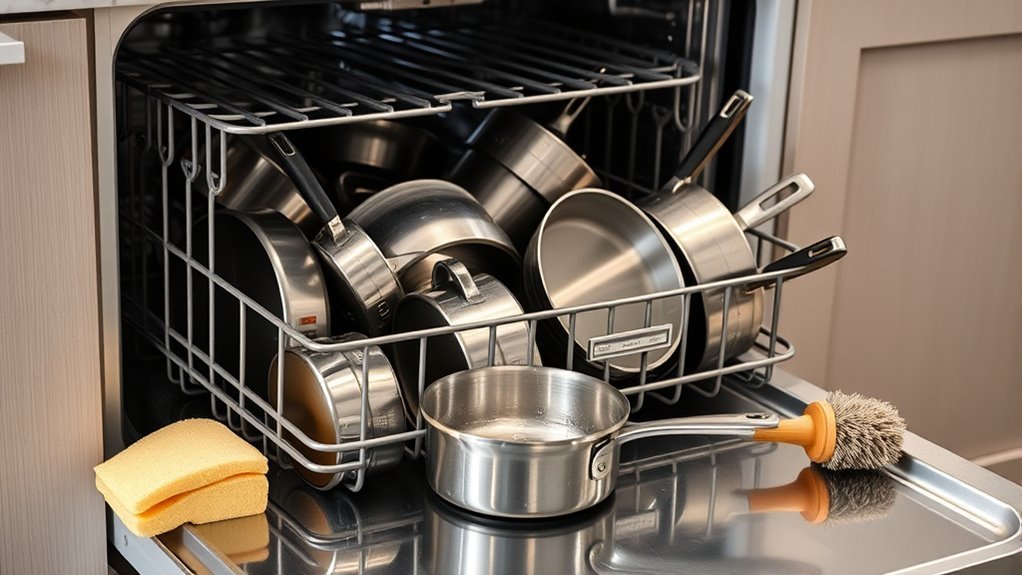
You might think your saucepans are invincible once they hit the dishwasher, but that’s not always the case. The safety of your cookware hinges on materials and manufacturer guidelines. Some pans thrive in the dishwasher, while others don’t. Curious about which ones make the cut? Understanding the specifics can save you from costly replacements and keep your kitchen gear in top shape. Let’s explore what you need to know to protect your investment.
Understanding What Makes Saucepans Dishwasher-Safe
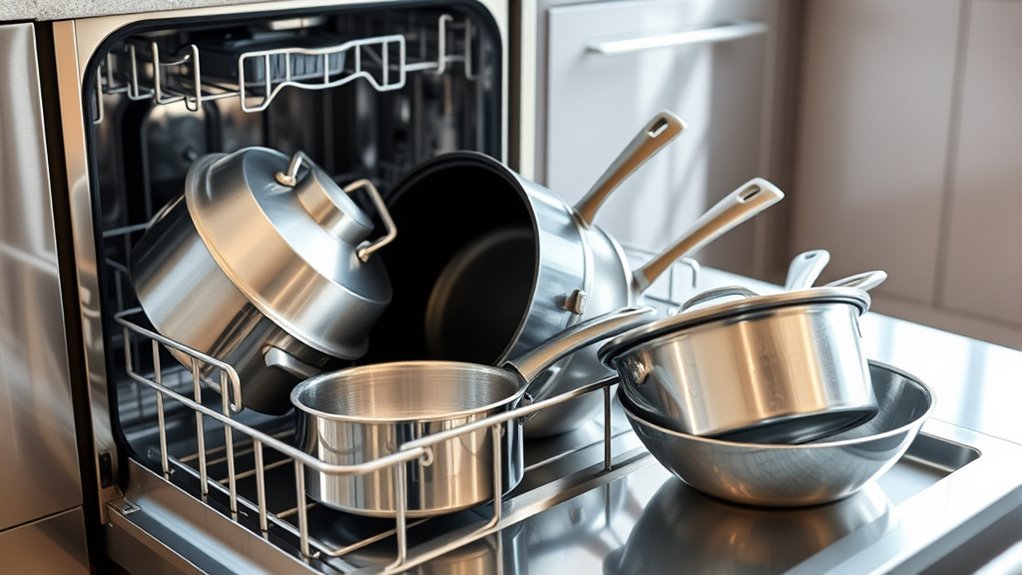
When it comes to choosing saucepans that are safe for the dishwasher, understanding the materials and construction is key.
Look for options made from durable materials like stainless steel or hard anodized aluminum; these are typically dishwasher-safe and can withstand high temperatures and harsh detergents.
Non-stick saucepans, while often labeled as dishwasher-safe, may not hold up over repeated cycles. To prolong their lifespan, hand washing is usually recommended.
Non-stick saucepans may be labeled dishwasher-safe, but hand washing is often best to extend their lifespan.
Additionally, check for riveted or welded handles, as these enhance dishwasher safety by reducing the risk of loosening compared to glued handles.
Always look for explicit “dishwasher safe” labeling to verify you’re making the right choice.
Avoid overcrowding the dishwasher with large or heavy saucepans, as this can hinder effective cleaning and lead to damage.
Identifying Dishwasher-Safe Materials and Coatings
Understanding which materials and coatings are dishwasher-safe can save you time and aggravation in the kitchen.
Stainless steel, hard anodized aluminum, and certain ceramic-coated pans are generally dishwasher safe. However, be cautious with nonstick coatings; basic Teflon may degrade faster in the dishwasher. For durability, opt for high-quality reinforced coatings like titanium-reinforced or diamond-infused, which hold up better under dishwasher conditions.
Always check for explicit “dishwasher safe” labels on cookware. Some materials can warp or suffer damage from high heat. If you’re using PFAS-free ceramic, verify the manufacturer’s guidelines to prevent issues.
Even with dishwasher-safe pans, avoid abrasive detergents or high heat settings, as they can wear down coatings and shorten their lifespan. By knowing what materials work best, you can maintain your cookware’s integrity and enjoy a hassle-free cleaning experience.
Common Non-Stick Coatings and Their Dishwasher Compatibility
Many cooks appreciate the convenience of non-stick coatings, but knowing how they hold up in the dishwasher is key.
Teflon-coated non-stick pans might be labeled as dishwasher safe, but repeated cycles can wear them down, reducing their effectiveness.
Teflon-coated non-stick pans may claim to be dishwasher safe, but frequent cycles can diminish their performance over time.
On the other hand, ceramic coatings are usually PFAS-free and can handle the dishwasher, though hand washing is recommended for longevity.
Hard anodized aluminum pans are often dishwasher safe, but doing so could void warranties and cause surface wear.
If you have diamond-infused non-stick pans, they’re generally more durable and can withstand dishwasher use without much concern.
Ultimately, multi-layer coatings perform better in dishwashers than basic ones, yet hand washing is still the best way to preserve their quality.
For the best results, consider hand washing your non-stick pans to maintain their performance and lifespan.
The Pros and Cons of Using the Dishwasher for Saucepans
Using the dishwasher for your saucepans can save time and effort, especially with modern stainless steel options designed for it.
However, be cautious—high heat and harsh detergents can damage non-stick coatings and warp aluminum.
Always check the manufacturer’s guidelines to verify you’re not compromising your cookware’s lifespan.
Benefits of Dishwasher Use
Although you might enjoy the satisfaction of handwashing your cookware, using a dishwasher for saucepans can be a game-changer in your kitchen routine.
For busy households, the easy cleanup it offers is invaluable, saving you time and effort after cooking. Many modern pans in the dishwasher are designed to withstand high temperatures and water pressure, effectively removing stubborn stains and grease.
This reduces the risk of food residue buildup, leaving your pans sparkling clean. Just remember to check manufacturer guidelines, as some saucepans may have specific care instructions.
While frequent dishwasher use may wear down non-stick coatings, the convenience and efficiency of dishwasher cleaning can greatly enhance your cooking experience.
Embrace this liberating approach to kitchen care!
Potential Risks Involved
While the convenience of tossing saucepans into the dishwasher is tempting, it’s essential to weigh the potential risks involved. Here are some key points to contemplate:
- Coating Damage: Nonstick pans may degrade due to high heat and harsh detergents.
- Aluminum Degradation: Prolonged exposure can lead to corrosion or discoloration.
- Warranty Voids: Using the dishwasher might void warranties on specific cookware.
- Cleaning Efficiency: Dishwashers may not remove stuck food, requiring manual intervention.
- Material Considerations: Stainless steel is generally safer, but it can still discolor over time.
Understanding these risks helps you make informed decisions about your cookware.
Enjoy the freedom of using your pots and pans, but choose wisely to maintain their longevity.
Handwashing vs. Dishwasher: Which Is Better?
When it comes to cleaning your saucepans, should you reach for the dishwasher or stick to handwashing? While many saucepans are labeled dishwasher safe, repeated exposure to high heat and harsh detergents can wear down non-stick coatings over time.
Handwashing is often recommended because it allows you to handle your cookware with care, reducing the risk of scratches or damage. Plus, stubborn residues might require some pre-soaking or manual scrubbing that a dishwasher can’t always manage effectively.
Ultimately, the choice depends on your saucepan’s material and coating, as well as your preferences for maintenance. If you value longevity and want to preserve your cookware’s quality, handwashing is usually the better option.
However, if convenience is your priority, a dishwasher can still do the job—just be mindful of the potential risks involved with frequent use.
Tips for Maintaining Your Saucepans in the Dishwasher
Maintaining your saucepans in the dishwasher requires a few simple strategies to confirm they stay in great condition.
By following these tips, you can help guarantee your cookware remains durable and effective:
- Check manufacturer labels: Confirm your saucepans are labeled dishwasher safe, especially non-stick pans.
- Use the top rack: Place your saucepans on the top rack to minimize exposure to high heat and prevent warping.
- Select a gentle cycle: Opt for a lower heat setting to reduce wear and tear, particularly on delicate finishes.
- Avoid overcrowding: Give your saucepans space to avoid scratches and guarantee proper cleaning.
- Inspect regularly: Keep an eye out for signs of damage or wear, as even dishwasher-safe products can degrade over time.
Signs Your Saucepans May Not Be Dishwasher-Safe
Even with careful maintenance, some saucepans mightn’t be suitable for the dishwasher. Start by checking for any warnings against dishwasher use, especially if your saucepan has a non-stick coating. High heat and harsh detergents can damage that coating over time.
Even with proper care, some saucepans aren’t dishwasher-safe, especially those with non-stick coatings. Check for warnings before washing.
Look for signs of wear, like peeling or discoloration, as these may indicate that your saucepan isn’t dishwasher-safe.
If your saucepan is made of aluminum or certain stainless steel types, be cautious; these materials can warp or tarnish in the dishwasher. Always heed the manufacturer’s instructions—if it says “hand wash only,” follow that guideline to protect your cookware and maintain warranty coverage.
Finally, any saucepan with plastic handles or parts is generally a no-go for the dishwasher, as the heat can cause warping or melting. Prioritizing dishwasher safety will help extend the life of your cookware.
Choosing Dishwasher-Safe Cookware: Key Considerations
When choosing dishwasher-safe cookware, start by checking for clear labeling that confirms its compatibility.
Focus on materials like stainless steel and reinforced non-stick options, which often hold up better in the dishwasher.
Additionally, consider brand reliability; many reputable brands back their products with warranties ensuring long-lasting performance.
Key Material Types
Choosing the right material for your saucepans can make a significant difference in how well they hold up in the dishwasher.
Here are some key material types to evaluate for dishwasher safety:
- Stainless Steel: Generally dishwasher safe and durable.
- Aluminum: Lightweight but may tarnish; hand washing is often better.
- Non-Stick Coatings: Basic versions can wear out; opt for reinforced types like titanium or diamond-infused for better durability.
- Ceramic & Enamel: Often dishwasher safe but check for chipping risks.
- Labels Matter: Always look for explicit “dishwasher safe” labels for assurance.
Dishwasher Safety Features
Selecting the right cookware goes beyond just material choice; it also involves understanding the safety features that make items suitable for the dishwasher. Always look for explicit “dishwasher safe” labeling to guarantee your cookware can handle the dishwasher’s conditions.
Stainless steel and high-quality non-stick coatings are generally more durable than aluminum or lower-grade options. Multi-layered non-stick surfaces are especially resilient, reducing wear over time.
Pay attention to handle materials; riveted stainless steel or silicone handles are preferable to plastic, as they tend to be more durable. After each wash, regularly check for signs of wear, as repeated cycles can compromise the integrity of your cookware.
Using metal utensils may also impact long-term durability, so be cautious.
Brand Reliability Factors
Finding reliable brands for dishwasher-safe cookware is essential for ensuring your investment lasts. When choosing your next saucepan, keep these brand reliability factors in mind:
- Reputable Brands: Look for names like T-fal, GreenPan, and OXO, known for durability and warranty coverage.
- Dishwasher Safe Labels: Always check for explicit “dishwasher safe” labels to avoid damaging coatings.
- Product Reviews: Research customer feedback to gauge long-term satisfaction and performance.
- Quality Materials: Opt for hard-anodized aluminum or reinforced ceramic designed to withstand dishwasher cycles.
- Warranty Length: Consider brands offering longer warranties, reflecting their confidence in product durability.
Home Cook Testimonials: Experiences With Dishwasher-Safe Saucepans
How do home cooks truly feel about dishwasher-safe saucepans? Many share mixed experiences.
While some non-stick options claim to be dishwasher safe, repeated washes often degrade their coating over time. It’s vital to look for explicit “dishwasher safe” labels, as not all materials hold up well in the dishwasher.
Some non-stick cookware may be labeled dishwasher safe, but frequent washing can compromise their coating. Always check for clear labels.
Testimonials suggest that stainless steel and hard anodized saucepans generally fare better, maintaining their appearance and functionality even after multiple cycles.
However, some cooks advocate for hand washing to enhance longevity, noting that gentle cleaning preserves the saucepan’s integrity, especially when dealing with high-acid foods.
While convenience is tempting, many agree that avoiding the dishwasher for non-stick options can greatly extend their lifespan and preserve their non-stick properties.
Ultimately, it’s about finding a balance between ease and maintaining the quality of your cookware.
Conclusion: Making the Best Choice for Your Cookware
When choosing your cookware, consider long-term care tips to guarantee it lasts.
Materials like stainless steel and reinforced non-stick coatings offer durability, especially in the dishwasher.
Always check manufacturer guidelines to avoid voiding warranties and to find the best maintenance practices for your specific pans.
Long-Term Care Tips
While it might be tempting to toss your saucepans into the dishwasher after a long cooking session, taking a moment to reflect on their long-term care can pay off considerably.
To keep your cookware in top shape, consider these tips:
- Hand wash your saucepans instead of using the dishwasher.
- Check the manufacturer’s care instructions for specific guidance.
- Use gentle, non-abrasive cleaning agents while hand washing.
- Avoid high-temperature dishwasher cycles that can damage coatings.
- Invest in high-quality cookware with reinforced coatings for better durability.
Material Durability Factors
Choosing the right material for your saucepans is essential, especially if you want them to withstand the rigors of dishwasher cleaning.
Stainless steel and hard-anodized aluminum excel in material durability, ensuring better dishwasher safety compared to non-stick coatings.
Basic Teflon non-stick pans may degrade quickly when exposed to harsh dishwasher cycles, while reinforced options like ceramic or diamond-infused coatings offer more resilience.
Be cautious of lower-quality materials, as high heat can warp them.
Multi-layered coatings are generally more durable than single-layer ones, enhancing longevity.
Always follow manufacturer care guidelines to keep your cookware in top shape and extend its lifespan.
Making informed choices will free you from worries about damaging your favorite pans.
Frequently Asked Questions
What Are 8 Things I Should Never Put in the Dishwasher?
You should never put these eight items in the dishwasher: non-stick cookware with delicate coatings, cast iron pans, copper cookware, wooden utensils, glass dishes, plastic containers, insulated bottles, and sharp knives.
High heat and harsh detergents can ruin non-stick surfaces and cast iron seasoning. Wooden items may crack, while plastic can warp. Insulated bottles can lose their seals, and sharp knives might dull.
Handwashing these items is a safer, more effective option.
How Do I Know if My Pans Are Dishwasher Safe?
To know if your pans are dishwasher safe, look for a “dishwasher safe” label or symbol on the packaging or the pan’s bottom.
Check the materials; stainless steel and reinforced non-stick coatings usually are compatible.
Always refer to the care instructions from the manufacturer for specific guidelines.
Which Saucepans Are Dishwasher Safe?
Bright, shiny stainless steel and sturdy aluminum pans can dance through your dishwasher, but check for “dishwasher safe” labels first.
Non-stick coatings might join the party too, though frequent cycles can wear them down, so hand washing’s often best. Brands like T-fal and GreenPan proudly advertise their dishwasher-safe options.
Just remember, keep harsh detergents and abrasive cleaners at bay to preserve your cookware’s beauty and longevity.
Enjoy the liberation of effortless cleaning!
Is It Safe to Put Stainless Steel Pans in the Dishwasher?
Yes, it’s generally safe to put stainless steel pans in the dishwasher, but consider their durability.
While it offers cleaning efficiency, repeated cycles can dull their shine. To maintain their appearance, hand washing’s often recommended.
Keep them away from non-stick or aluminum items to prevent scratches. Use a gentle, non-abrasive detergent for better care.
Always check the manufacturer’s guidelines to confirm you’re following the best practices for your specific cookware.
Conclusion
In summary, choosing the right method for cleaning your saucepans can feel like maneuvering through a culinary minefield. While many are dishwasher-safe, handwashing often extends their life like magic. Always check for labels, materials, and care guidelines to avoid disaster. Remember, keeping your cookware in top shape is essential for creating delicious meals. So, whether you’re handwashing or loading the dishwasher, make informed choices and your saucepans will serve you well for years to come!