
The six best bottleless water dispensers for 2027 reflect a clear shift toward cleaner filtration, lower maintenance, and easier daily use. From multi-stage systems to self-cleaning and touchless designs, each model offers a different balance of convenience and performance. A few stand out for more than one reason, though the most practical choice depends on what matters most in the home or office. The details that separate them are worth a closer look.
iSpring DS4S Bottleless Water Dispenser – 4-Stage Filtration, Hot/Cold/Room
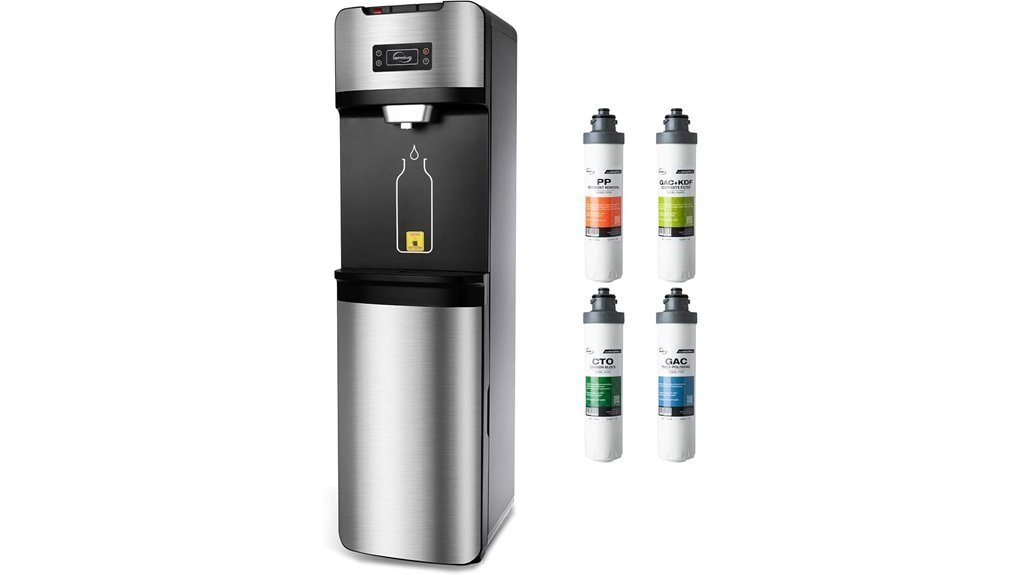
The iSpring DS4S Bottleless Water Dispenser stands out for homes and small offices that want reliable filtration with hot, cold, and room-temperature water in a compact stainless steel unit. Its 4-stage system targets sediments, chlorine, lead, mercury, PFAS, chloramine, and other heavy metals, helping improve water taste and clarity. The 11.8 x 14.1 x 41.7-inch design includes a child safety lock and leak-free construction. Installation is straightforward with included tubing and adapters, while self-cleaning operation and easy filter changes reduce upkeep. A one-year warranty, lifetime support, and 30-day guarantee add reassurance.
Best For: Homes and small offices that want a compact, bottleless water dispenser with hot, cold, and room-temperature water plus strong 4-stage filtration.
Pros:
- Filters out sediments, chlorine, lead, mercury, PFAS, chloramine, and other heavy metals.
- Compact stainless steel design with child safety lock and leak-free construction.
- Easy DIY installation, self-cleaning operation, and low-maintenance filter changes.
Cons:
- Requires installation and a water line, so it is less convenient than a plug-and-play bottled dispenser.
- Only a 1-year manufacturer’s warranty compared with some competitors’ longer coverage.
- Not ideal for large commercial settings that need much higher water volume.
Brio 800 Bottleless Countertop Water Cooler with Filtration
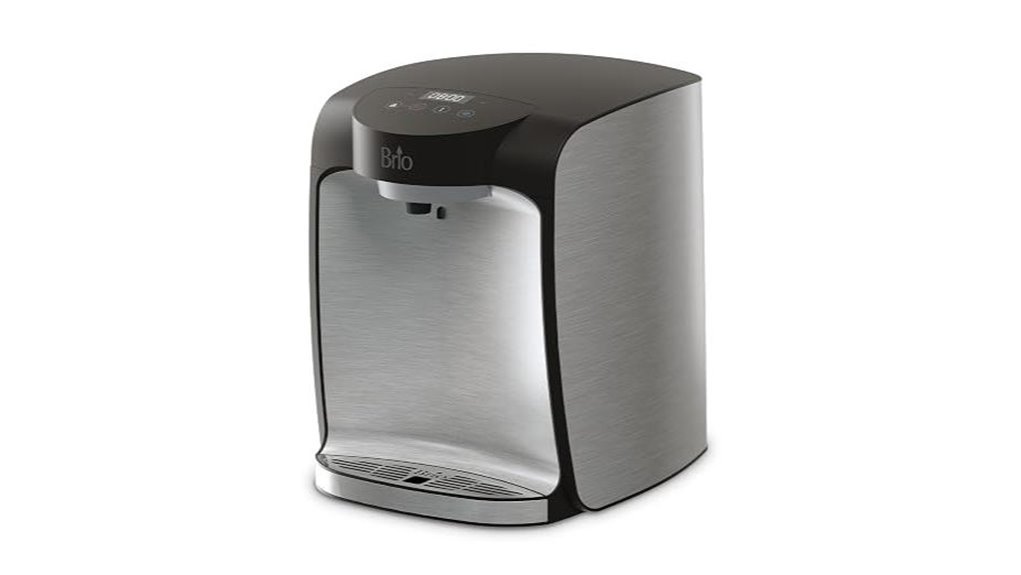
Brio’s 800 bottleless countertop cooler suits users who want hot, cold, and room-temperature water in a compact design. The stainless steel unit, model CLCTPOU820UVF2, measures 17.5 x 12.5 x 17.4 inches and weighs 35 pounds, making it suitable for countertops. Its 2-stage filtration removes dust, particles, and rust while reducing PFAS and microplastics. A self-cleaning function circulates hot water through the reservoirs and internals. The larger solenoid valve supports faster filling, and the 11-inch dispense height accommodates bottles and pitchers. It is corded electric and has earned 4.4 stars from 27 reviews.
Best For: households, offices, or small spaces that want a compact countertop water cooler with hot, cold, and room-temperature dispensing plus built-in filtration.
Pros:
- 2-stage filtration helps remove dust, particles, and rust while reducing PFAS and microplastics.
- Self-cleaning function circulates hot water to help keep the reservoirs and internals clean.
- Fast dispensing and an 11-inch dispense height make it easier to fill bottles, cups, and pitchers.
Cons:
- Requires corded electric power, so it must be placed near an outlet.
- At 35 pounds, it may be heavy for some users to move or reposition.
- Countertop design and 17.5-inch depth may take up significant space in smaller kitchens.
Brio 400 Series Self-Cleaning Bottleless Water Cooler Dispenser

Ideal for busy households and small offices, it delivers tri-temp water with bottleless convenience. The Brio 400 Series Self-Cleaning UV Bottleless Water Cooler Dispenser, model CLPOU420UVF2, connects to a water line for nonstop supply. Its stainless steel cabinet measures 14.7 by 15 by 43.5 inches and weighs 45 pounds. The 2-stage filtration system improves taste, odor, and clarity, while UV-CARE disinfects the cooler and removes 99.99% of microbes. Hot water reaches 212°F, and a child safety lock adds protection. UL approval, included filters, and installation kit support straightforward setup.
Best For: Busy households and small offices that want a bottleless, self-cleaning water cooler with hot, cold, and room-temperature dispensing.
Pros:
- Bottleless design provides continuous water without the need to refill bottles.
- UV-CARE self-cleaning system helps disinfect the unit and reduce microbes.
- Tri-temp dispensing and 2-stage filtration improve convenience and water quality.
Cons:
- Requires connection to a water line, so installation is more involved than a standard bottled cooler.
- At 45 pounds, it may be somewhat heavy to move or reposition.
- Hot-water safety lock can add a small extra step when dispensing hot water.
Avalon Touchless Bottleless Water Cooler with Filters, Black
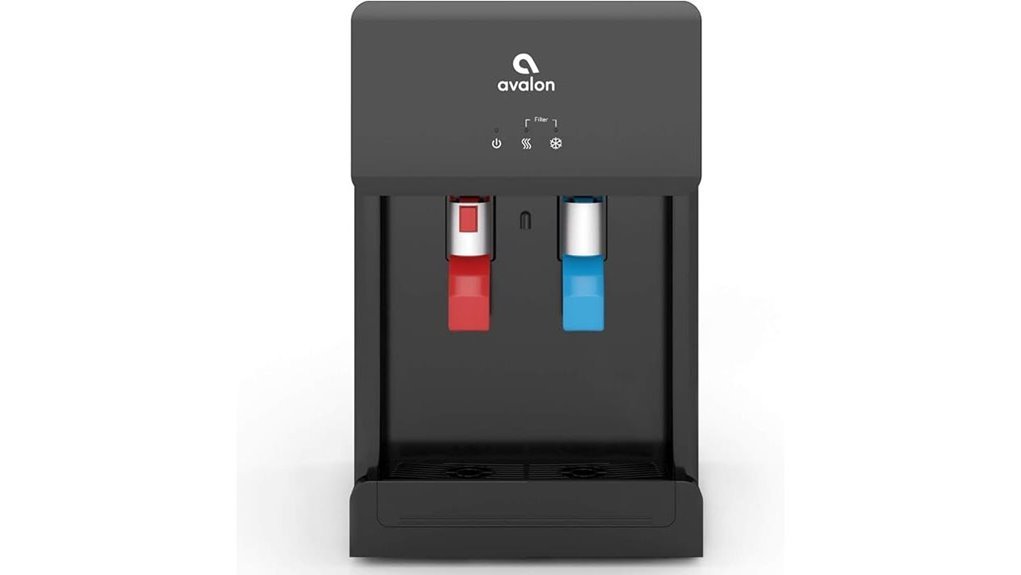
Avalon’s touchless countertop dispenser suits households wanting hygienic, space-saving hot-and-cold filtered water. The black Avalon B8BLK is NSF certified and UL approved, with a compact 12 x 13 x 19-inch profile. Its dual-stage filtration pairs a sediment filter with a carbon block filter, each rated for 6 months or 1,500 gallons. The unit dispenses chilled water to 47°F and heated water to 185°F, while a child safety lock protects the hot spout. Installation includes tubing, adapters, and instructions. A one-year warranty is available upon request, with Amazon’s 30-day return policy also applying.
Best For: Households or small offices that want a compact, touchless countertop water cooler with both hot and cold filtered water and built-in safety features.
Pros:
- Touchless dispensing helps improve hygiene and convenience.
- Dual filtration with sediment and carbon block filters provides filtered water and lasts up to 6 months or 1,500 gallons.
- Includes hot and cold temperature options plus a child safety lock on the hot spout.
Cons:
- Requires installation, so it’s less plug-and-play than a standard jug dispenser.
- Countertop size may still be bulky for very small kitchens.
- Replacement filters and maintenance add ongoing cost and effort.
Avalon Self Cleaning Bottleless Water Cooler Dispenser
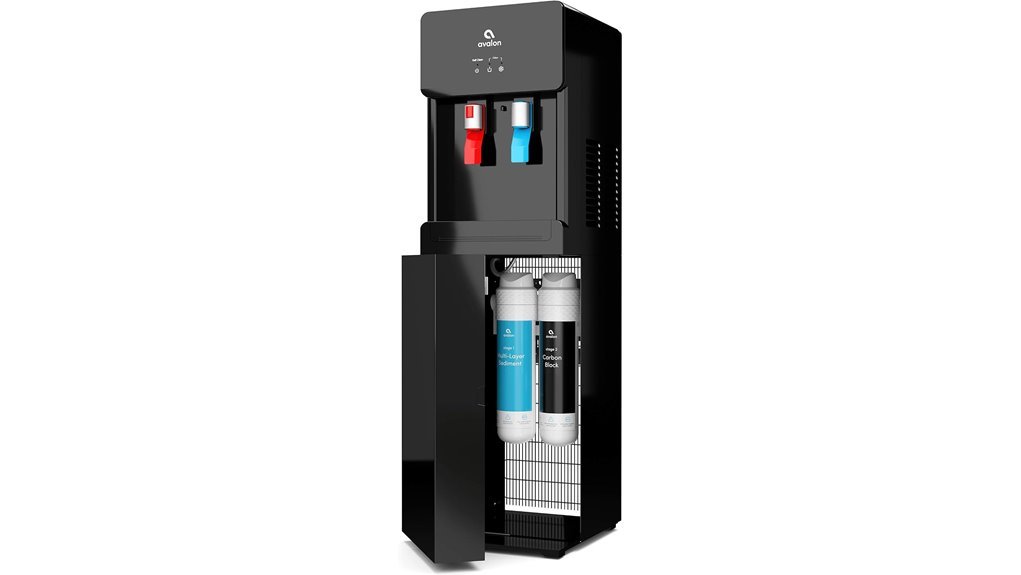
With hot and cold spouts, this Avalon dispenser suits households wanting convenient year-round hydration. The Avalon Self Cleaning Touchless Bottleless Water Cooler Dispenser, model A7BOTTLELESSBLK, uses a slim black freestanding design that fits compact spaces. Its self-cleaning function sanitizes the unit, while a child safety lock protects users handling hot water. A built-in night-light improves nighttime access. Dual filtration relies on Avalon A5FILTER and A4FILTER cartridges, each lasting up to six months or 1,500 gallons. The 520-watt system includes installation hardware, delivers 185°F hot and 47°F cold water, and is backed by a one-year warranty.
Best For: Households, offices, or small spaces that want a slim bottleless water cooler with hot and cold water, built-in filtration, and self-cleaning convenience.
Pros:
- Self-cleaning feature helps sanitize the dispenser and reduce maintenance.
- Dual filtration system provides clean water and helps lower the cost of bottled water.
- Hot and cold spouts, child safety lock, and night-light add convenience and safety.
Cons:
- Requires installation, so it is less plug-and-play than bottled coolers.
- Filters need periodic replacement every 6 months or 1,500 gallons.
- At 40 pounds and 41 inches tall, it may still be bulky for very tight spaces.
Avalon Touchless Bottleless Water Cooler Dispenser with BioGuard

The Avalon A13-S suits households and offices that want touchless dispensing and built-in sanitation. This stainless steel, under-sink unit delivers cold, cool, and hot water, with heating up to 185°F. Its touchless sensor reduces contact, while the digital display shows temperature and time. A built-in nightlight aids low-light use. Dual filtration with sediment and carbon block filters helps remove chlorine, lead, rust, and bacteria. The ozone self-cleaning tank adds maintenance support. The leak detector and included installation kit simplify setup. Backed by a one-year warranty, it handles up to 1,500 gallons.
Best For: Households and offices that want a touchless bottleless water cooler with hot, cold, and cool water options plus built-in sanitation and easy under-sink installation.
Pros:
- Touchless sensor dispensing reduces contact and improves convenience.
- Dual filtration and ozone self-cleaning help support cleaner water and easier maintenance.
- Includes a leak detector, installation kit, and digital temperature/time display.
Cons:
- Requires under-sink installation, which may be less convenient for some users.
- Filters need replacement about every 6 months or 1,500 gallons.
- Higher power use and hot-water capability may be more than some households need.
Factors to Consider When Choosing Bottleless Water Dispensers in 2026

Selecting a bottleless water dispenser in 2026 often starts with its filtration stages, temperature options, and installation requirements. Safety features also matter, especially in shared spaces where hygiene and user protection are priorities. Ongoing maintenance needs should be weighed carefully, since they affect long-term performance and convenience.
Filtration Stages
Filtration stages play a major role in how well a bottleless water dispenser performs, since multi-stage systems usually remove a wider range of contaminants, including chlorine, heavy metals, and PFAS. A four-stage design often combines sediment filtration, activated carbon, and targeted treatment layers that improve taste and reduce specific pollutants. Dual-stage systems, typically using sediment and carbon block filters, can still provide basic purification, but they may not match the broader protection of more advanced setups. Performance also depends on regular filter changes, usually every six months or about 1,500 gallons. Matching the filter stages to local water concerns helps guarantee the dispenser addresses the contaminants that matter most and delivers consistently cleaner water over time.
Temperature Options
Beyond filtration performance, temperature options also shape how well a bottleless water dispenser fits daily use. Many models provide hot, cold, and room-temperature settings, letting users match beverages to personal preference. Hot water may reach 212°F, which supports instant soups, tea, and coffee, while cold water can drop to 47°F for a crisp drink. Some advanced units add customizable controls, giving greater flexibility for varied routines and recipes. These choices improve convenience by delivering water ready for hydration or cooking without extra steps. They also support energy efficiency, since the system heats or chills only to the selected level instead of requiring separate appliances. For buyers, temperature versatility can meaningfully expand the dispenser’s value.
Installation Requirements
Installation requirements can make a bottleless water dispenser either straightforward or complicated to set up, so buyers should first decide whether the model supports DIY installation or calls for professional help. Many units include installation kits, tubing, adapters, and step-by-step instructions, which can simplify setup for a home or office. Compatibility with existing plumbing matters, especially when a water line connection is required. Space should also be measured before purchase, since countertop and freestanding models differ in footprint and clearance needs. Ease of maintenance is worth noting as well; self-cleaning designs can reduce upkeep demands after installation. A model that matches the available plumbing, dimensions, and installation skill level is more likely to fit the intended environment without unnecessary delays or added expense.
Safety Features
Safety features deserve close attention after installation details are settled, since they affect both daily use and long-term peace of mind. A strong choice includes child safety locks on hot water spouts, especially in homes where curious hands could reach them. Self-cleaning systems using UV light or ozone add another layer of protection by limiting microbial buildup inside the unit. Leak detection sensors are also valuable, because they can alert users to abnormal flow and help reduce the risk of water damage. Models with easy-to-access filters support safer drinking water by making replacements straightforward. It is also wise to confirm NSF and UL certifications, since these marks indicate compliance with recognized health and safety standards for dependable everyday operation.
Maintenance Needs
Maintenance needs can shape whether a bottleless water dispenser remains a convenience or becomes a recurring chore. Regular filter replacement is central to keeping water quality high, with many units needing changes every six months or after roughly 1,500 gallons. Systems with self-cleaning UV or ozone functions reduce effort by sanitizing internal parts and limiting microbial growth. Installation also influences upkeep; kits with tubing and adapters can make setup simpler and lessen early frustration. Monitoring features, including leak detectors, add protection by catching problems before they cause damage or inefficiency. Maintenance demands also depend on system complexity. Two-stage filtration designs usually require less attention than advanced multi-stage models, which may offer broader purification but more frequent service and closer oversight.
Frequently Asked Questions
How Much Electricity Do Bottleless Water Dispensers Use Yearly?
Bottleless water dispensers usually use about 100 to 500 kilowatt-hours of electricity per year, depending on heating, cooling, and standby features. Basic cold-only models can use much less, while hot-and-cold units with compressors and heating elements use more. Usage also depends on room temperature and how often water is dispensed. Energy-efficient models may keep annual costs relatively low, especially when fitted with timers or sleep modes.
Can Bottleless Dispensers Work Without a Sink Nearby?
Yes, bottleless dispensers can work without a sink nearby if a water line can be routed from another source. They usually need direct plumbing, so installation may require extending tubing to a nearby supply, refrigerator line, or filtered feed. A sink is not essential, but access to pressurized water and a drain, if the model has one, is. Placement depends on plumbing access rather than sink proximity.
What Maintenance Tools Are Needed for Installation?
Installation typically requires a drill, adjustable wrench, tubing cutter, Teflon tape, screwdrivers, and a level. If the unit connects to a water line, a shutoff valve tool or saddle valve kit may also be needed. A filter wrench can help during cartridge setup, while a bucket and towel manage spills. Some models include basic parts, but specialized fittings or a pressure gauge may be useful for cleaner, safer installation.
Do These Dispensers Reduce Microplastics in Water?
Studies suggest bottled water can contain hundreds of microplastic particles per liter, so the answer is partly yes. A bottleless dispenser connected to a filtered line may reduce microplastics by removing some particles before water reaches the tap. However, effectiveness depends on the filtration system, especially membrane, carbon, or reverse-osmosis stages. It will not eliminate every contaminant, but it often offers a cleaner option than typical single-use plastic bottles.
How Loud Are Bottleless Water Dispensers During Operation?
Bottleless water dispensers are usually quiet, producing only a low hum during cooling or heating and a brief sound when water flows. Noise levels vary by model, with compressor-based units often louder than tankless or thermoelectric designs. In a typical office or home setting, the sound is generally unobtrusive. Maintenance-related noises, such as filtration changes or pump activation, are occasional rather than constant, and usually remain modest.
Conclusion
In 2027, the best bottleless water dispensers blend clean convenience, cool efficiency, and clever care. From iSpring’s sturdy four-stage filtration to Brio’s self-cleaning strength and Avalon’s touchless technology, each model delivers dependable hydration with less hassle and waste. Buyers should weigh filtration, temperature options, maintenance, and placement before choosing. With the right unit, homes and offices can enjoy fresher water, easier upkeep, and a smarter, more sustainable sipping solution.
