
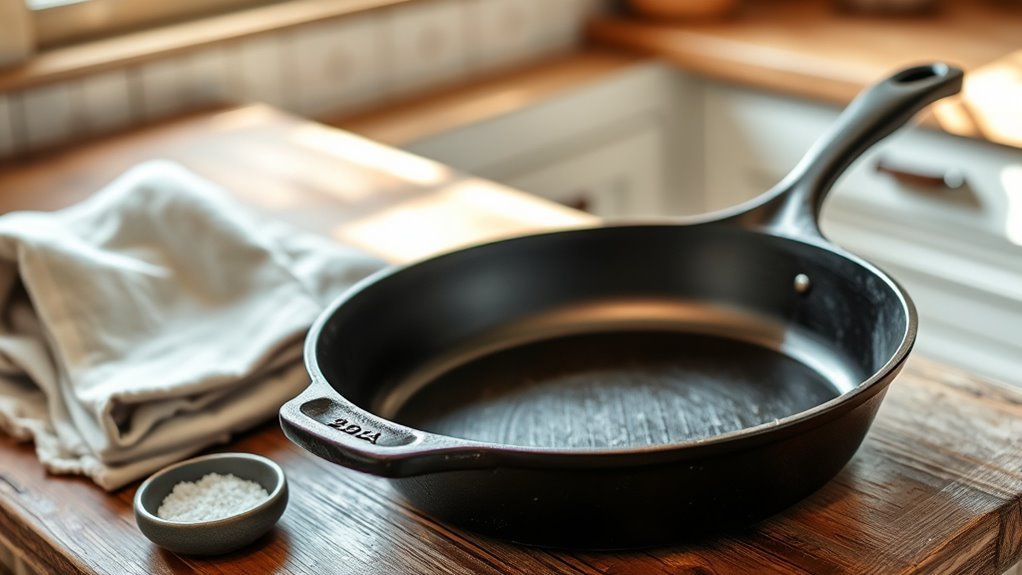
A seasoned skillet is more than just a cooking tool; it’s a culinary companion that enhances your meals. When you understand what seasoning means, you’ll appreciate its role in creating a natural nonstick surface while adding essential iron to your dishes. But how do you maintain that perfect seasoning? And what signs indicate it’s time for a refresh? Let’s explore these vital aspects of your cast iron skillet and why they matter.
How to Properly Season Your Cast Iron Skillet
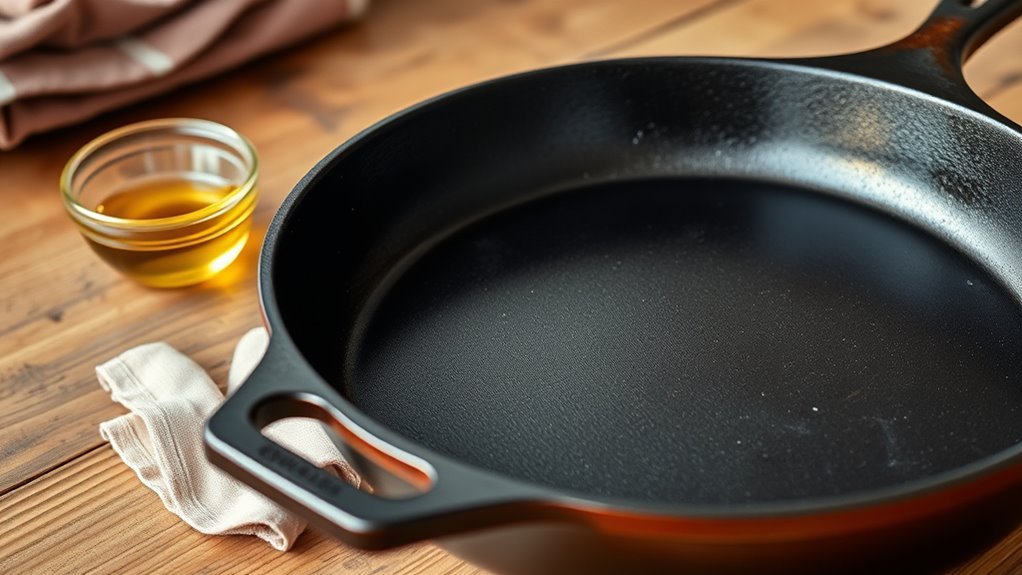
When you want to guarantee your cast iron skillet performs at its best, seasoning it properly is key. Start by applying a thin layer of cooking oil—vegetable or canola works great—over the entire surface.
Then, bake it at a high temperature, around 450°F (230°C). This process creates a durable, nonstick surface through polymerization, essential for ideal cooking.
To build a solid protective coating, repeat this seasoning process three to four times. Regular maintenance is crucial, too. After each use, clean your skillet with hot water and a stiff brush, avoiding soap.
Remember to dry it immediately to prevent rust and reapply oil to maintain seasoning. A well-seasoned skillet not only enhances cooking performance but also allows you to cook acidic foods without damaging the layer.
Embrace this ritual, and your cast iron skillet will serve you with joy and liberation for years to come.
Signs Your Skillet Needs Reseasoning
If you notice your skillet’s surface looking dull or gray, it’s time to pay attention. This could mean the seasoning process is wearing thin. Here are some signs that your cast iron skillet needs reseasoning:
| Signs | What It Means |
|---|---|
| Dull surface | The protective coating has worn off. |
| Food sticks | The nonstick layer has degraded, affecting cooking. |
| Rust spots | Moisture has compromised the seasoning, requiring immediate action. |
Additionally, if you spot dark residue on your drying towels or feel a rough texture, it signals flaking seasoning or incomplete polymerization. Reseasoning restores your skillet’s functionality and protects it from further damage. Keeping an eye on these signs guarantees your cooking experience remains liberating and delightful!
Which Oils Are Best for Seasoning Cast Iron?
Maintaining the seasoning on your cast iron skillet is key to ensuring its longevity and performance, and choosing the right oil plays a significant role in that process. For effective seasoning, opt for oils like vegetable oil, canola oil, or melted shortening, all boasting high smoke points above 400°F (204°C).
These oils facilitate polymerization, creating that coveted nonstick surface. While flaxseed oil is another option, it requires careful application to avoid sticky residue.
Regular seasoning with a thin layer of oil after each use enhances your skillet’s capabilities, making it a versatile kitchen ally.
On the flip side, steer clear of oils with low smoke points, like olive oil, as they can lead to degradation and unwanted stickiness.
What Are the Myths About Seasoning Cast Iron?
Wondering what misconceptions might be lurking around the seasoning of your cast iron skillet? One common myth is that your cast iron cookware is nonstick without seasoning; in reality, it requires a polymerized layer of fat to achieve that coveted nonstick surface.
Myth: Cast iron is nonstick without seasoning. Truth: It needs a polymerized fat layer for that perfect nonstick finish.
You might think any oil works for seasoning, but oils with a high smoke point, like vegetable or canola oil, are best for effective polymerization.
Another misconception is that your skillet never needs re-seasoning; regular maintenance is essential to keep that nonstick layer intact and prevent rust.
Plus, many believe acidic ingredients should never touch cast iron, yet well-seasoned pans can handle short cooking times with them just fine.
Finally, don’t be fooled by a shiny surface—true seasoning appears dark and matte, potentially uneven at first.
Embrace these truths, and your cast iron will thrive!
Why Is Seasoning Important for Cast Iron Cookware?
Seasoning your cast iron skillet is more than just a maintenance task; it’s the secret to revealing its full potential in the kitchen. This process creates a protective layer through the polymerization of oil, ensuring a durable, nonstick surface that enhances cooking performance.
A well-seasoned skillet improves food release, making it perfect for sticky dishes without the hassle of sticking. Plus, it plays an essential role in rust prevention, extending your skillet’s lifespan.
Regularly cooking with fats helps maintain this seasoning, ensuring it remains effective over time. You can also cook acidic foods without fear, showcasing the versatility of your skillet.
Beyond practicality, seasoning contributes to dietary health by adding beneficial iron to your meals. Embrace the freedom that comes with a well-seasoned cast iron skillet, revealing endless culinary possibilities while enjoying the benefits of enhanced flavor and nutrition.
Frequently Asked Questions
Do I Need to Do Anything With a Pre-Seasoned Cast Iron Skillet?
Yes, you should take a few steps with your pre-seasoned cast iron skillet. First, apply a thin layer of oil before your first use for enhanced nonstick benefits.
For maintenance, regularly cook with oils that suit your dishes, as this builds flavor and improves seasoning.
Clean it with gentle methods to prevent rust, and manage heat carefully to enhance longevity.
What Does a Good Seasoned Skillet Look Like?
A good seasoned skillet has a smooth, shiny, and darkened surface, reflecting excellent skillet maintenance.
You’ll notice even seasoning without sticky spots, enhancing food release and cooking performance. It should resist rust, thanks to its hydrophobic layer, while also improving flavor enhancement during cooking.
With proper cleaning techniques and regular use, you’ll enjoy durability factors like heat retention.
Remember to follow usage tips for the best results and long-lasting enjoyment!
Does a Skillet Have to Be Seasoned?
Yes, a skillet needs seasoning for ideal performance. Proper cast iron maintenance enhances heat distribution and food release, making your cooking techniques more effective.
Seasoning benefits include rust prevention and flavor enhancement, giving dishes a rich taste. While non-stick alternatives exist, they often lack the durability and character of a well-seasoned skillet.
Use smart cleaning methods and storage tips to maintain your skillet, ensuring it lasts and continues to elevate your culinary adventures.
Is a Seasoned Cast Iron Skillet Ready to Use?
Yes, a seasoned cast iron skillet’s ready to use! Ironically, while many think it’s just a cooking tool, it’s a flavor-enhancing hero.
With proper skillet maintenance and seasoning techniques, you’ll enjoy incredible cooking performance. Its heat retention guarantees perfectly cooked dishes, while rust prevention keeps it in top shape.
For food release, stick to gentle cleaning methods and longevity tips, and watch your skillet transform into a beloved kitchen companion!
Conclusion
In the world of cooking, a seasoned skillet isn’t just a tool; it’s a partner. It enhances flavor, promotes health, and endures the test of time. By mastering the art of seasoning, you access a domain of culinary possibilities. You protect your investment, elevate your dishes, and embrace the joy of cooking. So, take a moment to care for your skillet—it rewards you with every sizzle, every meal, and every shared moment around the table.
