
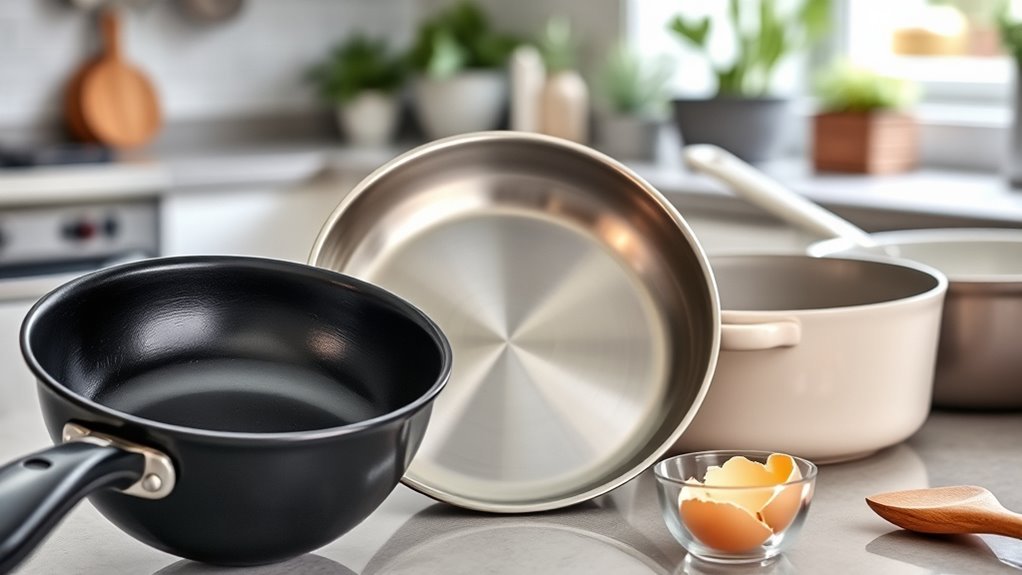
When it comes to nonstick pans, not all are created equal, and many do contain PFAS, especially those made with PTFE. While “PFOA-free” labels may seem reassuring, they often mask the presence of other harmful PFAS chemicals. To navigate these concerns effectively, you’ll need to understand the materials used and the potential health implications. So, what should you consider when choosing safer cookware options?
What Are PFAS and Why Should You Care?
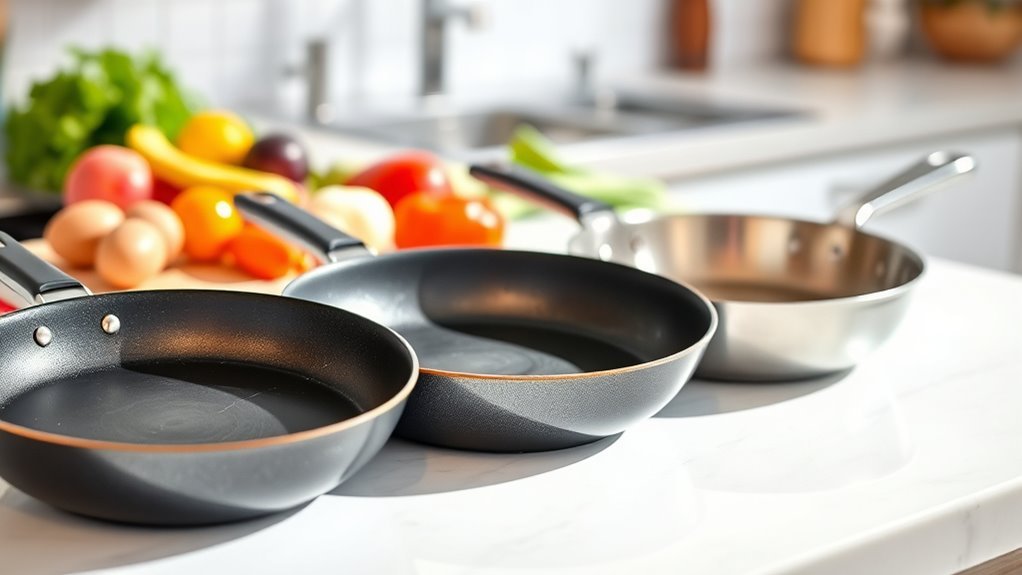
PFAS, or per- and poly-fluoroalkyl substances, are synthetic chemicals that have permeated our lives since the 1970s, primarily for their remarkable non-stick and water-repellent properties.
While you might appreciate the convenience of nonstick cookware, it’s essential to know that many of these products contain PFAS, which don’t break down naturally in the environment. This leads to long-term contamination of water and soil resources, impacting everyone’s safety.
Many nonstick cookware products contain PFAS, leading to lasting environmental contamination and potential safety risks for all.
Studies link PFAS exposure to serious health issues, including thyroid disruption, elevated cholesterol, and increased cancer risks, particularly for testicular and kidney cancers.
Regulatory changes are underway in several states, aiming to ban PFAS in cookware due to these rising health concerns. However, misleading labeling often clouds consumer understanding.
Identifying PFAS in Your Cookware: A Simple Guide
Identifying PFAS in your cookware starts with understanding labels and common types of these chemicals.
Look for terms like “PTFE-free” but remember that “PFOA-free” doesn’t guarantee the absence of other PFAS.
Exploring safer cookware alternatives can help you reduce your exposure to these harmful substances.
Understanding PFAS Labels
How can you be sure your nonstick cookware is truly safe? Understanding PFAS labels is vital. Many nonstick coatings labeled “PTFE-free” may still contain PFAS, leading to confusion.
While pans advertised as “PFOA-free” sound reassuring, they can still have PTFE. It’s essential to dig deeper and verify product content through manufacturer information.
Studies show that about 79% of nonstick cooking pans contain PTFE, raising concerns about PFAS in cookware. Misleading labeling can obscure the presence of other toxic chemicals as well.
To navigate this landscape, consult resources like Consumer Reports or the Green Science Policy Institute’s PFAS-free products list for reliable cookware options. Empower yourself with knowledge to make safer choices.
Common PFAS Types
While choosing nonstick cookware, understanding the common types of PFAS can greatly impact your health and safety.
These substances are often present in nonstick coatings, and identifying them is essential. Here are four common types of PFAS you should be aware of:
- PTFE (Teflon) – The most prevalent nonstick coating, often linked to health concerns.
- PFOA – Previously used in nonstick products, now largely phased out but may still linger in some items.
- PFOS – Another once-common type, associated with various health risks.
- Other PFAS – Many products claim to be “PFOA-free,” yet might still contain harmful alternatives to PFAS.
Stay informed and consider safer alternatives to PFAS, like stainless steel or cast iron, for your cookware.
Safe Cookware Alternatives
When choosing cookware, understanding how to identify PFAS can greatly enhance your safety in the kitchen. It’s essential to look for cookware labeled as “PFAS-free,” but remember that some products may still contain harmful substances. Safe cookware alternatives like stainless steel, cast iron, and ceramic coatings don’t leach toxic chemicals and offer durability. Regular maintenance, such as avoiding high heat and using gentle utensils, can extend the life of these options.
| Cookware Type | Notes |
|---|---|
| Stainless Steel | Durable, non-reactive |
| Cast Iron | Excellent heat retention |
| Ceramic Coatings | Non-toxic, easy to clean |
| PFAS-Free Cookware | Verify ingredient transparency |
| PFOA-Free Options | Check for misleading labeling |
Comparing Nonstick Coating Types: Safety and Performance
As you explore nonstick pans, understanding the differences in coating types is vital for making informed choices about safety and performance.
Here’s a breakdown of common nonstick coatings:
- PTFE (Teflon): Often contains PFAS, with studies showing that 79% of tested pans have this coating.
- Ceramic: A popular PFAS-free option, ceramic coatings are effective but may wear out faster and require careful handling to maintain nonstick properties.
- Other Nonstick Coatings: Some products claim to be “PTFE-free” but may still contain harmful substances, so transparency in labeling is important.
- Durability and Performance: While ceramic offers a safer alternative, its longevity mightn’t match that of traditional PTFE coatings.
Health Risks of PFAS in Cookware
PFAS in cookware can pose significant health risks that consumers often overlook. These synthetic chemicals, commonly found in PFAS coatings on nonstick cookware, are linked to serious health issues. Long-term exposure to PFAS has been associated with liver disease, thyroid dysfunction, and elevated cholesterol levels, along with increased risks for testicular and kidney cancers.
Alarmingly, studies reveal that 79% of tested nonstick pans contain PTFE, a type of PFAS, raising red flags about consumer safety. Many products misleadingly advertise themselves as “PTFE-free” or “PFOA-free,” yet they may still harbor other harmful PFAS, complicating your informed choices.
As awareness of these health risks grows, several states are moving to ban PFAS in cookware. It’s essential to stay informed and consider the potential dangers of traditional nonstick options, prioritizing your health over convenience.
Top PFAS-Free Cookware Alternatives for Healthier Cooking
Maneuvering the world of cookware can be intimidating, especially with growing concerns about health risks associated with traditional nonstick options.
Fortunately, there are several PFAS-free cookware alternatives that can liberate your kitchen while guaranteeing safety. Here are four excellent choices:
- Cast Iron: Durable and versatile, cast iron skillets provide exceptional heat retention and develop a natural nonstick surface over time.
- Stainless Steel: Perfect for browning and searing, stainless steel pans are nonreactive and long-lasting.
- Carbon Steel: Similar to cast iron but lighter, carbon steel offers excellent heat distribution and nonstick properties when seasoned properly.
- Ceramic-Coated Cookware: Brands like Caraway and GreenPan offer nonstick capabilities without the PFAS risks, though they require careful heat management.
Always check labels to verify your cookware is truly PFAS-free, as some products may mislead with terms like “PFOA-free.”
Your health deserves clarity in your kitchen choices.
How to Care for Your Nonstick Cookware Like a Pro
Choosing the right cookware is just the beginning; knowing how to care for it is equally important for maintaining its performance. Proper care enhances the longevity of your nonstick cookware, ensuring that your frying pan remains easy to use.
| Care Tip | Do’s | Don’ts |
|---|---|---|
| Cooking Temperature | Use low to medium heat | Avoid high temperatures |
| Utensils | Use wooden or silicone tools | Don’t use metal utensils |
| Cleaning | Hand wash with mild soap | Avoid abrasive sponges |
| Storage | Use pan protectors | Don’t stack without care |
Making the Switch to PFAS-Free Cooking
Switching to PFAS-free cookware offers significant health benefits, reducing your exposure to harmful chemicals associated with traditional nonstick options.
To make this change smooth, consider using durable alternatives like stainless steel or ceramic-coated pans and adopt proper cooking techniques to prolong their lifespan.
It’s also essential to research product labels carefully, as some items may still contain harmful materials despite claims of being “PFOA-free.”
Benefits of PFAS-Free Cookware
As concerns about health risks associated with PFAS have grown, opting for PFAS-free cookware offers significant advantages for both your well-being and cooking performance.
Here are four key benefits:
- Reduced Health Risks: Avoid exposure to harmful chemicals linked to health issues like thyroid dysfunction and certain cancers.
- Enhanced Cooking Performance: Switching to options like stainless steel or cast iron can improve your cooking experience.
- Effective Nonstick Properties: Alternatives such as ceramic-coated and carbon steel pans provide a nonstick surface without the associated health risks.
- Sustainability: Proper care extends the lifespan of PFAS-free cookware, making it a sustainable choice for long-term health.
Choosing PFAS-free cookware not only promotes safety but also elevates your culinary adventures.
Tips for Transitioning Smoothly
Shifting to PFAS-free cookware can feel overwhelming, but with a strategic approach, it becomes manageable and rewarding.
Start by gradually replacing your nonstick cookware, focusing on the items you use most often. Consider durable alternatives like stainless steel, cast iron, or ceramic—these materials are safe and effective.
As you change, familiarize yourself with proper cooking techniques; remember that cast iron requires seasoning for a nonstick surface.
To extend the lifespan of your new cookware, cook on medium to low heat.
Finally, leverage resources like the PFAS-free products list from the Green Science Policy Institute to make informed choices.
This thoughtful approach empowers you to embrace a healthier cooking environment without sacrificing performance.
Do All Nonstick Pans Have PFAS?
What makes nonstick pans a popular choice in kitchens today? Their convenience and ease of use are hard to beat.
However, the question of PFAS presence in these pans is vital. While not all nonstick pans contain PFAS, many traditional options do, particularly those made with PTFE.
Here are some key points to take into account:
- PFAS Prevalence: Consumer Reports found that 79% of tested nonstick pans had PTFE.
- PTFE-Free Doesn’t Mean Safe: Labels claiming “PTFE-free” might still contain other harmful compounds.
- Health Risks: PFAS are linked to serious health issues, including cancer and hormone disruption.
- Safe Alternatives: Think about using stainless steel, cast iron, or certain ceramic options that don’t involve PFAS.
Frequently Asked Questions
Which Non-Stick Pans Don’t Have PFAS?
For non-stick pans without PFAS, consider options with ceramic coatings or uncoated stainless steel.
Brands like Caraway and GreenPan offer eco-friendly, PFAS-free choices that prioritize safety.
While ceramic coatings can wear over time, they provide a safer alternative to traditional non-stick surfaces.
Always check labels for certifications to guarantee you’re selecting safe brands.
With these options, you can enjoy cooking while minimizing exposure to harmful chemicals.
Are PFAS in Toilet Paper?
Yes, PFAS can be found in some toilet paper products due to their moisture-resistant properties.
To guarantee your toilet paper safety, seek brands that explicitly state they’re free from PFAS. Stay informed about eco-friendly alternatives and prioritize consumer awareness.
By choosing products without these harmful chemicals, you take a step towards healthier living and environmental responsibility.
Embrace alternatives that align with your values and promote a safer, more sustainable lifestyle.
Which Non-Stick Pans Should I Avoid?
You should avoid non-stick pans that contain PTFE or Teflon, especially if they’re scratched or damaged, as they pose durability concerns and may release harmful chemicals.
Brands with misleading “PFOA-free” labels can still contain PFAS, affecting both cooking performance and environmental impact.
Instead, consider alternatives like uncoated cast iron or stainless steel for safer, more sustainable options, ensuring you’re making a choice that promotes your health and the planet’s well-being.
Are PFAS Still in Non-Stick Pans?
Yes, PFAS can still be present in non-stick pans, especially those made with traditional coatings like PTFE.
You should consider eco-friendly coatings and non-stick alternatives, such as ceramic or stainless steel, which are often free from harmful chemicals.
To prioritize your health, adopt safe cooking practices and research brands that explicitly state they’re PFAS-free.
Being informed empowers you to make choices that protect your well-being and the environment.
Conclusion
In a world where health concerns are increasingly pressing, choosing PFAS-free cookware isn’t just a trend—it’s a commitment to safer cooking. While not all nonstick pans contain these harmful chemicals, many do, lurking beneath deceptive labels. By opting for alternatives like stainless steel or ceramic, you’re not just protecting your family; you’re also embracing a healthier lifestyle. After all, isn’t your well-being worth the effort? Make informed choices today for a safer kitchen tomorrow.
