
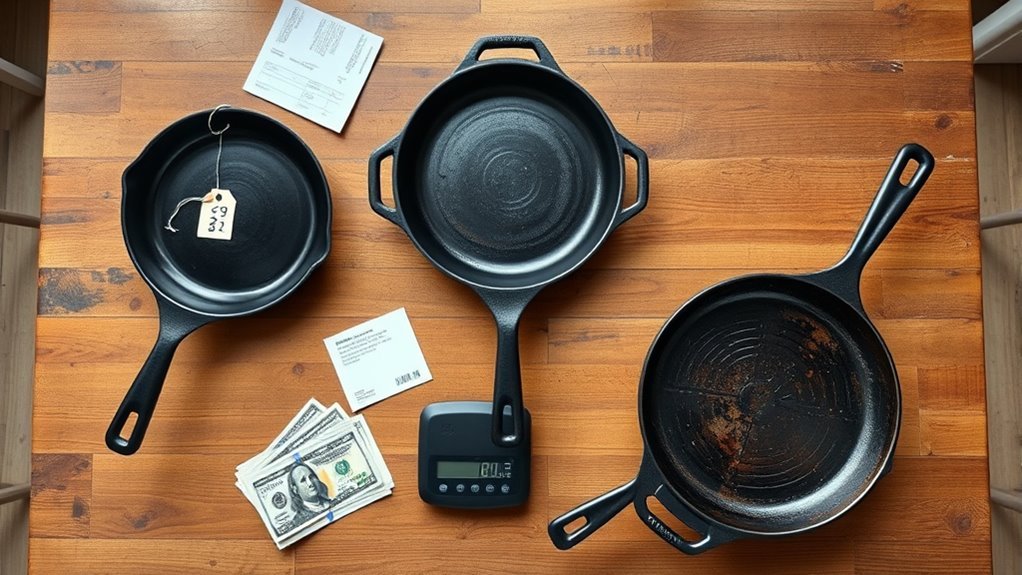
How much does a cast iron skillet cost? The answer depends on its size, brand, finish, and whether you buy new or vintage. Affordable models can handle everyday cooking, while premium skillets cost much more for specialized finishes and craftsmanship. Understanding these differences helps you choose a pan that fits your budget without paying for features you don’t need.
Quick Answer
A new cast iron skillet can cost about $19 for a basic 12-inch model, around $25–$38 for a classic Lodge skillet, or $165–$275 for selected premium and enameled models. Vintage skillets range from affordable used pans to expensive collector pieces. Size, finish, condition, and rarity explain most price differences.
Last checked: November 14, 2026. Current retail prices and product specifications were checked against manufacturer and retailer listings.
Key Takeaways
- A traditional 10- to 12-inch pre-seasoned skillet offers strong value for most home cooks.
- Premium prices often reflect lighter construction, polished surfaces, enamel finishes, or specialized craftsmanship.
- A vintage skillet’s asking price does not establish its resale value. Completed sales provide better evidence.
- Pan weight, usable cooking area, and cooktop compatibility matter as much as price.
- Basic cleaning and seasoning are inexpensive, and ordinary cooking oil is usually sufficient.
Understanding Cast Iron Skillets and Their Benefits
Cast iron skillets are durable pans made from iron that has been cast into shape. Their greatest cooking advantage is excellent heat retention, which makes them useful for searing meat, frying potatoes, and baking cornbread.
Unlike aluminum, cast iron does not spread heat quickly. It can develop hot spots when heated too fast, so gradual preheating helps the cooking surface reach a more consistent temperature.
Many modern skillets arrive pre-seasoned. Seasoning is a thin layer of oil that has bonded to the metal through heat. It helps protect the surface from rust and makes food easier to release.
Traditional cast iron also works on gas, electric, and induction cooktops. Suitable models can move from the stovetop to the oven, grill, or campfire.
However, not every cast iron product has the same heat limits. Enamel coatings, glass lids, silicone handles, and other accessories may restrict oven or open-flame use.
Weight is another consideration. Standard cast iron can be heavy, but lighter models are available. For example, the Ozark Trail Lightweight 12-inch skillet weighs about 3.7 pounds, making it easier to lift than many traditional pans.
With proper care, a cast iron skillet can remain useful for decades. That long service life helps explain why even inexpensive models can be worthwhile purchases.
Price Ranges for Cast Iron Skillets: What to Expect
The cost of a cast iron skillet varies widely, but you do not need a premium budget to buy a functional pan. Basic pre-seasoned models can cost less than $20, while carefully finished premium models may exceed $200.
For example, Walmart lists an Ozark Trail 12-inch pre-seasoned cast iron skillet for $18.87. It offers a large cooking surface at a relatively low price.
Meanwhile, premium brands charge more for features such as polished interiors, lighter designs, distinctive handles, or decorative enamel.
Here is a practical overview of common price categories.
| Skillet category | Typical price range | Best suited for |
|---|---|---|
| Budget bare cast iron | About $15–$40 | Beginners and everyday cooking |
| Mid-range cast iron | About $40–$100 | Larger pans and upgraded designs |
| Premium bare cast iron | About $100–$300+ | Specialized finishes and craftsmanship |
| Enameled cast iron | About $50–$275+ | Cooks who prefer no seasoning |
| Vintage cast iron | Varies widely | Collectors and secondhand buyers |
These are broad shopping categories, not fixed manufacturer prices. Individual models may fall outside them.
The lowest price mentioned in the original comparison was $11.87 for an Ozark Trail 9.5-inch carbon steel frying pan. However, carbon steel and cast iron are different cookware materials, so that pan should not be used to establish the starting price of cast iron.
For most buyers, a basic pre-seasoned skillet is enough. The premium price becomes more relevant when you want a particular weight, surface finish, appearance, or brand.
Key Factors Affecting Skillet Prices
Cast iron skillet prices depend mainly on size, manufacturing quality, finish, brand, and included accessories. A higher price may provide greater convenience or a more refined design, but it does not automatically produce better food.
- Brand reputation: Established manufacturers may charge more for consistent quality, customer support, and warranty coverage.
- Size: Larger skillets generally require more material and can cost more than smaller versions in the same product line.
- Surface finish: Polished or machined interiors can increase production costs compared with rougher factory finishes.
- Material and coating: Enameled cast iron requires additional finishing and eliminates the need for traditional seasoning.
- Weight and design: Lightweight construction, helper handles, and ergonomic features can affect price.
- Accessories: A lid, handle cover, or cleaning kit can increase the total cost of a purchase.
- Age and rarity: Vintage pieces may carry a collector premium based on markings, condition, and availability.
Remember that expensive cast iron does not necessarily retain more heat than an affordable alternative of similar mass and construction. Both can perform well when you use proper cooking techniques.
Comparing Prices of New vs. Vintage Cast Iron Skillets
New cast iron skillets are usually the more predictable purchase. They have clearer specifications, known retail prices, and often come with manufacturer support.
Vintage skillets offer history and collectible appeal, but their prices depend heavily on the particular piece. Two pans from the same manufacturer can sell for very different amounts.
New Skillet Costs
A new cast iron skillet provides dependable performance without requiring you to identify old markings or assess decades of wear.
For example, Lodge lists its 10.25-inch Classic Skillet at a sale price of $24.90, compared with a regular price of $29.95.
The company’s 12-inch Classic Skillet is listed at $29.90 on sale, making it a practical choice for larger meals.
These pans arrive pre-seasoned, so you can start cooking after following the manufacturer’s initial cleaning instructions.
You can also choose from budget models, premium polished skillets, and enameled options. Their different finishes and designs allow you to prioritize convenience, weight, or appearance.
Unlike collectibles, modern cookware is generally purchased for use rather than expected resale appreciation.
Vintage Skillet Value
Vintage cast iron skillets can cost anywhere from modest secondhand prices to thousands of dollars for unusual collector pieces. Their value depends on condition, markings, casting quality, and rarity.
Brands such as Wagner Ware, Griswold, and Lodge remain familiar names among collectors.
For a real sale example, a Griswold No. 9 skillet sold at Faulk Auctions for $65 on June 25, 2026, before the stated buyer’s premium.
At the opposite extreme, a rare first-series Victor No. 7 skillet, attributed to Griswold and dated to the late 1800s, appeared in an Etsy listing with an asking price of $8,765.43.
That listing is no longer available, and the asking price does not establish that someone paid the amount.
Similarly, a Wagner Ware No. 10 may be advertised for around $230, but the actual sale price can differ considerably.
If you’re buying vintage cast iron for cooking rather than collecting, prioritize a sound cooking surface over rare markings or decorative appeal.
Pro Tip: When evaluating a vintage skillet, compare completed sales for the same size, logo, and condition. Asking prices alone can greatly exaggerate a pan’s likely resale value.
Popular Brands and Their Prices
Popular cast iron skillet brands cover nearly every budget. Lodge and Ozark Trail provide affordable options, while Field Company, Smithey, and Le Creuset serve buyers looking for more specialized designs.
The following examples show how prices differ between specific products.
| Brand | Size (inches) | Price |
|---|---|---|
| Lodge | 10.25 | $24.90 sale |
| Lodge | 12 | $29.90 sale |
| Ozark Trail | 12 | $18.87 standard / $29.39 lightweight |
| AOKIWO | 12 (covered) | $29.99 sale |
| Le Creuset | 10.25 | $240 suggested retail |
| Vintage (Wagner/Griswold) | Various | Example: $65 auction sale; $8,765.43 rare asking price |
The listed prices are examples from specific models and listings, not averages for each brand.
Other premium manufacturers are worth understanding when comparing prices. The Field Company No. 8 skillet has a 10.25-inch diameter and is listed at $165. Its design emphasizes a smoother cooking surface and lighter handling.
Likewise, the Smithey No. 10 skillet is listed at $180. It features a polished interior, pouring spouts, and a helper handle.
Le Creuset takes a different approach with colorful enameled cast iron. Its 10.25-inch Signature Skillet has a suggested retail price of $240, while the larger 11.75-inch version is listed at $275.
The AOKIWO covered skillet is another affordable example. Its $29.99 promotional price includes a glass lid, which can be useful for covered frying and simmering.
You can compare its specifications through the AOKIWO 12-inch covered cast iron skillet listing.
For everyday cooking, compare usable cooking area, weight, care requirements, and warranty terms before paying more for a premium name.
Where to Score the Best Deals on Cast Iron Skillets
You can find cast iron skillet deals through online retailers, local secondhand shops, and seasonal promotions. The best option depends on whether you want a new pan with predictable specifications or an inexpensive vintage find.
Online Retailers Comparison
Online stores make it easy to compare prices across brands and sizes. Amazon, Walmart, and manufacturer websites are common places to start.
However, a lower listed price does not always mean a better deal. Shipping charges, included accessories, return policies, and seller reliability can change the overall value.
Look closely at the product description, especially when listings use terms such as lightweight, pre-seasoned, enameled, or covered.
Also, confirm that the pan is actually cast iron. Carbon steel cookware may appear in similar search results, but it has different construction and handling characteristics.
A 12-inch skillet with a lid should not be compared directly with an uncovered 10-inch pan unless you account for the size and accessories.
Local Thrift Stores
Thrift stores, flea markets, estate sales, and garage sales can offer inexpensive cast iron cookware. Some secondhand skillets may cost approximately $5–$30, although valuable collectibles can be priced much higher.
The main benefit is that you can inspect the pan before buying it.
Check the following points:
- Cracks: Look carefully around the sidewalls, handle connection, and bottom.
- Warping: Place the skillet on a flat surface and check whether it rocks.
- Rust: Light surface rust can often be removed, but severe corrosion requires more work.
- Cooking surface: Look for deep pitting, unusual damage, or coating problems.
- Markings: Check the underside for manufacturer names, logos, and size numbers.
Warning: Do not buy a cracked cast iron skillet for cooking. Cracks can grow during heating and may cause the pan to fail. Damaged enamel also needs careful assessment because chipped coating cannot be repaired with ordinary seasoning.
A rusty but structurally sound bare cast iron skillet may be worth restoring. However, the time and supplies required should be part of your buying decision.
Seasonal Sales Events
Seasonal promotions can lower the cost of new cast iron skillets. Discounts vary by brand, retailer, and product availability.
These shopping periods are useful opportunities to compare offers:
- Black Friday and Cyber Monday: Retailers often promote cookware and kitchen accessories.
- Post-Holiday Clearance: Some stores discount remaining cookware inventory after major holidays.
- Back-to-School Sales: Kitchen essentials may appear in home and apartment promotions.
- Summer Outdoor Promotions: Camping and grilling cookware may receive seasonal discounts.
Some promotions offer reductions of 10–30%, but the percentage is not guaranteed. A manufacturer’s current sale price is more useful than an advertised discount without a clear starting price.
You can also subscribe to retailer newsletters if you want sale alerts.
How Weight and Size Affect Skillet Prices
Size and weight influence both cast iron skillet cost and everyday convenience. Larger skillets generally use more metal, but construction methods and brand positioning also affect the final price.
For example, Lodge lists its classic 10.25-inch skillet at approximately 5.66 pounds and its 12-inch version at approximately 7.69 pounds.
By comparison, the lightweight Ozark Trail 12-inch cast iron skillet weighs about 3.7 pounds and was listed at $29.39.
This shows that a larger diameter does not always mean a heavier pan. Wall thickness and construction also matter.
Heavier skillets can store more heat, which is useful when adding cold food to a hot cooking surface. However, extra weight can make washing, lifting, and moving the skillet more difficult.
Keep these size categories in mind:
- 6–8 inches: Suitable for small servings, eggs, and individual baked dishes.
- 10–12 inches: A versatile range for most everyday meals.
- 14 inches and larger: Useful for larger portions, group cooking, or outdoor meals.
Check the flat cooking surface rather than relying only on the advertised diameter. A skillet’s outer rim may be wider than the area available for food.
For induction or glass cooktops, choose a skillet with a suitable flat base. Lift it when repositioning to reduce the risk of scratching the cooking surface.
Maintenance Costs of Cast Iron Skillets
Maintaining a traditional cast iron skillet usually costs very little. Most owners can care for their pans with ordinary dish soap, water, a cloth or brush, and a small amount of cooking oil.
The main expense is your time rather than a recurring need for specialized products.
Here are the main maintenance considerations:
- Cooking oil: A bottle may cost roughly $5–$15, depending on the product. You only need a small amount for regular surface care.
- Cleaning tools: A basic brush or scraper can help remove food residue. Specialized tools are optional.
- Rust prevention: Dry the skillet promptly after washing and store it in a dry place.
- Re-seasoning: Occasional oven seasoning may be needed if the protective surface becomes damaged. Specialty oil and care kits can cost around $10–$30, but regular cooking oil also works.
For a specific reference, Lodge sells seasoning spray for $11.95 and a care kit for $24.95. These are optional products, not required ongoing purchases.
The basic cleaning routine is simple:
- Allow the skillet to cool enough to handle safely.
- Wash it with warm water and mild dish soap if needed.
- Remove stuck-on food with a brush or scraper.
- Dry the pan completely.
- Apply a very thin layer of cooking oil when needed to maintain the finish.
According to Lodge’s cast iron cleaning instructions, modern dish soap is safe for seasoned cast iron. The old rule that you must never use soap is outdated.
However, bare cast iron should not go into the dishwasher. Prolonged moisture can damage the seasoning and encourage rust.
If the pan needs full re-seasoning, Lodge recommends applying a thin coat of oil and heating the skillet upside down in an oven at 450–500°F for one hour, followed by cooling in the oven.
Everyday cooking and proper drying often reduce how frequently that extra step is needed.
Essential Tips for Choosing Your Ideal Cast Iron Skillet
The best cast iron skillet is one that matches your cooking habits, physical comfort, and maintenance preferences. You do not need to purchase the most expensive model to get durable cookware.
Start with size, then decide whether traditional or enameled cast iron fits your needs.
Consider Size Options
Choose a skillet based on the number of portions you usually cook and the available burner space.
A smaller skillet is convenient for individual meals, but its limited cooking area may become frustrating when preparing larger dishes.
A medium 10- or 12-inch skillet is often the most flexible choice because it can handle everyday frying, searing, and baking.
Larger models are useful for batch cooking, but they require more storage space and may be difficult to lift.
If you often cook for two to four people, a medium skillet is a practical starting point. For single servings, a smaller model may be easier to manage.
2. Evaluate Material Type
Traditional and enameled cast iron offer similar core heat-retention benefits, but their surfaces require different care.
Traditional bare cast iron develops a seasoned cooking surface. It is well suited to frying, searing, baking, and outdoor cooking when the model is designed for those uses.
You must dry it carefully and maintain the seasoning, but minor rust and seasoning damage can often be repaired.
Enameled cast iron has a protective glass-like coating. It does not need traditional seasoning and is convenient for cooking acidic foods such as tomato-based sauces.
For example, the Le Creuset Signature Skillet has an enameled interior and is rated oven-safe up to 500°F.
Le Creuset identifies the skillet as dishwasher-safe but recommends hand washing to help preserve the finish.
Do not assume every enameled skillet has the same oven rating or care instructions.
Also, enamel can chip if the pan is dropped or struck against a hard surface. Unlike ordinary seasoning damage, chipped enamel cannot simply be restored by applying cooking oil.
If you want a low-cost pan for high-heat cooking, bare cast iron is a practical choice. If you prefer less seasoning maintenance, enameled cast iron may justify the higher price.
3. Assess Weight Preference
Weight directly affects how comfortable a skillet feels during cooking and cleanup. A heavier pan may hold more heat, but it can be tiring to carry when filled with food.
Consider these factors:
- Lightweight models: A skillet around 3.7 pounds can be easier to handle than a traditional full-weight model of similar diameter.
- Heavy-duty models: Skillets weighing more than 5 pounds can offer substantial thermal mass for searing and frying.
- Helper handles: A second grip makes lifting larger skillets more manageable.
- Personal comfort: Test the weight in person if possible, especially when choosing a large skillet.
Remember that handle length and grip shape also influence comfort. A balanced skillet with a helper handle can be easier to control than a lighter model with an awkward grip.
Pro Tip: Before buying, compare the pan’s empty weight with something you already lift comfortably in your kitchen. Remember that food adds weight, and a hot skillet often requires oven mitts or a two-handed grip.
Are Cast Iron Skillets Worth Their Price?
Cast iron skillets are worth considering if you want durable, versatile cookware with strong heat retention. Even an inexpensive model can handle searing meat, frying eggs, sautéing vegetables, and baking cornbread.
Unlike many disposable kitchen products, a properly maintained cast iron skillet can remain useful for generations.
However, value depends on how often you use it. If you prefer a lightweight pan that requires minimal care, traditional cast iron may not be your first choice.
Seasoning also needs realistic expectations. A well-maintained skillet can develop good food-release properties, but it does not automatically become as slippery as a modern nonstick coating.
Gradual preheating, enough cooking fat, and appropriate temperature control are just as important as seasoning.
For most home cooks, a reasonably priced pre-seasoned model provides the essential benefits. Premium products are more appealing when you specifically value smoother surfaces, lighter construction, special finishes, or craftsmanship.
Vintage cast iron has an additional appeal: history. Yet buying an old pan does not guarantee future appreciation or better cooking performance.
Frequently Asked Questions
What Is the Average Price of a Cast Iron Skillet?
A typical everyday cast iron skillet often costs about $20–$50, depending on its size, brand, and features. Budget pans can cost less, while premium models may exceed $200. This is a practical shopping range rather than a calculated market average. A pre-seasoned 10- or 12-inch skillet is a good starting point for most kitchens.
Are Cast Iron Skillets Worth Money?
Yes, cast iron skillets can offer excellent value because they are durable and versatile. Some vintage models also have collectible value. However, not every old skillet is rare or expensive. For everyday cooking, an affordable, well-maintained pan can provide many of the same practical benefits as a costly premium model.
How Much Does a Cast Iron Pan Cost?
A new cast iron pan can cost less than $20 for a basic model, while many popular everyday skillets sell for approximately $20–$60. Larger, enameled, or premium models cost more. The final price depends on size, finish, included accessories, and retailer discounts. You can save money by choosing a standard pre-seasoned skillet without extra accessories.
How Much Is a Cast Iron Worth?
A used cast iron skillet may be worth only a few dollars or several hundred, depending on its manufacturer, age, condition, and rarity. Exceptional collector pieces can carry much higher asking prices. To estimate the value of a specific pan, identify its markings, inspect its condition, and compare completed sales of matching models.
Do Expensive Cast Iron Skillets Cook Better?
Expensive cast iron skillets do not automatically cook better than affordable models. Premium pans may offer smoother surfaces, lighter construction, or more comfortable handles. However, cooking results still depend heavily on temperature control, seasoning, and technique. A properly preheated budget skillet can produce excellent results for everyday frying, searing, and baking.
Conclusion
A cast iron skillet does not need to be expensive to become a reliable kitchen tool. For most home cooks, an affordable 10- or 12-inch pre-seasoned model offers a good balance of cost, durability, and versatility.
If you prefer lighter construction, decorative enamel, or collectible history, spending more may make sense. Start by choosing the size and weight you can comfortably handle, then compare prices for models with the features you actually need.
Sources
- Lodge Cast Iron: 10.25-Inch Classic Skillet: Manufacturer pricing, dimensions, weight, and compatibility.
- Lodge Cast Iron: 12-Inch Classic Skillet: Manufacturer pricing and weight specifications.
- Walmart: Ozark Trail 12-Inch Skillet: Budget skillet price and product specifications.
- Walmart Business: Ozark Trail Lightweight Skillet: Lightweight skillet pricing and specifications.
- Walmart: AOKIWO Covered Cast Iron Skillet: Price and included glass lid.
- Field Company: No. 8 Cast Iron Skillet: Premium skillet pricing, design, and size.
- Smithey Ironware: No. 10 Skillet: Premium pricing, polished finish, and product dimensions.
- Le Creuset: Signature Skillet: Enameled cast iron pricing, oven compatibility, and care information.
- Faulk Auctions: Vintage Griswold No. 9: Documented vintage skillet auction result.
- Etsy: Rare Victor No. 7 Skillet Listing: Historical asking price; listing no longer available.
- Lodge Cast Iron: How to Clean Cast Iron: Soap use, washing, drying, and rust prevention.
