
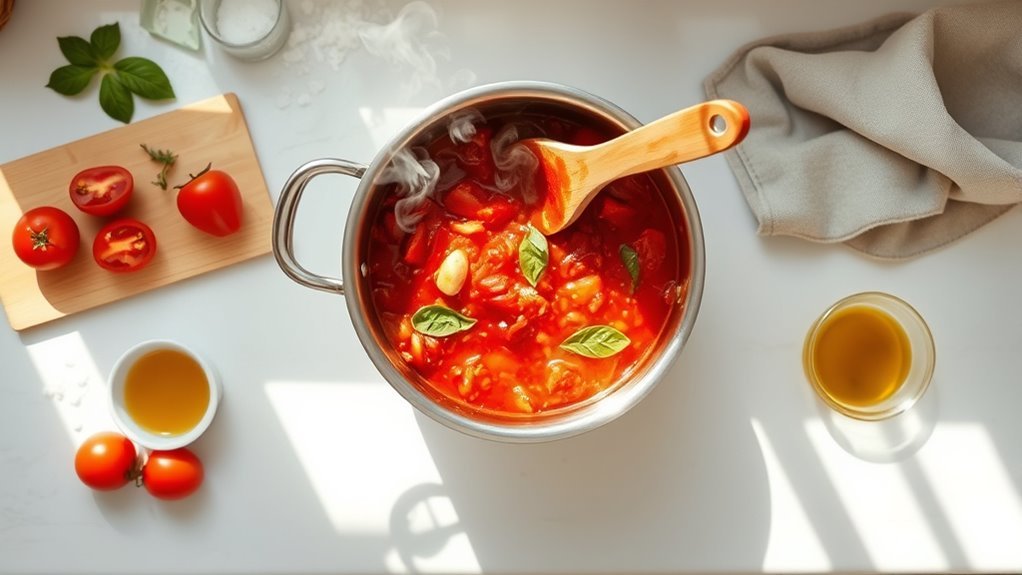
You might be surprised to learn that cooking tomato sauce in stainless steel is one of the best choices you can make. Its non-reactive surface helps maintain the sauce’s fresh flavors while preventing any metallic taste. But there’s more to it than just picking the right pot. Discover how to maximize your results with the right techniques and ingredients to elevate your sauce-making game. Are you ready to transform your culinary skills?
Why Stainless Steel Is Ideal for Cooking Tomato Sauce
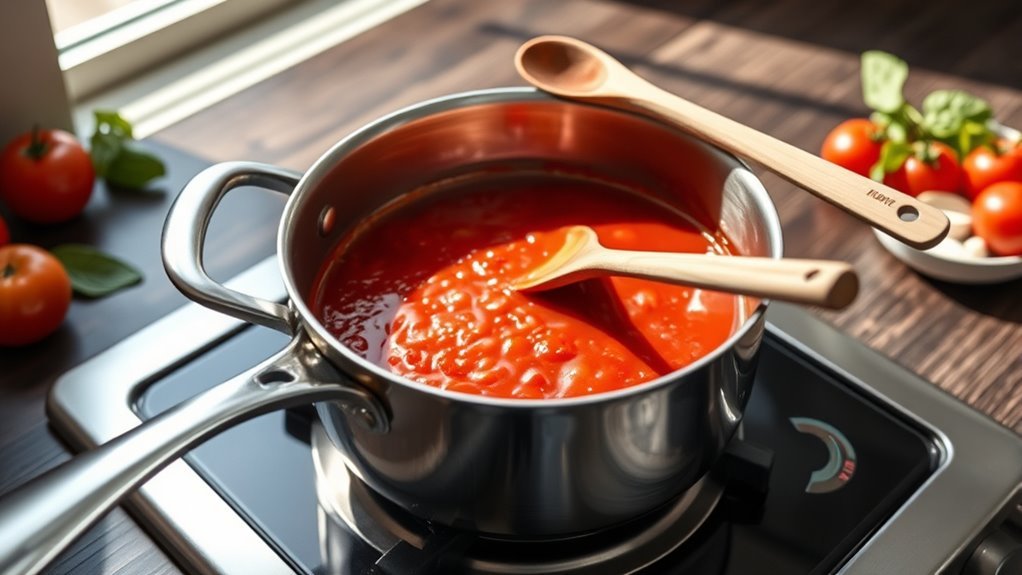
When you choose stainless steel for cooking tomato sauce, you’re opting for a material that won’t interfere with the rich, natural flavors of your ingredients. Its non-reactive nature guarantees that the acidity of tomatoes, which range from a pH of 4.3 to 4.9, doesn’t lead to unwanted flavor transfer.
High-quality stainless steel, like 18/10, minimizes off-flavors, keeping your sauce tasting fresh and vibrant.
Using medium heat is key; it helps prevent any metallic taste while allowing for even heat distribution—essential for simmering without scorching.
Plus, the durability of stainless steel means you can sauté aromatics first, enhancing the flavor profile of your tomato sauce.
This combination creates a smooth, delicious sauce that honors the natural essence of your ingredients, making your culinary experience truly liberating.
Embrace stainless steel, and savor the difference in every bite!
Getting Your Ingredients Ready for Cooking
To kick off your tomato sauce, start by selecting high-quality tomatoes like Roma or on-the-vine for their rich flavor.
Next, prepare aromatic ingredients by finely chopping garlic and onion, which will form a delicious base.
Don’t forget to have fresh basil and kosher salt on hand to elevate your sauce’s taste at the end!
Selecting Fresh Tomatoes
Selecting the right tomatoes is essential for crafting a flavorful sauce that shines in your dishes. To create a rich flavor, opt for meaty varieties like Roma and on-the-vine tomatoes. Look for firm, bright, blemish-free fresh tomatoes to guarantee peak taste. Mixing different tomato varieties can elevate your sauce’s profile, so don’t hesitate to experiment!
| Tomato Variety | Flavor Profile |
|---|---|
| Roma | Meaty, ideal for sauces |
| On-the-vine | Sweet, juicy |
| San Marzano | Rich, slightly tangy |
| Beefsteak | Bold and juicy |
Slice your tomatoes, scoop out the seeds, and grate the flesh while discarding the skins for a smooth sauce. Enjoy the liberation of creating your perfect tomato sauce!
Preparing Aromatic Ingredients
Aromatic ingredients are the backbone of your tomato sauce, and prepping them right sets the stage for a delicious outcome.
Start by chopping fresh tomatoes into quarters, discarding the seeds to enhance texture and avoid excess water.
Dice yellow or sweet onions for a hint of sweetness, and mince garlic to create a flavorful base.
When it’s time for basil, tear the leaves rather than chop them; this preserves their vibrant flavor and essential oils.
Don’t forget to measure out kosher salt to balance the acidity of the tomatoes during cooking.
If you need an extra touch of acidity, a splash of red wine vinegar or balsamic will complement the sauce beautifully.
Embrace these steps for a sauce that sings!
Essential Cooking Tools
Having the right tools can make all the difference when preparing your tomato sauce. Equip yourself with these essential cooking tools to release your culinary creativity:
- High-Sided Rounded Pan: A stainless steel saucier is perfect for even heat distribution and preventing splatter as you cook.
- Food Mill: This tool guarantees a silky smooth sauce by separating skins from juice, enhancing texture.
- Chopping Tools: A sharp chef’s knife is key for chopping tomatoes and onions efficiently, allowing flavors to meld beautifully.
Don’t forget your measuring cups! They help you portion fresh tomatoes accurately, aiming for about 4 cups for a balanced sauce.
With these tools at your side, you’ll easily elevate your sauce-making game.
Step-By-Step Guide to Making Tomato Sauce in Stainless Steel
When you’re ready to cook, choosing a high-quality stainless steel pot is key to achieving a delicious tomato sauce.
You’ll want to master cooking techniques that enhance flavors while being mindful of how to preserve the sauce’s integrity.
Let’s explore the steps that guarantee your sauce turns out rich and vibrant without any unwanted metallic taste.
Choosing Quality Stainless Steel
Choosing quality stainless steel cookware is essential for making a flavorful tomato sauce. Opt for high-quality stainless steel, like 18/10, to guarantee non-reactivity and prevent off-flavors from tomatoes.
Here are some key points to take into account:
- Select cookware with good heat distribution for even cooking.
- Avoid prolonged cooking times to prevent metallic tastes in your sauce.
- Regularly clean and maintain your pots for consistent performance.
Cooking Techniques for Sauce
Crafting a delicious tomato sauce in stainless steel starts with the perfect foundation: sautéing.
Heat olive oil over medium heat and cook chopped onions and minced garlic for 5-8 minutes until they’re translucent, creating a flavorful base.
Next, add 4 cups of chopped fresh tomatoes—opt for meaty varieties—and let them cook down until soft, allowing most of the liquid to evaporate.
For a smoother sauce, use a food mill to separate the skins from the juice.
Now, simmer the tomato juice on low heat for 30-45 minutes, stirring occasionally to prevent sticking and deepen the flavors.
Just before serving, toss in fresh basil to preserve its aroma and adjust seasoning for a balanced taste.
Enjoy your culinary liberation!
Flavor Preservation Tips
To preserve the vibrant flavors of your tomato sauce while cooking in stainless steel, start by selecting high-quality 18/10 stainless steel cookware. This non-reactive material guarantees even heat distribution and prevents off-flavors.
- Preheat your pot over medium heat and add oil to create a non-stick surface.
- Sauté aromatics like onions and garlic first, building a rich flavor base.
- Keep the cooking temperature low to medium to minimize any metallic taste.
Gently stir with wooden or silicone utensils to protect the stainless steel surface.
By following these flavor preservation tips, you’ll create a delicious tomato sauce that bursts with freshness, allowing the natural ingredients to shine without interference.
Enjoy the liberation of flavor in every bite!
Common Mistakes to Avoid When Cooking With Stainless Steel
When cooking with stainless steel, avoiding common pitfalls can make all the difference in your dish’s outcome. First, steer clear of high heat; cooking tomatoes at this temperature can scorch your sauce, ruining its flavor. Instead, stick to medium-low heat for ideal results.
Always preheat your cookware before adding oil to prevent sticking and guarantee even cooking.
When introducing acidic ingredients like tomatoes, wait until after sautéing your aromatics to avoid unwanted reactions with the metal. Use non-metal utensils—wooden or silicone—to protect your cookware’s surface from scratches that can affect performance.
Finally, keep an eye on cooking times; overcooking can leach nickel and chromium into your sauce. By sidestepping these mistakes, you’ll elevate your tomato sauce experience and enjoy every vibrant bite!
Troubleshooting Common Issues With Tomato Sauce in Stainless Steel
While cooking tomato sauce in stainless steel can yield delicious results, you might encounter a few common issues that can affect flavor and texture. Here’s how to troubleshoot them:
- Off-flavors: Prolonged cooking can cause tomatoes’ acidity to react with the metal, leading to a metallic taste.
- Discoloration: High heat can intensify these reactions, altering the sauce’s vibrant color.
- Health concerns: If you’re sensitive to nickel or chromium, consider using high-quality 18/10 stainless steel to minimize leaching.
To avoid these pitfalls, stick to medium heat and stir gently with wooden or silicone utensils.
This way, you’ll keep your pot in great shape while preserving the integrity of your sauce. Embrace the process of creating a rich, flavorful tomato sauce without compromising on quality or taste!
How to Clean and Care for Stainless Steel Cookware
Cooking tomato sauce in stainless steel can be a rewarding experience, but proper care of your cookware is essential to maintaining its performance and appearance.
To clean your stainless steel pots and pans, skip harsh abrasives. Instead, use warm soapy water with a soft cloth or sponge to preserve that sleek finish. For stubborn stains or burnt-on food, mix baking soda and water to create a gentle paste that lifts residue without scratching.
Always dry your cookware immediately after washing to prevent water spots and keep the shine intact.
If you encounter discoloration from high heat, boil a vinegar and water mixture in the pot, then scrub gently with a non-abrasive pad.
Regular maintenance includes using a non-abrasive cleaner or specialized stainless steel polish to keep your cookware looking new and to enhance its durability.
Your stainless steel will thank you, shining bright for every culinary adventure!
Frequently Asked Questions
What Foods Should Not Be Cooked in Stainless Steel?
You should avoid cooking acidic foods, like tomatoes and citrus, in stainless steel, as they can lead to flavor transfer and staining issues.
Delicate proteins, such as eggs and fish, tend to stick, making them tricky to manage. Additionally, sugary items like caramel may scorch quickly due to the metal’s heat conductivity.
Keep an eye on dairy products, too, since they can curdle if not monitored closely in stainless steel.
What Type of Pan Should I Cook Tomato Sauce In?
To cook tomato sauce perfectly, choose a high-sided saucier or a heavy-bottomed pan. These options guarantee sauce consistency, promote even heat distribution, and enhance flavor preservation.
Start by sautéing your aromatics to build a rich base, then add tomatoes. Using medium heat prevents any unwanted reactions while allowing the flavors to develop.
With the right pan, you’ll liberate your culinary skills and create a sauce that delights the palate.
Is It Okay to Cook Spaghetti Sauce in a Stainless Steel Pan?
Yes, it’s perfectly fine to cook spaghetti sauce in a stainless steel pan!
The benefits of stainless steel include its non-reactivity, ensuring your sauce maintains its rich flavor without any off-tastes.
Start by seasoning the pan with oil for an ideal cooking surface.
Sauté your aromatics first, then add tomatoes.
This method enhances your spaghetti sauce flavor and helps prevent sticking.
Embrace the freedom of cooking with stainless steel and elevate your culinary creations!
Does Tomato Interact With Stainless Steel?
Yes, tomatoes do interact with stainless steel due to their acidity.
While high-quality stainless steel minimizes metal leaching, prolonged cooking can alter flavors and cause discoloration.
To preserve the rich, vibrant taste of your sauce, cook on medium heat and monitor it closely.
This way, you’ll maintain the integrity of the tomatoes without unwanted metallic notes.
Choosing the right cookware guarantees your culinary creations shine with vibrant flavors.
Conclusion
Cooking tomato sauce in stainless steel not only preserves vibrant flavors but also contributes to healthier meals. Did you know that stainless steel cookware can last over 100 years with proper care? By choosing quality ingredients and following the right techniques, you’ll create a rich, delicious sauce that elevates any dish. So grab your stainless steel pot, and embrace the joy of cooking—your taste buds will thank you!

