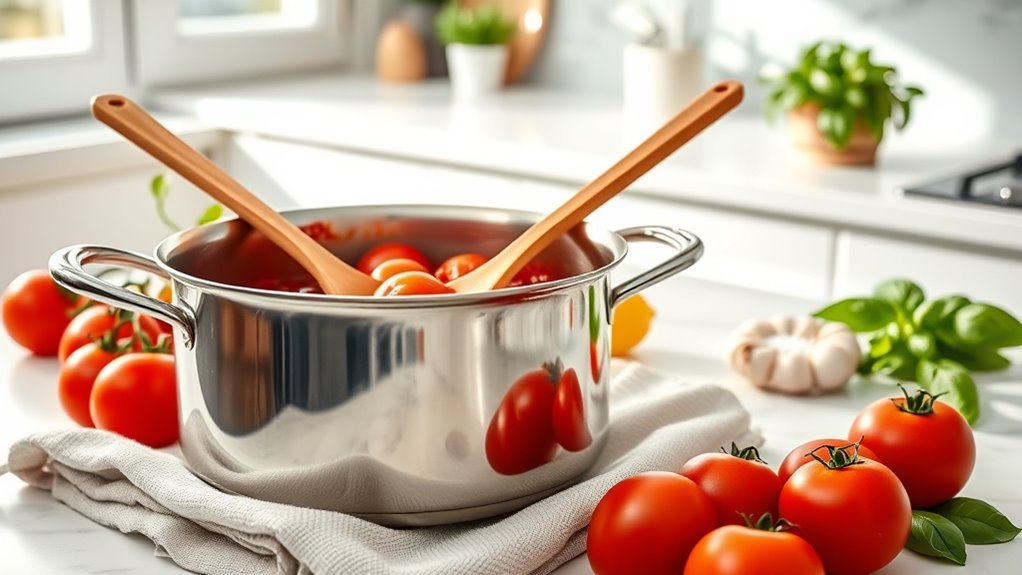
If you’re wondering about cooking tomatoes in stainless steel, you’re in for a treat. This cookware not only enhances the vibrant flavors of tomatoes but also guarantees even heat distribution. However, it’s essential to know how to prevent sticking and choose the right pots for the job. With the right techniques, you can create delicious sauces and hearty dishes. Curious about the best practices and tips to elevate your tomato dishes?
The Benefits of Cooking Tomatoes in Stainless Steel
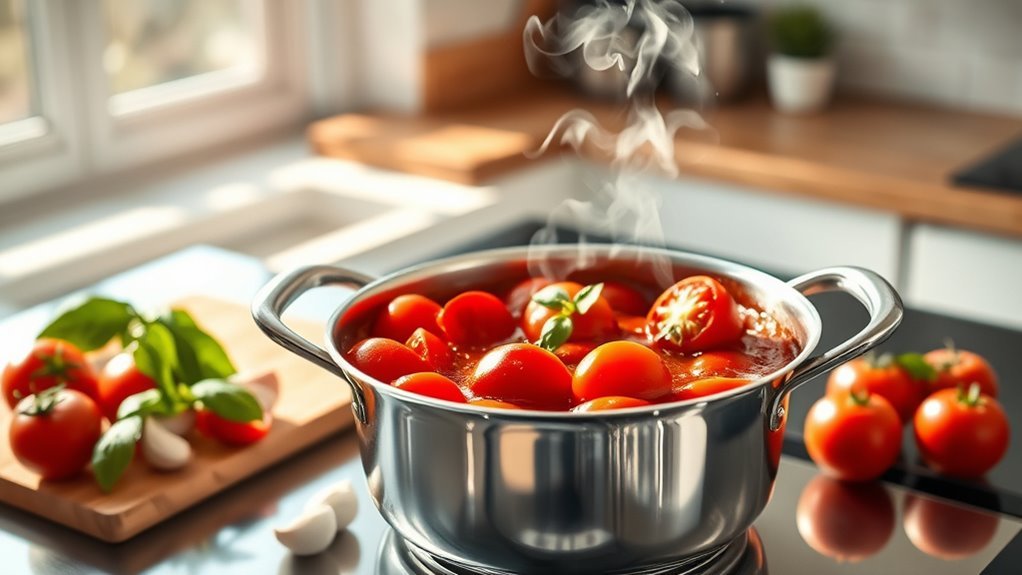
When you cook tomatoes in high-quality stainless steel, you’re not just choosing a durable option; you’re also ensuring the flavors of your dish shine through without any unwanted interference.
Stainless steel cookware is perfect for acidic foods like tomatoes, thanks to its non-reactive nature. This means you won’t experience flavor transfer, allowing the vibrant taste of your dish to take center stage.
The even heat distribution of stainless steel helps eliminate hot spots, ensuring your tomatoes cook consistently. By using medium heat, you further minimize the risk of off-flavors or discoloration from acidity interactions.
And when you sauté aromatics like onions and garlic first, you elevate the overall flavor while keeping your cookware in pristine condition.
With its resistance to scratching and long-lasting durability, stainless steel cookware becomes a trusted companion for all your tomato-based recipes. Embrace the liberation of flavor with each dish you create!
How to Prevent Sticking When Cooking With Stainless Steel
Mastering the art of cooking with stainless steel means knowing how to prevent food from sticking. Here are three essential tips to keep your meals moving smoothly in those stainless steel pots:
- Preheat Properly: Heat your stainless steel pan for 2-3 minutes on medium heat. A well-preheated surface minimizes sticking.
- Use Enough Fat: Add olive oil or butter until it shimmers but doesn’t smoke. This creates a barrier, helping your food release easily.
- Avoid Overcrowding: Give your ingredients room to breathe. Overcrowding lowers the pan’s temperature, increasing the chance of sticking.
Once you’ve followed these steps, let your food cook for a minute or two before flipping. This guarantees edges set properly.
When it’s time to release, use a spatula to gently lift your food; proteins will naturally bond and then release from the pan’s surface. Enjoy your cooking adventure!
Why Tomato Acidity Matters for Your Cookware Choices
Understanding the acidity of tomatoes is essential for making informed choices about your cookware. With a pH level between 4.3 and 4.9, tomatoes can react negatively with certain metals, particularly unlined aluminum or copper. If you cook tomato sauce in these materials, you might notice off-flavors and discoloration that alter your dish’s integrity.
Understanding tomato acidity is key for cookware choices, as unlined aluminum or copper can alter flavors and colors.
High-quality stainless steel, like 18/10, is your best bet. It’s non-reactive, preserving the vibrant flavors and colors of your tomatoes.
However, keep in mind that prolonged cooking at high temperatures can lead to leaching of nickel and chromium, especially if you have sensitivities. To enjoy your tomato sauce without worry, use medium heat and shorter cooking times. This way, you can savor the richness of your dish without compromising on taste or safety.
Choose wisely, and let your culinary creativity flow!
How to Select the Best Stainless Steel Pots for Cooking Tomatoes
When you’re choosing the best stainless steel pots for cooking tomatoes, focus on high-quality grades like 18/10 to prevent unwanted reactions.
Pot size matters too; a larger pot allows for even heat distribution, which is essential for rich, flavorful sauces.
Look for features that enhance heat distribution, ensuring your tomato dishes come out perfectly every time.
Quality Stainless Steel Grades
Selecting the right stainless steel pot for cooking tomatoes is crucial for achieving the best flavor and texture. Here are three key factors to take into account:
- High-Quality Grade: Opt for 18/10 stainless steel, which boasts 18% chromium and 10% nickel, guaranteeing durability and corrosion resistance.
- Thick Base: Look for pots with a thick base for even heat distribution, preventing hot spots that could spoil your tomatoes’ taste.
- Non-Reactive Cookware: Verify the pot is labeled as non-reactive. High-quality stainless steel minimizes the risk of off-flavors when cooking acidic foods like tomatoes.
Pot Size Considerations
Choosing the right pot size for cooking tomatoes can make all the difference in your dish’s outcome. You’ll want a pot that holds at least 2-3 quarts to accommodate the tomatoes as they cook down. A deep pot, ideally 6-8 inches high, helps with simmering while minimizing splatter.
| Pot Size | Best Uses |
|---|---|
| 2-3 Quarts | Sauces & Soups |
| 4-6 Quarts | Stews & Large Batches |
| 8+ Quarts | Canning & Bulk Cooking |
Additionally, make sure the pot has a thick base for even heat distribution. Opt for high-quality stainless steel, and check for compatibility with your heat source. These pot size considerations will enhance your tomato dishes considerably.
Heat Distribution Features
To achieve the perfect tomato dish, understanding heat distribution features in stainless steel pots is essential. When selecting your pot, consider these key factors:
- Material Quality: Opt for high-quality 18/10 stainless steel, ensuring durability and even heat distribution.
- Base Thickness: Choose pots with a thick base to minimize hot spots, which can alter flavors in acidic dishes.
- Core Composition: Look for pots with an aluminum or copper core to enhance heat conductivity, promoting consistent cooking temperatures.
Common Mistakes to Avoid When Cooking Tomatoes
While cooking tomatoes can elevate your dishes, there are common mistakes that can diminish their flavor and texture.
First, avoid using unlined copper or aluminum pots; the acidity of tomatoes reacts with these metals, altering their taste and posing health risks. When using stainless steel, remember that prolonged cooking times can lead to off-flavors and discoloration, so stick to medium heat and shorter durations.
Preheating your stainless steel pot for 2-3 minutes before adding oil is essential. This step prevents sticking and promotes even cooking.
Don’t skimp on oil—adding enough creates a barrier that fills the pot’s pores, enhancing the non-stick effect.
Finally, stir gently with wooden or silicone utensils to protect the stainless surface from scratches, which can cause food to stick and affect performance.
Avoiding these pitfalls will help you reveal the full potential of your tomatoes!
Cooking Techniques for Perfect Tomato Sauces
Creating the perfect tomato sauce involves more than just tossing ingredients together; it’s about layering flavors and techniques that bring out the best in your tomatoes. Here are three essential steps to elevate your sauce:
Creating the perfect tomato sauce requires thoughtful layering of flavors and techniques to truly enhance your tomatoes.
- Preheat your pot: Heat your stainless steel pot over medium for 2-3 minutes. This guarantees even cooking and prevents sticking.
- Build a flavor base: Start by sautéing onions and garlic in a generous amount of extra-virgin olive oil. This creates a delicious foundation before adding your chopped tomatoes and tomato puree.
- Simmer to perfection: Allow your sauce to simmer on low to medium heat for 30-45 minutes. This lets the flavors meld and thickens the sauce beautifully.
Finally, for a smooth finish, use a food mill to separate the skins from the juice. With these techniques, your tomato sauce will be nothing short of extraordinary!
Recommended Tomato-Based Recipes for Stainless Steel Pots
When you’re ready to elevate your cooking, consider the versatility of stainless steel pots for tomato-based recipes.
Marinara sauce comes alive when you sauté onions and garlic in your stainless steel pot, then add canned San Marzano tomatoes, creating a rich, flavorful sauce.
For a vibrant tomato and basil soup, use fresh tomatoes and sautéed aromatics; the non-reactive surface preserves those bright flavors beautifully.
If you’re craving Spaghetti alla Pizzaiola, cook pasta in your stainless steel pot with sautéed tomatoes, garlic, and oregano, ensuring the flavors meld perfectly without any metallic taste.
A hearty tomato and vegetable stew is also a fantastic option; combine chopped tomatoes with an equal weight of veggies, cooking gently to avoid off-flavors.
For quick dishes like bruschetta, stainless steel’s heat retention allows for rapid cooking while keeping the tomatoes fresh and delightful.
Enjoy liberating your culinary skills with these recipes!
How to Clean and Maintain Stainless Steel Cookware for Tomatoes
Cleaning and maintaining stainless steel cookware after cooking with tomatoes is essential for preserving both its appearance and performance. Follow these steps to keep your pots looking their best:
- Soak in hot, soapy water: This helps loosen any stuck-on bits.
- Use a non-abrasive sponge: Gently scrub away residue without scratching the surface.
- Treat tough stains with baking soda: Mix it with water to create a paste that lifts stubborn marks.
Avoid harsh detergents and steel wool, as they can dull your cookware’s finish.
After washing, always dry your pots thoroughly to prevent unsightly water spots.
Regular polishing with a stainless steel cleaner will help maintain that shiny look and extend your cookware’s life.
Alternatives to Stainless Steel for Cooking Tomatoes?
Many home cooks seek alternatives to stainless steel for preparing delicious tomato dishes, and there are several excellent options to contemplate.
Enameled cast iron is a top choice, as it’s non-reactive and retains heat beautifully, ensuring your flavors stay intact.
Glass cookware, like Pyrex, is another safe alternative; it doesn’t react with acids and lets you easily monitor your cooking.
If you prefer non-stick pans, just make sure they’re of high quality to avoid any chemical leaching when working with acidic tomatoes.
Copper cookware can enhance heat conductivity, but remember to line it to prevent reactions.
Finally, ceramic cookware shines with its non-reactive surface, preserving the natural flavors of your ingredients.
Each of these alternatives offers unique benefits, ensuring that your tomato dishes are as vibrant and delicious as they can be.
Frequently Asked Questions
What Foods Should Not Be Cooked in Stainless Steel?
You should avoid cooking highly acidic foods, like citrus and vinegar sauces, in stainless steel. They can alter flavors and discolor your cookware.
Eggs can stick if your pan isn’t preheated and oiled properly. Delicate fish often breaks apart, making it tough to serve.
Instead, consider using non-reactive cookware for these items. This way, you’ll preserve their flavors and textures while enjoying a smoother cooking experience.
Embrace the freedom of cooking with confidence!
Should You Not Cook Tomatoes in Stainless Steel?
You shouldn’t cook tomatoes in stainless steel if you want the best flavors and health benefits.
Ironically, while tomatoes boast vitamins and antioxidants, cooking them in certain pans can dull their vibrant taste. The acidity might react with the metal, leading to off-flavors.
Instead, embrace alternatives like enameled cast iron or glass. They’ll liberate your culinary creativity and let those juicy tomatoes shine, keeping all their delightful benefits intact.
Is It Safe to Cook Acidic Food in Stainless Steel?
Yes, it’s safe to cook acidic food in stainless steel. High-quality stainless steel minimizes acidic reactions, keeping flavors intact.
You can confidently sauté tomatoes or simmer sauces without worrying about a metallic taste. Just remember to use medium heat and shorter cooking times to further reduce any potential issues.
If you’re particularly sensitive, consider switching to enamel-coated pots for a completely non-reactive surface.
Enjoy your cooking adventures without fear!
Does Tomato Interact With Stainless Steel?
When you invite tomatoes into your stainless steel kitchen, they dance together without conflict. The high-quality stainless steel acts like a trusted partner, ensuring flavor enhancement without the bitter aftertaste.
However, if you let them simmer too long or over high heat, you risk a bit of leaching. Keep your cooking gentle and brief, and enjoy the vibrant flavors without worry—your culinary freedom awaits!
Conclusion
In the world of cooking, stainless steel is your trusty knight, ready to bring out the best in your tomatoes. With its durability and ability to evenly distribute heat, you’ll create vibrant sauces and hearty dishes without a hitch. Remember to avoid overcrowding and keep that pan preheated, and you’ll savor every rich, sun-kissed flavor. So, grab your stainless steel pots, and let the culinary adventure begin—your tomatoes are waiting for their moment to shine!