

A cast iron skillet is a heavy frying pan cast from iron, with thick walls and a flared rim. It heats slowly, holds heat for a long time, and moves from the stovetop to the oven, so it is a go-to pan for searing, frying and baking.
This page explains what a cast iron skillet is, how the main types differ, what it does well, where it falls short and how to look after it. It is the main overview in our cast iron series, so each section links to a deeper guide.
Cast Iron Skillet at a Glance
| Question | Short answer |
|---|---|
| What is it made of? | Iron cast in a mold, usually with a thin coating of baked-on oil (seasoning) or a glass-like enamel layer |
| Typical sizes | About 6 to 15 inches across the top; 10 to 12 inches is the most common for home cooks |
| Best at | Searing, pan-frying, baking, roasting and shallow frying |
| Heat behavior | Slow to heat, may heat unevenly at first, then holds heat very well |
| Care level | Hand wash, dry well, add a thin coat of oil (bare iron only) |
| Lifespan | Decades or more with basic care |
What a Cast Iron Skillet Is Made Of and How It Is Built
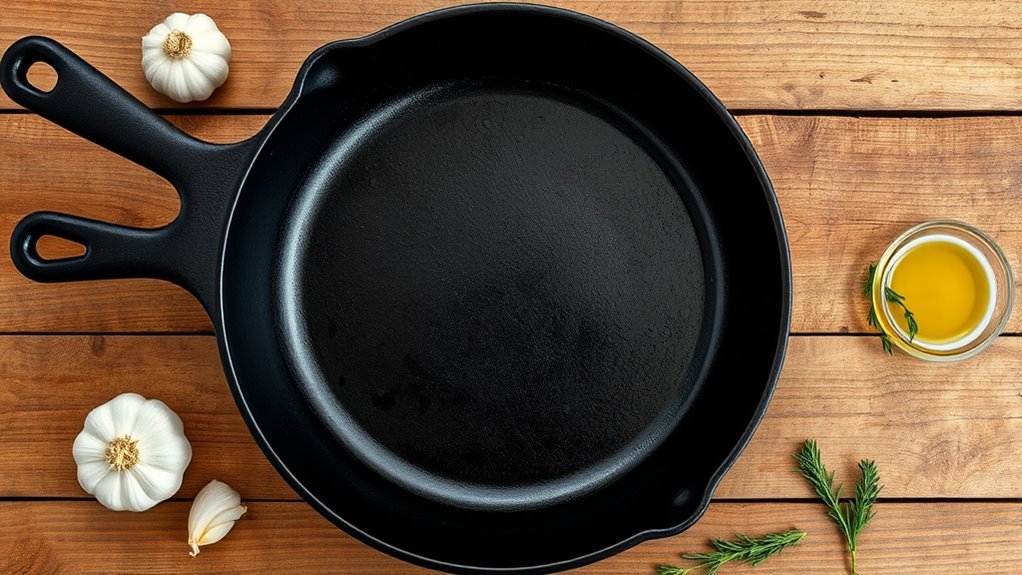
Makers pour molten iron into a mold, let it cool, and then finish the pan. Most skillets sold today come pre-seasoned: the maker bakes oil onto the iron so the pan is ready to use and resists rust.
The result is a pan that is thick, heavy and rough to the touch. A skillet has low, sloping sides that make it easy to flip food and slide a spatula underneath. It usually has a long handle and a small helper handle opposite it, because a full pan can be hard to lift with one hand.
How a Cast Iron Skillet Cooks
Thick iron stores a lot of heat. Once the pan is hot, it does not drop in temperature much when you add cold food, which is why steaks and burgers brown well in it.
The tradeoff is that iron conducts heat more slowly than aluminum or copper. Preheat the pan for several minutes on medium heat so the heat spreads across the surface, and expect the area over the burner to be hottest.
What seasoning does
Seasoning is a thin layer of oil that has been heated until it bonds to the iron. It protects the metal from rust and gives the surface a slick, naturally low-stick finish. It builds up with regular cooking and can be repaired at home. Our guide to what a seasoned cast iron skillet is covers it in detail.
Types of Cast Iron Skillets
| Type | Surface | Strengths | Watch out for |
|---|---|---|---|
| Pre-seasoned bare iron | Baked-on oil seasoning | Lower price, high-heat searing, improves with use, can be re-seasoned | Can rust if left wet; long acidic simmers may dull the seasoning |
| Enameled cast iron | Glass-like enamel coating | No seasoning needed, easier with acidic foods, simple cleanup | Enamel can chip; usually costs more; follow the maker’s heat limits |
| Vintage or restored | Often smoother than new bare iron | Lighter, smoother cooking surface on many older pans | Check for cracks and warping; may need a full re-season |
Skillets also come with different handles, pour spouts and depths. Deep skillets and baker’s skillets exist for casseroles and breads, but the classic shallow skillet is the most versatile.
What Cast Iron Skillets Are Used For
A skillet is an all-round pan. Common jobs include searing steak and chops, frying chicken and bacon, cooking eggs and potatoes, baking cornbread and skillet cookies, and finishing dishes in the oven. For a full overview, read what cast iron skillets are used for, and for a food-by-food list see what you can cook in a cast iron pan.
Pros and Cons of a Cast Iron Skillet
Pros
- Excellent heat retention for browning and searing
- Works on gas, electric, induction, in the oven and over a campfire
- Very durable and repairable when the seasoning wears
- Usually inexpensive for the lifespan you get
Cons
- Heavy, especially in larger sizes
- Slow to heat and slow to cool
- Bare iron needs drying and an occasional touch-up of oil
- Not ideal for long simmers of acidic sauces or very delicate fish
A closer look at these tradeoffs is in what cast iron skillets are good for.
Cast Iron Skillet vs Other Pans
| Pan | Best for | Compared with cast iron |
|---|---|---|
| Nonstick | Eggs, fish, quick low-heat cooking | Lighter and easier, but the coating wears out and it is not meant for very high heat |
| Stainless steel | Sauces, pan sauces, even browning | Lighter and fine with acidic foods, but food sticks more without good technique |
| Cast iron | Searing, frying, baking, oven-to-table | Heaviest, holds the most heat, longest-lasting |
How to Care for a Cast Iron Skillet
- Wash it by hand after cooking with hot water and a brush or sponge. A little mild dish soap is fine for bare iron, but do not soak the pan.
- Dry it right away with a towel, then warm it on the burner for a minute to drive off moisture.
- Rub in a very thin layer of cooking oil while the pan is warm and wipe off the excess.
- Store it somewhere dry. A paper towel inside helps if you stack pans.
- If food starts to stick or you see rust, scrub off the rust and re-season the pan.
For the full routine, see how to care for a cast iron pan. Avoid the dishwasher for bare iron, because it strips the seasoning and causes rust.
What to Look for When You Buy a Cast Iron Skillet
- Size: A 10- or 12-inch skillet suits most households. See what size cast iron skillet to buy.
- Weight and handle: Pick it up if you can. A pan you struggle to lift is a pan you will not use.
- Surface: Smoother interiors feel nicer for eggs, while rougher ones are fine for searing.
- Finish: Pre-seasoned is the easiest start. Choose enameled if you want to cook a lot of tomato dishes without worrying about seasoning.
- Cooktop: Heavy pans with rough bottoms can scratch glass-top stoves, so lift rather than slide them.
Frequently Asked Questions
What makes a cast iron skillet special?
It holds heat far longer than thin pans, so it sears well and keeps food hot at the table. It also goes from stovetop to oven, can be used over a campfire, and with basic care can last for generations.
How can I tell if a skillet is really cast iron?
Check the weight and finish first: cast iron is heavy for its size and has a slightly rough, matte surface. A magnet alone is not proof, because steel pans are magnetic too. Maker marks or the word cast iron on the underside help.
Is a cast iron skillet the same as a cast iron pan?
In everyday use, yes. Skillet usually means a frying pan with flared, sloped sides, while pan can also cover deeper or straight-sided pieces. For the whole category, including Dutch ovens and griddles, see our guide to cast iron cookware.
Are old cast iron skillets worth money?
Some vintage skillets from makers such as Griswold and Wagner are collectible, but value depends on the maker, size, markings and condition. Most old pans are best treated as great cookware first: restore the seasoning and cook with them.
Related Cast Iron Guides
- What is cast iron cookware covers skillets, Dutch ovens, griddles and more
- Do you have to season a cast iron skillet
- Can you put a cast iron pan in the oven
Conclusion
A cast iron skillet is a heavy, durable pan that sears, fries and bakes extremely well, and that rewards basic care with decades of use. If you want one pan that goes from stove to oven, it is a strong first choice.
