
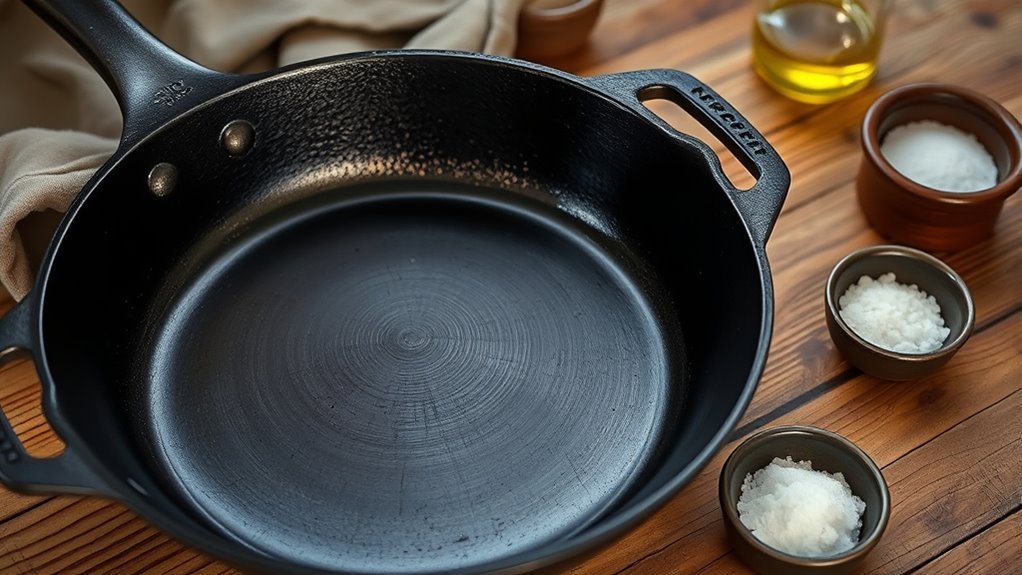
A seasoned cast iron skillet is one coated with a thin, hardened layer of baked-on oil. That layer protects the iron from rust, helps food release and gives the pan its dark, smooth finish. Seasoning is not a flavoring. It is a surface that builds up each time you cook with oil and heat.
Seasoned Cast Iron at a Glance
| Question | Answer |
|---|---|
| What is seasoning? | Oil that has been heated until it bonds to the iron as a hard, slick film |
| What does it look like? | Dark brown to black, smooth, slightly glossy |
| What does it do? | Protects against rust and makes the pan more nonstick |
| Does a new pan have it? | Many do. Check the brand’s instructions |
| Is it permanent? | No. It can wear down and be rebuilt |
What Does “Seasoned” Mean for a Cast Iron Skillet?
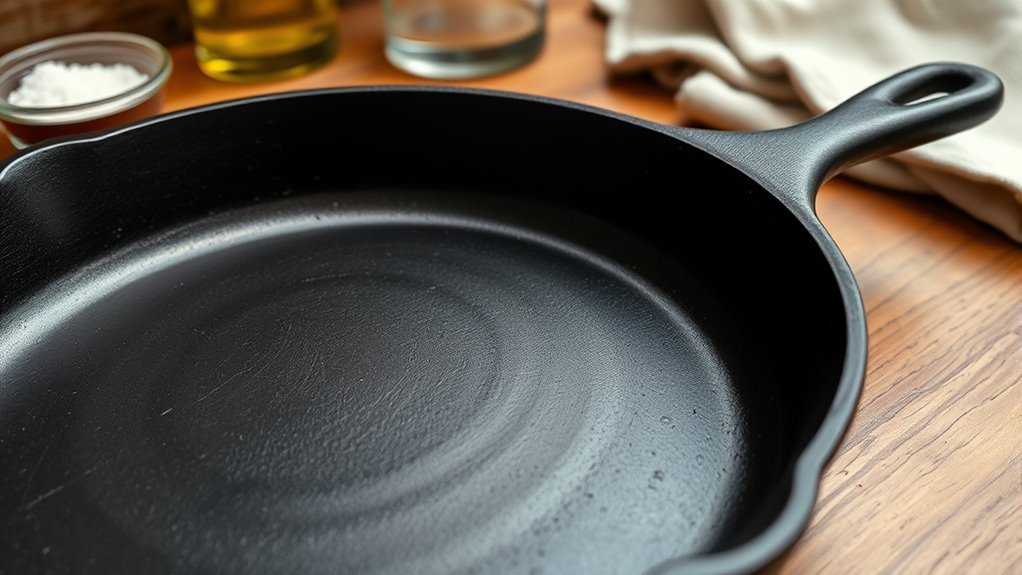
Bare cast iron is porous and rusts quickly. When you coat it in a thin layer of oil and heat it past the oil’s smoke point, the oil changes chemically and hardens into a thin layer that bonds to the metal. People call this process polymerization.
Each time you cook with fat on a hot pan, a bit more of this layer builds up. That is why an older, well-used skillet often performs better than a new one.
How to Tell If a Cast Iron Skillet Is Seasoned
- Color: dark brown to black, even across the cooking surface.
- Feel: smooth and dry, not sticky, rough or powdery.
- Sheen: a soft, satin gloss rather than a dull, gray look.
- Food release: eggs and pancakes slide with a little oil and not much force.
- Water: droplets bead up rather than soaking in.
Orange or reddish spots mean rust, which means the seasoning has worn through in that area. A sticky surface usually means the oil was applied too thick or not heated long enough.
Is a New Skillet Already Seasoned?
Many new skillets are sold pre-seasoned. Lodge, for instance, says its pans are seasoned at the foundry with baked-on vegetable oil and that new pieces do not need seasoning before the first use. Other brands, and vintage or bare pans, can differ, so follow the maker’s instructions. If you are not sure, read whether you have to season a cast iron skillet.
What Does a Seasoned Skillet Do for You?
- Rust protection: the layer keeps moisture off the bare iron.
- Better food release: food sticks less, though it never matches a fresh nonstick pan.
- Easier cleaning: residue wipes off more readily.
- Durability: a cared-for pan can last for generations.
Seasoning also affects how much iron reaches your food. A thick seasoning layer tends to reduce it. See whether you get iron from cooking in cast iron.
How Seasoning Is Built and Kept Up
You build seasoning two ways. One is oven seasoning: a thin film of oil is baked on at high heat. Lodge’s guidance is to wipe on a very thin coat, bake the pan upside down at 450 to 500 degrees Fahrenheit for an hour and let it cool in the oven. The other is everyday cooking, since frying, searing and roasting with oil add layers over time.
Keep it up by washing gently, drying the pan fully and wiping a thin film of oil after each use. Our cast iron care guide has the full routine.
What Damages Seasoning?
- Soaking the pan or leaving it wet
- The dishwasher
- Steel wool or harsh scouring, unless you are removing rust on purpose
- Long simmers of acidic foods such as tomato sauce or wine, especially in a pan with thin seasoning
- Applying too much oil, which turns tacky
Damaged seasoning is fixable. Scrub off loose bits, dry the pan and season it again.
Related Guides
Frequently Asked Questions
What does it mean when a cast iron skillet is seasoned?
It means the pan has a thin, hardened layer of baked-on oil on its surface. That layer protects the iron from rust and makes the pan more nonstick. It is not a flavoring or spice, and it builds up with use.
How can I tell if my cast iron skillet is seasoned?
A seasoned skillet looks dark and smooth with a slight sheen, and water beads or food releases fairly easily. A dull, gray or orange-brown pan, or one that feels rough or sticky, needs more seasoning.
Is a new cast iron skillet already seasoned?
Many are. Lodge, for example, sells pans pre-seasoned with baked-on vegetable oil and says new pieces do not need home seasoning. Check your brand’s instructions, since unseasoned and vintage pans vary.
Is seasoning the same as a nonstick coating?
No. Seasoning is polymerized cooking oil that bonds to the iron, not a chemical coating. The black color is baked-on oil, and the surface improves with regular cooking and care but never becomes as slick as a factory nonstick pan.
Does seasoning wash off with soap?
A well-built seasoning layer can handle a little mild dish soap and a brush. What damages it is soaking, harsh scouring, the dishwasher and leaving the pan wet. Dry the pan and wipe on a thin film of oil after washing.
Conclusion
A seasoned cast iron skillet has a baked-on oil layer that protects it and makes it more nonstick. Look for a dark, smooth finish, and keep it that way by drying and oiling the pan after each use.
