
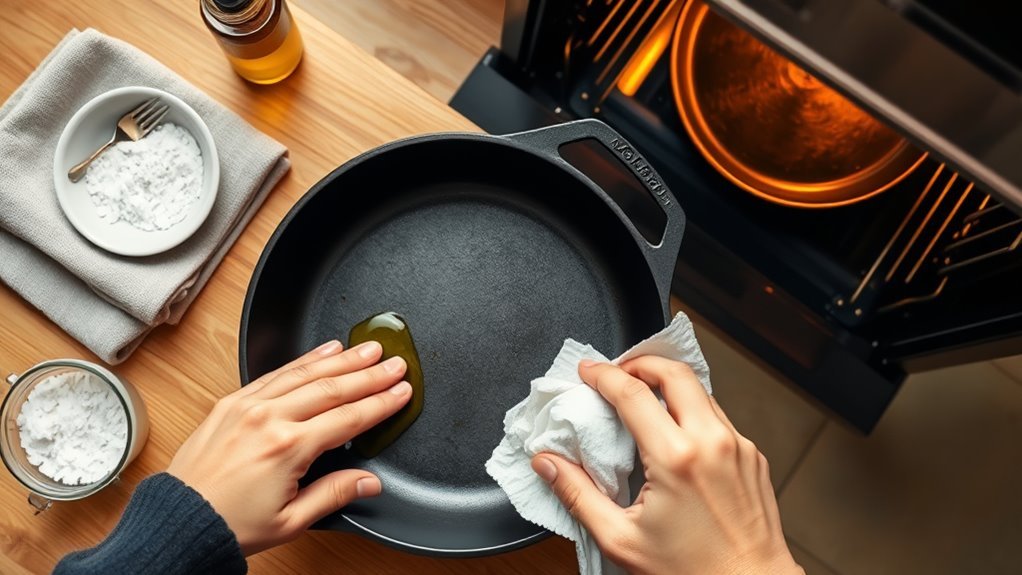
Seasoning your cookware is essential for achieving that perfect non-stick surface and enhancing its longevity. When done correctly, it forms a protective layer that keeps food from sticking and prevents rust. You might think it’s a complicated process, but it’s quite straightforward. In this guide, you’ll discover the right techniques, tools, and common pitfalls to avoid, ensuring your cookware remains in top shape for years to come. Ready to transform your kitchen essentials?
What Is Seasoning and Why It Matters
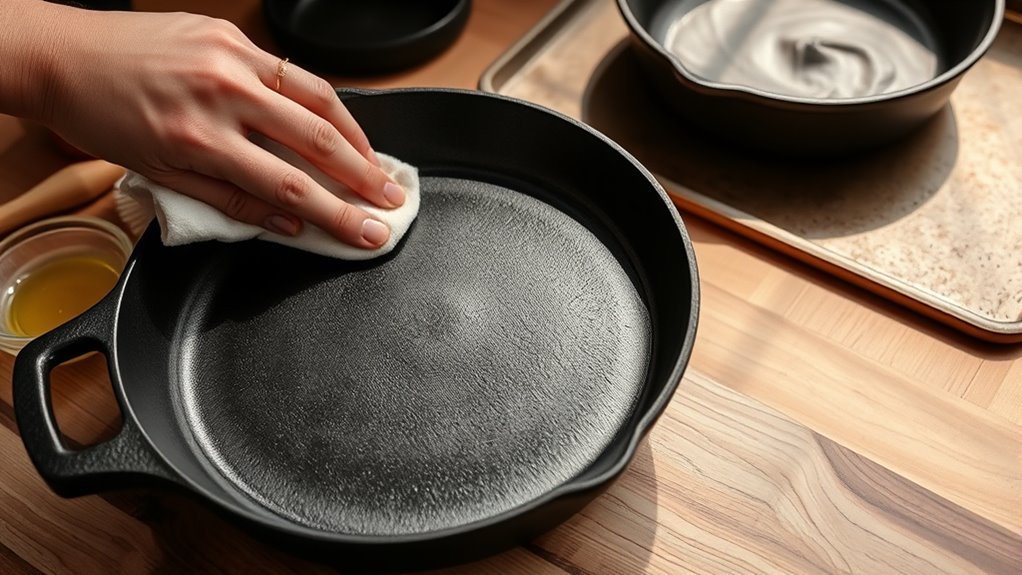
Seasoning your cookware is more than just a maintenance step; it’s an essential part of creating delicious meals. The seasoning process transforms your cast iron pans into culinary powerhouses by polymerizing oil through heat, resulting in a natural non-stick surface. This isn’t just about ease; it protects your pans from rust and enhances the flavor of everything you cook in them.
Over time, a well-seasoned pan develops a beautiful black, slick surface that indicates effective seasoning and superior cooking performance.
A well-seasoned pan reveals a stunning black surface, signifying exceptional seasoning and outstanding cooking results.
To keep that non-stick surface thriving, regular maintenance is key. Every 2-3 months, a little attention goes a long way in retaining those sought-after properties and extending the life of your cookware.
Embracing this age-old practice, rooted in over 2,000 years of tradition, liberates you to explore flavors and techniques with confidence. Your kitchen deserves it!
Key Tools and Ingredients for Effective Seasoning
To season your cookware effectively, you’ll need a few essential tools and the right oils.
Grab a scouring sponge for cleaning, a lint-free towel for drying, and some high-smoke-point oils like grapeseed or peanut oil to create that perfect non-stick surface.
With these items in hand, you’re ready to transform your cookware into a kitchen superstar.
Essential Tools Required
When gearing up to season your cookware, having the right tools can make all the difference. Start with a cast iron skillet, as its smooth surface is essential for effective oil application and even heating.
You’ll need a non-abrasive scrubbing sponge to clean your skillet thoroughly, ensuring a strong bond with the oil. High smoke point oil, like grapeseed or flaxseed, is vital for creating that durable non-stick layer.
Choose between the oven or stovetop for seasoning; if you go the oven route, don’t forget aluminum foil to catch drips.
Finally, grab a lint-free cloth or paper towels to apply a thin, even layer of oil, wiping off any excess to prevent sticky surfaces.
Happy seasoning!
Recommended Oil Choices
Choosing the right oil is key to achieving that perfect seasoned cookware. For robust, seasoned iron, grapeseed oil is a top choice due to its high smoke point of around 420°F and neutral flavor.
Peanut oil also shines with its impressive 450°F smoke point, but steer clear if you’re allergic to nuts. If you want a hard, non-stick finish, flaxseed oil’s polymerization properties are unmatched—just be certain to apply it carefully to avoid stickiness.
Canola and vegetable oils are affordable options, but they don’t hold up as well over time.
Preparing Your Cookware for Seasoning
Properly preparing your cookware for seasoning sets the foundation for a durable, non-stick surface. Follow these steps to guarantee your iron cookware is ready:
- Clean: Use a scrubber sponge and dish soap to remove as much protective coating and residues as possible.
- Dry: Wipe down your cookware with a lint-free towel. To eliminate any remaining moisture, preheat it gently for a few minutes on the stove.
- Oil: Choose an oil with a high smoke point—like grapeseed or avocado. Apply a very thin layer to the inside and outside surfaces, avoiding any pooling or drips.
- Preheat: Set your oven to the oil’s recommended temperature. Place your cookware upside down with a baking sheet below to catch any drips during the seasoning process.
With these steps, you’ll be well on your way to achieving a beautifully seasoned surface!
Oven Seasoning: Step-by-Step Instructions
Oven seasoning your cookware is a straightforward yet essential process that transforms raw cast iron into a reliable, non-stick kitchen companion.
Start by preheating your oven to 90°C (200°F) and heating the cookware for 15 minutes to eliminate moisture. Next, apply a very thin coat of oil, like rice bran or canola oil, guaranteeing there are no excess pools.
Place the cookware upside down in the oven, with a sheet of aluminum foil on the rack below to catch any drips. Gradually increase the temperature to 250°C (480°F) and bake for 1.5 to 2 hours. This step allows the oil to polymerize, creating those essential layers of seasoning.
Finally, let the cookware cool in the oven for at least 30 minutes or, for best results, overnight. This method guarantees you’ve got a durable, non-stick surface ready to elevate your culinary adventures!
Stove-Top Seasoning: A Convenient Alternative
Stove-top seasoning is a quick and efficient way to achieve that perfect non-stick surface on your cookware.
All you need are a few essential tools and some handy tips to make the process smooth and effective.
Let’s explore how to get started and what you’ll need to guarantee your skillet is ready for action!
Quick Tips for Success
When it comes to seasoning your cookware, stove-top seasoning offers a quick and effective method that fits seamlessly into your cooking routine. Follow these tips for success:
- Gradually heat the pan: Start on low to medium heat to avoid warping your cookware.
- Use avocado oil: Apply about a teaspoon with a paper towel and tongs for a thin, even coat—no pooling!
- Look for smoke: Heat the pan until it smokes; this signals the polymerization process is creating that durable non-stick surface.
- Repeat the process: Wipe and apply oil for 10-15 minutes until your skillet achieves a black, slick finish.
Regularly maintain the seasoning after each use to keep your pan in top shape!
Essential Tools Needed
To successfully season your cookware, you’ll need a few essential tools at your disposal. Start with a cast iron skillet, a reliable heat source, and cooking oil with a high smoke point—grapeseed or avocado oil works well. Don’t forget paper towels for even oil distribution.
Here’s a handy table to help you gather what you need:
| Tool | Purpose |
|---|---|
| Cast Iron Skillet | Base for seasoning |
| Heat Source | Provides consistent temperature |
| Seed Oil | Creates a non-stick layer |
| Paper Towels | Spreads oil evenly for coverage |
With these tools, you’re ready to transform your iron pots and stainless steel cookware into seasoned kitchen warriors!
How to Keep Your Cookware Seasoned and Ready
Maintaining the seasoning on your cast iron cookware isn’t just about keeping it looking good; it’s essential for ensuring its longevity and cooking performance.
Maintaining your cast iron’s seasoning is crucial for its durability and optimal cooking performance.
By following these simple steps, you can keep your cookware seasoned and rust-free:
- Wipe and Oil: After each use, wipe your cookware and apply a light layer of oil to maintain the seasoning and prevent rust.
- Gentle Cleaning: Avoid soap or abrasive scrubbers. Rinse with hot water and use a gentle scrubber if needed.
- Proper Storage: Store your cast iron cookware in a dry place to prevent moisture buildup, which can lead to rust formation.
- Re-season Regularly: Every 3 to 4 months, re-season your cookware or when food starts to stick, ensuring superior cooking performance.
Common Mistakes to Avoid When Maintaining Your Seasoned Cookware
While it might seem tempting to scrub your seasoned cookware with soap or abrasive cleaners, doing so can strip away the essential protective layer that keeps your pan in top shape. Instead, just wipe it down with a damp cloth.
Never let your pan soak in water; prolonged exposure can lead to rust, ruining that beautiful non-stick cooking surface you’ve worked hard to maintain.
Also, hold off on cooking highly acidic foods right after seasoning—ingredients like tomatoes or vinegar can erode that precious layer.
When adding oil for maintenance, remember: less is more. A very thin layer is all you need; too much can become sticky and ruin the experience.
Finally, always heat your pan before adding food; this simple step prevents sticking and preserves the integrity of your seasoning.
Frequently Asked Questions
How Do You Season Your Cookware?
To season your cookware, start by thoroughly cleaning it to remove any residue.
Then, apply a thin layer of seasoning oil, like grapeseed or avocado, ensuring there’s no excess.
Preheat your oven to around 450°F, placing the oiled pan upside down on the middle rack.
Bake for 1-2 hours to create a non-stick surface.
Repeat this process a few times and remember to maintain it by wiping with oil after each use.
Can I Cook Immediately After Seasoning Cast Iron?
You can cook right after seasoning cast iron, but it’s not ideal.
While the allure of immediate cooking tempts you, patience pays off. Allow the seasoning oils to bond fully, enhancing your cooking techniques.
If you can’t wait, stick to low to medium heat and avoid acidic foods that might clash with your new non-stick surface.
For the best results, let your cookware rest for at least an hour, or even better, 24 hours.
What Ruins Cast Iron Seasoning?
To ruin cast iron seasoning, you’ll want to avoid common seasoning mistakes. Excess moisture leads to rust, so always prioritize rust prevention.
Choose the right oil selection, as some oils break down quicker than others. Stick to gentle cleaning methods; harsh soaps can strip away that precious seasoning.
Cooking acidic foods can also erode your hard-earned layer. With care, you can keep your cast iron in top shape and ready for delicious meals!
How Do I Know if I Seasoned My Cast Iron Correctly?
You’ll know you’ve seasoned your cast iron correctly by looking for a shiny, smooth surface free of rough patches. If oil beads up when heated, that’s a great sign!
Food should slide off easily, showcasing effective seasoning. Regular cast iron maintenance is key, so season it frequently with perfect oils to enhance that non-stick layer.
If you see dullness or rust, it’s time to re-season and reclaim that kitchen freedom!
Conclusion
Now that you know how to season your cookware, you’re just a few steps away from achieving that perfect, non-stick surface. Imagine whipping up your favorite meal, the skillet gliding effortlessly as you cook. Coincidentally, with just a little care and attention, your cookware not only enhances flavors but also becomes a cherished kitchen companion. So, embrace the art of seasoning and enjoy the delicious meals that await you, knowing your skillet is ready for every culinary adventure!

