
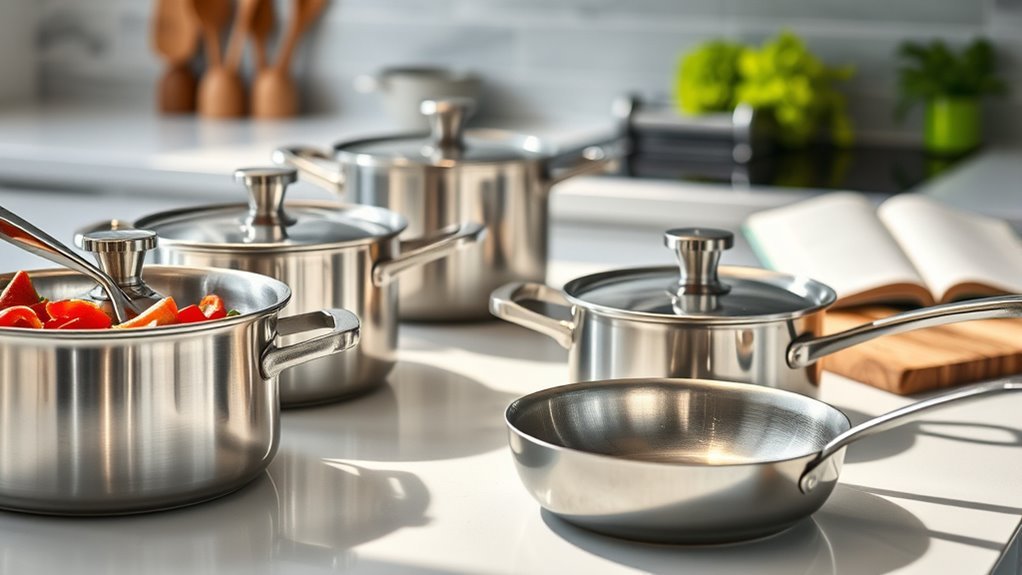
Are stainless steel utensils safe for everyday cooking? For most people, yes. These tools are durable, easy to clean, and resistant to rust. However, the stainless steel grade, possible metal allergies, and how you use your cookware can affect your exposure to nickel and chromium.
Quick Answer
Yes. Uncoated stainless steel utensils are safe for most people during normal cooking and serving. Grades 304 and 316 resist corrosion, and plain stainless steel contains no PTFE or PFAS coating. Small amounts of nickel and chromium can move into acidic foods, so people with diagnosed metal allergies may need alternative materials.
Key Takeaways
- 18/8 and 18/10 usually describe grade 304, while 18/0 commonly refers to grade 430.
- Food acidity, cooking time, and cookware condition can influence how much metal enters food.
- A magnetic utensil is not automatically unsafe, and medical-grade stainless steel is not necessarily nickel-free.
- Prompt cleaning, proper drying, and avoiding prolonged exposure to salt or bleach help prevent corrosion.
Why Are Stainless Steel Utensils Generally Safe?
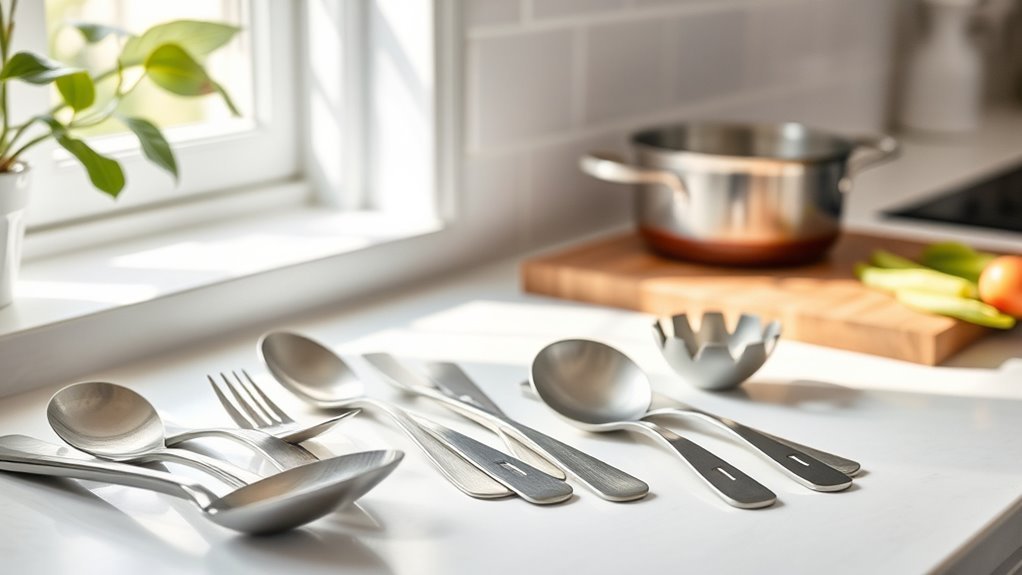
Stainless steel utensils are generally safe because their surfaces resist corrosion and are easy to clean. Unlike porous materials, smooth stainless steel does not readily absorb food residue, moisture, or odors.
Stainless steel contains iron, chromium, and sometimes nickel or other alloying elements. Chromium forms a thin protective layer of chromium oxide on the metal’s surface.
This layer helps prevent rust and limits direct contact between food and the underlying metal. It can also reform when the steel is exposed to oxygen, provided the surface is not severely damaged.
According to Health Canada’s cookware safety guidance, stainless steel is strong, long-lasting, and resistant to rust and staining.
Uncoated stainless steel also avoids the need for a synthetic nonstick coating. Its metallic structure contains no PFAS, although a separately applied coating could have a different composition.
The British Stainless Steel Association’s PFAS guidance explains this distinction.
However, stainless steel is not completely inert under every condition. Acids, salt, heat, and prolonged food contact can increase the release of small amounts of metal.
There is also an important difference between a serving spoon and a cooking pot. A spoon may touch hot food briefly, while a saucepan can hold acidic ingredients at high temperatures for hours.
Both can be safe, but the conditions of use matter when assessing metal exposure.
Stainless Steel Grades Buyers Should Know (304, 316, 18/10, 201, 430)
Grade 304 is a practical choice for most everyday stainless steel utensils, while 316 offers additional corrosion resistance in demanding conditions. Grades 201 and 430 can also be suitable for certain kitchen uses, but their compositions and performance differ.
Understanding these differences helps you avoid paying extra for features you do not need.
Labels such as 18/8, 18/10, and 18/0 describe approximate chromium and nickel content. The British Stainless Steel Association’s cutlery-grade explanation notes that 18/8 and 18/10 are essentially the same 304 grade.
| Stainless Steel Grade | Nickel Content | Key Characteristics | Typical Kitchen Use |
|---|---|---|---|
| 304 (18/8 or 18/10) | 8–10.5% | Strong everyday corrosion resistance and good durability. | Spoons, forks, ladles, bowls, and cookware. |
| 316 | 10–13% | Contains molybdenum for improved resistance to certain corrosive conditions. | Specialized cookware and demanding food-contact environments. |
| 201 | 3.5–5.5% | Uses more manganese and less nickel than 304; corrosion resistance depends on conditions. | Some lower-cost kitchenware and utensils. |
| 430 (18/0) | Little or no intentionally added nickel | Magnetic, generally lower corrosion resistance than 304 or 316. | Flatware and equipment used in less corrosive conditions. |
The nickel ranges for 304, 316, and 201 come from thyssenkrupp Materials’ stainless steel composition data. Actual composition can vary within each grade’s specifications.
304 vs. 316 Stainless Steel: Which Is Better?
Grade 304 is usually the better-value choice for normal home cooking. Grade 316 provides stronger resistance to certain corrosive environments because it contains molybdenum.
Both grades contain chromium and nickel. Their surfaces help resist rust and ordinary food-related corrosion.
Here is how to choose:
- Choose 304 for everyday cooking utensils, serving tools, mixing bowls, and most cookware.
- Consider 316 for equipment regularly exposed to demanding salty or acidic conditions.
- Consider 430 for some lower-nickel flatware applications when its lower corrosion resistance is acceptable.
- Assess 201 carefully when buying inexpensive utensils, especially if the manufacturer gives little information about materials or intended use.
Grade 316 is sometimes called marine-grade stainless steel, but it is not automatically the best purchase for every kitchen.
For example, a 304 serving spoon can last for years with normal cleaning. Paying extra for a 316 spoon may offer little practical advantage.
For pots, construction also matters. Stainless steel conducts heat less efficiently than aluminum or copper, so a bonded base or fully clad design can improve heating performance.
That construction feature is useful for cookware, but it is not a requirement for a solid stainless steel spoon.
Nickel Content Explained
Nickel helps improve the structure and corrosion resistance of many stainless steel alloys. However, a higher nickel percentage does not automatically mean a utensil is safer for someone with a nickel allergy.
Grade 304 usually contains 8–10.5% nickel, while grade 316 typically contains more. Both can perform well in kitchens, but neither should be called nickel-free.
Grade 430, commonly labeled 18/0, uses little or no intentionally added nickel. It is often found in forks, spoons, and other flatware.
However, 18/0 does not guarantee absolutely zero nickel. Small residual amounts may be present, and the finished product’s metal release depends on more than its alloy percentage.
Nickel content and nickel release are different measurements. A product may contain nickel but release very little during ordinary use.
Therefore, if you have a confirmed nickel allergy, consider both the material specification and your medical advice before choosing utensils.
Health Risks: Nickel, Chromium, Allergies, and Testing
The main health concern with stainless steel utensils is the possible release of nickel and chromium, especially for people sensitive to these metals. For most people, normal use of well-made stainless steel utensils is not considered a significant health risk.
The amount released depends on the alloy, food acidity, temperature, contact time, and surface condition.
It is also important to distinguish ordinary contact with metal from swallowing metal ions released into food. These exposures can affect people differently.
Nickel and Chromium Release: What Does the Research Show?
Stainless steel can release measurable nickel and chromium into acidic foods during cooking. Research shows that longer heating times and certain cooking conditions increase this release.
In a 2013 study published in the Journal of Agricultural and Food Chemistry, researchers examined tomato sauce cooked with different stainless steel materials.
After six hours of cooking, nickel concentrations increased by as much as 26 times and chromium concentrations by as much as 7 times, depending on the steel tested.
The published stainless steel leaching study also found that new cookware could release more metal than cookware that had already been used repeatedly.
These figures describe the specific experimental conditions. They should not be treated as typical exposure levels from briefly stirring food with a stainless steel spoon.
Another study examined common foods cooked for one hour in stainless steel pots. The researchers found measurable metal release but reported levels below known allergy-triggering thresholds under the conditions tested.
The 2017 study on nickel and chromium release nevertheless noted that total dietary exposure could matter for highly sensitive people.
Together, these studies show why cooking conditions and individual sensitivity are more useful than blanket statements that stainless steel either never leaches metal or is inherently dangerous.
For everyday use, the main factors are:
- Acidity: Tomato sauce, citrus, and vinegar can increase metal migration.
- Contact time: Prolonged heating or storage gives food more time to interact with the metal.
- Surface condition: Corrosion, pitting, or damaged areas can affect metal release.
- Previous use: Some studies found higher release from new items than from repeatedly used cookware.
- Steel grade: Different alloy compositions can behave differently under the same conditions.
These findings do not mean you must stop cooking tomatoes in stainless steel. They explain why prolonged acidic cooking deserves extra consideration if you have a diagnosed metal sensitivity.
Nickel Allergy Testing and Exposure Limits
Nickel allergy is usually diagnosed using patch testing, not a routine skin-prick test or an IgE blood test. A dermatologist can assess symptoms and determine whether nickel or another substance is causing allergic contact dermatitis.
Patch testing involves placing small amounts of suspected allergens against the skin and checking for delayed reactions.
The American Academy of Dermatology explains patch testing as a method for identifying substances that cause allergic skin reactions.
Symptoms of nickel-related contact dermatitis can include itching, redness, rash, and skin irritation after contact with nickel-releasing objects.
Some highly sensitive people may also experience skin symptoms linked to nickel consumed in food. However, this does not happen to everyone with a nickel contact allergy.
There is no single exposure level that guarantees freedom from allergic symptoms for every person. Individual reactions and total exposure can differ.
For this reason, selecting 18/10 or 316 steel is not a reliable way to avoid nickel exposure. These alloys contain nickel.
Note: If you have a confirmed nickel allergy, repeated unexplained rashes, or suspected reactions after meals, consult a dermatologist or qualified healthcare professional. Do not begin a restrictive low-nickel diet or assume that changing cookware alone will resolve your symptoms.
If a clinician recommends reducing nickel exposure, suitable alternatives may include glass, properly manufactured enameled cookware, or other documented nickel-free food-contact materials.
A utensil or cookware label should not replace medical advice for a diagnosed allergy.
Safest Cookware & Utensils for Everyday Use (Low-Leach Options)
For most households, high-quality uncoated stainless steel is one of the most practical low-reactivity choices for cooking and serving food. It is durable, easy to sanitize, and does not depend on a fragile nonstick coating.
Well-made stainless steel utensils are a reliable everyday choice when you match the material to your cookware and use it as intended.
However, the safest utensil for one task may not be the best option for another.
- 304 stainless steel: A strong general-purpose choice for ladles, spoons, tongs, bowls, and cookware.
- 316 stainless steel: Useful when improved resistance to certain corrosive conditions is needed.
- Single-piece stainless utensils: Avoid unnecessary joints where moisture or food residue can collect.
- Uncoated stainless pans: Durable cooking surfaces that do not rely on a synthetic nonstick layer.
- Wooden or bamboo utensils: Useful for stirring and serving, particularly when protecting delicate cookware surfaces.
- Food-safe silicone utensils: Flexible tools for scraping, folding, and working with nonstick pans.
- Glass or suitable enameled cookware: Alternatives worth considering when a clinician recommends avoiding nickel-containing metal surfaces.
Look for smooth edges, secure handles, and surfaces that are easy to clean. Avoid utensils with deep crevices, loose joints, or damaged food-contact areas.
Heavy-gauge construction can improve durability, especially for larger utensils that lift heavy portions of food.
However, thickness alone does not establish a utensil’s alloy grade or prove that it releases less metal.
Warning: Do not use sharp stainless steel utensils on nonstick cookware unless the manufacturer specifically permits metal tools. Metal edges can scratch or damage the coating. Use wood, silicone, or another manufacturer-approved material instead.
For uncoated stainless steel pans, metal utensils are generally acceptable, although sharp scraping can leave scratches or visible marks.
Matching your utensils to your cookware is usually more useful than trying to find a single material for every cooking task.
Cooking Habits to Reduce Metal Leaching From Stainless Steel
You can reduce avoidable metal exposure by limiting unnecessary contact between stainless steel and highly acidic or salty foods. Proper cooking habits also help preserve the protective surface and prevent corrosion.
These precautions are especially useful when cooking regularly with stainless steel pots and pans.
- Use appropriate cookware: Choose well-made stainless steel suitable for the food and cooking method.
- Limit unnecessary acidic cooking time: Avoid leaving tomato sauce, vinegar-based dishes, or citrus mixtures in hot stainless steel for much longer than needed.
- Transfer leftovers: Move acidic or salty foods into suitable storage containers rather than leaving them in cookware for extended periods.
- Prevent overheating: Follow the manufacturer’s recommended heat settings and avoid heating empty cookware excessively.
- Add salt carefully: When salting boiling water, let the water heat first and stir until the salt dissolves.
- Avoid unnecessary abrasion: Do not scrape cookware aggressively with sharp metal tools or steel wool.
When making an acidic sauce, you can still use a suitable stainless steel saucepan. The goal is to avoid unnecessary prolonged exposure, not to eliminate all acidic cooking.
For someone with significant nickel sensitivity, using a suitable alternative cooking vessel for long acidic preparations may be a more practical precaution.
Also, remember that briefly stirring a sauce with a stainless steel spoon is not the same exposure as simmering it in a stainless steel pot for several hours.
Focus on the cooking situations that involve the longest and most demanding contact conditions.
Cleaning, Seasoning, and Storage to Prevent Corrosion and Contamination
Stainless steel utensils are easy to maintain with warm water, mild dish soap, and proper drying. Regular cleaning removes food residue and helps prevent staining or corrosion.
Unlike cast iron, stainless steel utensils do not need a permanent oil seasoning layer to remain safe for use.
Follow these basic care steps:
- Wash: Clean utensils with warm, soapy water and a soft sponge or suitable brush.
- Remove stubborn residue: Soak in warm soapy water when necessary, then use a non-abrasive cleaning method.
- Rinse: Remove soap, food particles, and cleaning products thoroughly.
- Dry: Use a clean towel or allow complete drying before storage.
- Inspect: Check for deep pitting, sharp damaged edges, rust, and loose components.
- Store: Keep utensils in a dry, ventilated drawer or utensil holder.
Dishwashers are suitable for many stainless steel utensils, although hand washing can help preserve their appearance. Follow the manufacturer’s instructions, especially for products with wood, plastic, or joined handles.
Avoid prolonged soaking in bleach or concentrated salt solutions. The British Stainless Steel Association’s cleaning guidance explains how chloride-containing substances can cause surface staining and pitting.
Does Stainless Steel Need Seasoning?
No. Stainless steel cookware and utensils do not require seasoning for corrosion protection or normal use.
Some cooks heat a small amount of oil in stainless steel pans to temporarily improve food release. However, this is not the same as maintaining a durable seasoning layer on cast iron.
You do not need to heat oil until it smokes to make stainless steel safe.
According to All-Clad’s cookware care instructions, seasoning stainless steel pans is not required.
For easier cooking, proper preheating, suitable temperature control, and enough cooking fat are more useful than trying to maintain a permanent coating.
After cooking, clean the pan normally.
When Should You Replace Stainless Steel Utensils?
Replace a stainless steel utensil when damage makes it difficult to clean, unsafe to handle, or unreliable during cooking.
Watch for these problems:
- Deep corrosion pits or extensive rust that cannot be removed.
- Cracks, broken welds, or loose handles.
- Sharp burrs or damaged edges that could injure you.
- Crevices that repeatedly trap food and cannot be cleaned effectively.
- Visible deterioration that continues despite appropriate cleaning and care.
Minor scratches, water spots, and rainbow-colored heat stains do not automatically mean the utensil is unsafe.
Surface discoloration can often be cleaned. Deep structural damage or ongoing corrosion deserves more attention than ordinary cosmetic marks.
How to Buy Low-Nickel or Medical-Grade Stainless Steel Utensils
Choosing low-nickel stainless steel utensils starts with confirming the actual alloy grade. Marketing phrases such as medical-grade, surgical-grade, or premium stainless steel do not automatically tell you how much nickel a product contains.
For example, 316L stainless steel is used in some medical applications, but it still contains nickel. Medical-grade does not mean nickel-free.
When comparing kitchen utensils, use this checklist:
- Check the alloy grade: Look for a clear specification such as 304, 316, 201, or 430.
- Understand the label: Recognize that 18/8 and 18/10 commonly refer to 304, while 18/0 usually indicates 430.
- Confirm food-contact suitability: Choose products intended for kitchen use, not unidentified industrial metal products.
- Review the construction: Look for smooth surfaces, secure handles, and clean joints.
- Check cleaning instructions: Confirm whether the utensil is dishwasher-safe or requires hand washing.
- Request documentation when needed: Ask the manufacturer for material specifications or relevant food-contact testing information.
If nickel exposure is your primary concern, 18/0 flatware may be worth considering because it usually contains much less nickel than 304 or 316.
However, 430 is not necessarily the best choice for every cooking environment. It generally has lower corrosion resistance than 304 and 316.
For people with severe metal allergies, a suitable nonmetal alternative may be preferable to relying on an undocumented low-nickel claim.
Can You Identify Food-Grade Stainless Steel With a Magnet?
No. A magnet cannot reliably establish whether a stainless steel utensil is food-safe or identify its exact alloy grade.
Grade 430 is generally magnetic, while 304 and 316 are usually much less magnetic. However, manufacturing processes can make some 304 stainless steel items respond to a magnet.
The Australian Stainless Steel Development Association’s grade-testing guidance explains why magnetic response alone is insufficient for confirming stainless steel composition.
Instead, use a manufacturer’s documented material specifications when the exact grade matters.
You should also distinguish alloy verification from food-contact testing. Knowing the grade does not independently prove that a particular finished product meets every applicable food-contact requirement.
Frequently Asked Questions
Are Stainless Steel Utensils Non-Toxic?
Yes. Plain stainless steel utensils are considered safe for most people because their smooth, corrosion-resistant surfaces are easy to clean. They do not have a PTFE coating unless a separate coating is added. Nickel or chromium can migrate in small amounts, especially during long contact with acidic foods, so allergies deserve extra care.
What Are the Downsides of Using Stainless Steel Utensils?
The main drawbacks are scratched nonstick cookware, hot handles, occasional sticking when used in stainless pans, and possible pitting after poor care. Lower-cost tools can also have rough seams or loose handles. Stainless steel is durable, but it is not the best choice for every pan or every person with a metal allergy.
What Is the Healthiest Material for Utensils?
There is no single healthiest utensil material for everyone. Stainless steel is durable and easy to wash, while wood, bamboo, and food-safe silicone are gentler on nonstick coatings. Glass is useful for serving, and ceramic blades can be sharp but brittle. Choose well-made tools suited to your cookware and clean them properly.
What’s the Downside of Stainless Steel Cookware?
Stainless steel cookware can make food stick unless you manage heat and oil. It also conducts heat less evenly than copper or aluminum, which is why many pans have layered bases or cores. Long cooking of acidic dishes can increase nickel and chromium migration, and some users need to avoid nickel-containing alloys.
Can You Use Stainless Steel Utensils on Nonstick Pans?
Usually not. Metal tools can scratch or damage many nonstick coatings, even when the utensil itself is food-safe. Use silicone, wood, or another tool approved by the pan manufacturer instead. Stainless steel utensils work better with uncoated stainless pans and other surfaces that tolerate metal tools.
Is 18/0 Stainless Steel Better for Nickel Allergies?
It can reduce nickel exposure because 18/0 flatware usually uses grade 430, which has little or no intentionally added nickel. However, the label does not prove zero nickel release or prevent all reactions. If you have a confirmed allergy, seek medical advice and choose documented materials that work for you.
Conclusion
Stainless steel utensils are safe and practical for most kitchens. Grade 304 is a reliable everyday choice, while 316 offers additional corrosion resistance in demanding conditions.
If you have a nickel allergy, focus on documented material composition rather than marketing terms such as medical-grade. Choose tools suited to your cookware, avoid prolonged exposure to corrosive substances, and replace items with serious damage.
With thoughtful selection and basic care, stainless steel utensils can provide years of reliable cooking and serving performance.
Sources
- Health Canada: The Safe Use of Cookware and Bakeware: Stainless steel composition, cookware safety, nickel allergy considerations, and care recommendations.
- British Stainless Steel Association: Stainless Steels and PFAS Chemicals: PFAS content in stainless steel and distinctions between the base metal and applied coatings.
- British Stainless Steel Association: Cutlery Stainless Steel Grades: Differences between 18/8, 18/10, 18/0, 304, and 430 stainless steel.
- thyssenkrupp Materials: Stainless Steel Composition: Alloy compositions and nickel-content ranges for common stainless steel grades.
- Kamerud et al.: Stainless Steel Leaches Nickel and Chromium into Foods During Cooking: Effects of stainless steel grades, cooking time, and repeated use on metal release into tomato sauce.
- Guarneri et al.: Release of Nickel and Chromium in Common Foods During Cooking: Metal release under common cooking conditions and considerations for metal-sensitive individuals.
- American Academy of Dermatology: Patch Testing: Diagnosis of allergic contact dermatitis and the distinction between patch and skin-prick testing.
- British Stainless Steel Association: Cleaning Methods for Stainless Steel: Cleaning methods, chloride exposure, staining, and pitting corrosion.
- All-Clad: Cookware Care and Customer Support: Stainless steel cleaning, salt-related pitting, heat use, and seasoning requirements.
- Australian Stainless Steel Development Association: Testing for Grade Confirmation: Limitations of magnetic testing and methods for identifying stainless steel grades.
