
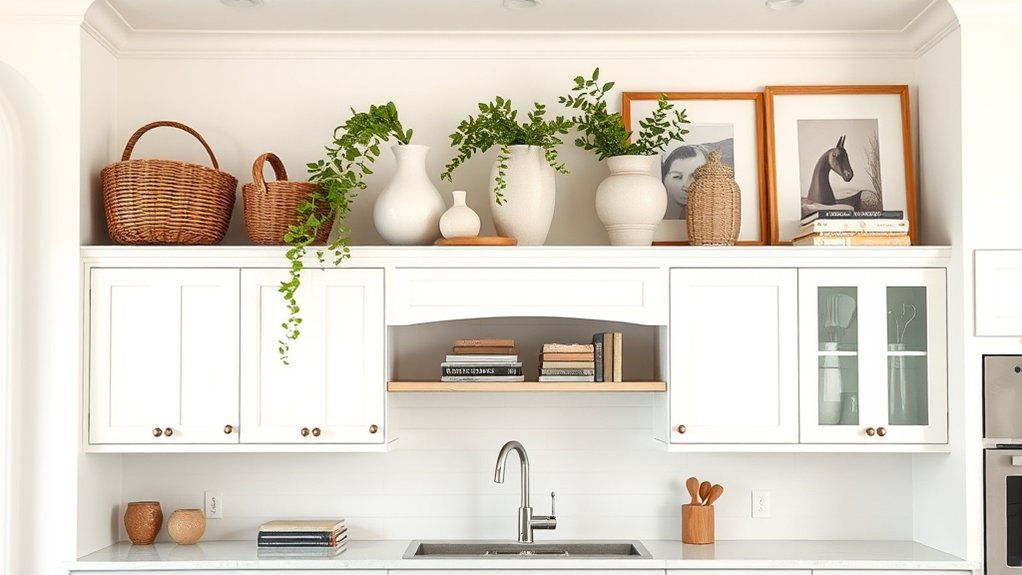
Decorating above kitchen cabinets works best when the space looks deliberate rather than crowded. Start by checking the available height, nearby heat sources, vents, and how easily you can clean the area. Then choose a small number of baskets, vases, greenery, boxes, or lighting accents that match the kitchen’s colors and proportions.
Quick Answer
To decorate above kitchen cabinets, use a few large, coordinated pieces instead of many small objects. Mix heights and textures with baskets, vases, greenery, or decorative boxes, keep combustible items away from cooking heat, and choose pieces that are stable and easy to remove for cleaning.
Key Takeaways
- Use fewer, larger objects so the cabinet line feels styled rather than cluttered.
- Measure the gap and check nearby vents, lighting, and cooking heat before placing anything overhead.
- Lidded baskets and decorative boxes can provide storage while keeping seldom-used items out of sight.
- Choose washable, easy-to-lift decor because exposed cabinet tops collect dust and cooking residue.
- Leaving the space empty is often the best choice in a minimalist kitchen or a kitchen with very little clearance.
At a Glance
| Time Required | Usually one short styling session; allow extra time if the cabinet tops need deep cleaning. |
| Difficulty | Easy, provided the area can be reached safely. |
| Tools Needed | Tape measure, microfiber cloth, mild cleaner, and a stable step stool or stepladder. |
| Cost | Free if you reuse decor you already own; otherwise the cost depends on the baskets, vessels, plants, or lighting selected. |
Warning: Use a stable step stool or stepladder to reach cabinet tops, and avoid climbing while carrying a large or awkward object. Keep paper, dried plants, fabric, and other combustible decorations away from stovetop heat or flame. Do not block vents, range-hood outlets, sprinklers, or other building equipment.
How to Decorate Above Kitchen Cabinets
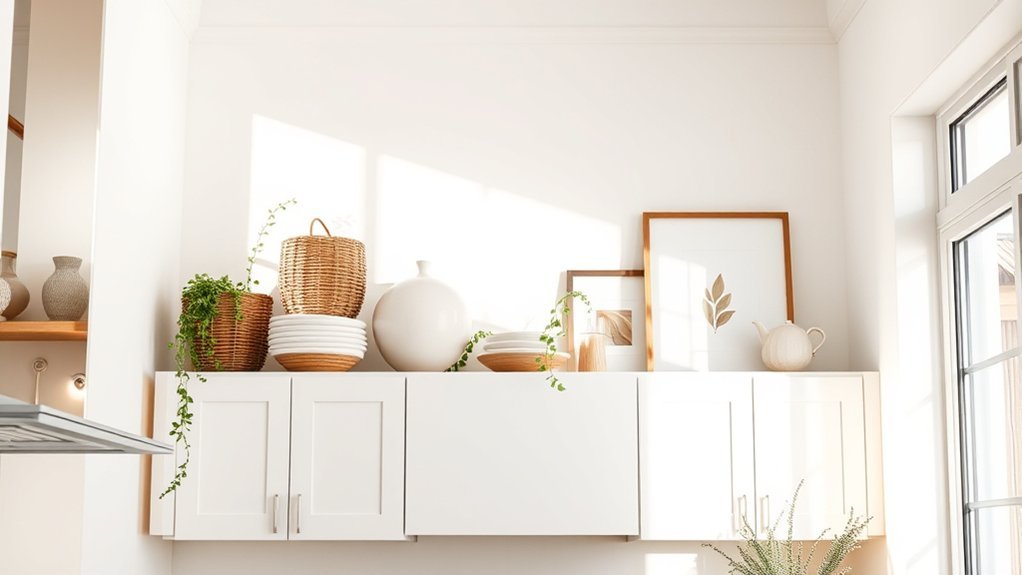
The space above kitchen cabinets looks best when it functions as part of the room rather than as a collection of leftover decor. Begin with the largest pieces, leave visible space around them, and repeat one or two colors or materials already used in the kitchen.
Baskets and lidded boxes can hide seasonal or seldom-used items. Ceramic vases, urns, glass bottles, and faux greenery can add height and texture. Battery-powered accent lights can add warmth where appropriate, but lighting should be kept clear of heat and selected with battery safety in mind.
The simplest rule is to use fewer, larger pieces and leave enough empty space for each object to be seen clearly.
- Clean the cabinet tops before styling.
- Measure the usable height between the cabinets and ceiling.
- Choose two or three materials or colors that already appear in the room.
- Arrange the tallest pieces first, then fill selected gaps with medium and low objects.
- Step back and remove anything that makes the display look crowded.
Pro Tip: Photograph the arrangement from the main kitchen entrance. A photo makes uneven spacing and unnecessary clutter easier to notice than when you are standing directly beneath the cabinets.
Measure the Gap and Check Safety First
Before buying decor, measure the height from the cabinet top to the ceiling and note any crown molding, pipes, vents, lights, sprinklers, or range-hood components. A shallow gap usually looks cleaner when left empty or decorated with low-profile pieces. A taller gap can handle larger baskets, vases, or layered groupings.
Do not block ventilation or equipment that needs service access. Near a range, keep combustible decorations away from cooking heat. The National Fire Protection Association advises keeping items that can catch fire away from the stovetop.
Access matters too. A properly positioned step stool or stepladder is safer than standing on a chair or countertop. OSHA ladder-safety guidance emphasizes stable positioning, inspecting ladders before use, and maintaining control while climbing.
Heavy or fragile objects deserve extra caution. If an object could fall, break, or overload an unsupported surface, choose something lighter or confirm that the cabinet construction and installation can safely support it.
Decide What Belongs Above Cabinets
A successful arrangement starts with deciding whether the space should provide storage, decoration, or a combination of both. Lidded baskets and canvas boxes are useful for lightweight seasonal items that are not needed every day. They keep the contents hidden while producing a cleaner silhouette than loose storage.
Decorative urns, vases, pottery, and sculptural objects work well when their scale matches the available space. Avoid scattering many small pieces across a long cabinet run; they tend to disappear visually while making dusting more difficult.
Cookbooks can provide height in a decorative grouping, but exposed books also collect dust and cooking residue. They are better suited to an area well away from the range and should be skipped if easy cleaning is a priority.
Seldom-used appliances can be stored overhead only when they are light enough to move safely and can be reached without awkward lifting. Frequently used or heavy appliances belong in easier-to-access storage.
Balance Height, Texture, and Color
Once the practical choices are made, use height, texture, and color to keep the display connected to the rest of the room. A tall vase beside a medium basket and a lower decorative object usually creates more movement than a row of pieces that are all the same height.
Texture adds contrast. Woven baskets can soften glossy cabinetry, while smooth ceramics can calm a kitchen that already contains strong wood grain or patterned surfaces.
Keep the palette restrained. Neutral objects can form the base of the arrangement, with one or two accent colors repeated from the backsplash, cabinets, countertops, hardware, or nearby textiles.
Vary Heights Thoughtfully
Height variation helps the eye move across the cabinet line. Instead of alternating tall and short objects mechanically, create a few larger groupings and leave open space between them.
| Grouping | Height | Effect |
|---|---|---|
| Books | Low | Creates a base for another object |
| Vases | Tall | Draws the eye upward |
| Boxes | Medium | Adds storage and visual weight |
| Lanterns | Varied | Adds shape and depth |
| Three-piece group | Mixed | Creates a clear focal grouping |
Odd-numbered groups such as three objects often feel natural, but they are not a requirement. The more important goal is to give each object enough visual space.
Mix Texture And Color
Texture and color keep an above-cabinet display from looking flat. Woven baskets, ceramic vessels, glass, wood, and a small amount of greenery can provide enough variation without turning the area into a collection of unrelated objects.
- Pair a rough texture, such as a woven basket, with a smoother vase or glass vessel.
- Use a limited color palette and repeat a color already found elsewhere in the kitchen.
- Use a stable riser or a small stack of decorative books only where the area stays relatively free of cooking residue.
- Repeat one material or shape across separate groupings so the full cabinet run feels connected.
Use Baskets and Boxes Above Cabinets
Baskets and boxes are among the most practical choices for the space above kitchen cabinets because they provide both visual texture and concealed storage. Lidded woven baskets work well for lightweight seasonal items, while canvas or decorative boxes create a simpler, more uniform look.
Lidded containers keep their contents cleaner and hidden, although the outside of the basket or box will still need regular dusting.
Choose containers that can be lifted safely from above shoulder height. Large boxes filled with heavy dishes, appliances, or bulk pantry goods can be awkward and unsafe to retrieve.
Mixing two or three compatible sizes can keep a long cabinet run from looking rigid. Similar colors or materials help multiple baskets read as one intentional arrangement rather than miscellaneous storage.
Style With Vases and Urns
Vases and urns add height without requiring a large number of objects. Their simple silhouettes also make them easier to dust than collections made from many small decorative pieces.
Choose pieces whose colors or finishes relate to the cabinets, counters, hardware, or backsplash. A matte ceramic vase can soften glossy finishes, while clear or colored glass can add a lighter visual effect.
- Vary heights rather than using identical vessels in a straight row.
- Combine one textured surface with one or two smoother finishes.
- Repeat cabinetry or backsplash colors for a coordinated look.
- Use closed or lidded vessels when discreet storage is useful.
Add Faux Plants or Easy Greenery
Greenery can soften hard cabinet lines and introduce natural color. Faux plants are the simplest choice in areas that receive little sunlight or are difficult to water safely. Choose realistic foliage with restrained colors rather than highly glossy leaves.
Live plants may work where there is enough light, temperature stability, and safe access for watering, but they are less practical if reaching the cabinet top requires frequent climbing.
| Choice | Effect |
|---|---|
| Faux succulents | Compact shape with minimal maintenance |
| Faux ferns or trailing foliage | Softens long cabinet lines |
| Greenery in urns or vases | Keeps plants contained in an easy-to-move grouping |
A few plants are usually enough. Large amounts of foliage can trap dust and become difficult to clean, especially near active cooking areas.
Use Bottles, Lights, and Themed Decor
Colored bottles, subtle lighting, and a small themed grouping can work above cabinets when the display remains simple. Choose one idea and repeat it selectively instead of covering the entire cabinet run with matching objects.
Lighting should be used only where it does not interfere with ventilation, create a heat problem, or leave loose wires and batteries in difficult-to-reach locations.
Colored Bottles Display
Amber, green, blue, or clear glass bottles can add color without requiring large decorative pieces. Varying the heights creates a more natural silhouette than lining up bottles of identical size.
- Use two or three bottle heights rather than a long row of identical shapes.
- Mix clear and tinted glass sparingly.
- Repeat a bottle color that already appears elsewhere in the kitchen.
- Leave open space around the grouping so light can pass through the glass.
If the kitchen already contains many colors or patterns, clear glass or a single bottle color will usually look calmer than a multicolored collection.
Battery Light Accents
Battery-powered LEDs can add soft accent lighting without requiring permanent wiring. They work particularly well inside translucent vessels or behind a limited number of decorative objects.
If the lights or remote use button or coin batteries, choose products with properly secured battery compartments and keep spare batteries inaccessible to children. The U.S. Consumer Product Safety Commission explains that current requirements include secure battery compartments and warning information because swallowed button and coin cells can cause serious injury.
Switch lights off when they are not needed, follow the manufacturer’s placement instructions, and avoid positioning decorative lighting where heat from a range or other appliance can affect it.
Themed Decorative Vignettes
A themed vignette works best when the theme is subtle. A few vintage bottles, pottery pieces, rustic containers, or seasonal accents can establish a mood without making the kitchen look like a permanent holiday display.
- Group related objects rather than spreading them evenly across every cabinet.
- Use one larger piece to anchor each grouping.
- Add height with a stable riser or decorative book only where cleaning conditions make sense.
- Rotate seasonal pieces instead of stacking new decor around existing objects.
Keep Above-Cabinet Decor Easy to Clean
Cabinet tops can collect both ordinary household dust and cooking residue, so easy cleaning should influence every decorating choice. Fewer objects mean fewer surfaces to move, wash, and reposition.
For routine cleaning, remove the decor and wipe the cabinet top with a microfiber cloth and a cleaner suitable for the cabinet finish. USDA kitchen-cleaning guidance recommends hot, soapy water for many kitchen surfaces and advises using cleaning products that are appropriate for the surface and intended use.
| Choice | Benefit | Ease |
|---|---|---|
| Microfiber cloth and mild soapy water | Removes ordinary dust and residue | Simple routine cleaning |
| Surface-compatible removable liner | Can simplify cleanup where appropriate | Lift and clean or replace as needed |
| Minimal vases or urns | Reduces the number of surfaces collecting dust | Fast to remove and wipe |
Note: There is no universal twice-a-year cleaning schedule for cabinet tops. Clean them often enough to prevent visible dust or greasy residue from building up; kitchens with frequent frying or poor ventilation may need attention more often.
Avoid using newspaper, loose plastic film, or other makeshift liners near cooking heat. Also avoid using a lubricant or solvent such as WD-40 as a default cabinet cleaner. When residue is stubborn, follow the cabinet manufacturer’s care guidance or use a cleaner specifically labeled as suitable for that finish.
Avoid Common Above-Cabinet Decor Mistakes
Most unsuccessful above-cabinet displays have too many objects, use pieces that are too small for the viewing distance, or ignore practical kitchen conditions.
- Do not fill every inch. Empty space separates groupings and makes each piece easier to see.
- Avoid dozens of small collectibles. They are difficult to read visually from below and take longer to clean.
- Do not block vents or mechanical equipment. Leave access to anything that needs airflow, inspection, or servicing.
- Keep combustible decor away from cooking heat. This includes paper, dried plant material, fabric, and similar items.
- Avoid unstable or very heavy objects. Anything placed overhead should be secure and easy to retrieve safely.
- Do not force a display into a shallow gap. If there is not enough room for properly scaled decor, leaving the space empty usually looks better.
Know When to Leave It Empty
Sometimes the best decision is to leave the space above kitchen cabinets undecorated. An empty cabinet line can suit minimalist and contemporary kitchens, reduce cleaning work, and prevent a narrow gap from looking crowded.
Leaving the space open is especially sensible when the gap is shallow, the kitchen already contains strong visual elements, or the cabinet tops sit close to an active cooking area.
Empty space is not unfinished space. When the kitchen already has enough color, texture, and storage, an undecorated cabinet top can be the cleaner design choice.
- Leave the area open when the clearance is too low for properly scaled decor.
- Choose emptiness if frequent cleaning would make a display impractical.
- Avoid using overhead space merely to hide miscellaneous clutter.
- Consider full-height cabinetry during a future remodel if eliminating the gap is a long-term goal.
Current kitchen design research also supports a broader emphasis on practical function and storage. The 2026 U.S. Houzz Kitchen Trends Study found strong interest in functionality and documented wood cabinetry as a leading cabinet-color choice, reinforcing the wider shift toward warm but practical kitchen design.
Frequently Asked Questions
What are some creative ways to decorate above kitchen cabinets?
Use lidded baskets, sculptural vases, decorative boxes, glass bottles, pottery, or a small amount of faux greenery. Create two or three larger groupings instead of lining the entire cabinet run with small objects. A subtle battery-powered light can add depth where heat, ventilation, and battery safety are not concerns.
What should you put on top of upper kitchen cabinets?
Good choices include lightweight lidded baskets, decorative boxes, vases, urns, pottery, faux plants, and other large objects that are easy to dust. Lightweight seasonal storage can also work. Avoid unstable, very heavy, highly breakable, or frequently used items that are difficult to retrieve safely.
Do people still decorate above their kitchen cabinets?
Yes, but decorating the space is optional rather than a requirement. A few large baskets, ceramics, or plants can suit traditional, farmhouse, eclectic, or warm contemporary kitchens, while leaving the area empty often works better in minimalist rooms or kitchens with narrow cabinet-to-ceiling gaps.
How should you decorate above kitchen cabinets in 2026?
For a current look, focus on warmth, useful storage, natural-looking materials, and a restrained number of objects rather than chasing a specific themed trend. Current 2026 kitchen research shows continued interest in functionality and wood cabinetry, so baskets, ceramics, wood tones, and uncluttered groupings can fit comfortably with broader design directions.
Should you decorate above cabinets near a stove?
Use extra caution. Do not place combustible materials where they can be exposed to stovetop heat or flame, and do not block the range hood or other ventilation. In a high-grease cooking zone, leaving the cabinet top empty may also be easier to maintain.
How often should you clean the tops of kitchen cabinets?
Clean them whenever visible dust or greasy residue begins to accumulate rather than relying on a fixed schedule. Kitchens where frying is common may need more frequent cleaning. Using fewer, easy-to-lift decorations makes the job faster.
Conclusion
Above-cabinet decor works best when it combines appearance with practical kitchen needs. Measure the gap first, keep heat and ventilation in mind, and choose a few stable pieces that repeat colors or materials already used in the room. Baskets, vases, boxes, greenery, and subtle lighting can all work, but none are necessary.
If the display becomes difficult to clean, blocks equipment, sits too close to cooking heat, or simply makes the kitchen feel busier, leaving the cabinet tops empty is the better design choice.
Sources
- 2026 U.S. Houzz Kitchen Trends Study — current kitchen design, cabinetry, functionality, and storage trends.
- USDA Food Safety and Inspection Service: Cleanliness Helps Prevent Foodborne Illness — kitchen-surface cleaning guidance.
- National Fire Protection Association: Cooking Safety — keeping combustible materials away from stovetop heat and flame.
- OSHA Ladder Safety — safe ladder setup and use principles relevant when reaching high cabinet areas.
- U.S. Consumer Product Safety Commission: Button Cell and Coin Battery FAQs — requirements and safety considerations for decorative products that use button or coin batteries.
