
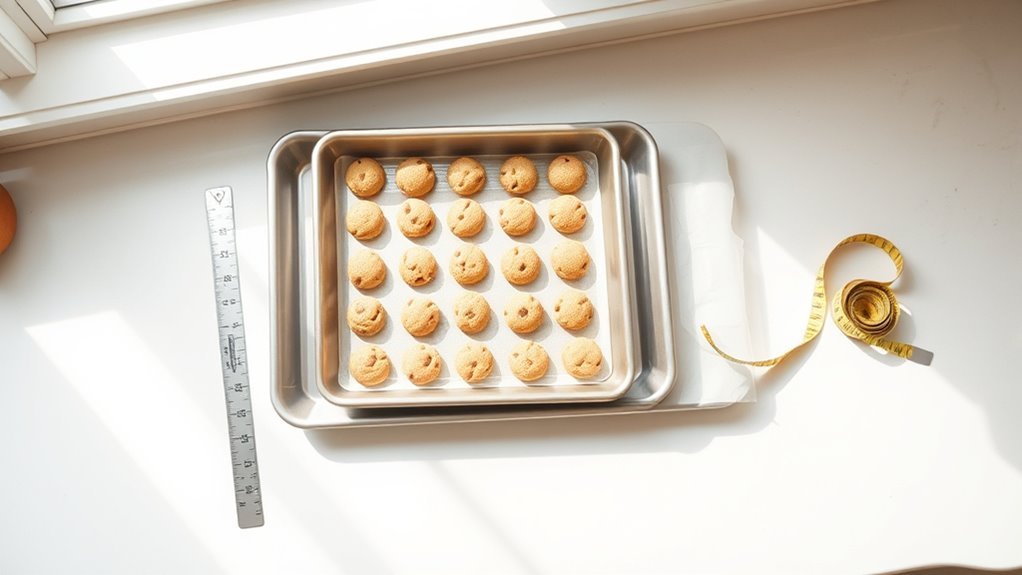
Choosing the right baking sheet sizes makes baking, roasting, and meal preparation easier. A pan that’s too large may not fit your oven, while a small one can leave food crowded and unevenly cooked. Understanding standard dimensions, rim styles, and materials helps you choose a baking sheet that suits your kitchen.
Quick Answer
The most useful baking sheet size for home cooking is a half sheet, measuring about 18 x 13 inches. Quarter sheets measure roughly 13 x 9.5 inches and suit smaller batches. Full sheets measure 26 x 18 inches and generally require commercial ovens. Always check exterior dimensions and oven clearance before buying.
Key Takeaways
- Standard rimmed sheet pans are typically about 1 inch deep, unlike deeper cake and casserole pans.
- Light-colored aluminum promotes even baking, while dark finishes can brown food more quickly.
- Rimmed pans contain roasting juices, while perforated pans improve airflow around bread and pizza crusts.
- Reinforced rims help resist warping, and handwashing protects most baking sheet finishes.
- Exterior dimensions matter more than the advertised size category when checking oven compatibility.
Which Baking Sheet Size Should You Choose?
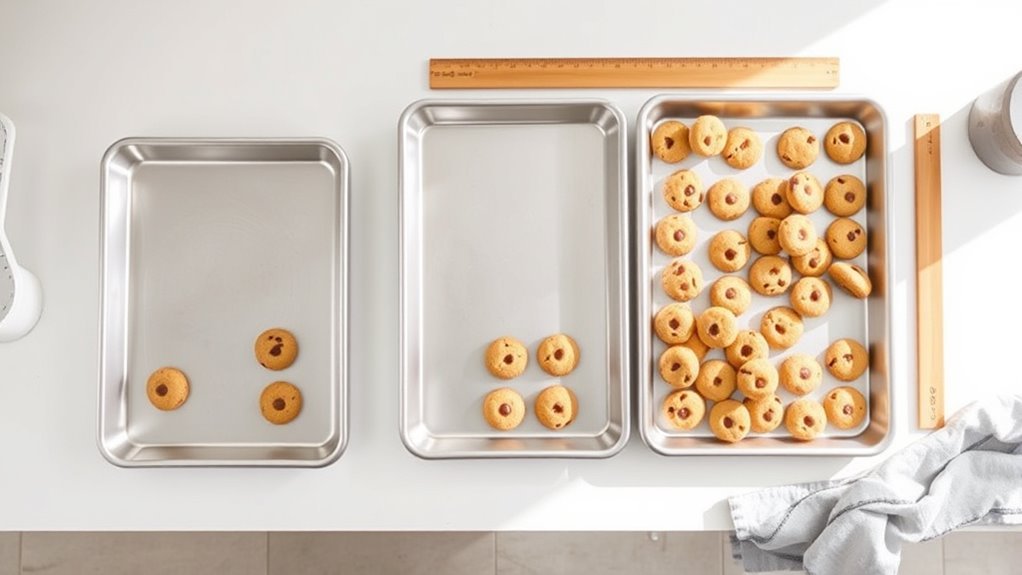
For most home kitchens, an 18 x 13-inch half-sheet pan offers the best balance of cooking space and versatility. It handles cookies, roasted vegetables, sheet-pan dinners, and many other everyday recipes.
However, your ideal size depends on how much food you prepare and the usable space inside your oven.
Choose a Quarter Sheet for Small Batches
A quarter-sheet pan measures approximately 13 x 9.5 inches, with a shallow rim usually around 1 inch high.
It’s useful when cooking for one or two people. You can roast a small portion of vegetables, toast nuts, warm leftovers, or bake a compact batch of cookies.
Its smaller footprint also makes it convenient for food preparation and refrigerator storage. Some quarter sheets fit countertop ovens, although you should confirm the exact dimensions.
A quarter sheet is ideal for smaller portions, but its shallow rim cannot replace a deeper 9 x 13-inch casserole pan.
Choose a Half Sheet for Everyday Baking
A half-sheet pan provides enough room for most home baking and roasting tasks without requiring commercial kitchen equipment.
It’s particularly useful for:
- Baking cookies with enough space between portions.
- Roasting vegetables without excessive crowding.
- Preparing sheet-pan chicken and other dinners.
- Baking granola, pastries, and thin sheet cakes.
- Cooking several servings in one batch.
If you’re buying only one baking sheet, a sturdy, light-colored, rimmed half sheet is usually the most practical choice.
Choose a Full Sheet for Commercial Baking
A full-sheet pan measures approximately 26 x 18 inches. It provides twice the nominal surface area of a half sheet.
Commercial bakeries, restaurants, and catering kitchens use these pans for large quantities of food.
However, most standard home ovens cannot accommodate a full sheet. Its dimensions generally exceed the available rack space.
If you regularly prepare large batches at home, using multiple half-sheet pans is often more practical.
Common Baking Sheet Sizes and What They Hold
Standard baking sheet dimensions are based on the pan’s overall length and width. The most common categories are full, half, quarter, and eighth sheets.
Manufacturers may vary slightly in their measurements, so the figures below are nominal sizes rather than exact dimensions for every product.
| Sheet Size | Typical Dimensions | Best Uses | Oven Compatibility |
|---|---|---|---|
| Full Sheet | 18 x 26 inches | Commercial baking and large batches | Commercial ovens |
| Half Sheet | 13 x 18 inches | Cookies, roasting, and sheet-pan meals | Most full-size home ovens |
| Quarter Sheet | 9.5 x 13 inches | Small batches, side dishes, and reheating | Home ovens and some countertop ovens |
| Eighth Sheet | 6.5 x 9.5 inches | Very small portions and food preparation | Home and many small ovens |
These measurements align with established sheet-pan categories. The manufacturer’s exterior-size guide also shows why actual dimensions can differ slightly from nominal sizes.
Commercial manufacturers confirm that full sheets measure approximately 18 x 26 inches, as shown in the commercial full-sheet specifications.
How Much Food Can Each Baking Sheet Hold?
A larger sheet holds more food, but usable capacity depends on the ingredients and how much space they need.
For example, cookie dough spreads while baking, so you cannot fill the entire surface with dough. Vegetables also need space around them for better browning.
Some approximate capacity descriptions place full sheets around 6–8 quarts, half sheets around 3–4 quarts, and quarter sheets around 1–2 quarts. However, these are rough physical volume estimates, not standardized manufacturer capacities or recommended liquid fill levels.
Because the rims are shallow, baking sheets are better suited to foods arranged across the surface than dishes containing substantial amounts of liquid.
For cakes and brownies, the pan’s depth becomes especially important. A standard half sheet is much shallower than a typical 9 x 13-inch cake pan.
As the half-sheet recipe conversion guide explains, matching surface area alone does not guarantee that a cake recipe will fit safely.
Are Cookie Sheets the Same Size as Baking Sheets?
Cookie sheets do not follow one universal size standard. Some measure around 12 x 15 inches, while others are larger or smaller.
A traditional cookie sheet is flat on several sides, sometimes with one raised edge for handling. This design makes sliding cookies onto a cooling rack easier.
A rimmed baking sheet can also bake cookies. However, the raised edges make it more versatile for roasting and other cooking tasks.
How Material, Thickness, and Color Affect Baking
Baking sheet performance depends on more than dimensions. The material, metal thickness, surface color, and protective lining all affect heat transfer and browning.
For everyday baking, light-colored aluminum is a reliable choice because it conducts heat efficiently. Darker surfaces often produce faster browning, particularly on the bottoms of cookies.
Material and Heat Conductivity
Aluminum transfers heat efficiently and responds quickly when oven temperatures change. That helps promote consistent results across the baking surface.
Steel sheets can also work well, especially when they have a durable coating. However, their heating characteristics depend on the metal thickness, finish, and construction.
Silicone mats and parchment paper are not baking sheet materials themselves. They are liners that affect food release and heat transfer between the pan and your food.
| Surface | Effect |
|---|---|
| Aluminum | Conducts heat efficiently and supports even browning. |
| Dark metal | Absorbs more radiant heat and can brown food bottoms faster. |
| Light metal | Usually provides more controlled browning for delicate baked goods. |
| Silicone | A silicone baking mat adds insulation and may produce softer bottoms. |
| Parchment/Teflon | Parchment and suitable nonstick surfaces help food release, but their heat limits and baking effects vary. |
For delicate pastries and cookies, a light-colored baking sheet with parchment paper is often a dependable combination.
If you use a dark nonstick sheet, monitor the food closely. Your cookies may brown sooner than expected even when you follow the recipe’s recommended baking time.
Thickness and Browning Effects
Thicker baking sheets usually offer greater rigidity and better resistance to permanent warping. Thin sheets respond quickly to temperature changes but may flex more under heat.
However, thickness alone does not determine how evenly cookies bake. Pan color, material, oven performance, and food placement also matter.
When comparing metal baking sheets, you may see a gauge number. For similar sheet-metal constructions, a lower gauge generally means thicker metal.
Look for sturdy construction and reinforced rims rather than judging a sheet only by its advertised thickness.
For cookies with overbrowned bottoms, changing to a lighter pan or adding insulation can help.
Pro Tip: If delicate cookies consistently develop overly dark bottoms, try nesting one baking sheet inside another. The extra metal layer reduces direct heat transfer to the food. Baking may take longer, so monitor doneness rather than relying only on the timer. This technique is explained in double-pan baking guidance.
Perforated, Rimmed, and Nonstick Pans: When to Use Each
Different baking sheet styles serve different purposes. Perforated pans encourage airflow, rimmed pans contain food and juices, and nonstick pans simplify food release.
Choosing the right design matters as much as selecting the correct size.
Perforated Baking Sheets
Perforated baking sheets have small holes that allow hot air to reach more of the food’s underside.
They are useful for foods that benefit from a crisp surface, including certain breads, pizza crusts, and pastries.
However, perforated sheets are less suitable for juicy foods, loose ingredients that could fall through the holes, or recipes with liquid batters.
Rimmed Baking Sheets
Rimmed sheets have raised edges around the entire pan. These edges help contain oil, juices, and small pieces of food.
Use a rimmed sheet for:
- Roasting vegetables and potatoes.
- Preparing chicken or other sheet-pan dinners.
- Baking cookies and pastries.
- Making granola and roasted nuts.
- Baking shallow cakes when the recipe specifies a sheet pan.
For most households, this is the most useful baking sheet style.
Nonstick Baking Sheets
Nonstick baking sheets have a coating designed to reduce sticking and simplify cleanup. They can be convenient for delicate cookies and pastries.
However, nonstick coatings need careful treatment. Metal utensils, harsh cleaners, and excessive heat can shorten their useful life.
Always follow the manufacturer’s temperature limits. For example, the nonstick bakeware care instructions for one manufacturer specify a maximum temperature of 450°F (230°C).
Uncoated aluminum is another option if you prefer a pan without a nonstick finish. Parchment paper can help prevent sticking and simplify cleanup.
Care, Storage, and Oven-Fit Tips
Proper care helps baking sheets maintain their shape and performance. Gentle cleaning, dry storage, and enough oven clearance also reduce common problems.
Use the following practices to protect your pans and keep baking results consistent.
Proper Cleaning Methods
The safest general cleaning method for most baking sheets is handwashing with mild dish soap and a soft sponge.
Let the pan cool before washing. Sudden temperature changes can cause metal to expand or contract unevenly.
Warning: Do not place a hot baking sheet directly into cold water. Rapid cooling can cause warping or permanent distortion, especially in lighter pans. The manufacturer’s baking-sheet warping guidance identifies rapid temperature changes as a common cause.
Follow these steps after each use:
- Let the pan cool. Allow it to reach a safe handling temperature before cleaning.
- Remove loose residue. Wipe away crumbs and excess oil using a soft cloth or sponge.
- Wash gently. Use warm water and mild dish soap. For stubborn residue, follow the manufacturer’s soaking recommendations.
- Rinse and dry. Remove soap residue and dry the pan thoroughly before storing it.
Avoid abrasive scouring pads on nonstick coatings. Even uncoated aluminum can develop scratches from aggressive cleaning.
Dishwashers may discolor natural aluminum, while repeated dishwasher cleaning can damage some nonstick finishes. Handwashing is generally the better choice for preserving appearance and coating life.
Efficient Storage Solutions
Store baking sheets in a clean, dry location where they are protected from unnecessary pressure and scratching.
Vertical organizers can save cabinet space and make individual pans easier to access. Slotted racks, pull-out organizers, and cabinet dividers are useful options.
If you prefer stacking, place a soft protective layer between nonstick pans to reduce scratches.
For heavier baking sheets, flat storage on a stable shelf is also practical. Avoid placing heavy cookware on top of thin pans where it could bend their rims.
Choose an organizer that accommodates your largest baking sheet without forcing it into a narrow opening.
Measuring Oven Clearance
Measure your oven’s usable interior width, depth, and rack clearance before purchasing an oversized baking sheet.
A pan needs more than enough room to slide through the door. Hot air must also circulate around it during cooking.
Professional baking-pan selection guidance recommends allowing about 2 inches of clearance around a sheet pan for good heat circulation.
Use this simple measurement checklist:
- Measure oven width. Check the usable space between the interior sidewalls.
- Measure oven depth. Include the space needed for the door to close and avoid blocking airflow.
- Check rack height. Make sure tall food and raised rims have enough vertical clearance.
- Compare exterior pan dimensions. Account for rolled edges, handles, and reinforced rims.
For a typical half sheet, allow room beyond its approximately 18 x 13-inch outer dimensions.
If you plan to bake on multiple racks, leave enough vertical space between pans so hot air can move freely.
Quick Buying Checklist: What to Look For
Before buying a baking sheet, compare its dimensions, construction, finish, and intended cooking tasks.
You do not need a commercial-grade collection to get reliable results. A well-made sheet that fits your oven and suits your recipes is more useful than an oversized pan.
Features Worth Checking
- Size: Choose a half sheet for everyday use or a quarter sheet for small batches.
- Material: Light-colored aluminum is a practical option for consistent heat distribution.
- Thickness: Look for sturdy metal that resists excessive bending and flexing.
- Rim design: Raised rims are useful for roasting and containing juices.
- Surface finish: Choose uncoated metal or a suitable nonstick finish according to your cooking preferences.
- Oven compatibility: Check the exact exterior measurements and maximum oven-safe temperature.
- Cleaning: Consider whether the finish requires special care.
- Weight: Select a pan you can comfortably lift when loaded with food.
Most standard rimmed baking sheets have sides around 1 inch high, although deeper specialty designs are available.
A deeper pan can be useful for certain recipes, but you should not assume a shallow baking sheet can replace a cake pan with taller sides.
For everyday cooking, choose a sturdy, rimmed half-sheet pan with reinforced edges. Select perforated or specialty pans only when their design benefits your recipes.
If you frequently prepare smaller meals, pairing a half sheet with a quarter sheet gives you more flexibility without requiring a large cookware collection.
For baking in a countertop convection oven, check that the manufacturer permits the pan’s dimensions and placement. Some compact ovens require specially sized trays.
Frequently Asked Questions
Is a 9×13 Pan a Cookie Sheet?
A 9 x 13-inch pan can be a quarter-sheet baking pan if it has a shallow rim, but a 9 x 13-inch cake pan is usually deeper. Check the rim height rather than the length and width alone.
Do Full-Size Baking Sheets Fit in a Regular Oven?
Usually not. A full commercial sheet measures about 18 x 26 inches, so most home ovens cannot accommodate it; a 13 x 18-inch half sheet is the usual home-oven choice.
How to Measure Baking Sheet Size?
Measure the outside length and width, including the rolled rim, then measure the side height from the bottom to the rim. Compare those measurements with your oven’s usable rack space and leave room for airflow.
What Is Considered a Baking Sheet?
A baking sheet is a shallow metal pan used for baking cookies, roasting food, and making sheet-pan meals. Rimmed versions contain juices, while cookie sheets may have a flat edge for easier cookie removal.
What Is the Difference Between a Half Sheet and a Quarter Sheet?
A half sheet is about 13 x 18 inches, and a quarter sheet is about 9.5 x 13 inches. A half sheet gives more room for cookies or vegetables; a quarter sheet is easier to handle for a small meal.
Can You Bake Cookies on a Rimmed Baking Sheet?
Yes. A light-colored rimmed half sheet works well for cookies if you leave enough space between portions. Line it with parchment when needed, and let the pan cool before starting another batch.
Conclusion
The best baking sheet size depends on your oven and the amount of food you prepare. For most home cooks, an 18 x 13-inch half sheet offers the best all-around value, while a quarter sheet is useful for smaller tasks.
Choose a sturdy material, select the right rim design, and confirm your oven’s usable space. With proper care, a good baking sheet can serve you reliably for years.
Sources
- Nordic Ware, Naturals Aluminum Bakeware: Standard sheet pan dimensions, construction, and exterior measurements.
- Vollrath Foodservice, Wear-Ever Full-Size Sheet Pan: Commercial full-sheet dimensions and construction specifications.
- King Arthur Baking, Baking Your Favorite Recipes in a Half-Sheet Pan: Pan depth, surface area, and recipe conversion limitations.
- King Arthur Baking, Your Complete Guide to Baking Pans: Baking sheet selection, oven clearance, and cookie sheet design.
- King Arthur Baking, Bake Your Sheet Pan on Another Sheet Pan: Insulation and prevention of excessive bottom browning.
- USA Pan, Bakeware Use and Care: Nonstick coating care, safe temperature limits, and cleaning instructions.
- Nordic Ware, Why Baking Sheets Warp in the Oven: Causes of baking sheet warping and prevention methods.
