
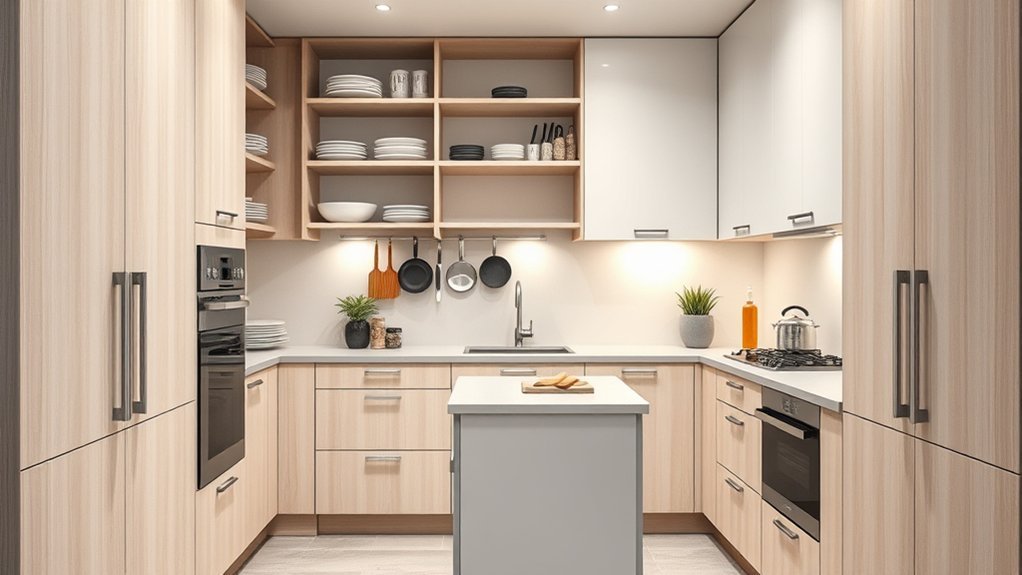
Maximizing space in a small kitchen starts with removing duplicates and rarely used tools, then arranging what remains around how you actually cook. Use walls, cabinet height, drawer dividers, pull-outs, turntables, and door-mounted storage to reclaim overlooked space. Keep counters focused on daily-use items, measure before buying organizers, and choose storage that keeps heavy, sharp, or hazardous items secure.
Quick Answer
To maximize space in a small kitchen, declutter first, then use vertical storage, pull-out shelves, turntables, drawer dividers, cabinet-door organizers, and a movable cart where needed. Keep counters clear, measure every cabinet before buying inserts, and store frequently used items where they are easiest to reach.
Key Takeaways
- Declutter before buying storage products so you organize only what you actually use.
- Use height: shelf risers, wall rails, hooks, pegboards, and stackable bins can recover otherwise unused space.
- Improve access in deep and corner cabinets with pull-outs and turntables instead of stacking items several layers deep.
- Measure width, depth, height, hinges, plumbing, and door clearance before ordering organizers.
- Keep knives, cleaners, heavy cookware, and wall-mounted storage secure, especially in homes with children.
At a Glance
| Time Required | About 30–90 minutes for a basic declutter and reset; longer if installing hardware |
| Difficulty | Easy for freestanding organizers; moderate for securely mounted shelves or racks |
| Tools Needed | Tape measure, labels or marker, cleaning cloth; screwdriver or drill only for approved mounted storage |
| Cost | Can start at no cost by decluttering and repurposing containers; cost rises with pull-outs, carts, or wall systems |
Start by Decluttering Your Small Kitchen
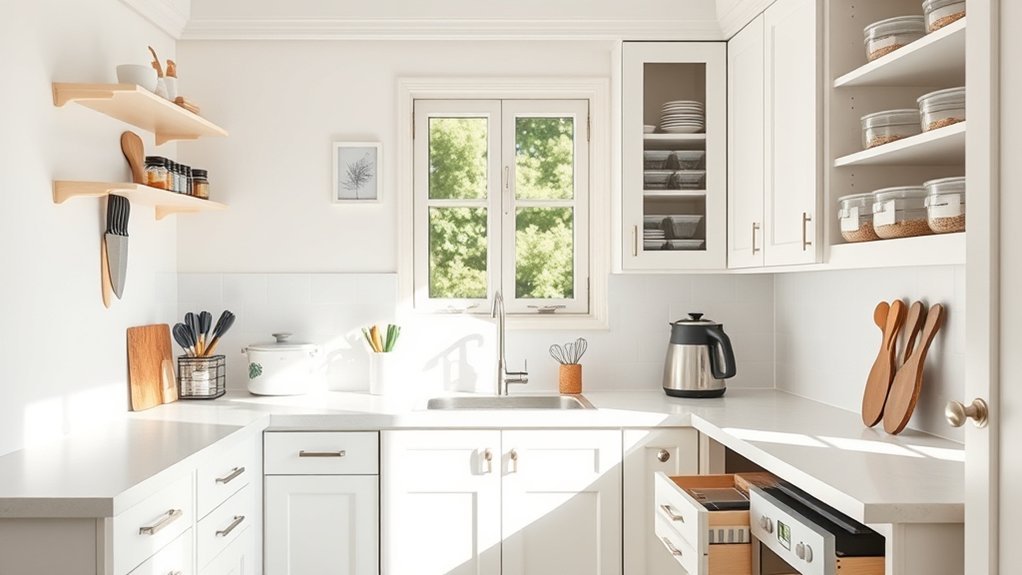
A clutter-free kitchen starts with a careful review of what is already on hand. Regular decluttering reveals duplicates, worn tools, unmatched food-storage lids, and gadgets that no longer support daily cooking. If you have not used an item for a long time and it is not seasonal or specialized, consider donating, recycling, or responsibly discarding it.
This simple purge gives a small kitchen more breathing room and makes the remaining items easier to see and reach. Start with one drawer, cabinet, or shelf at a time so the reset stays manageable.
To organize kitchen essentials, use drawer organizers for utensils and tools, and use clear or labeled containers where visibility helps. Group like items together—baking supplies with baking supplies, food-storage pieces together, and everyday cooking tools near the prep area.
A one-in, one-out rule can help prevent new purchases from rebuilding clutter. With fewer objects competing for space, the kitchen becomes easier to clean, easier to use, and simpler to maintain.
Measure Before Buying Kitchen Organizers
Before ordering bins, pull-outs, turntables, shelf risers, or door racks, measure the space they must fit. Record the usable interior width, depth, and height, not just the outside cabinet dimensions. Check hinges, door swing, shelf thickness, drawer sides, and any lip or face frame that could block an organizer.
For under-sink storage, also map the drainpipe, garbage disposal if present, supply lines, and shutoff valves. For wall-mounted storage, identify the wall type and follow the mounting instructions supplied with the product.
Pro Tip: Measure twice and sketch the cabinet opening before shopping. An organizer that technically fits the cabinet can still fail if a hinge, pipe, shelf edge, or door blocks it.
Organize by Work Zone and Frequency
Small-kitchen storage works best when it follows your routine. Keep daily-use items near the place where you use them: knives and cutting boards near prep space, pans near the range, mugs near the coffee setup, and dishwashing supplies near the sink.
Store rarely used appliances, serving pieces, and seasonal tools higher up or farther back. Heavy cookware is usually easier and safer to handle from lower cabinets than from high shelves. This approach reduces unnecessary reaching and keeps prime storage available for the items used most often.
Make the Most of Vertical Space
With excess clutter cleared away, the next opportunity is height. In a compact kitchen, vertical space can turn unused wall and cabinet area into practical storage. Open shelves and wall rails can keep frequently used dishes, utensils, and seasonings accessible, while shelf risers and stackable bins make better use of tall cabinet interiors.
Over-the-door organizers can add capacity for lightweight items where the door and hinges can handle the load. Inside cabinets, use risers or bins to avoid unstable stacks and make lower items easier to retrieve.
| Idea | Benefit | Best Use |
|---|---|---|
| Open shelves | Adds visible storage | Frequently used dishes, jars, light items |
| Hooks or pegboards | Frees drawer and counter space | Utensils, small pans, lightweight tools |
| Magnetic storage made for kitchens | Uses wall or appliance-side space | Compatible knives, spice tins, or metal tools |
Plan vertical storage with restraint. Keep everyday pieces in comfortable reach, reserve the highest spaces for lightweight or infrequently used items, and avoid overloading shelves or hooks.
Use Your Kitchen Walls for Storage
Walls offer valuable storage in a small kitchen when floor and counter space are limited. IKEA’s small-kitchen guidance shows wall rails and shallow shelves as ways to keep utensils, pots, jars, and seasonings accessible while clearing work surfaces.
Self-adhesive hooks can hold lightweight oven mitts, towels, or measuring tools when the product is approved for the wall surface and the item stays within its rated load. Pegboards can provide flexible storage for utensils and smaller cookware, while magnetic storage systems designed for kitchens can keep compatible tools visible and easy to reach.
Under wall cabinets, clip-on baskets can reclaim overlooked space for lightweight pantry items. Check that the basket fits the shelf thickness and does not interfere with the work area below.
Together, these options move appropriate items off crowded counters while keeping the kitchen easy to use.
Warning: Secure wall- or ceiling-mounted storage with hardware appropriate for the wall and expected load, and follow the manufacturer’s instructions. Keep knives, cleaners, and other hazards out of young children’s reach; the U.S. Consumer Product Safety Commission recommends safety latches or locks where cabinets contain cleaners, knives, or other dangerous items.
Add Pull-Out Shelves and Lazy Susans
Pull-out shelves improve access in deep cabinets by bringing pots, pans, pantry goods, or small appliances forward instead of leaving them hidden at the back.
Lazy Susans or cabinet turntables work especially well for bottles, condiments, spices, and other small items in corners or deep shelves because the contents rotate into view.
Together, these upgrades can reduce digging and make existing cabinet volume easier to use. Retrofit products are available for many cabinets, but compatibility depends on the opening, hinges, frame, and interior dimensions.
Pull-Out Shelves for Access
When deep cabinets are hard to use efficiently, pull-out shelves bring stored items within easier reach. They reduce the need to remove items from the front just to reach something at the back.
In small kitchen storage, pull-outs can improve visibility for pots, pans, pantry goods, or small appliances and turn deep cabinet space into more usable capacity.
Some pull-out systems can be retrofitted into existing cabinetry without a full remodel. Before buying, measure the clear opening and confirm that hinges, doors, plumbing, and frame edges will not interfere with the slide mechanism.
For compact kitchens, this change can improve access and make storage better match daily habits.
Lazy Susans for Corners
Corner cabinets often hide valuable storage, and a turntable or Lazy Susan can make that space easier to use by rotating stored items toward the opening. For spices, condiments, oils, or snacks, the ability to spin the tray can reduce forgotten items at the back.
Use pull-outs where you need front-to-back access and turntables where rotation makes more sense. The two systems solve different problems and do not need to be installed together.
Choose a turntable that fits the shelf with enough clearance to rotate without hitting hinges, pipes, or the cabinet door. Avoid overloading it with tall or unstable items that may tip as the tray turns.
Choose Stackable Storage Bins
Stackable storage bins make efficient use of vertical cabinet or pantry space when they are sized for the shelf and the items inside. Clear designs can make contents easier to identify, while labeled opaque bins can work just as well when you prefer a cleaner visual appearance.
Use different sizes for snacks, canned goods, packets, or shelf-stable produce as appropriate. Avoid buying bins before decluttering; otherwise, the kitchen can become full of containers without gaining much usable space.
| Benefit | Impact |
|---|---|
| Vertical stacking | Uses cabinet or pantry height |
| Clear sides | Improves visibility |
| Mixed sizes | Fits different categories |
| Grouped items | Reduces scattered clutter |
| Low-cost options | Allows gradual upgrades |
The goal is not to fill every inch. Leave enough room to remove a bin without disturbing the whole shelf, and keep the heaviest containers on sturdy, easy-to-reach levels.
Tidy Drawers With Organizers
Drawer organizers bring order to even narrow kitchen drawers by separating cutlery, utensils, and small tools into clear sections.
Adjustable organizers can adapt to spoons, peelers, whisks, and long-handled tools without forcing a fixed layout. The OXO Good Grips Expandable Utensil Drawer Organizer, for example, uses an expandable format, removable compartments, and non-slip feet; the exact model, price, and availability can change.
Inserts can separate small gadgets from larger utensils so each item has a defined place. Put the most frequently used tools toward the front or in the easiest-to-reach compartment.
Tiered or stackable drawer inserts can add capacity where drawer height allows, but make sure the drawer still closes freely. Regular decluttering keeps the system useful and prevents organizers from becoming another layer of clutter.
The result is a more predictable layout in which every drawer contributes useful, easy-to-access storage.
Create More Counter Space
Strategic surface planning can make a small kitchen much easier to work in. A sturdy, well-fitting chopping board over the sink can create temporary prep space when the sink design safely supports it. IKEA also recommends this approach as one way to extend the usable work surface in a compact kitchen.
Wall-mounted shelves can keep suitable everyday essentials off the countertop, while clip-on hanging baskets beneath upper cabinets can add light storage without taking up work surface. A rolling utility cart can provide a mobile prep or storage area and then move aside when not needed.
Stackable bins on a countertop can use height instead of width, but they should be reserved for items used often enough to justify the space. Store rarely used countertop appliances in accessible cabinets or on a cart if their weight and size allow.
These kitchen storage ideas do not create more square footage; they make the existing work surface more usable.
In a small kitchen, the goal is not to squeeze in more stuff. It is to make the space you already have easier to see, reach, and use.
Use Under-Sink Space Safely
The cabinet under the sink is useful, but plumbing makes it different from an ordinary cupboard. Choose bins or pull-outs that fit around the drainpipe and supply lines, and keep shutoff valves visible and reachable. A removable tray or washable bin can also make leaks or spills easier to notice and clean.
If the cabinet stores cleaning products, keep them separate from food and follow label directions. In homes with young children, the American Academy of Pediatrics’ HealthyChildren guidance advises storing dangerous cleaning products in a high, locked location or using a child-safety lock when they must be kept under the sink.
Avoid packing the cabinet so tightly that a leak, valve, filter, or disposal connection becomes inaccessible. Organization should improve access, not hide essential plumbing.
Use Cabinet Doors and Shelf Sides
Cabinet doors can carry lightweight storage when the hinges, clearance, and mounting method are suitable. Hooks and slim holders can keep mitts, towels, measuring cups, or small packets close at hand without using counter space.
Shelf sides can add narrow vertical storage for lightweight baskets or compatible magnetic accessories, turning overlooked surfaces into practical storage.
Inside-door organizers add another layer, but check that stored items will not hit interior shelves when the door closes.
Door Hooks for Essentials
Door hooks and slim hanging accessories can make useful storage from cabinet doors. Lightweight essentials such as measuring cups, dish towels, or cleaning cloths can stay within reach while counters remain open.
Self-adhesive options can simplify installation, but “no-drill” does not mean “works on every surface.” 3M’s Command guidance says users should follow the instructions for the specific product, prepare the surface as directed, wait the specified time, and stay within the listed weight limit.
Over-the-door organizers can hold pantry packets or approved cleaning supplies if the door closes properly and the load does not strain the hinges. Clip-on hanging baskets under wall cabinets provide another removable option.
Each fixture should solve a specific storage problem rather than simply adding more places to put clutter.
Shelf-Side Hanging Storage
When every inch matters, the sides of shelves and cabinets can become discreet storage zones for lightweight essentials. In small cabinets, this can free the main shelf area for larger items.
Self-adhesive hooks may hold measuring cups or dish towels when the surface and load are appropriate. Magnetic accessories should be used only on compatible surfaces or with their intended mounting system.
- Clip-on baskets beneath wall cabinets keep lightweight, frequently used items visible.
- Tiered side shelving can organize jars when there is enough clearance.
- Over-the-door organizers can add vertical capacity for pantry goods or approved cleaning supplies.
Together, these options reduce clutter and help a compact kitchen feel deliberately organized rather than crowded.
Inside-Door Organizer Options
Building on shelf-side storage, cabinet doors offer another overlooked layer of capacity. Well-placed inside-door organizers can hold measuring cups, oven mitts, wraps, packets, or spices when the stored items are shallow enough for the door to close.
Self-adhesive hooks can add lightweight storage without drilling when the product is compatible with the surface. Purpose-built magnetic accessories can secure compatible metal tools or containers where appropriate.
Over-the-door organizers can hold lightweight pantry goods or cleaning supplies, while shallow baskets fixed to shelf sides can capture small items that otherwise become scattered.
The result is a more open layout in which doors and side panels contribute useful storage without interfering with cabinet access.
Add Shelf Risers and Vertical Dividers
If a cabinet has a large empty gap above short stacks of plates or cups, a shelf riser can create a second usable level. This is often more practical than piling items into tall, unstable stacks.
Vertical dividers are useful for cutting boards, sheet pans, cooling racks, trays, and pan lids. Storing these pieces on edge can make each one easier to remove without lifting a heavy stack.
Choose inserts that fit the cabinet and can support the intended load. Leave enough clearance to lift or slide items out comfortably.
Store Pots and Pans in Smart Spots
Pots and pans can be placed in high-functioning spots that keep a small kitchen orderly and efficient. The best location depends on weight, frequency of use, cabinet strength, and how safely you can lift the cookware.
A securely installed wall- or ceiling-mounted rack can move compatible cookware out of cabinets, but it must be anchored according to the manufacturer’s instructions and positioned where hanging pans will not create a head or reach hazard. Inside cabinets, pull-out shelves can make large pieces easier to access.
Use vertical dividers for lids or shallow pans, and stack nested cookware only when pieces remain easy to lift without scraping or tipping. Magnetic strips are better reserved for products specifically designed to hold knives or compatible tools rather than as a general solution for heavy cookware.
- Hang compatible cookware only on a properly rated, securely mounted rack.
- Use pull-out shelves in deep cabinets when they fit the opening and load.
- Use dividers, lid racks, or stable nesting to control vertical space.
Pick Budget-Friendly Storage Ideas
Budget-friendly storage can make a small kitchen more functional without a remodel. Start with changes that cost nothing: declutter, regroup items by use, move rarely used tools out of prime space, and repurpose sturdy containers you already own.
Self-adhesive hooks, magnetic spice racks, shelf risers, and stackable bins can be inexpensive ways to reclaim space, but prices vary by brand, size, and market.
For a more tailored setup, adjustable drawer organizers, under-shelf baskets, and over-the-door solutions can add order while keeping the layout flexible.
Affordable Organizing Tools
A few well-chosen organizing tools can make a small kitchen more efficient without a major spend. Prioritize products that solve a measured problem rather than buying matching containers for every shelf.
- Self-adhesive hooks use cupboard doors or suitable wall surfaces for lightweight items; always follow the specific surface and weight instructions.
- Expandable drawer organizers separate utensils and can adapt to different drawer widths.
- Stackable storage bins use cabinet or pantry height while keeping grouped items together.
Over-the-door organizers add capacity for light pantry items, while magnetic spice racks can use a compatible refrigerator side or metal surface.
Skip fixed price claims because organizer prices change frequently. Compare dimensions, load ratings, installation requirements, and return policies before buying.
DIY Space Savers
Clever DIY storage can make a compact kitchen work harder without adding bulky furniture.
DIY open shelves made from properly supported boards and suitable brackets can lift frequently used items into view and use vertical wall space. Match the fasteners to the wall type and expected load.
Under-shelf baskets can slide or clip onto suitable shelves to hold lightweight packets, wraps, or utensils that otherwise become scattered.
Clip-on hanging baskets beneath wall units can keep appropriate produce or pantry items close at hand while preserving counters for prep.
Magnetic strips made for knives or tools can free drawer space when mounted securely and positioned safely.
Repurposed jars, bins, and baskets can become useful organizers after they are cleaned, stable, and appropriately sized.
These budget moves support a more adaptable kitchen where function and design work together.
Note: Renters should check lease rules before drilling or making permanent changes. Even removable adhesive products have surface and weight limitations, so follow the specific manufacturer instructions rather than assuming every “damage-free” product is suitable for every finish.
Frequently Asked Questions
What are some clever ways to save space in a small kitchen?
Use vertical storage such as shelf risers, wall rails, hooks, pegboards, and stackable bins; add pull-outs or turntables to deep cabinets; use cabinet doors for lightweight organizers; and keep counters limited to daily-use items. A rolling cart or foldable work surface can add flexible storage or prep space when the layout allows.
How can I maximize counter space in a small kitchen?
Move infrequently used appliances into cabinets or onto a cart, use wall storage for suitable tools, and consider a sturdy sink-cover cutting board that fits your sink securely. Drawer organizers and cabinet-door storage can also move small items off the worktop. Keep at least one clear prep zone instead of filling every surface with organizers.
How can I maximize space in my tiny kitchen?
Start by decluttering and grouping items by use. Then use cabinet height with risers or stackable bins, add pull-outs in deep cabinets, organize corners with turntables, use door backs for shallow storage, and add a slim rolling cart only if it does not block the walkway. Measure before buying anything.
What are some clever storage ideas for a small kitchen?
Useful options include under-shelf baskets, vertical dividers for trays and lids, magnetic spice racks on compatible surfaces, pull-out shelves, turntables, inside-door organizers, shelf risers, and a narrow cart. Choose each organizer for a specific problem and keep plumbing, hinges, doors, and walkways unobstructed.
How should I organize the cabinet under the kitchen sink?
Use removable bins or pull-outs that fit around the plumbing, keep shutoff valves and connections accessible, and avoid packing the cabinet so tightly that leaks are hidden. Store hazardous cleaning products according to their labels and secure them from children. Keep food out of the cleaning-supply zone.
What small-kitchen storage ideas work well for renters?
Start with freestanding shelf risers, drawer dividers, stackable bins, a rolling cart, and clip-on or over-door organizers that do not require drilling. If you use adhesive hooks, confirm the product is compatible with the surface and load, and follow removal instructions. Check the lease before making any permanent changes.
Conclusion
In a small kitchen, every inch matters, but the best result comes from making storage easier to see, reach, and maintain rather than simply packing in more items. Declutter first, use height carefully, improve deep-cabinet access, and put doors, shelf sides, drawers, and under-sink space to work. Pull-outs, turntables, dividers, stackable bins, and well-chosen wall storage can make a compact kitchen feel calmer and more efficient. Measure before buying, install mounted products safely, and choose upgrades that match the way you cook.
Sources
- IKEA — Maximizing kitchen space for more room to cook — wall storage, sink-cover work surface, clip-on baskets, and rolling-cart ideas.
- OXO — Good Grips Expandable Utensil Drawer Organizer — current product features for adjustable drawer organization.
- 3M Command — Product FAQs — installation, surface, waiting-time, and weight-limit guidance for adhesive hooks and strips.
- U.S. Consumer Product Safety Commission — Childproofing Your Home — cabinet locks and latches for knives, cleaners, and other hazards.
- HealthyChildren.org — Kitchen Safety — American Academy of Pediatrics guidance on storing cleaners and sharp tools away from children.
