
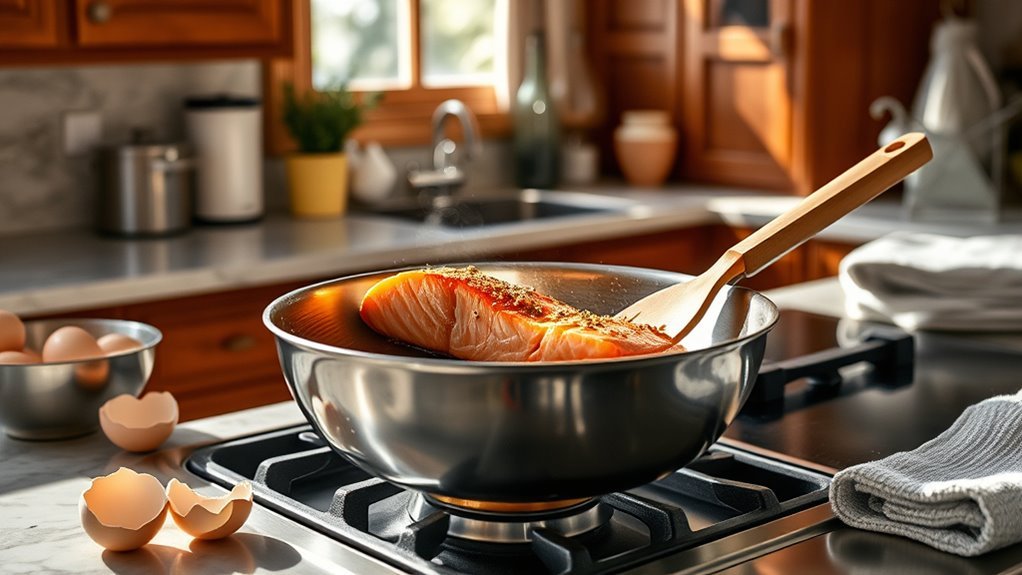
Is stainless steel hard to cook with? Not once you learn a few habits. Stainless has no coating, so food can stick if the pan is cold, the food is wet or you move it too soon. Preheat properly, add oil to a hot pan, and let food release on its own, and most of the frustration goes away.
This is the beginner’s overview. For a step-by-step heat check, read when a stainless steel pan is ready, and for the opposite problem see how to know if a stainless steel pan is too hot.
Why Stainless Steel Feels Hard at First
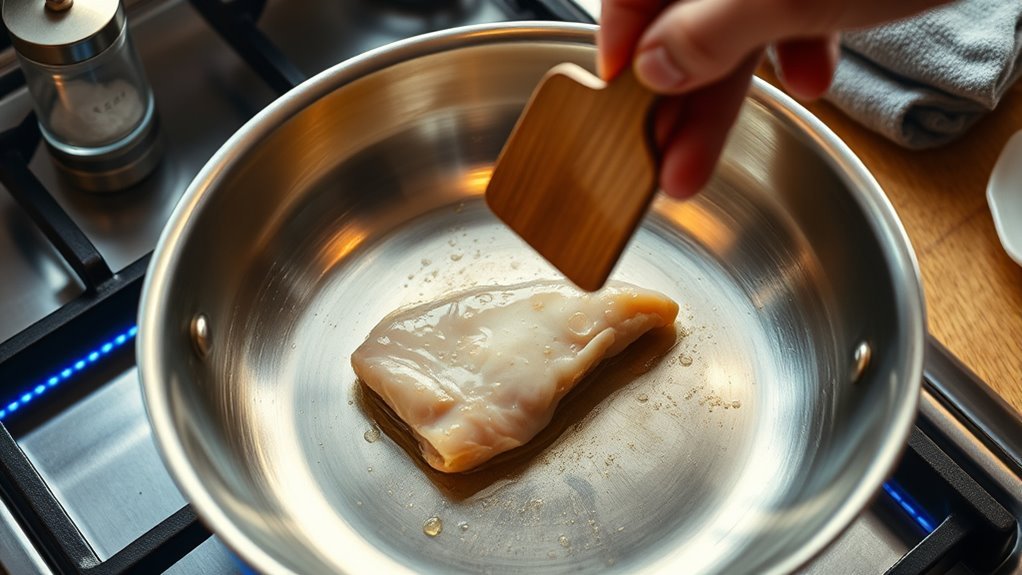
Nonstick pans forgive mistakes. Stainless steel does not hide them, which is why many new cooks think it is difficult. The surface looks smooth, but at a microscopic level it has tiny pores. Food proteins grab into those pores when the pan is not hot enough. When the pan is properly heated and oiled, a thin layer of fat fills the gaps and food slides free.
The payoff is real: stainless can take high heat, goes from stove to oven, handles metal utensils, and builds the browned bits (fond) that make good pan sauces.
5 Habits That Stop Food Sticking to Stainless Steel
- Preheat the empty pan. Heat it on medium for 2 to 3 minutes until a few drops of water form a single gliding bead. Wipe it dry afterward.
- Add oil to the hot pan. Swirl in a thin film and wait until it shimmers, then add food.
- Pat food dry. Moisture cools the pan and makes food steam instead of sear.
- Do not move it too soon. Seared food releases when a crust forms. If it resists, give it another 30 to 60 seconds.
- Do not crowd the pan. Too much food drops the temperature. Cook in batches.
Stainless Steel vs Nonstick vs Cast Iron
| Feature | Stainless steel | Nonstick | Cast iron |
|---|---|---|---|
| Learning curve | Medium | Easy | Medium |
| Searing and browning | Excellent | Limited by heat guidance | Excellent |
| Delicate foods (eggs, fish) | Needs technique | Easiest | Needs seasoning |
| Metal utensils | Generally fine | Usually not recommended | Fine |
| Oven use | Usually high, check rating | Often lower limits | Very high |
| Upkeep | Wash and dry, occasional polish | Gentle washing, coating wears | Seasoning care |
Nonstick is still the easiest choice for scrambled eggs and delicate fish. Most home cooks keep both. Our guide to which pans you need can help you plan a set.
Foods That Are Easy vs Tricky in Stainless Steel
- Easy: searing meat, roasting vegetables on the stove, sautéing, boiling, simmering sauces, and making pan sauces.
- Moderate: fish fillets and chicken breasts. Pat them dry, use enough fat and wait for them to release.
- Tricky: eggs and thin pancakes. Preheat well, use enough fat and keep the heat at medium-low after the water test.
What to Do When Food Sticks
- Stop and wait. Raw-looking sticking food is often just not ready to flip.
- Lower the heat if it is browning too fast, then add a splash of oil around the edge.
- Deglaze. If bits are stuck but not burned, add a little stock, wine or water to lift them and make a sauce.
- Start over if it is burnt. Wipe out the pan and begin again with fresh oil.
How to Clean Stainless Steel Easily
Cleaning is not hard if you do it while the pan is still warm, not hot. Let it cool for a few minutes, soak in warm soapy water, and wash with a sponge. For stuck food, simmer a little water in the pan, then scrub with a nylon pad.
For stains or heat tint, many makers, including All-Clad, suggest white vinegar or a non-abrasive cleanser such as Bar Keepers Friend. Avoid steel wool and bleach, and dry the pan to prevent spots. Wondering about the dishwasher? See can stainless steel go in the dishwasher.
Add salt after water has come to a boil, since salt sitting on a cool stainless surface can cause small pits, according to All-Clad’s care guidance.
Choosing a Stainless Steel Pan That Is Easier to Use
Construction matters more than the brand name. A pan with a thin base heats unevenly and sticks more.
- Fully clad pans have layers of stainless and aluminum all the way up the sides, which spread heat evenly. Read which ply is best for a comparison.
- Weight and thickness: a heavier pan holds heat better, but may be harder to lift.
- Induction use: look for a magnetic base or check the maker’s induction statement. See how to tell if cookware is induction ready.
Is Stainless Steel Safe to Cook With?
Stainless steel is widely used for cookware and food equipment. Small amounts of nickel and chromium can leach from steel, especially from new pans or with acidic foods cooked for a long time. For most people this is not a concern. If you have a nickel allergy or sensitivity, ask your doctor and look at the steel grade. For a wider comparison, see the healthiest cookware material.
Frequently Asked Questions
Is stainless steel hard to cook with for beginners?
It takes a little practice, but it is manageable. The keys are preheating the pan, adding oil once it is hot, drying your food and leaving it alone until it releases. After a few meals most people find it easy.
Why does everything stick to my stainless steel pan?
Usually the pan was not hot enough, the food was wet or cold, or it was moved too early. Preheat until water beads, add oil, pat food dry and wait for a crust to form before flipping.
Can you cook eggs in stainless steel?
Yes, but it needs technique. Preheat the pan, check with the water test, add enough fat, then lower the heat to medium-low before the eggs go in. Nonstick is easier if you want zero effort.
Do you need oil to cook in stainless steel?
Yes, in most cases. A thin layer of oil in a hot pan fills the tiny pores in the metal and helps food release. Foods that release their own fat, such as bacon, need less.
Conclusion
Stainless steel is not hard to cook with once you control the heat, use oil in a hot pan and give food time to release. It rewards you with strong browning, durability and easy pan sauces.
Related guides: what All-Clad cookware is and what 5-ply stainless steel is.
