
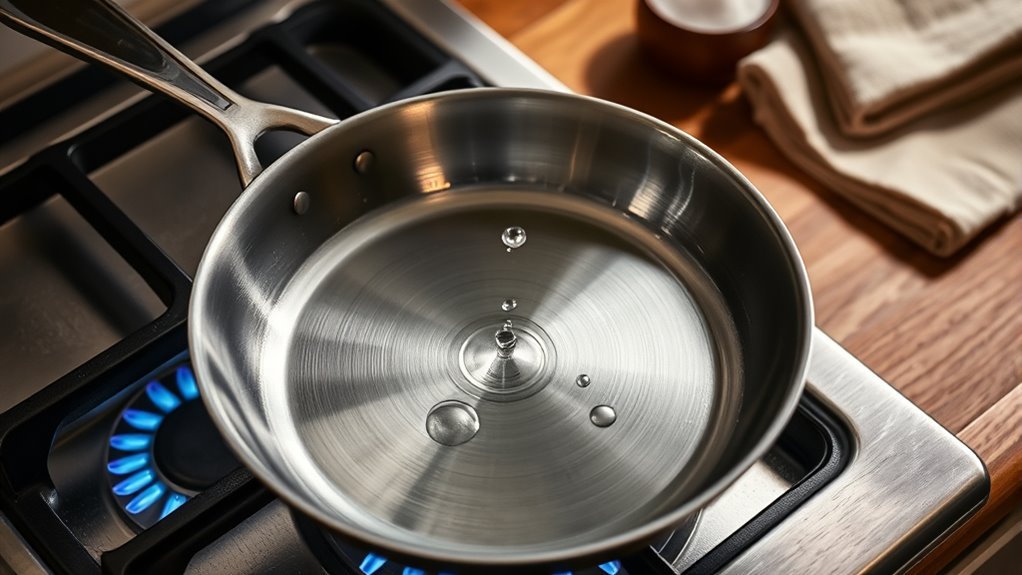
A stainless steel pan is ready when a few drops of water gather into one shiny bead and glide across the surface instead of sizzling away. For a 10-inch pan that usually takes about 2 to 3 minutes over medium heat, though your burner and the thickness of the pan change the timing. This guide shows how to run the water test, how long to preheat, when to add oil, and what to do if the pan is not quite right.
New to stainless? Start with our overview of whether stainless steel is hard to cook with. If you think you overshot the heat, jump to how to know if a stainless steel pan is too hot.
Is My Stainless Steel Pan Ready? Quick Water-Test Chart
| What the water does | What it means | What to do |
|---|---|---|
| Drops sizzle, flatten and evaporate in a few seconds | Pan is not hot enough yet | Keep heating, retest in 30 to 60 seconds |
| One drop forms a ball and glides like mercury | Pan is ready | Wipe it dry, add oil, then food |
| Drops break into many tiny beads that dart around, or oil smokes right away | Pan is hotter than you need | Take it off the heat for 30 to 60 seconds |
How to Do the Water Test (Leidenfrost Test)
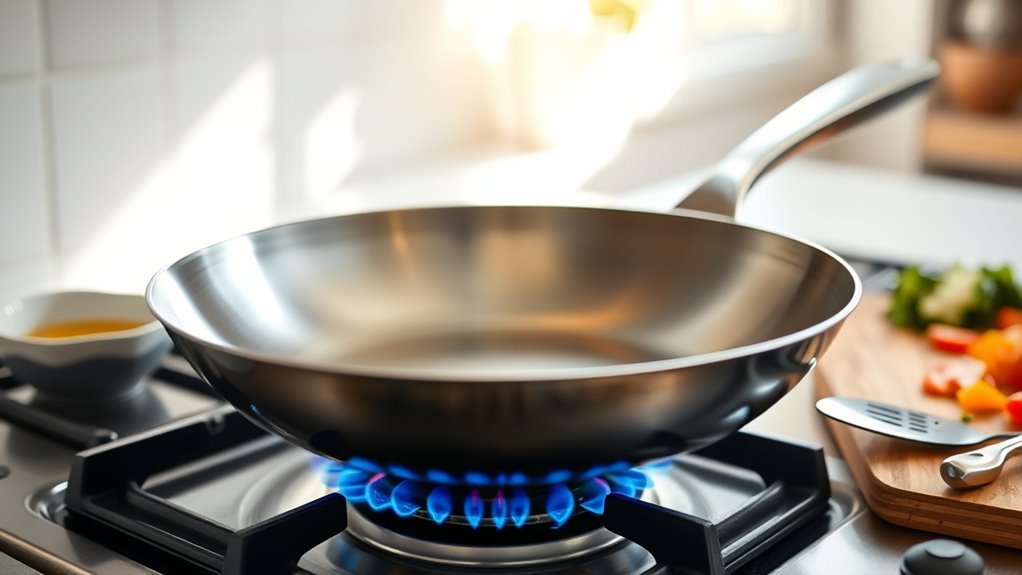
The water test works because of the Leidenfrost effect. Above roughly 380°F (about 193°C), a drop of water floats on a thin cushion of its own steam, so it beads up and slides instead of boiling off. A pan at that point is hot enough for food to sear and release without gluing itself to the metal.
- Start with a clean, completely dry pan. Leftover water makes the test unreliable.
- Heat it empty on medium or medium-low for 2 to 3 minutes.
- Flick or sprinkle a few drops of water, about half a teaspoon, onto the surface.
- If the water sizzles and spreads out, wait another 30 to 60 seconds and test again.
- When one drop becomes a ball that rolls around, the pan is ready. Pour out the water or wipe it with a paper towel before you add fat.
Test with a few drops, not a splash. Pouring in a lot of water cools the pan and can spit hot droplets at you.
How Long Does a Stainless Steel Pan Take to Preheat?
There is no single number, so use these as starting points and trust the water test.
- Small or medium pan (8 to 10 inches): about 2 to 3 minutes on medium heat.
- Large pan (12 inches or more): add a minute or two so the edges catch up with the center.
- Thick, heavy pans: take longer to heat but hold heat better once they get there.
- Induction: often heats much faster, so check after about a minute and use a lower setting than you would on gas or electric.
- Electric coil: slower to respond, so start earlier and avoid big heat jumps.
All-Clad, for example, advises preheating its stainless pans gradually on low to medium heat and not leaving an empty pan on a hot burner. Rushing the preheat on high heat is a common cause of scorched spots and warping.
When to Add Oil or Butter
Add oil after the pan passes the water test, not before. A hot pan with cool oil is the classic stainless method: swirl the oil and wait for it to shimmer and flow thinly, usually 10 to 20 seconds. Then add your food.
- Oil: pick one with a smoke point above your cooking temperature, such as refined avocado or canola oil, for searing.
- Butter: add it after the oil, or lower the heat first, because it browns and burns at a lower temperature.
- Cold pan start: only works for a few foods, such as bacon, where the fat renders as the pan warms.
Other Signs the Pan Is Ready
The water test is the most reliable visual cue, but these help confirm it.
- Oil shimmers and spreads thinly, with faint ripples but no smoke.
- Food gives a steady sizzle the moment it lands, not a violent crackle.
- An infrared thermometer can help, but shiny metal often reads lower than the real surface temperature, so treat the number as a rough guide.
Holding your hand over the pan is not a precise method. Use it only as a rough safety check, and never touch the surface.
Match the Heat to What You Are Cooking
Once the pan passes the water test, you often turn the heat down before the food goes in. These are starting points, not rules.
| Food | Heat after the water test | Tip |
|---|---|---|
| Steak, chops, seared chicken thighs | Medium to medium-high | Pat the surface dry for a better crust |
| Fish fillets | Medium | Let the crust form and release before turning |
| Vegetables | Medium | Do not crowd the pan |
| Eggs | Medium-low | Use enough fat, and lower the heat after the water test |
What to Do If Food Still Sticks
- Wait before flipping. Seared food releases on its own once a crust forms. If it tugs, give it another 30 to 60 seconds.
- Dry the food. Surface moisture cools the pan and makes food stick.
- Take food out of the fridge first. Very cold food drops the pan temperature fast. Give it a few minutes on the counter.
- Do not overcrowd. Cook in batches so the pan stays hot.
- Use enough fat. A thin, even film is enough for most searing.
Never run cold water into a very hot pan. Let it cool first to avoid thermal shock and warping.
Frequently Asked Questions
Do I need to season a stainless steel pan before using it?
No. Stainless steel does not need seasoning like cast iron. Wash a new pan with soap and warm water, dry it, and preheat before cooking. Using the water test and enough oil prevents most sticking.
How do I know the stainless steel pan is ready without water?
Look for oil that shimmers and flows thinly without smoking, and listen for a steady sizzle when food lands. An infrared thermometer can help, but it may read low on shiny stainless, so the water test is more dependable.
Can I add oil to a cold stainless steel pan?
You can, but food is more likely to stick. For most foods, preheat first, check with the water test, then add oil. Cold-pan starts work best for fatty foods such as bacon, where the fat renders as the pan warms.
Is the water test safe for every pan?
It works on bare stainless steel, including clad pans. Do not use it on nonstick or enameled pans, which should not be preheated empty at high heat. Keep your face away from the pan, because water can spit when the surface is hot.
Conclusion
A stainless steel pan is ready when a drop of water beads up and glides across the surface. Preheat gently, wipe the pan dry, add oil, and wait for it to shimmer before cooking.
Related guides: signs a stainless steel pan is too hot, is stainless steel hard to cook with, and what All-Clad cookware is.

