When it comes to aluminum baking sheets, safety is a key concern for many cooks. You might wonder if these widely used tools can leach harmful substances into your food, especially with acidic ingredients. Understanding the materials and their properties can help you make informed choices. But what precautions should you take to guarantee your baking experience remains safe and effective? Let’s explore the nuances of aluminum bakeware and its alternatives.
What Are Aluminum Baking Sheets?
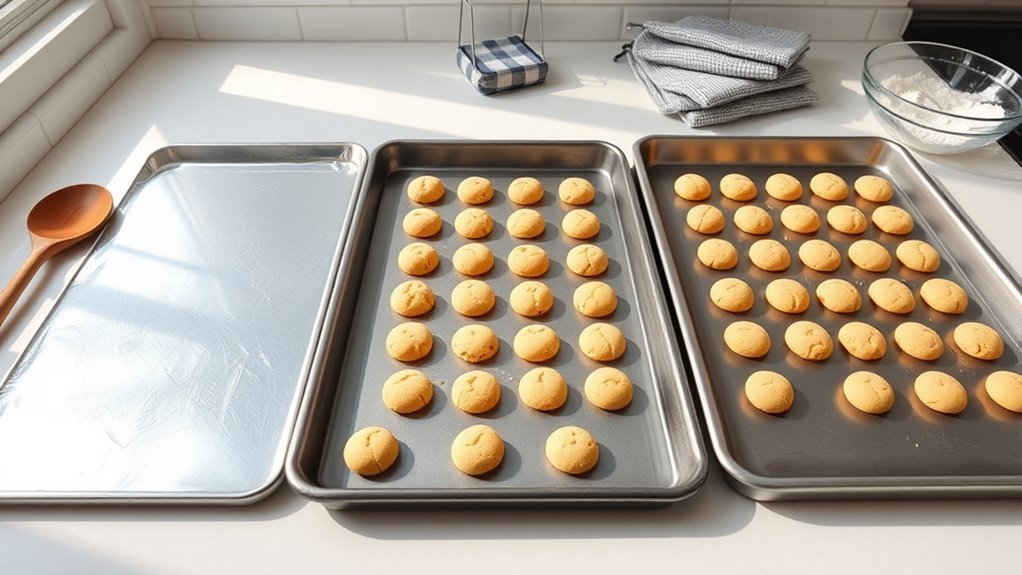
Aluminum baking sheets are vital tools in many kitchens, prized for their ability to conduct heat efficiently. Their excellent heat conductivity guarantees even baking and browning, making them favorites for cookies and roasted vegetables.
Aluminum baking sheets are essential for achieving perfectly baked goods, ensuring even heat distribution for cookies and roasted vegetables.
Lightweight and durable, they appeal to both home cooks and professional bakers. Uncoated aluminum sheets are generally food-safe, but safety concerns arise regarding aluminum leaching, particularly with acidic foods or high-temperature cooking.
This is where anodized aluminum comes into play. These sheets feature a protective layer that enhances durability and minimizes the risk of leaching, offering a safer alternative.
To maintain their integrity, proper care is important; avoid harsh chemicals and sudden temperature changes to prolong their lifespan.
Do Aluminum Baking Sheets Release Harmful Chemicals?
While many appreciate the efficiency of aluminum baking sheets, concerns about harmful chemical release shouldn’t be overlooked. Aluminum can leach into food, particularly when cooking acidic foods, which raises health risks due to potential chemical reactions and aluminum exposure.
Here are some key points to examine:
- Acidic Foods: Cooking with tomatoes or citrus can increase leaching.
- Anodized Aluminum: This type provides a protective layer, minimizing direct contact and leaching.
- Non-Stick Coatings: These can release harmful chemicals at high temperatures; it’s best to avoid them.
- Proper Care: Handling your sheets with care—avoiding high heat—can help minimize risks.
Research indicates that aluminum is generally safe for food contact, but long-term exposure warrants caution.
How to Avoid Health Risks With Aluminum Baking Sheets
To minimize health risks associated with aluminum baking sheets, it’s vital to adopt a few key practices.
First, consider using anodized or coated versions, as they greatly reduce the risk of aluminum leaching into food, especially with acidic foods like tomatoes or citrus. Preheating your oven before placing the baking sheets can also help prevent warping and limit chemical reactions with your meals.
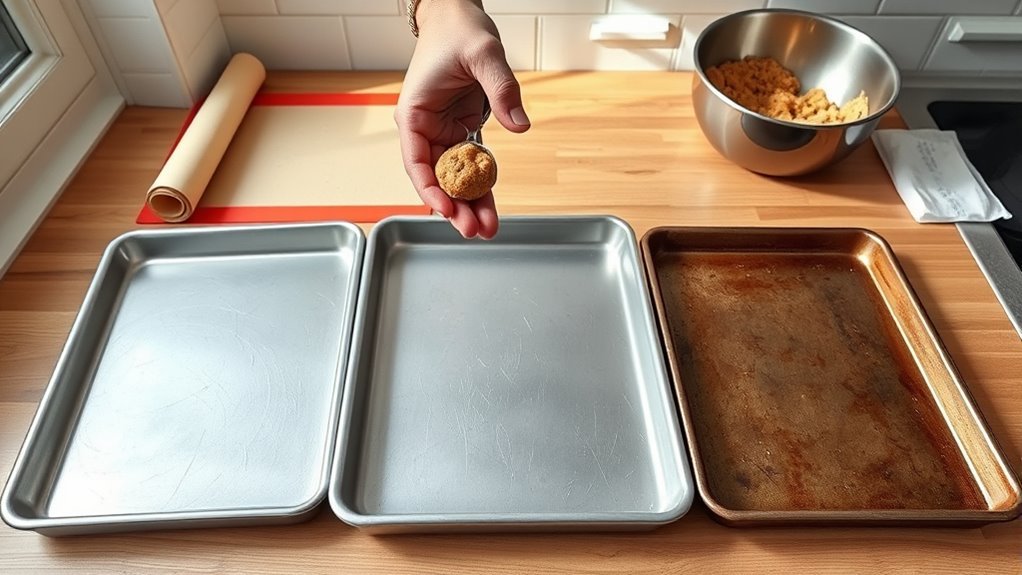
Regular inspection of your aluminum sheets is essential; look for scratches or pitting that could indicate potential health risks and compromise food safety.
Lining your baking sheets with parchment paper not only prevents sticking but also serves as a barrier to minimize direct contact with aluminum.
Finally, avoid using metal utensils on these sheets, as they can damage the surface and increase leaching over time.
Is Anodized Aluminum a Safer Option for Baking Sheets?
Is anodized aluminum truly a safer choice for baking sheets? The anodization process creates a protective layer that prevents aluminum leaching into your food, making it a more durable option.
Is anodized aluminum a safer choice for baking sheets? Its protective layer prevents aluminum leaching, enhancing durability and safety.
Here are some key benefits of anodized aluminum baking sheets:
- Enhanced Durability: The electrochemical process hardens the surface, making it scratch-resistant.
- Non-Stick Properties: Unlike standard aluminum, anodized aluminum provides a natural non-stick cooking surface without harmful coatings.
- Safe for High Temperatures: It can withstand high temperatures without reacting, guaranteeing your food stays safe.
- Compatibility with Acidic Foods: Anodized aluminum won’t react with acidic or alkaline ingredients, making it versatile for various recipes.
Always check labels to confirm you’re purchasing genuine anodized products for peak safety and performance.
With these features, anodized aluminum might just be the liberation you seek in your cooking journey.
Comparing Aluminum With Other Bakeware Materials
When comparing aluminum baking sheets with other bakeware materials, it’s essential to evaluate factors like heat conductivity, reactivity, and maintenance.
Aluminum baking sheets are lightweight and excel in heat conductivity, ensuring even baking and browning. In contrast, cast iron and stainless steel, while non-reactive and providing excellent heat retention, can be heavier and require more upkeep.
Unlike aluminum, which may leach when exposed to acidic foods, stainless steel and glass remain safe options. Anodized aluminum mitigates these concerns by creating a protective layer that prevents leaching and enhances durability.
Silicone baking mats, though non-toxic and flexible, mightn’t distribute heat as evenly, leading to inconsistent results.
Ultimately, choosing the right bakeware options depends on your baking needs—whether you prioritize performance or ease of maintenance.
Frequently Asked Questions
What Is the Safest Baking Sheet Material?
The safest baking sheet materials are uncoated stainless steel and borosilicate glass. Both offer excellent heat distribution and durability without harmful nonstick coatings.
For eco-friendly options, consider ceramic or porcelain, ensuring they’re lead-free.
In your durability comparison, stainless steel outlasts others, but glass provides unique surface textures.
Brand recommendations include USA Pan for stainless steel and Pyrex for glass.
Remember to follow maintenance tips for longevity and food safety in your kitchen.
Does Aluminum Release Toxins When Heated?
Aluminum doesn’t release harmful toxins when heated, despite aluminum toxicity myths. Cooking temperature effects can cause minimal metal leaching, but health studies show these levels are safe for most.
To guarantee food safety, care for your baking sheets by avoiding deep scratches and using parchment paper. Consider cookware alternatives like anodized aluminum for added protection.
Plus, recycling aluminum benefits the environment, making it a responsible choice in your kitchen.
Which Is Healthier, Aluminum Foil or Parchment Paper?
Parchment paper is healthier than aluminum foil for several reasons. It’s a non-stick option that won’t leach chemicals into your food, particularly with acidic dishes.
Its heat resistance up to 425°F guarantees durability in various cooking methods. Additionally, parchment paper is compostable, making it a better choice for the environment.
Regarding food safety and culinary uses, it offers a versatile alternative to aluminum foil, minimizing health concerns linked to aluminum exposure.
Which Is Better, Stainless Steel or Aluminum Baking Sheets?
When choosing between stainless steel and aluminum baking sheets, imagine a race—aluminum speeds ahead with quick heat conductivity and affordability, while stainless steel stands firm with unmatched durability and rust resistance.
For non-stick surfaces, both require maintenance, but stainless steel’s longevity may outweigh its higher cost.
Consider weight; aluminum’s lightness is a boon for mobility.
Be mindful of food reactions too; stainless steel remains neutral, ensuring your dishes shine without compromise.
Conclusion
To conclude, aluminum baking sheets can be safe for your kitchen, much like sturdy armor protecting a knight. By choosing anodized options and using parchment paper, you greatly reduce the risk of harmful leaching. Regular maintenance will keep your sheets in top shape, ensuring they last longer. While they’re a great choice, staying informed about your bakeware materials helps you make the best decisions for your health and cooking adventures.