
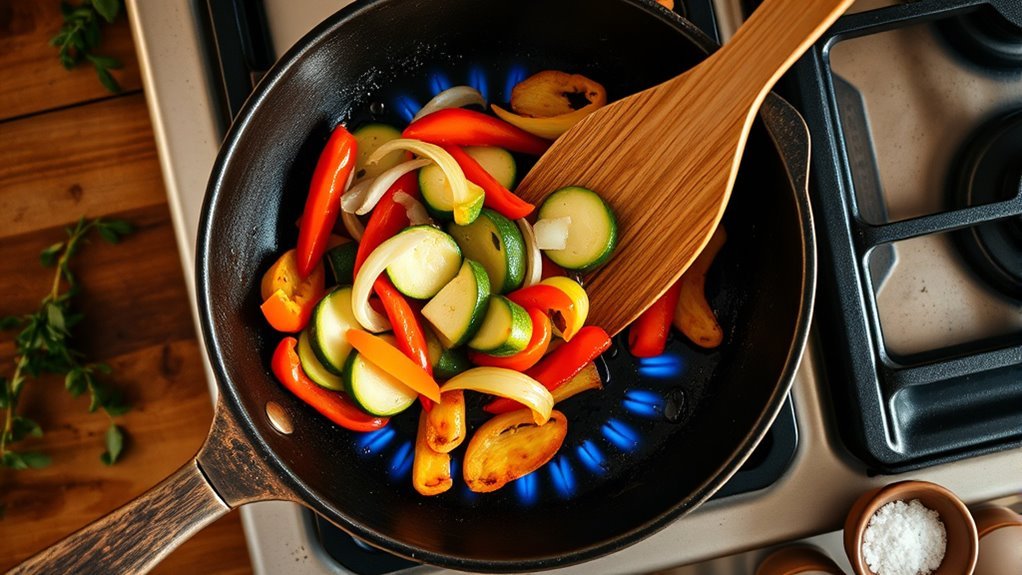
If you’ve ever wondered about sautéing in a cast iron skillet, you’re in for a treat. This versatile tool not only retains heat well but also develops a natural non-stick surface with proper care. Choosing the right oil and mastering your technique can elevate your dishes substantially. However, there are a few key considerations to keep in mind. Let’s explore how to make the most of your cast iron skillet for perfect sautéing results.
Why Choose a Cast Iron Skillet for Sautéing?

When you choose a cast iron skillet for sautéing, you’re opting for a tool that transforms your cooking experience. With its remarkable heat retention and distribution, you’ll find that every ingredient cooks evenly, achieving that perfect golden-brown finish.
The naturally non-stick surface, built through the seasoning process, makes food release effortless, so you can focus on creating culinary magic without the frustration of sticking.
Durable and resilient, your skillet can handle high heat, perfect for searing meats and vegetables quickly while locking in flavors and textures.
Plus, the versatility to shift from stovetop to oven opens up a world of cooking possibilities. As you sauté, you’re not just enhancing flavors; you’re also adding trace amounts of iron to your meals, contributing to your dietary needs.
Choosing a cast iron skillet elevates your cooking, making each dish a celebration of flavor and nourishment.
How to Properly Season Your Cast Iron Skillet
To keep your cast iron skillet in top shape, proper seasoning is key.
Start by applying a thin layer of organic flaxseed oil, making sure every surface gets a touch.
Then, with a few simple steps, you’ll create a non-stick surface that enhances your cooking experience.
Essential Seasoning Steps
Properly seasoning your cast iron skillet is essential for achieving that coveted non-stick surface and preventing rust.
Start by stripping any old seasoning with a vinegar and water soak, then scrub with baking soda to eliminate rust and debris.
Once clean, apply a thin layer of organic flaxseed oil over the entire skillet, including the handles.
Preheat your oven to 450°F (232°C) and place the skillet upside down on the middle rack, with a baking sheet below to catch drips.
Bake for about an hour to allow the oil to polymerize.
Finally, let the skillet cool completely in the oven.
Regular use enhances this seasoning, so embrace your skillet’s journey to liberation through cooking!
Best Oils to Use
What’s the secret to achieving a perfectly seasoned cast iron skillet? The best oils to use are essential for this transformation.
Flaxseed oil stands out as the top choice, thanks to its high smoke point and ability to create a durable, non-stick layer. If you prefer alternatives, grapeseed, canola, and sunflower oils offer similar benefits with neutral flavors.
Remember to apply a very thin layer to avoid sticky residue. After that, place your skillet upside down in a preheated oven at 450°F for about an hour to let the oil polymerize effectively.
Regular cooking with your skillet will keep that protective layer in shape, reducing the need for reseasoning. Enjoy the liberation of perfectly seasoned cooking!
Best Oils for Sautéing in Cast Iron
When it comes to sautéing in a cast iron skillet, choosing the right oil can make all the difference. For high-heat cooking, you’ll want oils with a high smoke point, like avocado oil (up to 520°F) and grapeseed oil (up to 420°F).
These oils can take the heat without breaking down, allowing your ingredients to shine. If you prefer a more neutral flavor, canola or vegetable oil works wonders, ensuring your dish’s natural tastes stand out.
Additionally, oils like flaxseed not only enhance the sautéing process but also help maintain your skillet’s seasoning. Just steer clear of low smoke point oils like olive oil, which can burn and spoil your food.
Remember to reapply oil as needed to prevent sticking and keep your skillet in top shape. By choosing the best oils for sautéing in cast iron, you empower your cooking and elevate your culinary creations.
Perfect Techniques for Sautéing Veggies and Meats
After selecting the right oil for sautéing, mastering your technique is key to bringing out the best in your veggies and meats.
Start by preheating your cast iron skillet over medium-high heat for a few minutes—this guarantees even cooking and prevents sticking. Use oils with high smoke points, like canola or grapeseed, to achieve ideal sautéing temperatures without burning.
Cut your veggies and meats into uniform sizes for even cooking, avoiding the dreaded overcooked and underdone mix.
Remember, overcrowding the skillet lowers the temperature, leading to steaming instead of that glorious sauté. If needed, cook in batches to maintain that perfect heat.
Stir frequently, allowing your food to develop a nice sear—this enhances flavor and texture while creating a delicious layer of seasoning.
Embrace these techniques, and you’ll elevate your sautéing game to a whole new level!
Sautéing Acidic Foods: What You Need to Know?
When sautéing acidic foods like tomatoes or citrus in your cast iron skillet, it’s essential to keep cooking times short.
Prolonged exposure can lead to a metallic taste and strip your skillet’s seasoning, so remove the food promptly.
For a worry-free experience, consider using enameled cast iron for those highly acidic dishes, ensuring flavors shine without compromise.
Key Considerations for Sautéing
Sautéing acidic foods in a cast iron skillet can be a delightful culinary experience, but it requires some careful consideration.
First, avoid prolonged cooking times to prevent an iron flavor from leaching into your dish. Quick removal of acidic foods like tomatoes or citrus is essential; use them sparingly and for short durations.
While you can sauté delicate fish, make certain your skillet is well-seasoned to maintain flavor integrity. This seasoning helps mitigate any negative reactions with acidic foods.
Quick Cooking Techniques
Reveal the vibrant flavors of your dishes by mastering quick cooking techniques in a cast iron skillet, especially when it comes to acidic foods.
Sautéing tomatoes or citrus can elevate your meals, but be cautious—prolonged contact may impart an unwanted iron flavor. Keep your cooking brief; a quick sauté guarantees those bright flavors shine without compromise.
Always preheat your skillet for that perfect sear and maintain a consistent temperature. A well-seasoned skillet enhances non-stick properties, preventing food from sticking, even with acidic ingredients.
After sautéing, clean your skillet while warm using salt and a metal scrubber to preserve its seasoning and guarantee longevity.
Embrace this liberating technique to create dishes bursting with freshness!
Easy Cleaning Tips for Your Skillet After Sautéing
Cleaning your cast iron skillet doesn’t have to be a chore; in fact, it can be a quick and satisfying process. Start by rinsing your skillet with hot water right after sautéing. This simple step prevents food from sticking and makes cleaning easier. Use a metal scrubber and sprinkle some coarse salt to effectively remove any residues without harming the seasoning.
Here are some easy cleaning tips to keep in mind:
| Step | Tips |
|---|---|
| Rinse | Use hot water immediately after cooking. |
| Scrub | Employ coarse salt with a metal scrubber. |
| Dry & Season | Dry completely and apply flaxseed oil. |
Avoid soap unless the skillet’s heavily soiled, as well-seasoned cast iron can handle just hot water. After cleaning, dry it thoroughly to avoid rust. These steps guarantee your skillet remains a trusty kitchen companion for years to come!
Common Mistakes to Avoid When Sautéing in Cast Iron
When you’re cooking with a cast iron skillet, avoiding common pitfalls can make all the difference in achieving perfectly sautéed dishes.
First, always preheat your skillet; this simple step guarantees even cooking and prevents sticking. Don’t skimp on fat, either—generously coating the pan creates that vital non-stick surface, especially for delicate items.
Another layer of care comes from managing the amount of food in the pan. Overcrowding leads to steaming rather than browning, so sauté in batches for ideal flavor and texture.
Keep an eye on the temperature, too; cast iron retains heat incredibly well, so adjusting it’s essential to avoid burning.
Lastly, be cautious with acidic ingredients. They can impart off-flavors and damage your skillet’s seasoning.
Frequently Asked Questions
What Foods Cannot Be Cooked in Cast Iron?
You shouldn’t cook highly acidic foods like tomatoes or citrus in cast iron for long periods. They can strip away the seasoning and impart a metallic flavor.
Delicate fish also requires caution, as it might stick and break apart. Boiling water isn’t ideal either; stick with stainless steel or aluminum for that.
Embrace the versatility of cast iron, but be mindful of these limitations to guarantee your meals taste their best!
What Food Is Best Cooked in Cast Iron?
You’ll find that meats and hearty vegetables shine when cooked in cast iron. The skillet’s heat retention gives your steak a perfect crust, delivering a serious flavor boost.
Think caramelized Brussels sprouts or roasted carrots that stay juicy inside. Even cornbread and frittatas turn out golden and evenly cooked, making it a versatile ally in your kitchen.
Embrace high-heat cooking, and release bold flavors with every dish you create!
Do You Oil a Cast Iron Before Cooking?
Yes, you should definitely oil your cast iron skillet before cooking. A thin layer of oil enhances its non-stick properties and helps prevent food from sticking.
Preheat the skillet with the oil for a well-prepared cooking surface, then add your ingredients. Just a small amount works wonders, and remember to wipe out any excess oil to keep things clean and reduce smoking.
Enjoy the liberation of cooking with ease and confidence!
What Ruins a Cast Iron Skillet?
A cast iron skillet can feel like a trusty friend, but neglect can ruin it. If you skip proper seasoning techniques, your skillet may stick like a bad memory.
Moisture exposure can cause rust, while high-acid foods strip that precious seasoning, leaving a metallic taste. Always dry your skillet thoroughly and avoid harsh cleaners.
Treat it with care, and it’ll serve you well for years, just like a loyal companion should.
Conclusion
In your cast iron skillet, you wield a trusty companion, transforming simple ingredients into culinary masterpieces. Just as a blacksmith tempers steel, your careful seasoning and attention to technique will forge unforgettable flavors. Embrace the warmth of this timeless tool, letting it guide you through sizzling veggies and tender meats. With each meal, you’re not just cooking—you’re crafting a story steeped in tradition. So, fire up that skillet and let your kitchen come alive with delicious possibilities!
