
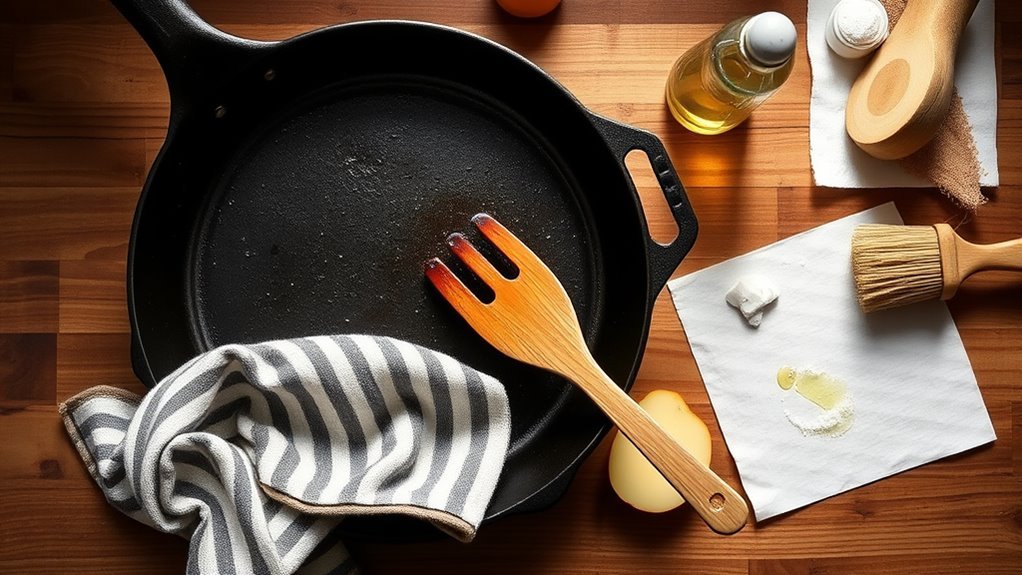
After cooking with your cast iron skillet, proper care is vital to guarantee it lasts for years. You might think it’s just about cleaning, but there’s more to it. From avoiding soap to the right drying techniques, every step matters. If you don’t handle it correctly, you could face rust or loss of seasoning. Want to know the best ways to maintain that perfect cooking surface? Let’s explore the essential steps together.
Why Proper Care Matters for Your Cast Iron Skillet
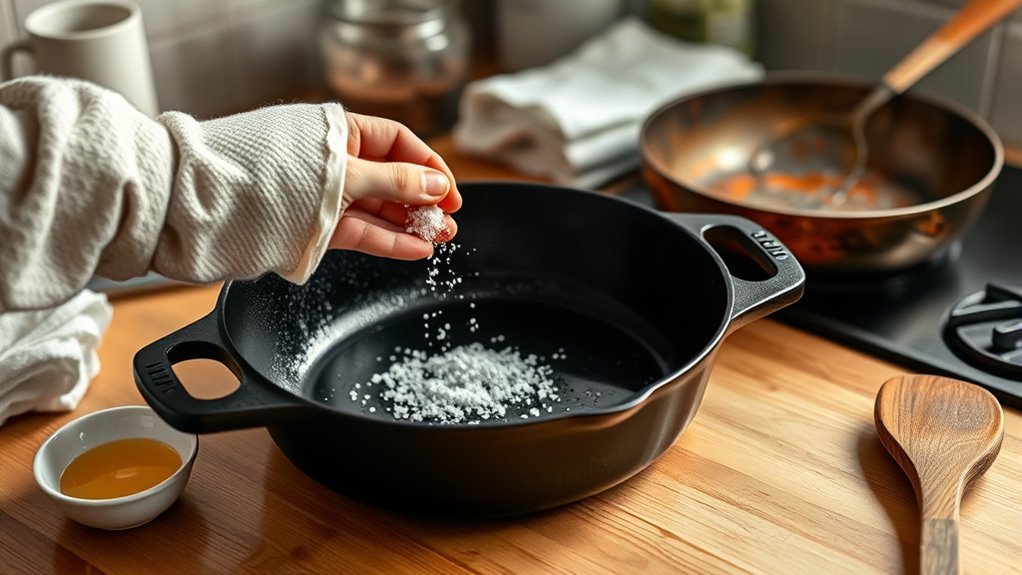
When you take proper care of your cast iron skillet, you’re not just maintaining a cooking tool; you’re enhancing its performance and longevity. A skillet that’s properly cared for will develop natural non-stick properties, allowing your food to release easily and improving your cooking results over time.
Regularly applying a thin layer of oil and heating the skillet is essential for seasoning, protecting it from rust and helping to maintain its non-stick surface.
Regular oil application and heating are vital for seasoning, rust protection, and preserving your skillet’s non-stick qualities.
Cleaning cast iron immediately after use is key to preventing food residue buildup, which can lead to sticking and degrade the seasoning. Avoid harsh chemicals and abrasive tools during cleaning; they can damage the protective layer.
Store your skillet in a dry environment, and remember to apply oil occasionally. This simple routine guarantees your skillet remains functional for generations, empowering you to cook with confidence.
How to Clean Your Cast Iron Skillet After Cooking
Cleaning your cast iron skillet right after cooking guarantees it stays in top shape for years to come. Start while it’s still warm by scraping off food particles with a scraper or flat-edged spatula.
For stubborn residue, use a chain mail scrubber or a stiff brush with hot water. This method won’t harm your skillet’s seasoning. Avoid soap unless absolutely necessary, as harsh detergents can strip that protective layer.
Once you’ve cleaned the skillet, dry it thoroughly with a towel. To prevent rust, heat it on a burner briefly to evaporate any remaining moisture.
Afterward, apply a thin layer of oil, like Crisco, to protect the surface and enhance its non-stick properties. Following these steps guarantees your cast iron skillet remains a beloved kitchen companion for years to come.
Best Methods for Stubborn Food Removal
Even with the best cleaning practices, stubborn food residues can still cling to your cast iron skillet. For effective removal, start by using a chainmail scrubber; it’s designed to lift stuck bits without damaging your skillet’s seasoning.
If the residue is particularly stubborn, add a small amount of warm water while the skillet is still warm. This helps loosen the food for easier cleaning.
Alternatively, a salt scrub with coarse kosher salt and a little water can work wonders, scrubbing away the stuck-on bits while preserving the seasoning.
You can also try boiling water in the skillet; as it cools, use a wooden spoon to gently scrape off any remaining particles.
If you must resort to soap and water, choose a mild dish soap sparingly, as too much can strip away the precious seasoning you’ve built up over time.
Easy Steps to Reseason Your Cast Iron
Reseasoning your cast iron skillet is essential for maintaining its non-stick surface and preventing rust.
Start by choosing the right high-smoke-point oil and applying it properly to guarantee an even coat.
After baking it at 450°F, let your skillet cool in the oven to set the seasoning—repeat this process if the surface looks dull.
Essential Seasoning Oils
When it comes to keeping your cast iron skillet in top shape, choosing the right seasoning oil is essential. Using high-smoke-point oils guarantees effective seasoning and durability. Here’s what you should consider:
- Flaxseed oil: Excellent for polymerization and building a strong layer.
- Canola oil: Affordable and widely available, perfect for seasoning.
- Vegetable oil: A reliable option for a smooth finish.
- Grapeseed oil: High smoke point and neutral flavor.
- Sunflower oil: Another great high-smoke-point choice.
Apply a thin layer of your chosen oil, guaranteeing an even coat. Avoid low-smoke-point oils like olive oil, as they can leave a sticky residue.
For the best results, repeat the seasoning process until you’ve achieved a durable, non-stick surface.
Proper Application Techniques
To keep your cast iron skillet performing at its best, mastering the reseasoning process is essential.
Start by ensuring your cast iron pans are completely clean and dry. Next, apply a thin layer of high-smoke-point oil, like canola or flaxseed, evenly across the surface.
Preheat your oven to 450°F, then place the skillet upside down on the middle rack, with a baking sheet underneath to catch any drips. Bake for one hour to allow the oil to polymerize, creating a durable non-stick surface.
Afterward, turn off the oven and let the skillet cool inside to prevent cracking.
If your skillet looks dull or patchy, repeat the process to maintain its non-stick properties and protect against rust.
Baking and Cooling Process
Achieve a perfectly seasoned cast iron skillet by mastering the baking and cooling process. Follow these easy steps to enhance your skillet’s non-stick quality:
- Clean your skillet thoroughly.
- Apply a thin layer of high-smoke-point oil, like flaxseed or canola.
- Place the skillet upside down in a preheated oven at 450°F with a baking sheet beneath to catch drips.
- Bake for one hour to allow the oil to polymerize effectively.
- Turn off the oven and let the skillet cool completely inside for ideal bonding.
Repeat this seasoning process if the surface appears dull or patchy.
Regular reseasoning keeps your cast iron in prime condition, extending its lifespan and ensuring a liberating cooking experience.
Top Tips to Prevent Rust on Your Cast Iron
Preventing rust on your cast iron requires a few simple yet effective practices. Always make sure your cast iron is dry completely before storing it; moisture is the enemy. After cleaning, apply a thin layer of oil to seal the surface and protect against rust. Remember to avoid soaking your cast iron in water, as excess moisture can promote rust formation. Storing your cast iron in a well-ventilated area is essential; consider placing paper towels between stacked pans to absorb any residual moisture. Regular cooking with fats like bacon grease or vegetable oil not only enhances flavor but also maintains the seasoning, creating a protective barrier against rust.
| Action | Purpose | Tips |
|---|---|---|
| Dry completely | Prevent moisture accumulation | Use a towel or air dry |
| Apply thin layer of oil | Seal and protect against rust | Use vegetable or flaxseed oil |
| Avoid soaking | Minimize excess moisture | Clean with minimal water |
How to Store Your Cast Iron for Longevity
To keep your cast iron in top shape, proper drying is essential—moisture can lead to rust.
Store your skillet in a well-ventilated area to enhance airflow and reduce moisture buildup.
If you stack your cookware, use paper towels between pans to absorb any excess moisture and protect the seasoning.
Proper Drying Techniques
One essential step in ensuring your cast iron skillet lasts for generations is mastering proper drying techniques. Moisture is your skillet’s worst enemy, so follow these key practices:
- Heat the skillet on a burner for a few minutes to evaporate any remaining moisture.
- Store your cast iron in a well-ventilated area to promote air circulation.
- If stacking, place paper towels between pieces to absorb moisture and protect the seasoning.
- Wipe a thin layer of oil on the cooking surface to maintain seasoning and create a rust barrier.
- Regularly check for any signs of moisture before storage to keep your skillet in peak condition.
Ideal Storage Conditions
Storing your cast iron skillet properly is essential for its longevity, as it can greatly impact its performance and condition.
Always make sure your skillet is completely dry before storage; moisture can lead to rust and corrosion. Opt for a well-ventilated area, avoiding airtight containers, to allow air circulation and prevent moisture buildup.
If you stack your skillet with other cookware, place paper towels between pieces to absorb moisture and protect the seasoning from scratches. A thin layer of oil—like Crisco or vegetable oil—can safeguard the seasoning and minimize rust.
Finally, avoid covering your cast iron with a lid; instead, leave it uncovered or loosely covered to promote airflow and keep your skillet in top shape.
Don’t Make These Common Cast Iron Mistakes
While cast iron skillets are renowned for their durability and cooking prowess, making common mistakes can compromise their longevity and performance. Here are some pitfalls to avoid:
- Avoid Soaking: Soaking your skillet can lead to rust and damage the seasoning.
- Limit Soap Use: Frequent soap use strips away the seasoning; stick to non-soap cleaning methods.
- Skip the Dishwasher: Dishwashers ruin seasoning; use gentle tools like chain mail or a stiff brush instead.
- Don’t Store Unseasoned: Always guarantee your skillet is seasoned and completely dry before storing to prevent rust.
- Beware of Temperature Shock: Pouring cold water into a hot skillet can cause cracking or warping.
How Regular Use Enhances Your Cast Iron’s Performance
Regularly using your cast iron skillet not only enhances its performance but also fosters a deeper bond with your cooking tools. Each time you cook, you build layers of polymerized oils that create a natural non-stick surface, thanks to consistent seasoning.
This regular use improves heat retention, allowing for better searing and browning of your favorite dishes. Cooking with fats like bacon grease or butter further maintains and enhances your skillet’s seasoning, reducing the need for extensive re-seasoning.
Over time, your skillet develops a robust protective layer, making it more effective and enjoyable to use.
Frequently Asked Questions
Are You Supposed to Put Oil on a Cast Iron After Cleaning It?
Yes, you should definitely put oil on your cast iron after cleaning it. This seasoning technique enhances its non-stick surface and protects it from rust.
Use high-smoke-point oil types like canola or flaxseed. After cleaning, lightly rub the oil around the skillet’s interior with a paper towel, wiping away excess.
Regular maintenance tips include applying oil even when not in use, ensuring your skillet remains in top shape for years to come.
What Should My Cast Iron Look Like After Cleaning?
After cleaning, your cast iron should gleam like a well-polished gem. The surface texture should be smooth and dark, free from food residue or rust.
Maintenance tips to guarantee this include using proper cleaning techniques, like avoiding soap. You might notice a slight sheen from a thin layer of oil, enhancing its non-stick quality.
Discoloration is fine, but steer clear of sticky spots—those indicate excess oil or improper seasoning.
What Ruins a Cast Iron Skillet?
A cast iron skillet can be ruined by neglecting rust prevention, like soaking it in water or storing it in humid conditions.
Poor seasoning techniques, such as using abrasive cleaners, strip away the protective layer.
Be mindful of heat management; overheating can damage the skillet’s integrity.
Additionally, cooking acidic foods in a poorly seasoned skillet can lead to undesirable food reactions, ruining both the skillet and your meals.
Protect your skillet for lasting use!
Why Is My Cast Iron Dirty After Cleaning?
Ever wondered why your cast iron looks dirty after cleaning? It might be stubborn food residue clinging on due to common cleaning mistakes.
If you scrub too hard, you can strip the cast iron seasoning, leaving a rough surface. Over-oiling or improper drying can create a sticky mess, while moisture leads to rust.
For a pristine skillet, follow rust prevention tips and maintain consistent seasoning layers to enjoy a clean, effective cooking surface.
Conclusion
So there you have it—you’ve got the secrets to keeping your cast iron skillet in tip-top shape. Treat it right, and it’ll reward you with a non-stick surface that rivals a cooking show celebrity’s. Forget to care for it, and you might as well use it as a doorstop. Embrace the quirks of cast iron cooking; after all, who needs fancy non-stick when you can wield the culinary power of a well-loved skillet? Happy cooking!