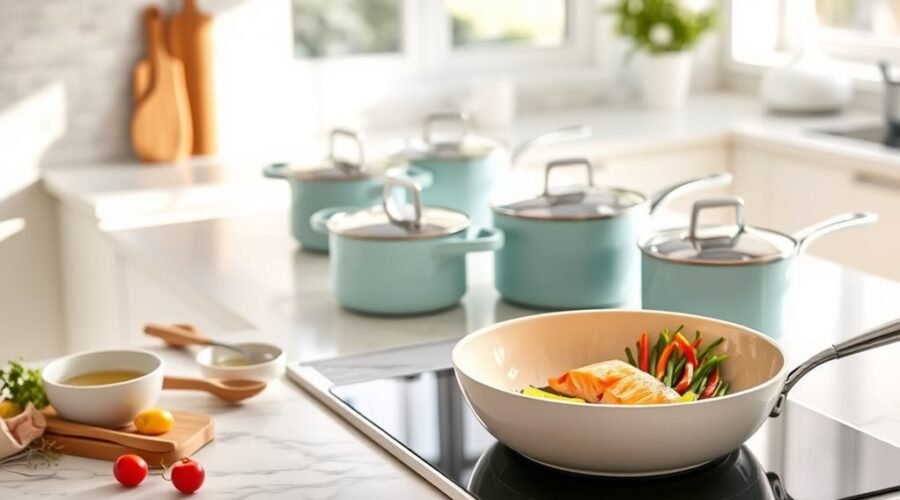
When it comes to cookware, ceramic coating offers a modern twist on traditional options, providing a safer alternative for your kitchen. It features a durable metal base topped with a nonstick ceramic layer, allowing for healthier cooking without harmful chemicals. If you’re wondering how this innovative material stands up against conventional nonstick cookware, or what unique benefits it brings to your culinary experience, you’ll want to explore the key facts further.
What Is Ceramic Coating Cookware and How Does It Work?
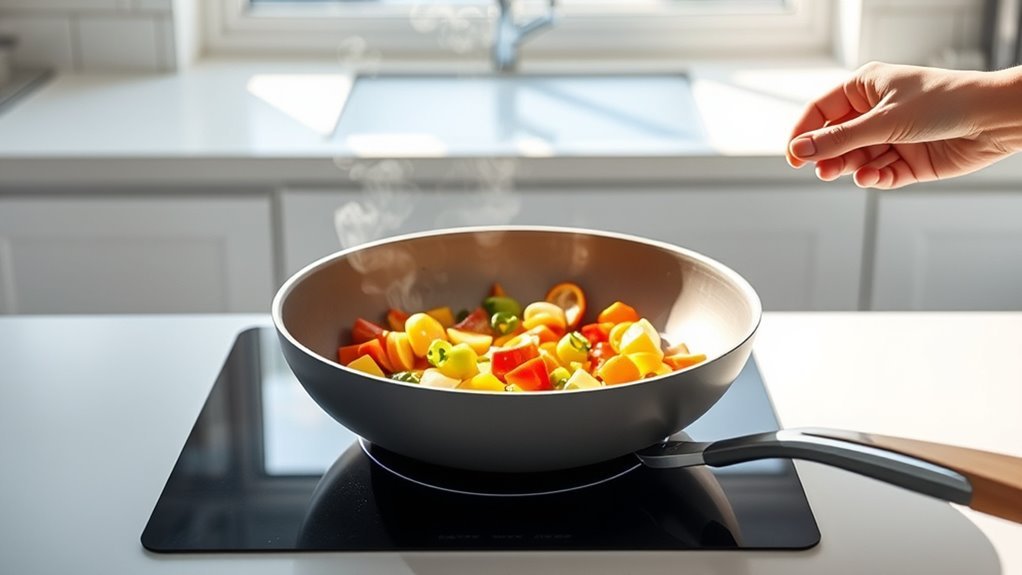
Ceramic coating cookware is revolutionizing the way you approach cooking. This innovative cookware features a metal base, often aluminum or stainless steel, coated with a sol-gel ceramic nonstick layer derived from silica.
Unlike traditional nonstick options that use harmful chemicals like PTFE and PFOA, ceramic provides a safer cooking experience. The ceramic coating creates a smooth, nonstick surface that allows for easy food release, often requiring little to no oil, promoting healthier meal preparation.
Oven-safe up to 400-450°F, this versatile cookware adapts to various cooking methods. However, the nonstick properties may diminish over time, typically lasting a few years with proper care.
To extend its life, use gentle utensils and avoid high heat. Embrace the liberation this ceramic-coated cookware offers, transforming your culinary adventures while prioritizing safety and health.
Safety Considerations: Is Ceramic Cookware Safe?
When considering your kitchen essentials, how safe is ceramic cookware? Generally, ceramic cookware is safe, especially when it’s free from harmful chemicals like PFAS, lead, and cadmium. This makes it a reliable choice for everyday cooking.
Ceramic cookware is a safe choice for everyday cooking, especially when free from harmful chemicals like PFAS, lead, and cadmium.
The nonstick ceramic coating, derived from silica, offers a non-toxic cookware option without the risks associated with traditional PTFE coatings. Quality brands often undergo third-party testing to verify they meet safety standards, so you can cook with confidence.
However, keep in mind that while ceramic coatings are sturdy, they can decompose if overheated. It’s best to stick to medium heat or lower to extend their lifespan.
Always research the materials used in your ceramic cookware to confirm they align with safety and health guidelines. By doing so, you can enjoy the benefits of cooking with ceramic while prioritizing your safety.
Benefits of Ceramic Coating Cookware
If you’re looking for cookware that combines safety and performance, ceramic-coated options are worth considering. With a non-toxic ceramic coating, you can enjoy nonstick cookware without harmful chemicals like PTFE and PFOA. This natural surface promotes effortless food release, allowing you to cook with less oil or fat—great for healthier meals.
Here’s a quick overview of the benefits:
| Benefit | Description |
|---|---|
| Non-toxic | No harmful chemicals for safer cooking. |
| Effortless food release | Easily slide foods off the surface. |
| Even heat distribution | Prevents hot spots for consistent cooking. |
| Easy to clean | Requires only gentle hand washing with mild soap. |
| Long-lasting performance | Can last for years with proper care. |
Embrace the liberation of cooking with confidence, knowing your ceramic-coated cookware is working for you!
Ceramic vs. Traditional Nonstick Cookware
While many home cooks appreciate the convenience of nonstick cookware, understanding the differences between ceramic and traditional nonstick options is vital for making an informed choice.
Ceramic cookware features a sol-gel ceramic nonstick layer applied to a metal base, typically aluminum or stainless steel, offering a safer alternative free from harmful substances like PTFE, PFOA, and PFAS. Unlike traditional nonstick, ceramic coatings won’t release toxic fumes when overheated.
However, it’s important to note that ceramic tends to lose its nonstick properties over time, generally lasting a few years, while PTFE-based options may last longer.
Ceramic cookware excels at handling high heat, resisting degradation better under certain conditions.
Regular maintenance, such as using non-metal utensils and avoiding high heat, is essential for extending the lifespan of both ceramic and traditional nonstick cookware.
Choose wisely to enjoy safe, efficient cooking without sacrificing performance.
Popular Uses for Ceramic Cookware in the Kitchen
Ceramic cookware stands out not just for its safety and durability but also for its versatility in the kitchen. Its nonstick surface and even heat distribution make it ideal for a range of cooking methods.
Here are three popular uses:
- Frying and Sautéing: Enjoy minimal oil usage and easy food release, perfect for healthier meals.
- Baking: Many ceramic pans are oven-safe up to 450°F, allowing you to shift seamlessly from stovetop cooking to the oven.
- Delicate Tasks: Whether you’re melting chocolate or cooking eggs, the even heat distribution minimizes hot spots, ensuring consistent results.
With induction compatibility and a smooth surface that simplifies cleaning, ceramic cookware is a practical choice for modern kitchens.
Embrace the freedom of versatile cooking, and let your creativity flow with this essential kitchen tool.
Care and Maintenance Tips for Longevity
To keep your ceramic-coated cookware in top shape, you’ll need to follow some essential cleaning and storage practices.
Always hand wash with warm water and mild soap, as dishwashers can wear down the coating.
When storing, use soft cloths or protective pads between pieces to prevent scratches and extend their lifespan.
Cleaning Recommendations
Maintaining the longevity of your ceramic-coated cookware hinges on proper cleaning techniques. To keep your ceramic cookware made in top shape, follow these recommendations:
- Hand wash your cookware with warm water and mild soap, using a soft sponge to prevent damage to the coating.
- Avoid metal utensils; opt for silicone or wooden tools to minimize scratches and preserve the nonstick pans surface.
- Cook on medium heat or lower to prevent overheating, which can degrade the ceramic coating over time.
Regularly inspect your cookware for signs of wear, and replace it once the nonstick properties diminish.
Proper Storage Techniques
Properly storing your ceramic-coated cookware can greatly extend its lifespan and maintain its nonstick properties.
Always store ceramic-coated pans separately, using soft cloths or padding to prevent scratches that could damage the nonstick surface. Avoid stacking heavy items on top, as this can lead to chipping or cracking of the coating.
Confirm your cookware is completely dry before storing; moisture buildup can compromise the integrity of the ceramic. Designate a storage space that minimizes exposure to extreme temperatures or humidity, which is essential for longevity.
Regularly inspect your cookware for signs of wear or damage, and replace any pieces that show significant deterioration to guarantee safe cooking and peak performance.
What Myths Should You Avoid About Ceramic Cookware?
What should you really believe about ceramic cookware? There are several myths that can mislead you when choosing your next nonstick pan. Here are three key misconceptions to avoid:
- All Ceramic Cookware is Solid Clay: Most ceramic pans actually feature a metal base coated with a silica-derived nonstick layer, resembling enamel rather than traditional pottery.
- Completely Free of Harmful Chemicals: While high-quality cookware options often avoid PFAS and PTFE, lower-quality products may still contain harmful materials.
- Indestructible and Dishwasher-Safe: Ceramic cookware isn’t indestructible; its nonstick properties can fade, especially with high heat and metal utensils.
Also, most manufacturers recommend hand washing to maintain the coating’s integrity.
Choosing High-Quality Ceramic Cookware: What to Look For
When selecting high-quality ceramic cookware, it’s crucial to focus on specific features that guarantee durability and safety. Look for cookware made from high-quality materials like aluminum or stainless steel, with a ceramic nonstick coating that’s free from harmful chemicals such as PFAS, PTFE, and PFOA. Verify its safety through third-party testing for peace of mind.
Here’s a quick reference table to guide your choice:
| Feature | Importance |
|---|---|
| High-Quality Materials | Guarantees durability and performance |
| Free from Harmful Chemicals | Promotes safer cooking |
| Oven-Safe | Accommodates various cooking methods (up to 450°F) |
| Compatible with Induction Cooktops | Guarantees ideal heat conduction |
| Manufacturer’s Warranty | Indicates commitment to quality and longevity |
How to Choose the Right Ceramic Cookware for Your Needs?
When choosing the right ceramic cookware, you’ll want to evaluate key features like material quality and maintenance requirements.
Look for options that are free from harmful chemicals and can handle high temperatures, ensuring safety and performance.
Additionally, selecting easy-to-clean cookware will help extend its lifespan and keep your kitchen running smoothly.
Key Features to Consider
Choosing the right ceramic cookware involves understanding several key features that can greatly impact your cooking experience. Here are three essential aspects to take into account:
- Material Composition: Look for cookware with a metal base, like aluminum or stainless steel, coated in a sol-gel ceramic layer for ideal nonstick performance.
- Health Safety: Verify your cookware is free from harmful chemicals such as PFAS, PTFE, and PFOA, promoting a healthier cooking environment.
- Heat Tolerance: Select ceramic cookware that’s oven-safe up to at least 450°F, allowing versatility in your cooking methods without risking damage to the coating.
Material Quality Assessment
Understanding material quality is essential for selecting ceramic cookware that meets your cooking needs. Look for products labeled free from harmful chemicals like PFAS, PTFE, and PFOA to guarantee safety.
Assess the ceramic coating’s quality by checking for third-party testing certifications, which indicate durability and reliable performance. When considering the metal base, aluminum provides lightweight convenience, while stainless steel offers durability and even heat distribution.
A smooth, glass-like finish enhances food release, making cleanup a breeze. Research user reviews and brand reputation to find high-quality options that balance performance, longevity, and aesthetic appeal.
Maintenance and Care Tips
To guarantee your ceramic cookware lasts and performs well, proper maintenance is essential. When choosing ceramic-coated options, verify they’re free from harmful chemicals like PFAS and PFOA.
Here are some key tips for maintaining your cookware:
- Hand Wash: Use warm water and mild soap to clean your cookware, avoiding abrasive materials that can scratch its surface.
- Check Compatibility: If you use an induction cooktop, select induction-compatible pieces for versatility in cooking methods.
- Review Warranty: Higher-quality ceramic cookware often comes with longer warranties, indicating confidence in its durability and nonstick performance.
Frequently Asked Questions
Is Ceramic Coating on Cookware Safe?
Yes, ceramic coating on cookware is safe when it’s free from harmful substances.
You’ll appreciate its durability and heat resistance properties, enhancing non-stick performance without toxic concerns.
While a cost comparison shows it’s often pricier than traditional options, the environmental impact is lower.
To maintain your cookware, use low to medium heat and non-metal utensils.
Follow these maintenance tips to prolong its life and enjoy safe, effective cooking every time.
What Is the Disadvantage of Ceramic Cookware?
Ceramic cookware can be tempting, but it’s not without its disadvantages. You’ll face durability concerns as the nonstick surface may wear out quicker than traditional pans.
Heat retention isn’t fantastic, leading to potential sticking issues. When you compare prices, you might find better options.
To prolong its life, avoid high heat and abrasive tools. Plus, consider the environmental impact of frequent replacements.
Embrace these maintenance tips to get the most out of your cookware.
Is It Better to Cook With Stainless Steel or Ceramic?
Choosing between stainless steel and ceramic depends on your cooking style.
Stainless steel benefits from excellent heat retention and durability, ideal for high-heat techniques. However, ceramic offers non-stick properties that simplify cooking and cleanup.
For maintenance, use wooden or silicone utensils with ceramic to prolong its lifespan, while stainless steel can handle metal tools.
Ultimately, if you prioritize ease and health, ceramic shines; if you need durability and versatility, stainless steel’s the winner.
What Is the Healthiest Cookware You Can Use?
Think of your kitchen as a sanctuary for health; choosing the right cookware is like laying a safe foundation.
The healthiest options are ceramic, stainless steel, and cast iron, all made from non-toxic materials. They excel in heat retention and cooking performance while ensuring food safety.
For surface durability, opt for high-quality pieces, and remember to follow maintenance tips to prolong their life.
Embrace these choices, and liberate your cooking experience!
Conclusion
To summarize, ceramic coating cookware offers safety, versatility, and style. It promotes healthier cooking, enhances food release, and withstands high temperatures, making it a valuable addition to your kitchen. By choosing high-quality options and following proper care techniques, you can enjoy its benefits for years. So, whether you’re sautéing vegetables, baking, or frying, ceramic cookware empowers you to cook with confidence, creativity, and convenience. Embrace this modern solution for a healthier culinary experience!