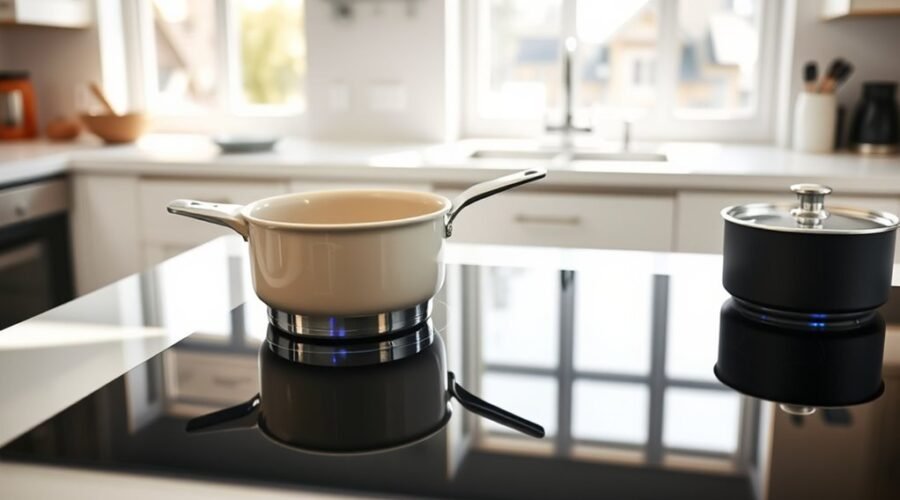
Imagine a seamless dance between cookware and cooktop, where heat flows effortlessly. In this domain of induction cooking, not all ceramic cookware can join the performance. Only those with a magnetic base—often steel or iron—can participate. Understanding the nuances of cookware compatibility becomes essential. What makes ceramic suitable for induction, and how can you identify the right pieces? The answers may redefine your cooking experience.
How Induction Cooking Works and Its Impact on Cookware Selection
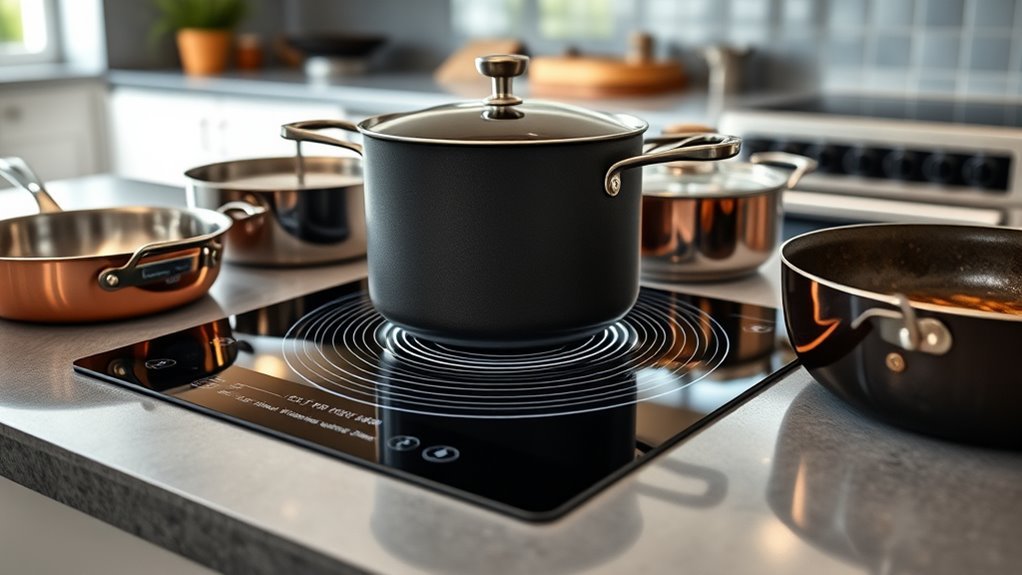
Induction cooking operates on the principle of electromagnetic energy, which directly heats induction-compatible cookware when placed on the cooktop. This method requires that your cookware has a magnetic base, typically found in materials like cast iron or stainless steel.
For ceramic cookware, ensuring it’s induction-compatible is vital; often, a layer of metal is integrated into the base to facilitate magnetism, enabling efficient heat transfer.
When selecting your cookware, proper sizing is important. Pans should match the diameter of the induction cooking zone to achieve even heating and maximize energy efficiency.
If you use non-magnetic ceramic cookware, you’ll find that it won’t conduct heat at all, rendering it ineffective on an induction stove. As a result, checking for induction compatibility is key to optimizing your cooking experience and ensuring that your culinary tools align with the powerful technology of induction cooking.
The Role of Magnetic Properties in Cookware
While many factors influence cooking efficiency, the magnetic properties of cookware play an essential role in the effectiveness of induction cooking. Induction cooktops require magnetic cookware that contains ferromagnetic materials like cast iron or certain stainless steels to generate heat efficiently.
The magnetic properties of cookware are crucial for effective induction cooking, requiring ferromagnetic materials for optimal heat generation.
Pure ceramic cookware generally lacks these magnetic properties, rendering it incompatible unless it’s specifically designed with a magnetic base.
Manufacturers often label induction-compatible ceramic pans, incorporating a magnetic layer to guarantee proper heating on induction surfaces. Additionally, the cookware must maintain close contact with the cooktop for peak performance, which emphasizes the importance of a flat bottom.
You can easily test cookware for induction compatibility using a magnet; if it sticks to the base, you’ve likely found suitable induction cookware.
Understanding these magnetic properties will empower you to make informed choices in your kitchen, maximizing the efficiency of your cooking experience.
Is Ceramic Cookware Compatible With Induction?
Can ceramic cookware truly be compatible with induction cooktops? The answer is yes, but only if it features a magnetic base. Not all ceramic cookware meets this requirement, as induction cooktops rely on ferromagnetic materials to generate heat.
To guarantee peak performance, consider these factors:
- Magnetic Base: Check if the ceramic cookware has a layer of steel or iron incorporated into its base.
- Construction Quality: Look for a thick, multi-layered base; poorly constructed cookware can lead to warping and uneven heating.
- Manufacturer Specifications: Always verify the manufacturer’s claims regarding induction readiness before making a purchase.
What to Look For in Induction-Compatible Ceramic Cookware
When searching for induction-compatible ceramic cookware, what key features should you prioritize? First, confirm that the cookware has a magnetic base, typically made of stainless steel or cast iron, to function effectively on induction cooktops.
When choosing induction-compatible ceramic cookware, ensure it has a magnetic base for optimal performance on induction cooktops.
Look for a multi-layered base with a thickness of over 4 mm; this guarantees even heat distribution and minimizes warping over time.
Additionally, check for PFAS-free ceramic coatings reinforced with materials like diamond or titanium. These enhancements provide durability and maintain long-lasting non-stick performance.
It’s also vital that the cookware features stainless steel handles, as they’re heat-resistant and can withstand higher oven temperatures, allowing for versatile cooking options.
Finally, always verify that the ceramic cookware is explicitly labeled as induction-compatible, since not all ceramic options meet this requirement.
Prioritizing these features will help you make an informed and liberated choice for your induction cooking needs.
Debunking Myths About Ceramic Cookware’s Compatibility With Induction
When considering ceramic cookware for your induction cooktop, it’s essential to understand that not all ceramic options will work effectively.
Many products may claim to be induction-ready, but only those with a magnetic base meet the necessary requirements for ideal heating.
Induction-Ready Ceramic Cookware
Understanding the nuances of induction-ready ceramic cookware is essential, especially since not all ceramic options are created equal.
To guarantee peak performance on induction cooktops, focus on these key features:
- Magnetic Base: Look for cookware with a magnetic base to enable proper induction compatibility.
- Ferromagnetic Core: High-quality options usually include a ferromagnetic core, which promotes even heat distribution and minimizes hot spots.
- Reinforced Coating: Choose ceramic pans with titanium or diamond coatings for enhanced durability and performance.
Always check the manufacturer’s specifications to confirm induction compatibility.
Not all ceramic cookware meets these standards, and those that don’t may warp or underperform, leading to frustrating cooking experiences.
Prioritize quality for the best results.
Common Misconceptions Clarified
How can you be certain your ceramic cookware is truly compatible with induction cooktops?
First, not all ceramic cookware works on induction surfaces; only those with a magnetic base qualify. Many products labeled as “induction-compatible” often have thin bases that can warp, resulting in poor performance and uneven heating.
Remember, induction cooktops need cookware that efficiently transfers electromagnetic energy, which standard ceramic lacks unless specifically designed for it. High-quality options with a stainless steel core guarantee both induction compatibility and even heat distribution.
Always check for induction certification to avoid the frustrations of inadequate cookware. By understanding these misconceptions, you can make informed choices and elevate your cooking experience.
How to Care for Your Induction-Compatible Ceramic Cookware
To maintain your induction-compatible ceramic cookware, focus on proper cleaning techniques and safe cooking practices.
Always use a soft sponge and mild dish soap to avoid scratches while ensuring you cook on medium to low heat to protect the non-stick coating.
Additionally, allow your cookware to cool completely before washing to prevent warping from thermal shock.
Proper Cleaning Techniques
Caring for your induction-compatible ceramic cookware requires attention to detail to guarantee longevity and performance. Proper cleaning is essential to maintain its efficiency within the magnetic field of induction cooktops. Follow these techniques:
- Always let your ceramic cookware cool completely before washing to prevent thermal shock.
- Use a soft sponge with mild dish soap for cleaning; avoid abrasive materials that scratch the nonstick coating.
- For tough stains, use a non-abrasive cleaner designed for ceramic surfaces.
Regularly inspect your cookware for warping or damage, as uneven bases can hinder compatibility with the heating zone.
Safe Cooking Practices
Maintaining the integrity of your induction-compatible ceramic cookware goes beyond proper cleaning techniques. First, always verify your cookware has a magnetic base to function effectively on induction cooktops.
To prolong its lifespan, avoid metal utensils; choose silicone, wooden, or plastic instead. Allow your ceramic pans to cool completely before washing to prevent thermal shock, which can damage the coating.
Hand wash your cookware using a soft sponge and mild dish soap to preserve its non-stick properties—steer clear of abrasive cleaners.
Additionally, store your ceramic pans carefully, utilizing pan protectors to prevent scratches and maintain their non-stick surface.
Following these safe cooking practices not only safeguards your investment but also enhances your culinary experience.
Top Brands for Induction-Compatible Ceramic Cookware
Induction-compatible ceramic cookware is essential for efficient cooking on induction cooktops, as not all ceramic options meet this requirement.
To guarantee peak performance, look for brands that prioritize durability and safety. Here are three top brands worth considering:
- Ciarra Gadgets: Known for their ceramic cookware featuring a ferromagnetic base, reinforced coatings, and PFAS-free materials, guaranteeing safe cooking without harmful chemicals.
- Naturepan: Offers a range of induction-compatible options designed for even heat distribution, thanks to their multi-layered base, which is at least 4 mm thick.
- Sanho: This brand combines high-performance non-stick properties with durability, making it a reliable choice for your induction cooking needs.
Choosing the Right Cookware for Your Induction Cooktop
When selecting cookware for your induction cooktop, understanding compatibility is vital. Not all ceramic cookware is suitable; only those labeled as “induction-ready” will perform effectively.
Look for pieces that feature a ferromagnetic core, which guarantees proper heating. The thickness of the cookware’s base matters too; opt for a multi-layered base over 4 mm thick to assure even heat distribution and prevent warping.
Additionally, high-quality ceramic coatings reinforced with materials like titanium or diamond enhance durability and maintain non-stick performance on induction surfaces.
Always verify the manufacturer’s specifications to confirm compatibility; this step is essential to avoid issues such as uneven cooking or hot spots.
Frequently Asked Questions
What Cookware Cannot Be Used on Induction?
You can’t use cookware made from non-magnetic materials like pure aluminum or copper on induction cooktops.
Ceramic features typically lack the necessary magnetic base, limiting pot compatibility.
Additionally, thin or warped cookware can compromise heat conductivity, leading to uneven cooking.
Always consider cookware weights, as those too small for the induction zone won’t heat effectively.
For best performance, conduct induction testing to verify your cookware meets the required standards.
Can I Use Pyrex on an Induction Stove?
You can’t use Pyrex on an induction stove.
With only 30% of traditional glass cookware being induction-compatible, its non-magnetic Pyrex material properties prevent efficient heat distribution. This results in poor cooking performance and potential safety concerns, as the glass mightn’t withstand direct heat.
For maximum induction cooktop efficiency, consider alternative cookware options like cast iron or stainless steel, which pass the cookware compatibility test and offer superior heat retention and distribution.
How Do I Know if My Cooktop Is Induction or Ceramic?
To determine if your cooktop is induction or ceramic, use induction testing with a magnet; if it sticks, you’ve got an induction cooktop.
Induction cooktops heat cookware directly through magnetic materials, guaranteeing efficient heat distribution. In contrast, ceramic cookware relies on radiant heat.
Check for precise temperature control features as well; induction models offer superior cooking efficiency compared to their ceramic counterparts.
Evaluate cookware types to ascertain compatibility for best performance.
What Pans Should Not Be Used on a Ceramic Cooktop?
You shouldn’t use warped pans, low-quality materials, or those with non-heat resistant handles on a ceramic cooktop.
For ideal ceramic cookware durability, guarantee even heat distribution and maintain proper size for efficient cooking.
Compare ceramic vs stainless; while ceramic offers better heat retention, stainless can be more durable.
Follow maintenance tips for ceramic surfaces to avoid scratches and guarantee safety, enhancing both the lifespan of your cookware and your cooking experience.
Conclusion
In summary, while ceramic cookware can shine on induction cooktops, it’s essential to choose pieces with a magnetic base. By doing your homework and selecting induction-ready options, you’ll avoid a costly misstep. Remember, not all that glitters is gold; compatibility matters. With the right cookware, you’ll enjoy efficient and even cooking. So, invest wisely to guarantee your culinary experience is nothing short of exceptional on your induction surface.