
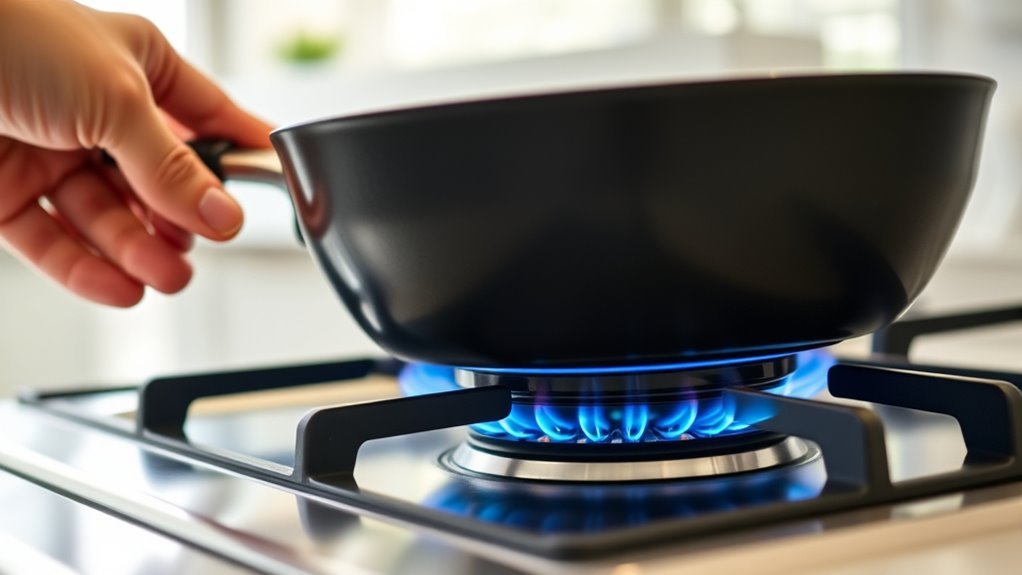
Can you use an induction pan on a gas stove without damaging it? In most cases, yes. But the pan’s construction, coating, and handles matter more than its induction label. Before you switch cooktops, a few simple checks can help you protect your cookware and cook safely.
Quick Answer
Yes, most induction-compatible pans can be used on a gas stove if the manufacturer permits it. Gas heats cookware through direct flame, so a magnetic base is not required for gas cooking. Check the pan’s construction, coating, and handles. Place it on a stable grate and keep the flames beneath its base.
Key Takeaways
- Induction compatibility and gas compatibility are different. A magnet test alone cannot confirm gas safety.
- Cast iron, carbon steel, and suitable stainless steel cookware work well on both heat sources.
- Nonstick coatings and heat-sensitive handles need extra protection from high flames.
- Gas cooking can cause discoloration or warping if you overheat the pan.
- A pan used on gas may still work on induction, but its base must remain suitable for the induction cooktop.
How to Check an Induction Pan Before Using It on Gas
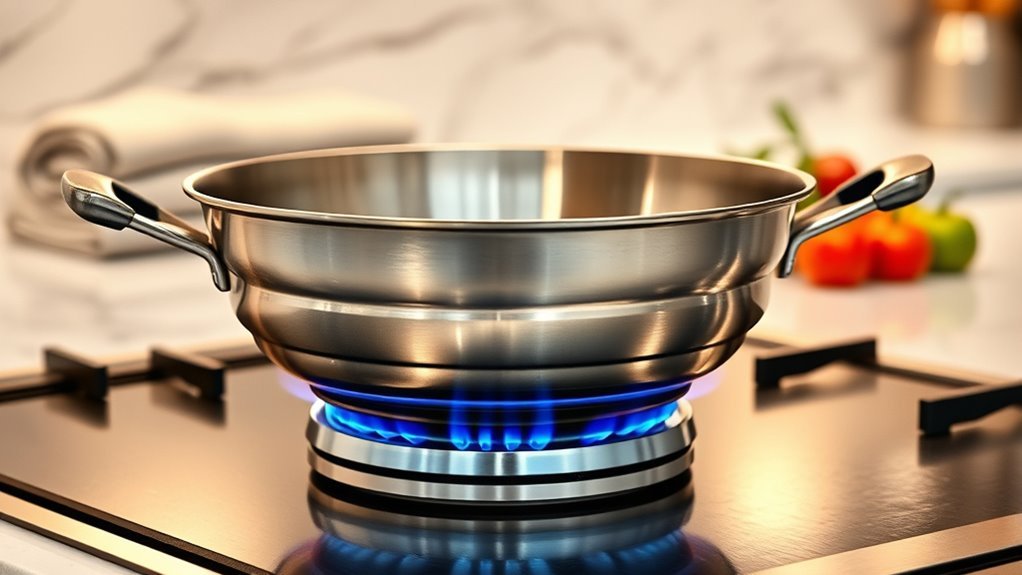
Most ordinary induction-ready cookware can handle gas cooking. However, you should confirm that your specific pan is approved for direct flame.
For example, Le Creuset’s induction cookware guidance confirms that many of its induction-compatible ranges also work on gas and other common cooktops.
Before using your pan, check these details:
- Cooktop compatibility: Look for gas approval on the packaging, product description, or instruction manual.
- Base condition: Check for cracks, warping, damaged coatings, or loose bonded layers.
- Handle material: Make sure plastic, silicone, or other heat-sensitive parts will not contact the flame.
- Pan stability: Place the cookware on an unlit burner grate and confirm it sits securely without tipping.
- Heat limits: Follow any restrictions for nonstick coatings, handles, or specialized components.
If all these checks pass, you can generally use the pan on gas without buying separate cookware.
Remember that an induction symbol identifies compatibility with an induction cooktop. It does not automatically guarantee suitability for every gas burner.
How Induction Pans Work vs. Regular Cookware
Induction pans contain magnetic material that responds to an induction cooktop’s electromagnetic field. This allows the cooktop to generate heat directly inside the cookware.
Gas stoves work differently. Their flames transfer heat to the bottom and sides of the pan, regardless of whether the metal is magnetic.
The U.S. Department of Energy’s induction cooking guide explains how electromagnetic heating makes induction cooking responsive and energy-efficient.
However, an induction-ready pan does not automatically cook faster when placed on gas. Its performance then depends on the flame, pan material, thickness, and construction.
Some induction pans have thick, multilayer bases. These may help spread heat across the cooking surface, although the results vary by design.
For example, a stainless steel pan with an aluminum core can distribute heat more evenly than a thin, single-layer stainless steel pan.
Induction cookware also differs from ordinary cookware in one important way: a conventional aluminum or copper pan may work very well on gas but fail to heat on induction without a suitable magnetic base.
Which Induction Pan Materials Handle Gas Flames Best?
The best materials for cooking on both gas and induction include magnetic stainless steel, cast iron, and carbon steel. Their durability and heat tolerance make them practical choices for everyday cooking.
However, material alone does not determine performance. Base thickness, bonded layers, surface coatings, and handle construction also matter.
Samsung’s cookware material guide identifies cast iron, stainless steel, aluminum, and copper among the materials used on gas cooktops.
Here is how the main options compare:
| Material | Induction Compatibility | Gas Cooking Performance |
|---|---|---|
| Cast iron | Yes | Durable and excellent at retaining heat. |
| Carbon steel | Yes | Good heat response and suitable for high-heat cooking. |
| Stainless steel with magnetic base | Yes | Durable; clad designs can improve heat distribution. |
| Induction-ready nonstick | Yes | Suitable when approved, but requires careful heat control. |
| Plain aluminum or copper | No, unless fitted with a suitable magnetic base | Conduct heat well and can perform effectively on gas. |
Thick Magnetic Bases
A thick, well-constructed base can help distribute heat and reduce the risk of warping. This is especially useful when flames concentrate heat around the center of a pan.
Many induction-ready stainless steel pans contain an aluminum layer or core between stainless steel layers. The aluminum helps conduct heat, while the magnetic stainless steel makes induction cooking possible.
However, a thicker base is not automatically better in every situation.
Heavy bases usually take longer to respond to temperature changes. Thin cookware may heat more quickly but can develop uneven temperatures if its design is poor.
Look for a base that is securely bonded, undamaged, and suitable for your cooking habits.
Flame-Resistant Coatings
Some induction pans have nonstick or protective coatings that require special care over gas flames. These coatings are not necessarily designed to withstand direct flame contact.
There is also a difference between a heat-resistant cooking surface and a flame-resistant exterior.
For example, a coated interior may tolerate normal cooking temperatures but suffer damage if the pan overheats while empty.
Tefal’s cookware instructions advise users to avoid empty-pan overheating, keep gas flames beneath the base, and let cookware cool before washing.
Inspect any decorative paint or sprayed coating on the underside. Direct flame may discolor, scorch, or damage finishes that were not designed for that exposure.
For nonstick cookware, moderate heat is generally the safer choice. Follow the limits set for your specific pan rather than assuming every coating behaves the same way.
Compatibility Test: Magnet Test and Visual Checklist
A magnet test helps establish whether cookware works on induction. It does not establish whether the cookware is safe for gas.
To check both types of compatibility, use this practical sequence:
- Identify the cookware model. Check its label or instructions for supported cooktops. Look for explicit gas compatibility.
- Test the base with a magnet. If a magnet sticks firmly, the pan is likely induction-compatible. A weak or absent magnetic attraction may mean it will not work properly on induction.
- Inspect the underside. Check for cracks, loose layers, damaged finishes, or severe warping.
- Check handles and lids. Make sure their materials can withstand heat from the nearby gas flame.
- Test stability before lighting the burner. Place the empty, cool pan on the grate and check that it does not rock or tip.
- Confirm special restrictions. Review instructions for coated pans, removable handles, or cookware containing electronic sensors.
Manufacturer instructions are the deciding factor when a pan has unusual materials or construction.
For example, the KitchenAid hard-anodized cookware instructions confirm that the covered induction-ready cookware can also be used on gas and electric surfaces.
Pro Tip: Keep your pan’s product instructions or model number available. If the compatibility symbols become difficult to read, you can still identify the correct care and heat restrictions without guessing.
A flat base is especially important if you plan to return the pan to induction. Gas grates can support some cookware that would not make proper contact with a flat induction cooking surface.
How to Use Induction Pans Safely on Gas Flames
To use an induction pan safely on gas, position it securely and control the flame so it stays beneath the base. Start with moderate heat and adjust it to suit your cooking.
Pay particular attention to nonstick finishes and handles that may be exposed to heat from the sides.
Flame Size and Control
The gas flame should remain beneath the pan rather than extending around its sides. Oversized flames waste energy and may overheat handles or exterior finishes.
Choose a burner suited to the pan’s base diameter. Then adjust the flame until it provides the heat you need without spreading beyond the bottom.
| Action | Guideline |
|---|---|
| Flame size | Keep flames beneath the pan’s base |
| Heat level | Start low to medium; adjust as needed |
| Monitoring | Watch the food and pan; reduce excessive heat |
| Surface | Use a stable burner grate that supports the pan |
For example, you may need only a low flame when simmering a sauce. Searing with suitable uncoated stainless steel or cast iron cookware may require more heat.
The goal is controlled cooking, not using the highest burner setting available.
Protecting the Cookware Finish
A gas flame can leave dark marks on a pan’s exterior. Some discoloration is cosmetic, but extreme heat can also damage coatings or bonded construction.
Protect the finish by avoiding unnecessarily high heat and preventing utensils or burner supports from scratching sensitive surfaces.
Use a stable grate and avoid dragging cookware across rough surfaces.
For nonstick pans, use suitable utensils and gentle cleaning tools. Follow the manufacturer’s instructions for the coating rather than treating every finish like bare stainless steel.
If you notice blistering, peeling, or other significant coating damage, stop using the pan until you can determine whether continued use is safe.
Heat and Safety Limits
Induction pans can overheat on gas just like other cookware. Empty-pan heating, excessive flame, and boiling dry are common causes of damage.
The OXO cookware use and care instructions recommend low to medium heat for normal cooking and warn against leaving empty cookware on a hot burner.
Gas flames also create heat around the pan’s sides. Handles, rivets, and lids may become hotter than you expect.
Use oven mitts or appropriate protection when handling hot cookware. Keep handles away from adjacent burners and prevent them from extending where someone could knock the pan over.
Gas cooking also requires ventilation. The U.S. EPA’s kitchen ventilation guidance recommends using an outdoor-venting range hood when available.
These precautions apply whether you use induction-ready cookware or a conventional gas pan.
Safety Warnings: Coatings, Thin Bases, and Manufacturer Limits
The biggest risks when using an induction pan on gas involve overheating, damaged coatings, unstable cookware, and heat-sensitive components.
A pan may be compatible with induction but still have a handle, exterior finish, or special feature that is unsuitable for open flames.
Warning: Never assume an induction symbol guarantees gas compatibility. Do not expose plastic handles, electronic sensors, or unsuitable exterior coatings to direct flames. Stop using cookware that develops serious warping, loose components, or damaged nonstick surfaces.
Thin pans need careful heat control because concentrated heating can create hot spots or distort the base.
For cookware with nonstick interiors, avoid dry heating and temperatures above the manufacturer’s limits.
Check handles, lid knobs, removable attachments, and any other parts that could be exposed to direct flame.
Smart cookware with embedded electronics or sensors needs particular attention. Use it on gas only when its manufacturer explicitly approves that heat source.
Remember that an oven-safe temperature rating does not automatically mean the entire pan can withstand direct flame contact.
Note: If a gas burner produces persistent yellow-tipped flames or appears to burn abnormally, have the appliance checked by your gas provider or a qualified technician. Changing cookware will not correct a faulty burner.
Cleaning and Maintenance After Gas Use
Let your induction pan cool before cleaning it after gas cooking. Sudden contact with cold water can cause thermal shock, which may damage or warp cookware.
Once the pan has cooled, follow this simple maintenance routine:
- Remove food residue. Wash the cooking surface with warm water, mild dish soap, and a suitable sponge.
- Clean the base. Remove soot, grease, and residue from gas cooking before they build up.
- Inspect the finish. Look for damaged coatings, unusual discoloration, or signs of separation around bonded layers.
- Dry thoroughly. Pay attention to seams, rims, and areas around handles.
- Store carefully. Use pan protectors or soft separators when stacking cookware that scratches easily.
For nonstick finishes, avoid steel wool and harsh abrasives unless the manufacturer specifically approves them.
Stainless steel cookware may tolerate different cleaning products, but those products should still match the pan’s finish and care instructions.
Seasoned cast iron and carbon steel require their own maintenance. Dry them thoroughly and maintain their seasoning as recommended.
If you plan to use the pan on induction again, make sure its base is clean. Burnt residue and deposits can interfere with clean contact and may mark a glass cooktop.
Light discoloration alone does not necessarily mean that cookware is unsafe. However, visible deformation, damaged nonstick surfaces, or loose handles deserve closer attention.
When Induction Pans Won’t Perform Well on Gas and Better Alternatives
Some induction pans are poorly suited to gas because of their construction rather than their magnetic properties. These include delicate coated pans, cookware with vulnerable handles, and pieces with unstable or damaged bases.
Problems are more likely when the pan experiences temperatures or flame exposure beyond its intended use.
Consider another pan in these situations:
- Thin or damaged base: Choose sturdier cookware if the existing pan warps or develops serious hot spots.
- Sensitive nonstick exterior: Use cookware with an underside designed for gas cooking.
- Heat-sensitive handle: Select a model with suitable heat-resistant components.
- Unstable construction: Avoid pans that cannot sit securely on the burner grate.
- Restricted heat-source approval: Follow the maker’s instructions if the cookware is intended only for certain cooktops.
Heavy stainless steel, cast iron, and suitable carbon steel are dependable alternatives when you regularly cook over open flames.
However, plain aluminum and copper are not poor gas-cooking materials. They conduct heat effectively, even though they generally need an added magnetic layer to work on induction.
Can Gas Cooking Affect Future Induction Performance?
Yes, excessive heat from gas can potentially affect a pan’s later performance on induction, especially if its base becomes warped.
However, normal gas use does not inherently remove a pan’s magnetic properties.
Some induction appliance manufacturers apply stricter requirements. For example, the Gorenje-hosted induction cooktop instructions caution against using pans previously heated on gas.
This is not a universal rule for all induction cookware. If you switch between heat sources, follow both your pan manufacturer’s instructions and your induction cooktop’s requirements.
Buying Guide: What to Look for in Dual-Compatible Cookware
If you regularly switch between gas and induction, choose cookware explicitly approved for both heat sources. A magnetic base is necessary for conventional induction cooking, while gas suitability depends on the complete pan design.
Use these features to compare your options:
- Dual compatibility: Look for manufacturer confirmation that the pan supports gas and induction.
- Reliable construction: Choose a well-made base that resists distortion during normal use.
- Heat distribution: Consider multilayer stainless steel with a conductive core if you want even heating for everyday meals.
- Durable materials: Cast iron and carbon steel are useful for cooking methods that require strong heat retention or high temperatures.
- Suitable handles: Check handle materials, grip comfort, attachment quality, and heat restrictions.
- Coating durability: If you choose nonstick cookware, confirm its gas compatibility and maintenance requirements.
- Pan size: Match the base to your gas burner and the cooking-zone requirements of your induction appliance.
- Easy maintenance: Consider how much effort the cookware needs after regular use.
Also check oven compatibility if you plan to move the pan from the stovetop into the oven. Oven ratings may differ for pans, handles, and lids.
When reading user reviews, focus on recurring reports about base warping, heat distribution, coating wear, and handle comfort.
For most kitchens that use both stove types, durable magnetic stainless steel cookware offers a practical balance of versatility and maintenance.
Choose cast iron if you value heat retention and do not mind its weight. Carbon steel is another option if you prefer a lighter pan that can handle high-heat cooking.
Frequently Asked Questions
Can I Use an Induction Pan on a Gas Stove?
Yes, most induction pans can be used on gas stoves when their manufacturers approve both heat sources. Cast iron, carbon steel, and suitable stainless steel are common options. Keep flames beneath the pan, control the temperature, and protect heat-sensitive handles and coatings.
What Cannot Be Cooked on Induction?
Induction can cook most everyday foods, but the cookware must have a suitable magnetic base. Ordinary glass, ceramic, aluminum, and copper cookware generally will not work without special induction-compatible construction. Techniques requiring direct flame contact, such as traditional flame charring, also cannot be performed directly on an induction cooktop.
Do Chefs Prefer Induction Over Gas?
Chef preferences vary. Some favor induction because it provides fast heating, responsive temperature control, and easier surface cleaning. Others prefer gas for its visible flame and direct control during certain cooking techniques. Both methods can produce excellent results when paired with suitable cookware.
What’s the Downside of an Induction Cooktop?
The main drawbacks are cookware compatibility requirements, dependence on electricity, and potentially higher purchase or installation costs. You may need new pans if your current cookware lacks a magnetic base. Some cooking techniques also require adjustments because induction does not provide an open flame.
Is a Magnet Test Enough to Check Gas Compatibility?
No, a magnet test only helps identify induction-compatible cookware. Gas cooking does not require magnetic materials. To confirm gas compatibility, check the manufacturer’s instructions, pan construction, handle materials, and coating restrictions. A magnetic base alone does not guarantee that a pan is suitable for direct flame.
Will Using an Induction Pan on Gas Damage Its Induction Compatibility?
Not necessarily. Normal gas cooking does not remove the magnetic properties of an induction pan. However, overheating can warp the base and affect future induction performance. Some induction cooktop manuals restrict pans previously used on gas, so follow the instructions for both appliances.
Conclusion
You can use most induction pans on a gas stove, provided their manufacturers approve gas cooking. A magnetic base is useful for induction, but safe gas use depends on the pan’s complete construction.
Before cooking, confirm compatibility, inspect the base and handles, and control the flame. With appropriate care, you can use suitable cookware across both heat sources while reducing the risk of avoidable damage.
Sources
- Le Creuset, Guide to the Best Pans and Pots for Induction Hobs: Confirms that many induction-compatible cookware ranges also work on gas and electric cooktops.
- U.S. Department of Energy, Making the Switch to Induction Stoves or Cooktops: Explains electromagnetic induction, cookware requirements, and heating performance.
- Samsung, Cooktop Cookware Breakdown: Explains common cookware materials and their suitability for gas and induction cooking.
- KitchenAid, Hard-Anodized Cookware Use and Care Instructions: Confirms dual cooktop compatibility for the covered cookware and provides gas-flame safety guidance.
- Tefal, Cookware Instructions and Frequently Asked Questions: Covers nonstick maintenance, overheating prevention, and gas burner use.
- OXO, Cookware Use and Care Instructions: Provides guidance on heat control, thermal shock, coating protection, and gas cooking.
- U.S. Environmental Protection Agency, Strategies for Improving Indoor Air Quality While Cooking: Provides kitchen ventilation recommendations.
- Gorenje, Induction Cooktop Instructions: Documents appliance-specific restrictions concerning cookware previously used on gas.
