
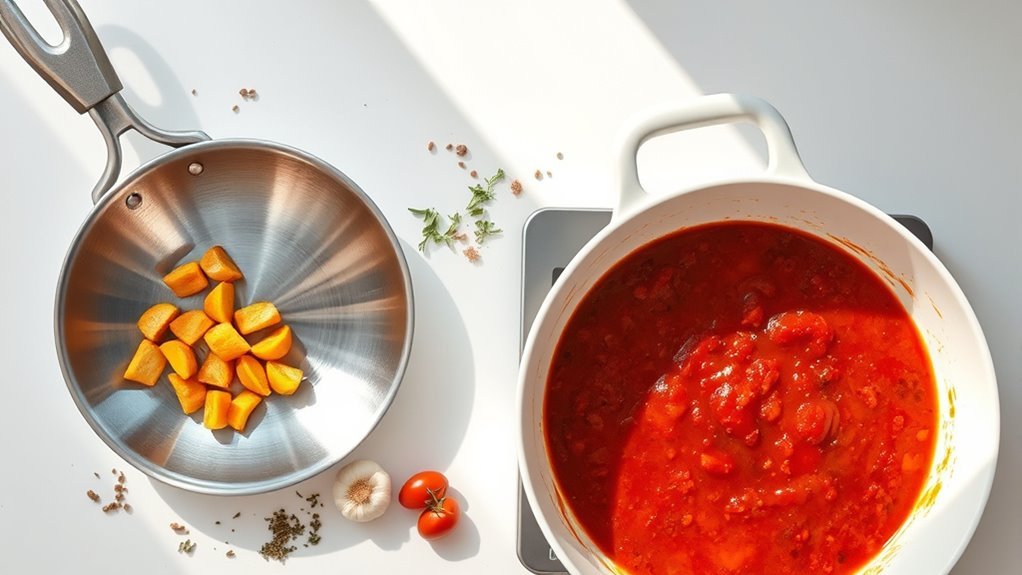
Did you know that nearly 60% of home cooks prefer aluminum cookware for its quick heating properties? While it’s lightweight and budget-friendly, it also has its drawbacks, particularly when it comes to reactivity with certain foods. On the other hand, ceramic cookware offers a non-toxic alternative but can be heavier and less durable. So, which one suits your culinary style best? Let’s explore the key differences and help you make an informed choice.
Understanding Ceramic Cookware: Key Features and Benefits
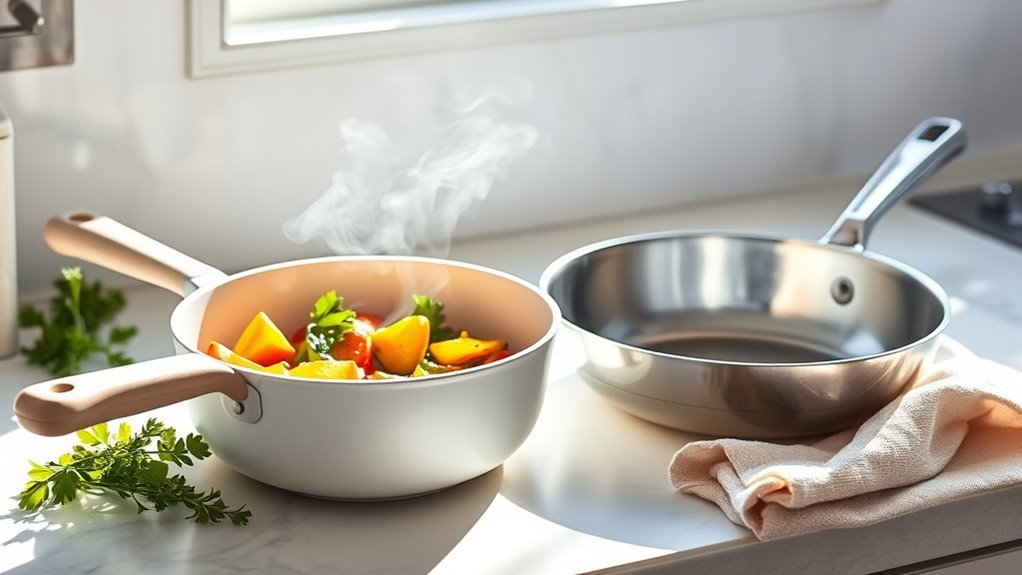
When it comes to choosing the right cookware, ceramic options stand out for their unique blend of safety and performance. This type of cookware features a non-toxic coating derived from sand-based materials, providing a healthier alternative to traditional nonstick options that often contain harmful chemicals like PFAS and PFOA.
With a naturally smooth, nonstick surface, ceramic cookware guarantees easy food release, making both cooking and cleanup a breeze.
Designed to heat evenly, this cookware prevents those annoying hot spots, delivering consistent results across various dishes. While it’s generally more scratch-resistant than other nonstick options, ceramic can chip or crack if mishandled, so keep maintenance in mind.
Although typically heavier than aluminum cookware, the sturdiness and durability of ceramic can enhance your cooking experience, giving you the freedom to explore new culinary adventures without worry. Embrace the benefits of ceramic and elevate your kitchen game!
Aluminum Cookware: Pros and Cons
Ceramic cookware offers a safe and reliable cooking experience, but aluminum cookware brings its own set of advantages that many home chefs appreciate. Here are some pros and cons to evaluate:
- Pros: Aluminum is lightweight and highly conductive, ensuring quick heating and even heat distribution for consistent results.
- Cons: Untreated aluminum can react with acidic foods, altering flavors and leaching small amounts of aluminum, so a protective coating is often necessary.
- Pros: Hard-anodized aluminum is durable, scratch-resistant, and frequently features non-stick coatings, making it versatile for various cooking methods.
While aluminum cookware can warp or dent more easily than stainless steel, its budget-friendly options start as low as $10, making it an accessible choice for many.
Weigh these factors carefully to determine if aluminum fits your cooking style!
Ceramic vs. Aluminum: A Direct Comparison
When choosing between ceramic and aluminum cookware, it’s crucial to evaluate both cooking performance and health factors.
Aluminum heats quickly and evenly, perfect for fast meals, while ceramic excels at retaining heat for those slow-cooked dishes you love.
Plus, with ceramic’s non-toxic surface, you can cook with peace of mind, knowing you’re avoiding harmful chemicals.
Cooking Performance Comparison
While both aluminum and ceramic cookware have their unique strengths, their cooking performance can greatly impact your culinary experience.
- Heat Distribution: Aluminum cookware heats quickly and evenly, perfect for precise temperature control. In contrast, ceramic retains heat well, ideal for slow-cooking.
- Durability: Aluminum is less likely to warp, while ceramic can chip if mishandled.
- Non-Stick Properties: Ceramic cookware offers a non-toxic, non-stick surface, while traditional aluminum may react with acidic foods unless coated.
When considering weight and maneuverability, aluminum is lightweight and easy to handle, making multitasking a breeze.
On the other hand, ceramic tends to be sturdier but heavier. Understanding these differences can help you choose the right cookware for your kitchen adventures.
Health and Safety Factors
Choosing the right cookware goes beyond just performance; health and safety play an essential role in your cooking choices.
Ceramic cookware stands out as a non-toxic option, free from harmful chemicals like PTFE and PFOA, ensuring no toxic substances leach into your food.
On the other hand, aluminum cookware may leach small amounts of metal, especially when cooking acidic foods, raising concerns about health risks.
While ceramic’s non-reactive surface usually enhances cooking safety, its durability can falter under high heat, leading to chipping.
Aluminum, while sturdy, is susceptible to warping and denting.
Ultimately, understanding these factors helps you make informed decisions for both your health and culinary adventures.
Health and Safety: Comparing Ceramic and Aluminum Cookware
When it comes to health and safety, the choice between ceramic and aluminum cookware can considerably impact your cooking experience.
Ceramic cookware stands out as a non-toxic option, free from harmful chemicals, while aluminum may leach into your food, especially with acidic ingredients.
Understanding these differences will help you make a more informed decision for your kitchen.
Chemical Composition Safety
As you explore cookware options, understanding the chemical composition safety of ceramic and aluminum is essential for your health.
Ceramic cookware stands out with its PFAS-Free Ceramic Nonstick coating, free from harmful chemicals like lead and cadmium. This non-reactive nature makes it ideal for cooking delicate or acidic foods.
In contrast, aluminum cookware can leach small amounts of aluminum into your meals, especially when cooking acidic ingredients, raising health concerns.
Consider these factors:
- Ceramic’s smooth nonstick surface promotes safer cooking.
- High-quality ceramic coatings guarantee a toxic-free experience.
- Hard-anodized aluminum may contain PTFE-based coatings; always check labels.
Both options can be safe if used properly, but ceramic often edges out when it comes to safety and versatility.
Leaching Concerns Explained
While both ceramic and aluminum cookware have their advantages, leaching concerns can considerably impact your cooking experience and health.
Aluminum cookware, particularly untreated varieties, can react with acidic foods, potentially allowing small amounts of aluminum to leach into your meals. While minimal exposure is generally deemed safe, many health-conscious cooks opt for alternatives.
Ceramic cookware, on the other hand, boasts a non-toxic coating and is PFAS-free, making it a safer choice. Its non-reactive nature means it won’t leach harmful substances into your food, providing peace of mind as you prepare delicate dishes.
With these cookware properties in mind, ceramic often emerges as the healthier option, ensuring your culinary creations remain pure and safe.
Cooking Performance: Which Material Works Best?
Choosing the right cookware can greatly impact your cooking performance, especially when it comes to materials like aluminum and ceramic. Each has distinct advantages that can elevate your culinary experience.
- Aluminum cookware heats quickly and evenly, perfect for tasks needing precise temperature control.
- Ceramic cookware excels in retaining heat, making it ideal for slow-cooking dishes, though it can chip or crack if mishandled.
- For cooking acidic foods, ceramic is non-reactive, ensuring your meals stay safe from leaching.
While aluminum’s heat conductivity is impressive, it can warp under high heat, affecting your cooking results.
Ceramic’s nonstick properties provide an excellent surface for many dishes, but remember they may diminish over time.
Ultimately, your choice will depend on what you prioritize in your kitchen—speed and heat control with aluminum, or steady, safe cooking with ceramic.
Maintenance Tips: Caring for Your Cookware
Caring for your cookware is just as important as choosing the right material. For ceramic cookware, stick to hand washing with mild soap and water to preserve that precious nonstick surface and avoid chipping.
And remember, avoid metal utensils—opt for wooden or silicone tools instead.
Avoid metal utensils; choose wooden or silicone tools to protect your cookware’s nonstick surface.
When it comes to aluminum cookware, you can often use the dishwasher, but seasoning it regularly will enhance the longevity of its nonstick surface. Keep in mind that prolonged exposure to acidic foods can cause pitting, so use caution.
Preheat your ceramic pans over medium heat for even cooking, while aluminum can withstand higher temperatures if treated well.
For both types, gentle cleaning is key; soaking stubborn stains makes scrubbing easier without damaging the surfaces.
Follow these maintenance tips to guarantee your cookware remains a loyal companion in the kitchen!
How to Choose the Right Cookware for Your Kitchen?
How do you decide which cookware will truly elevate your culinary experience? Choosing the right cookware hinges on several factors that cater to your unique cooking style and needs.
- Heat Conductivity: If you need quick temperature control, aluminum cookware is your best bet. For slow cooking, ceramic cookware shines.
- Non-Stick Properties: Ceramic cookware offers a safe, non-toxic surface but may wear out faster than aluminum’s traditional non-stick options.
- Budget Considerations: Aluminum cookware is often more budget-friendly, while high-quality ceramic pieces can be an investment.
Think about weight, too; aluminum is lightweight and easy to maneuver, perfect for multitasking, while ceramic is more durable but heavier.
Finally, consider reactivity—ceramic is non-reactive, making it safe for acidic foods. By evaluating these factors, you can confidently choose the cookware that aligns with your culinary aspirations.
Frequently Asked Questions
What Is the Healthiest Cookware to Use?
The healthiest cookware to use is often ceramic, thanks to its non-toxic options and non-stick surfaces that promote safe cooking.
You’ll appreciate its durability and excellent heat retention, ensuring consistent cooking performance.
While considering cost analysis and user preferences, remember that maintenance is simple—just avoid metal utensils.
Unlike aluminum, ceramic minimizes leaching concerns, making it a better choice for your health and the environment.
Enjoy cooking without worries!
Why Avoid Aluminum Cookware?
You wouldn’t wear a beautiful silk shirt while cooking spaghetti, right? Just like that, you might want to avoid aluminum cookware.
Its reactivity problems can lead to aluminum toxicity when cooking acidic foods. Plus, durability issues arise from scratching concerns and inferior surface coatings.
While it’s lightweight and boasts decent heat conductivity, the environmental impact and potential health risks outweigh the benefits.
Choose wisely for a liberated cooking experience!
Why Can’t You Use Olive Oil on Ceramic Pans?
You can’t use olive oil on ceramic pans because its low smoke point can ruin the ceramic’s nonstick properties and durability.
High cooking temperatures lead to olive oil smoke, creating a sticky residue that impacts food release and flavor. This residue can also contribute to surface scratching and necessitate more maintenance.
For better heat retention and safety, opt for oils with higher smoke points to preserve your ceramic cookware’s integrity and performance.
Which Is Better for Cookware, Ceramic or Aluminum?
When choosing between ceramic and aluminum cookware, consider aluminum’s durability and lightweight design, which enhances cooking performance.
Ceramic excels in heat retention and boasts non-stick properties, but it can suffer from surface scratches.
Price differences often favor aluminum, while maintenance tips suggest gentle care for ceramics.
Both options have unique aesthetic appeal, but remember the environmental impact—ceramic is typically more eco-friendly.
Ultimately, your choice should reflect your cooking style and preferences.
Conclusion
In the end, choosing between aluminum and ceramic cookware boils down to your cooking style and preferences. For instance, if you love whipping up quick stir-fries, aluminum’s lightweight design and rapid heating might be perfect for you. On the other hand, if you prioritize non-toxic cooking and plan to bake casseroles, ceramic could be your best bet. Ultimately, consider what you cook most often and let that guide your decision for a joyful culinary experience!
