
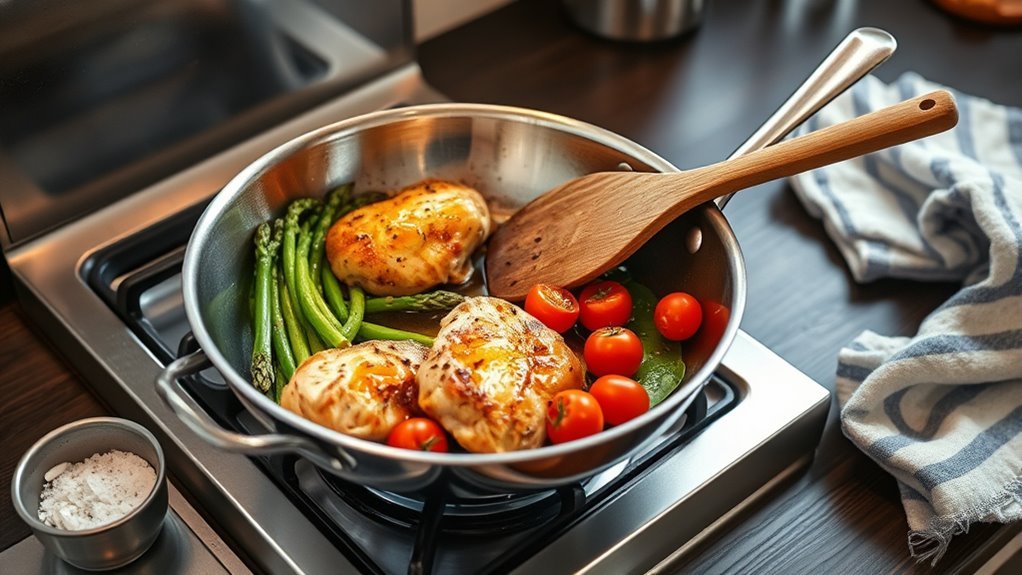
Did you know that stainless steel pans are favored by 85% of professional chefs for their versatility and durability? These pans excel at searing proteins and sautéing vegetables, making them a staple in any kitchen. With the right techniques, you can elevate your cooking game. Curious about what to cook and how to master the art of using these essential tools? Let’s explore the best foods and tips to make the most of your stainless steel pan.
Why Choose Stainless Steel for Cooking?
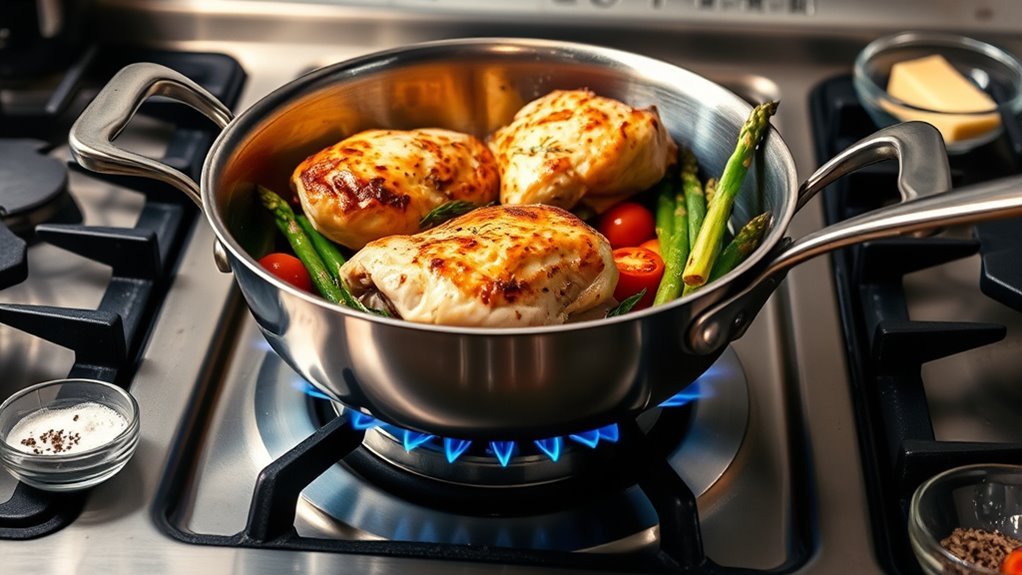
When you choose stainless steel for cooking, you’re opting for a versatile and reliable kitchen companion. Stainless steel pans are non-reactive, allowing you to cook acidic foods like tomatoes and citrus without worrying about altering their flavors.
Their excellent heat retention and distribution guarantee even cooking, making it easy to achieve that perfect sear. Plus, these pans are built to last; they resist rust, flaking, and scratching, maintaining their sleek appearance even with daily use.
Cleaning is a breeze, too—just toss them in the dishwasher or wipe them down for a shiny finish. Unlike non-stick options, stainless steel cookware doesn’t contain harmful chemical coatings, so you can cook with peace of mind.
Embrace the freedom of healthy cooking with stainless steel pans, and elevate your culinary game while enjoying the durability and performance that come with every meal.
Top Proteins to Sear in Your Stainless Steel Pan
When it comes to searing proteins, stainless steel pans shine with versatility and precision.
You’ll find that chicken breasts, pork chops, steak, and even seafood like fish and shrimp all benefit from this method, each bringing out unique flavors and textures.
Mastering the right techniques for each protein will elevate your cooking and make mealtime truly delicious.
Best Cuts of Meat
Searing proteins in a stainless steel pan can elevate your cooking to new heights, and there are five standout cuts of meat that truly shine in this method.
First up, ribeye, sirloin, and filet mignon boast marbling that enhances flavor and tenderness at high heat.
Next, bone-in or thick-cut pork chops benefit from the pan’s even heat, achieving a perfect sear while staying juicy.
Skin-on chicken thighs crisp beautifully, offering a satisfying crunch.
Lamb loin chops or rib chops render fat effectively, creating a rich, flavorful crust.
Ultimately, firm fish like salmon or swordfish develop a crispy exterior while remaining moist inside.
For the best quality results, these cuts will transform your stainless steel cooking experience.
Seafood Searing Techniques
Release the full potential of your stainless steel pan by mastering seafood searing techniques.
Start with scallops—preheat your stainless steel cookware until it’s hot, then add oil to create a non-stick barrier.
For fish fillets, place them skin-side down first; this guarantees a crispy texture while cooking evenly over medium heat.
When searing shrimp, arrange them in a single layer to promote caramelization and avoid steaming.
Don’t forget to dry your seafood thoroughly with paper towels; this enhances the Maillard reaction, giving you that glorious golden crust.
Finally, elevate your dish by deglazing the pan with a splash of white wine, capturing all those flavorful bits stuck to the bottom.
Enjoy your culinary liberation!
Poultry Cooking Tips
After perfecting your seafood searing skills, it’s time to explore poultry, another fantastic protein to cook in your stainless steel pan.
Here are some poultry cooking tips to elevate your dish:
- Chicken Breasts: Sear in a preheated pan with high-smoke point oil for a golden-brown crust.
- Duck Breast: Start skin-side down in a cold pan to render fat and achieve that crispy skin.
- Chicken Thighs: Bone-in, skin-on thighs thrive in high heat, ensuring rich flavor and crispy skin.
Embrace the art of searing poultry in your stainless steel pan.
Each cut brings unique flavors and textures, making your kitchen a liberating space for culinary creativity.
Your next meal is just a sear away!
Perfect Vegetables for Your Stainless Steel Pan
When it comes to cooking with stainless steel pans, the right vegetables can make all the difference.
You’ll find that sautéing leafy greens or roasting cruciferous veggies enhances their flavors beautifully.
Plus, mastering steaming techniques can help you retain those essential nutrients while still enjoying vibrant, delicious dishes.
Ideal Veggies to Sauté
Sautéing vegetables in a stainless steel pan can elevate your cooking game, and certain veggies shine brighter than others. Here are some ideal choices that will transform your dishes:
- Zucchini and Bell Peppers: Their high water content guarantees even cooking and glorious caramelization.
- Broccoli and Cauliflower: These firm vegetables withstand high heat, enhancing their natural flavors and achieving a beautiful golden-brown color.
- Spinach and Kale: Leafy greens wilt quickly, developing rich flavors without turning soggy.
Don’t forget to sauté onions and garlic for a sweet, aromatic base, and consider carrots and asparagus cut into uniform pieces for that perfect crunch.
Embrace these vibrant vegetables, and watch your meals come alive!
Roasting Techniques for Flavor
Roasting vegetables in a stainless steel pan transforms simple ingredients into a flavorful feast, provided you follow a few essential techniques.
First, preheat your pan to create a non-stick barrier with oil, ensuring even cooking. Opt for high-smoke point oils like canola or grapeseed to achieve that crispy texture without burning.
Cut your veggies into uniform sizes for consistent browning, enhancing both flavor and presentation. Avoid overcrowding the pan; this promotes better air circulation and caramelization, leading to more delicious results.
Finally, don’t forget about deglazing! A splash of broth or wine after roasting lifts those tasty browned bits, allowing you to create a rich sauce that elevates your dish.
Enjoy your culinary liberation!
Steaming for Nutrient Retention
After mastering roasting techniques, you might want to explore another method that maximizes flavor while keeping nutrients intact: steaming.
Using stainless steel pans for steaming not only preserves vitamins but also enhances the vibrant colors and crisp textures of your veggies.
Here are three ideal vegetables to steam:
- Broccoli: Retains its bright green color and crunch.
- Carrots: Stay sweet and tender while maintaining their nutrients.
- Asparagus: Delicate yet firm, bursting with flavor.
To steam, add a bit of water to your pan, bring it to a simmer, and elevate your veggies with a steamer basket.
Season the water with herbs or garlic for an extra flavor kick.
Embrace the liberation of healthy, delicious cooking!
Essential Techniques for Cooking Eggs Without Sticking
Mastering the art of cooking eggs in stainless steel pans can elevate your breakfast game considerably. To achieve that perfect, nonstick finish without relying on traditional nonstick cookware, follow these essential techniques:
| Step | Tips |
|---|---|
| Preheat the pan | Warm it over medium heat before adding oil. |
| Choose the right oil | Use high-smoke point oils like canola or avocado. |
| Wait for the oil | Confirm the oil is hot before cracking in eggs. |
| Don’t overcrowd | Cook fewer eggs at a time for even cooking. |
| Deglaze for flavor | Splash some water or broth after cooking to loosen bits. |
How to Make Delicious Sauces From Fond
Cooking eggs to perfection in a stainless steel pan is just the beginning of your culinary adventure.
Once you’ve seared meat or vegetables, you’re left with fond—those glorious browned bits packed with flavor.
Here’s how to transform that fond into a delectable sauce:
- Deglaze: Pour in stock, wine, or vinegar while the pan’s still hot. Use a wooden spoon to scrape up every last bit of flavor.
- Simmer: Let the liquid cook down. This reduces the sauce, concentrating its flavors and thickening it to perfection.
- Finish: Stir in butter or cream for a rich, luscious finish that elevates your dish.
With this versatile technique, you can craft gourmet sauces that turn simple meals into culinary masterpieces.
Embrace the power of fond, and liberate your kitchen creativity!
How to Achieve a Perfect Sear on Meats
Achieving a perfect sear on meats transforms ordinary dishes into culinary delights. Start by preheating your stainless steel pan on medium-high heat for about 2-3 minutes. This guarantees your meat sizzles rather than sticks.
Use a high smoke point oil, like canola or grapeseed, to create a non-stick barrier that enhances browning. Pat the meat dry with paper towels to eliminate excess moisture—this step’s essential for that coveted crust.
Avoid overcrowding the pan; sear one or two pieces at a time to maintain consistent heat. Let the meat sear undisturbed for several minutes before flipping. This patience develops a crust that releases naturally from the pan, locking in flavor.
If you’re using a Dutch oven, the process is similar, but the added depth can enhance the overall searing effect. Embrace this technique, and elevate your cooking to new heights!
Maintenance Tips for Long-Lasting Performance
To keep your stainless steel pans performing like new, a few simple maintenance tips can make all the difference. Embrace the joy of cooking with care that enhances your cookware’s lifespan and efficiency.
Keep your stainless steel pans in top shape with simple care tips that enhance their longevity and cooking performance.
- Regular Cleaning: Use Bar Keepers Friend to maintain the finish and tackle stubborn stains without scratching.
- Gentle Scrubbing: Steer clear of abrasive scrubbers that can damage the surface and diminish its non-stick capabilities over time.
- Proper Storage: Stack your pans with protective liners to avoid scratches and keep that radiant shine intact.
Additionally, don’t forget to season your pans periodically with high smoke point oil. This creates a non-stick barrier that elevates your cooking experience.
Common Mistakes to Avoid When Using Stainless Steel?
While you might be enthusiastic to whip up a delicious meal, there are common mistakes that can hinder your success with stainless steel pans. First, don’t crank the heat to high; medium heat works best to prevent sticking and guarantee even cooking.
Always add cold oil to a preheated pan to create a non-stick barrier—skipping this step can lead to frustration.
Avoid overcrowding the pan, as this traps steam and can ruin that perfect sear you’re aiming for. Let your food develop a natural crust before trying to flip or move it; this simple act minimizes sticking.
Finally, be cautious with utensils; using metal tools not specifically designed for stainless steel can scratch the surface and compromise performance.
Frequently Asked Questions
What Are Some Delicious Recipes I Can Cook in My Stainless Steel Pan?
You can whip up some delicious recipes in your stainless steel pan!
Start with flavorful searing of a juicy steak, creating a perfect crust. Toss in vibrant veggies for a quick stir-fry, locking in their crunch and nutrients.
Afterward, deglaze the pan with wine for a rich sauce.
Try fluffy scrambled eggs or golden pancakes next—both benefit from the even heat.
Your stainless steel pan’s versatility will elevate your meals effortlessly!
What Foods Should Not Be Cooked in Stainless Steel?
Imagine a fish fillet sizzling in a pan, only to stick like it’s auditioning for a role in a horror film. You’ll want to avoid delicate proteins, sugary foods, and overly sticky items like eggs in your stainless steel pan.
Instead, consider non-stick alternatives for those challenging dishes. Acidic ingredients can also react poorly, changing flavors.
Embrace the freedom of smooth cooking by choosing your foods wisely!
What Are the Best Uses for Stainless Steel Pans?
Stainless steel pans shine when you sear meats, sauté veggies, or deglaze for rich sauces.
You’ll love how they handle high heat, creating a beautiful crust that locks in flavor.
Try cooking acidic foods like tomato sauces without worry; they won’t react with the pan.
Their durability makes them perfect for frying and browning too.
Embrace these cooking techniques, and watch your culinary adventures flourish in the kitchen!
What’s the Downside of Stainless Steel Cookware?
While stainless steel cookware offers durability, it comes with drawbacks. Did you know that around 30% of cooks report frustration with food sticking?
Mastering cooking techniques can be a challenge, as improper preheating or oiling leads to sticking, especially with delicate items.
Plus, the weight can be cumbersome during long cooking sessions. Cleanup can also be a hassle, especially when dealing with burnt-on food, making it less appealing for everyday use.
Conclusion
In summary, using a stainless steel pan opens up a world of culinary possibilities. You’ll sear, sauté, and elevate your dishes with ease, transforming simple ingredients into gourmet meals. With the right techniques, you’ll reveal flavors and textures that make every bite unforgettable. Just remember to embrace the art of cooking—preheat, don’t overcrowd, and savor the process. As you master your stainless steel pan, you’ll find cooking becomes not just a task, but a joyful adventure.
