
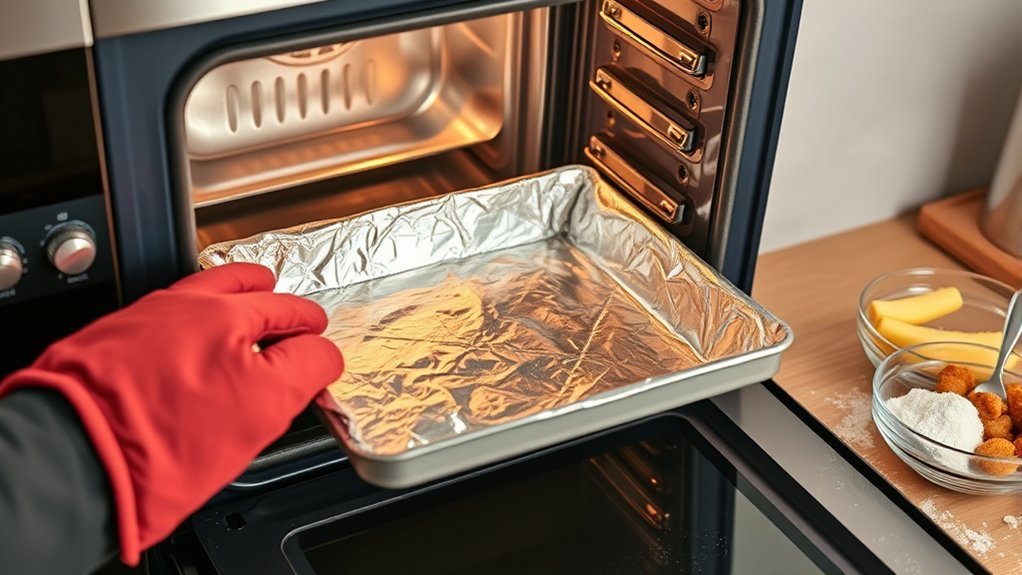
Aluminum foil is completely safe to use in the oven for lining baking sheets, wrapping meats, or tenting roasting poultry, provided it is kept away from heating elements and never placed directly on the oven floor. While foil withstands temperatures up to 1,220°F (660°C), improper placement can disrupt thermal airflow, permanently fuse to porcelain enamel, or pose a fire hazard. Using foil correctly protects your food, preserves appliance efficiency, and prevents costly oven repairs.
Quick Answer
Yes, you can safely put aluminum foil in conventional and convection ovens at standard baking temperatures. However, foil must only be used on oven racks, baking sheets, or roasting pans. Never place aluminum foil on the bottom of an oven, as trapped heat can melt or permanently fuse the metal to the interior porcelain finish.
Key Takeaways
- Never line the oven floor: Heat trapped beneath foil can permanently fuse it to porcelain enamel and void appliance warranties.
- Keep clear of elements and vents: Maintain at least a 1-inch clearance from heating elements, gas burners, and convection fans.
- Avoid high-acid foods: Direct contact with vinegar, tomatoes, or citrus dissolves foil and can transfer metallic salts into your food.
- Shiny side vs. dull side: Thermal difference is negligible; either side can face up during roasting or baking.
- Use heavy-duty foil for roasting: Standard foil tears easily under high heat and heavy foods; heavy-duty foil provides better structural integrity.
Can You Put Aluminum Foil in the Oven?
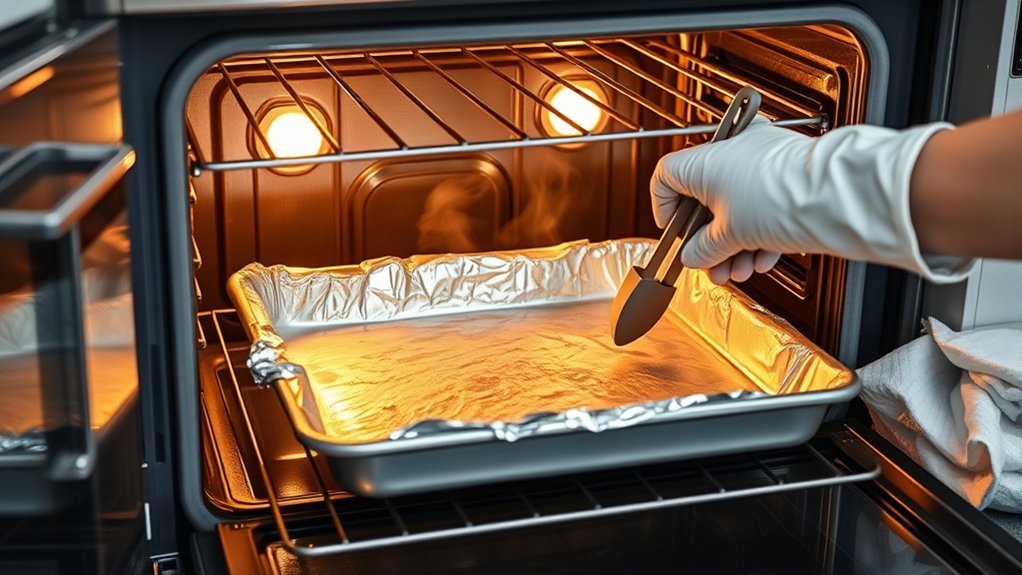
Aluminum foil can withstand standard residential oven temperatures without burning or degrading. With a melting point of approximately 1,220°F (660°C), kitchen foil easily tolerates the 300°F to 500°F range used in everyday baking, roasting, and broiling. It acts as an effective thermal conductor, reflecting radiant heat while sealing in moisture and protecting delicate foods from scorching.
However, safety depends entirely on placement. Foil is designed to interact with cookware, not the internal mechanical architecture of the oven. When placed on oven racks or wrapped directly around food, it functions reliably. When used inappropriately as an oven liner or drip catcher, it creates airflow obstructions and thermal traps that damage modern ranges.
At a Glance
| Safe Temperature Limit | Up to 1,220°F (660°C) melting point; safe for all standard baking and broiling settings. |
| Approved Placement | Baking sheets, roasting pans, casserole dishes, and wrapped around food on oven racks. |
| Prohibited Placement | Oven cavity floor, interior side walls, or touching active heating coils. |
| Incompatible Foods | High-acid foods (tomatoes, lemons, vinegar marinades) and heavily salted wet dishes. |
Shiny Side vs. Dull Side: Does It Matter?
One of the most persistent culinary debates is whether the shiny side or the dull side of aluminum foil should face upward in the oven. According to food laboratories and manufacturers like Reynolds Kitchens, it makes no practical difference to cooking performance.
The difference in appearance is merely a manufacturing byproduct. During the final milling stage, two layers of foil are passed through rolling mills simultaneously because the thin sheets would otherwise tear. The sides that touch the polished steel rollers emerge shiny, while the sides facing each other come out with a matte finish. Both sides reflect and conduct heat at essentially identical rates under typical kitchen conditions.
Pro Tip: The only exception is specialty non-stick aluminum foil. Non-stick varieties have a food-safe silicone coating applied exclusively to the dull side. When using non-stick foil, always place the food on the dull side facing up.
How to Use Foil Safely in the Oven
Safe operation requires respecting oven airflow and choosing the correct gauge of foil for your task. Standard foil works well for wrapping sandwiches or sealing light dishes, but high-heat roasting calls for heavy-duty foil to prevent puncturing and leaks.
- Line pans, not racks: Always mold the foil tightly inside a baking sheet or roasting tray. Avoid extending foil beyond the rim of the pan where it could touch heating coils.
- Leave ventilation gaps: If covering a casserole or roasting dish, crimp the foil securely to the rim of the dish rather than draping it across the oven shelf.
- Broil with drainage slits: When broiling fatty cuts of meat on a foil-lined broiler pan, slice small slits into the foil over the pan’s drainage slats so grease flows into the reservoir below rather than pooling under radiant heat.
- Convection oven clearance: In convection ovens, ensure foil is tucked securely under food. High-velocity circulating fans can lift loose foil sheets, blowing them into heating elements or blocking the blower grille.
When Foil Causes Oven Problems
Misusing aluminum foil can lead to appliance failure, electrical hazards, and compromised food quality. Understanding the mechanisms behind these risks prevents costly mistakes.
Warning: Modern electric ovens often house their primary bake element beneath a smooth porcelain floor. Placing foil directly on the cavity bottom traps intense radiant heat, raising localized temperatures past the softening point of porcelain and permanently bonding the aluminum to your oven. Appliance manufacturers including Whirlpool, GE, and Bosch explicitly state this voids your warranty.
Oven Liner Risks and Enamel Damage
Using foil as a catch-all liner on the oven bottom is one of the most common causes of service calls. In older ovens, the open gas flame or exposed electric element sits above the floor. In modern units, the heating source is concealed below the porcelain enamel cavity.
When aluminum foil rests directly on the bottom, heat cannot radiate freely into the cooking chamber. The trapped thermal energy causes the aluminum to oxidize aggressively and fuse chemically into the porcelain finish. Attempting to scrape the fused foil away chips the protective enamel, exposes raw steel, initiates rust, and often requires an entire oven cavity replacement.
Blocked Airflow and Inaccurate Thermostats
Ovens rely on natural thermal convection or mechanical fans to circulate hot air evenly. Covering an entire rack with foil acts as an impermeable barrier that segments the oven into an overheated lower zone and an underheated upper zone.
This thermal barrier blinds the oven’s internal temperature sensor, causing heating elements to cycle erratically. Baked goods end up with burnt bottoms and raw centers, baking times double, and electric components suffer unnecessary wear.
Chemical Reactions with Acidic and Salty Foods
Aluminum is an active metal that reacts directly with acids and concentrated salts. When cooking ingredients such as tomato sauce, citrus marinades, vinegar-based dressings, or barbecue glaze in direct contact with foil, chemical corrosion occurs.
The acid dissolves the metal, producing visible pinholes in the foil sheet. This reaction transfers aluminum ions and salts into the food, creating an astringent, bitter metallic taste and unappetizing black specks. For acidic recipes, use glass, ceramic, or unreactive stainless steel cookware.
Note: If you must cover an acidic dish with foil to retain moisture, place a protective layer of unbleached parchment paper over the food first, then crimp the aluminum foil over the parchment without letting metal touch the sauce.
Why Foil Turns Dark in the Oven
After prolonged exposure to high heat, aluminum foil often develops dark gray, brown, or rainbow-tinted patches. This coloration is not food grease or burnt coating; it is a natural metallurgical phenomenon known as surface passivation.
When heated past 400°F (204°C) in the presence of oxygen and ambient kitchen humidity, the foil’s microscopic native oxide layer (Al₂O₃) thickens rapidly. This thickened oxide coating refracts light differently, producing a dull or darkened appearance. The oxide layer is completely non-toxic, insoluble, and chemically stable. It will not leach into food or reduce the foil’s thermal capabilities, and no attempt should be made to scrub or wash it off.
“Surface oxidation on heated aluminum foil is an inert, self-limiting chemical barrier. While it alters visual sheen, it poses zero food-safety or toxicity risk.”
How to Bake Potatoes in Foil
Wrapping Russet potatoes in aluminum foil is a classic technique used to produce soft, tender, diner-style jacket potatoes. The foil locks in evaporating moisture, essentially steaming the potato interior while it roasts.
- Scrub and dry thoroughly: Wash Russet potatoes under cold water to remove dirt. Dry completely with a kitchen towel; residual surface moisture prevents the skin from seasoning properly.
- Pierce for steam release: Prick each potato 4 to 5 times with a fork or make a shallow 0.5-inch slit on top. This prevents internal steam pressure from rupturing the potato inside the foil.
- Season the skin: Rub the skin lightly with high-smoke-point oil (such as avocado or canola oil) and sprinkle with kosher salt.
- Wrap tightly in foil: Wrap each potato snugly in a single sheet of standard aluminum foil, folding the edges over to seal in the steam.
- Bake at 425°F (218°C): Place wrapped potatoes directly on the center oven rack. Bake for 50 to 60 minutes until an instant-read probe thermometer inserted into the center reads 205°F to 210°F (96°C to 99°C).
- Crisp the skin (Optional step): If you prefer crisp rather than soft skin, unwrap the potatoes during the final 10 minutes of baking, brush with an additional dab of melted butter or oil, and finish baking uncovered directly on the rack.
Aluminum Foil Alternatives for Oven Cooking
Depending on your culinary technique, several reusable and heat-resistant alternatives can replace aluminum foil effectively while eliminating metal waste:
- Parchment Paper (Baking Paper): Excellent for lining sheet pans for cookies, breads, and roasted vegetables. It provides superior non-stick properties and resists moisture. Safety limit: Rated up to 420°F–450°F (215°C–232°C). Never use parchment under an open broiler.
- Silicone Baking Mats (Silpat): Reusable fiberglass-reinforced silicone liners designed for baking sheets. They provide exceptional non-stick release and withstand temperatures up to 480°F–500°F (250°C–260°C).
- Oven-Safe Cookware with Lids: Enameled cast-iron Dutch ovens, covered casserole stoneware, and glass pyrex dishes naturally trap steam and braise meats without requiring disposable foil coverings.
- Stainless Steel Wire Racks: For roasting meats, resting food on an elevated stainless steel cooling rack set inside a sheet pan promotes 360-degree heat circulation without requiring foil shields.
- Natural Leaves (Banana or Corn Husks): For traditional slow-roasting and steaming, natural wrappers impart subtle aromatics while holding moisture during low-and-slow braises.
Frequently Asked Questions
What are common mistakes to avoid when using aluminum foil in the oven?
The most severe mistake is placing foil on the oven floor to catch drippings, which permanently fuses foil to porcelain enamel. Other frequent errors include covering an entire rack (which disrupts convective airflow), placing foil within 1 inch of electric heating elements, and using foil in direct contact with high-acid ingredients like tomatoes or citrus.
Can I put aluminum foil in the oven at 400 degrees?
Yes. Aluminum foil handles 400°F (204°C) with ease, as pure aluminum has a melting point of roughly 1,220°F (660°C). At 400°F, foil remains chemically stable and mechanically sound for baking, roasting, and tray lining.
Can I put aluminum foil in the oven without a pan?
Yes, you can place foil-wrapped items (such as jacket potatoes, garlic heads, or ribs) directly on the oven wire racks without a pan. However, never place a loose sheet of foil alone across a rack to catch grease beneath other pans; if you need a drip catcher, place a rimmed baking sheet on the lowest rack instead.
How to use aluminum foil correctly?
Use aluminum foil to line cookware, tent roasting meats to prevent overbrowning, or wrap foods tightly to seal in moisture. Choose heavy-duty foil for roasting or high-heat grilling. Always leave space around cookware for heat circulation, keep foil away from heating elements, and line acidic foods with parchment paper first.
Conclusion
Aluminum foil remains an indispensable kitchen tool when used within its engineering boundaries. It excels at lining baking pans, retaining moisture during roasting, and shielding delicate pastry crusts from burning. To protect your oven and achieve the best culinary results, remember the foundational rule: keep foil inside or on top of your cookware, maintain proper airflow clearance, and never allow foil to contact the bottom floor or exposed heating elements of your oven.
Sources
- USDA Food Safety and Inspection Service — Food safety parameters, food contact materials, and temperature guidelines.
- Reynolds Kitchens — Manufacturer technical specifications for aluminum foil temperature tolerances and manufacturing processes.
- GE Appliances Support — Factory guidelines on interior oven maintenance, radiant heat traps, and porcelain enamel protection.
- Whirlpool Product Help — Appliance manufacturer advisories against using aluminum foil as an oven liner.

1 thought on “How to Use Aluminum Foil in Oven: Simple Step-by-Step Guide”