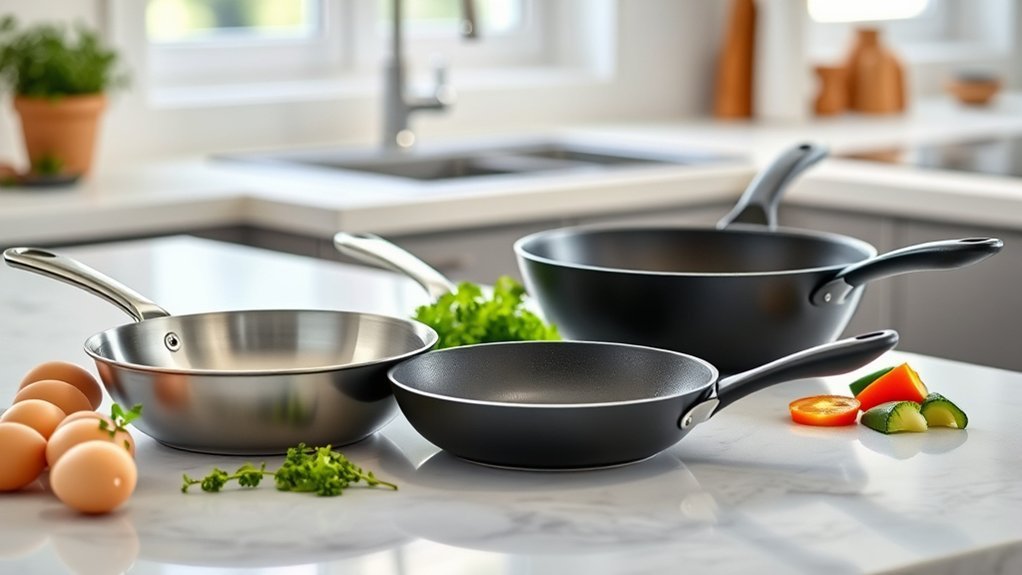
A good frying pan should heat evenly, match your cooktop, feel balanced in your hand, and suit the food you cook most often. For many home kitchens, an 8-, 10-, or 12-inch pan covers most jobs. Nonstick is useful for eggs and delicate foods, while stainless steel, carbon steel, and cast iron are better suited to browning and higher-heat work. The right choice also depends on usable cooking area, oven limits, handle design, weight, cleanup, and how much maintenance you are willing to do.
Quick Answer
Choose a frying pan by matching the material, size, base, and heat limits to your cooking style. A 10-inch pan is a practical everyday size for many cooks. Use nonstick for delicate foods, stainless steel for browning and pan sauces, carbon steel for responsive high-heat cooking, and cast iron for strong heat retention.
Key Takeaways
- Match the pan to the food: nonstick for easy release, stainless steel for browning, carbon steel for responsive heat, and cast iron for heat retention.
- Check the actual base diameter, not only the rim size, so the pan fits the burner and heats efficiently.
- Treat oven-safe temperatures as model-specific. Handles, lids, coatings, and attachments can lower the safe limit.
- Do not assume ceramic is automatically safer or longer-lasting than PTFE nonstick; compare the exact coating, care instructions, and manufacturer disclosures.
- For coated pans, moderate heat, gentle utensils, and hand washing usually help preserve release and surface condition.
How to Choose a Good Frying Pan
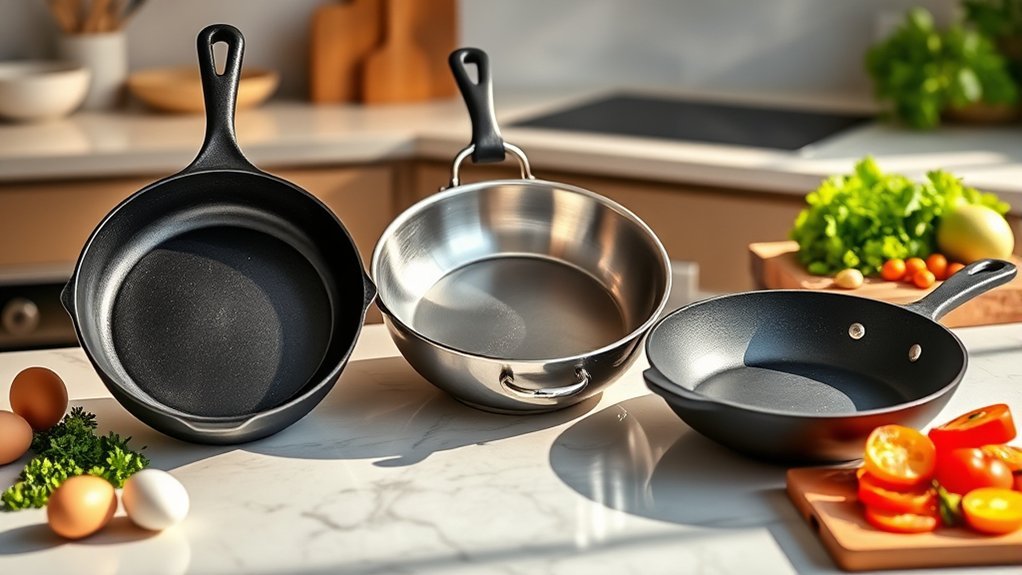
A good frying pan is chosen by balancing material, size, heat compatibility, usable cooking area, weight, and upkeep. An 8-inch pan works well for eggs and single portions, a 10-inch pan is a flexible everyday size, and a 12-inch pan gives more room for family meals and browning food without crowding.
Check cooktop compatibility before buying. Induction requires a magnetic, induction-ready base, while cast iron and many stainless steel pans work across common cooktops. A simple magnet test can help, but the manufacturer’s induction rating is the better guide because base construction and flatness also affect performance.
Also look at how the pan is built. A flat, stable base reduces rocking; a wide cooking surface gives food more contact with the pan; gently flared sides make turning and pouring easier; and a secure handle should feel comfortable when the pan is loaded.
Warranty terms can be useful, but they do not prove how long a pan will last. Read what the warranty actually covers, especially for coatings, warping, handles, and normal wear.
Pro Tip: If possible, lift a display pan with one hand before buying. A pan that feels fine when empty can become awkward after adding food, oil, and a lid.
Best Frying Pan Materials
Material has a major effect on heat response, searing, food release, weight, and maintenance. No single material is best for every task.
Nonstick frying pans are useful for eggs, pancakes, fish, and other foods that benefit from easy release. They usually need less oil and are quick to clean, but the cooking surface is a wear item and should be protected from excessive heat and abrasive tools.
Ceramic nonstick is a coating category, not solid ceramic cookware in most frying pans. Many current ceramic-coated models are made without intentionally added PFAS or without PTFE, but that claim should be checked on the exact product. Ceramic coatings can still wear, lose release, or scratch over time, so “ceramic” does not by itself guarantee longer life.
Stainless steel is durable, non-reactive for normal cooking, and excellent for browning, searing, and building fond for pan sauces. Stainless steel itself is not a strong heat conductor, so good frying pans often use an aluminum or copper core in a clad construction to spread heat more evenly.
For everyday performance, construction matters as much as the outer material: a well-designed clad pan can spread heat more evenly than a thin pan made from one metal.
Carbon steel heats and cools faster than heavy cast iron, handles high cooking temperatures well, and can develop an easy-release seasoned surface. Traditional carbon steel needs drying and seasoning to limit rust, although newer treated or nitrided designs may reduce that maintenance.
Cast iron is heavy but holds heat very well, making it useful for frying, searing, baking, and cooking over a grill or open flame when the specific pan is rated for that use. Seasoning protects bare cast iron from rust and improves release over time.
Enameled cast iron adds a glass-like enamel surface that does not need seasoning and handles acidic foods better than newly seasoned bare iron. It is usually heavier and can chip if struck or handled roughly.
What to Look for in a Nonstick Pan
When evaluating a nonstick pan, start with the exact coating, body construction, heat guidance, and care instructions. Ceramic-coated pans are commonly sold as PFAS-free or PTFE-free, while traditional nonstick may use PTFE. Those are different constructions, and neither label alone tells you how evenly the pan heats or how long the coating will perform.
The U.S. Food and Drug Administration explains that certain polymerized PFAS are authorized for some nonstick food-contact applications and that studies show negligible amounts capable of migrating to food from those coatings. Buyers who prefer cookware made without intentionally added PFAS can choose ceramic or other coating-free designs, but the choice should be based on verified product disclosures rather than broad “toxic” versus “non-toxic” labels.
- Compatibility: Confirm induction support if needed and verify the oven limit for the pan, handle, and lid.
- Body and base: Look for a flat, stable base and enough metal thickness to resist hot spots and warping.
- Handling: Choose a handle shape and pan weight you can control safely when the pan is full.
- Care: Follow the maker’s heat and utensil guidance. Even when a pan is dishwasher-safe, hand washing may reduce wear on the finish.
Warning: Do not treat a high oven-safe rating as permission to use maximum stovetop heat. Many coated nonstick pans are designed for low-to-medium stovetop heat, and overheating an empty pan can damage the coating or body. Follow the manufacturer’s instructions for the exact model.
Choose the Right Frying Pan Size
Pan size should match how much food you cook and the size of your burner. An 8-inch model suits a single serving, one or two eggs, and quick reheating. A 10-inch pan is often a good everyday middle ground. A 12-inch pan gives more room for larger portions, vegetables, or meat that needs space to brown rather than steam.
The listed diameter usually measures across the top rim, not the flat cooking surface. A 10-inch pan may have a much smaller flat area, so compare the cooking-surface diameter when manufacturers publish it. This matters for pancakes, fish fillets, burgers, and any recipe where usable flat space is more important than rim-to-rim size.
Also compare the bottom of the pan with the burner or induction zone. A base that greatly exceeds the active heating area may heat less evenly at the edges, while a pan that is too small can waste space and feel unstable on a large grate.
Note: Manufacturer size names are not always literal. For example, the Field Company No. 8 cast iron skillet is about 10.25 inches across the top, so always check dimensions instead of relying on the model number.
Pan Shape, Base, and Cooking Surface
Two frying pans with the same advertised diameter can cook very differently. The sidewall angle, base thickness, and flat cooking area determine how much food fits and how easily you can turn, toss, or pour.
- Wide flat base: Better for burgers, fish, cutlets, and other foods that need direct contact for browning.
- Flared sides: Make it easier to slide in a spatula, toss vegetables, and pour pan sauces.
- Higher sides: Reduce splatter and give more room for shallow braises or larger batches.
- Flat induction base: Helps maintain contact with glass and induction cooktops and reduces rocking.
- Clad sidewalls: On fully clad stainless steel, conductive layers extend up the sides instead of stopping at a separate base disc.
For glass or ceramic cooktops, lift heavy pans instead of sliding them. This reduces the chance of scratching the cooktop and makes it easier to keep the base flat and clean.
Heat Control and Oven Safety
Heat distribution matters because a pan that spreads heat evenly reduces severe hot spots and gives more consistent browning. Oven safety matters just as much when a recipe moves from the burner to the oven.
Do not choose an oven temperature from the material name alone. The body, coating, handle, lid, knob, rivets, and other parts can all change the safe limit. Current examples range widely: GreenPan Valencia Pro lists up to 600°F for the frypan, Made In CeramiClad lists 550°F, and Misen lists up to 1100°F for its coating-free Carbon Nonstick frying pan. Those ratings belong to those specific products, not to every ceramic, stainless, or carbon steel pan.
Heat Distribution Matters
Even a well-made frying pan can underperform if its construction creates strong hot spots. The most useful question is not simply “What metal is it?” but “How is the heat-spreading layer built?”
- Choose a pan with a flat base that matches the cooktop and burner size.
- For stainless steel, look for clad or bonded construction with a conductive aluminum or copper layer.
- Preheat gradually, especially with cast iron and carbon steel, to reduce uneven heating and warping risk.
- Keep coated nonstick within the manufacturer’s recommended heat range.
Heavy pans often hold heat more steadily, while lighter pans respond faster when the burner is adjusted. The better choice depends on whether you value heat retention or quick temperature changes.
Oven-Safe Temperature Limits
Oven-safe temperature limits should always come from the maker of the exact pan. For example, All-Clad lists its D3 Everyday stainless skillet as oven and broiler safe to 600°F, while its nonstick cookware lines can have lower limits. GreenPan Valencia Pro lists the frypan to 600°F, and Made In CeramiClad lists 550°F.
Cast iron can tolerate very high cooking temperatures, but even cast-iron makers set care limits around seasoning and attached components. Lodge notes that sustained temperatures around 650°F can begin to break down seasoning, so 650°F should not be treated as a universal “maximum safe temperature” for all cast iron.
Lids often have lower limits than pans. Glass lids, silicone parts, and plastic knobs can reduce the oven rating even when the metal body can tolerate more heat.
High-Heat Cooking Performance
For high-heat cooking, stainless steel, bare cast iron, and carbon steel are generally better choices than coated nonstick. They can brown meat well and tolerate the preheating needed for searing when used within the maker’s guidance.
- Carbon steel: Responsive, relatively light for an iron pan, and well suited to searing once properly preheated.
- Stainless steel: Excellent for browning and creating fond for sauces; clad construction improves heat spread.
- Cast iron: Slower to respond but strong at holding heat when cold food is added.
- Nonstick: Best kept to the heat range specified by the manufacturer. A high oven rating does not mean the coating should be blasted over maximum stovetop heat.
Handle Design, Weight, and Comfort
Handle design, weight, and balance all affect how practical a frying pan feels in daily use. A secure handle should give you enough leverage to lift and tilt the pan without twisting your wrist.
Riveted metal handles are common, but rivets are not the only sign of quality. What matters is that the attachment remains tight and the handle does not flex. Hollow or vented stainless handles may stay cooler on the stovetop than solid metal handles, but any metal handle can become hot depending on burner size, cooking time, and oven use.
Lighter pans are easier to toss and move, while heavier pans tend to feel steadier and often retain heat longer. A helper handle can make a large 12-inch pan or heavy cast-iron skillet easier to move safely with two hands.
Lighter pans are easier to maneuver; heavier pans usually feel steadier and hold heat longer. The best choice is the one you can control safely when it is full.
Soft-touch or silicone handle covers can improve grip, but they may lower the pan’s oven-safe temperature. Check the complete product rating rather than assuming the metal body sets the limit.
How Long a Frying Pan Lasts
A frying pan’s lifespan depends on its material, coating, heat exposure, cleaning routine, and how often it is used. There is no reliable universal rule that a coated nonstick pan lasts a fixed number of years.
Bare stainless steel, cast iron, and carbon steel can remain usable for decades when the pan stays flat, the handle remains secure, and corrosion is controlled. Coated pans are different because the release surface can gradually wear even when the body is still sound.
There is also no dependable category-wide rule that ceramic-coated pans always outlast PTFE nonstick or vice versa. Durability varies by coating system, pan construction, usage, and care. Independent durability testing often finds meaningful differences between individual models.
- Frequent overheating can shorten the life of coatings and can warp thinner pans.
- Metal or abrasive tools can damage surfaces that are not rated for them.
- Dishwasher detergents and repeated dishwasher cycles may dull finishes or accelerate coating wear, even on some products labeled dishwasher-safe.
- Warranty length does not equal expected service life; normal wear may be excluded.
Replace a coated pan when the cooking surface is deeply scratched, peeling, blistered, badly pitted, or no longer performs as intended despite correct cleaning. Replace any pan with a loose or unsafe handle, severe warping, cracks, or other structural damage.
How to Care for Your Frying Pan
Proper care starts with the pan’s material and the manufacturer’s instructions.
For nonstick cookware, hand washing with mild soap and a soft sponge is a safe default when the maker allows it. Wooden, silicone, or approved nylon utensils reduce scratching. Avoid overheating and avoid stacking bare pans directly on top of coated cooking surfaces unless you use a soft pan protector.
Proper care starts with the pan’s construction: coated pans need gentle heat and tools, while seasoned iron needs thorough drying and protection from rust.
For stainless steel, allow the pan to cool before washing. Many stainless pans can handle more aggressive cleaning than nonstick, but dishwasher guidance varies by product. For example, All-Clad recommends hand washing its D3 Everyday skillet even though stainless steel as a material is highly durable.
For carbon steel and cast iron, clean according to the maker’s care method, dry thoroughly, and maintain seasoning as needed. Lodge explains that seasoning is polymerized oil bonded to the iron; it improves release and helps protect the surface from rust.
If a seasoned pan develops light rust, it can often be scrubbed, dried, and reseasoned rather than discarded. If a coated pan is peeling or damaged through the cooking surface, replacement is usually the more practical choice.
Best Frying Pan Picks by Use Case
Specific models should be treated as examples to compare, not universal winners. Product generations, coatings, prices, and specifications can change, so the safest approach is to match the current model to your own heat, cooktop, size, and care needs.
The GreenPan Valencia Pro is a current ceramic nonstick example with an induction-ready base and a manufacturer-listed 600°F oven rating. The Field Company No. 8 is a lighter-style cast-iron example with a top diameter of about 10.25 inches. The All-Clad D3 Stainless Everyday Skillet is a fully clad stainless example rated by All-Clad to 600°F for oven and broiler use. The Misen Carbon Nonstick Frying Pan is a coating-free nitrided carbon-steel design with an aluminum core and a manufacturer-listed heat rating up to 1100°F.
Other current lines worth comparing include the OXO Ceramic Professional Non-Stick Frypan, Made In CeramiClad, and Swiss Diamond CXD. Lower-cost GreenPan pans may also fit tighter budgets, but compare the exact model rather than assuming every pan in a brand shares the same base, coating, or oven limit.
Best Nonstick Picks
For buyers comparing nonstick frying pans, these original examples serve different needs:
- GreenPan Valencia Pro: ceramic nonstick, induction-compatible, and rated by GreenPan to 600°F. GreenPan recommends silicone tools even though the surface is marketed as metal-utensil safe.
- OXO Professional Nonstick Pan: OXO’s current Ceramic Professional frypan uses a ceramic nonstick surface, a hard-anodized aluminum body, and an induction base. Check the current product page for the latest care and heat instructions.
- Misen Carbon Nonstick Frying Pan: not a conventional coated nonstick pan. It uses a nitrided carbon-steel cooking surface, is rated for metal utensils, and requires hand washing and periodic conditioning.
Made In Ceramic is now sold as CeramiClad, with current versions made without PFAS, PTFE, PFOA, lead, or cadmium and rated to 550°F. Swiss Diamond CXD is another ceramic option; the current CXD line is sold as PFAS- and PTFE-free and is rated to 500°F. Compare price, weight, usable cooking area, and care rules before deciding.
Best Material By Use
| Use case | Good material choice | Why |
|---|---|---|
| Eggs and delicate fish | Nonstick | Easy release at low-to-medium heat |
| Browning meat and pan sauces | Clad stainless steel | Strong browning and fond development |
| Baking and campfire-style cooking | Bare cast iron | High heat retention and rugged construction |
| High-heat searing with quicker response | Carbon steel | Lighter and more responsive than many cast-iron pans |
| Acidic sauces and long simmers | Stainless steel or enameled cast iron | Non-reactive cooking surface |
Nonstick is convenient for delicate foods and easy cleanup. Cast iron offers strong heat retention but needs drying and seasoning if it is bare iron. Stainless steel is durable and versatile, especially when clad with a conductive core. Carbon steel combines high-heat capability with faster response than heavy cast iron, while enameled cast iron handles acidic recipes without seasoning the cooking surface.
Frequently Asked Questions
What Type of Frying Pan Is the Best?
There is no single best type for every cook. Nonstick is easiest for eggs and delicate foods; clad stainless steel is excellent for browning and sauces; cast iron holds heat well; and carbon steel is responsive and strong at higher cooking temperatures. Choose by the food you cook most often and the maintenance you are willing to do.
What Frying Pans Should I Stay Away From?
Avoid pans with a loose handle, badly warped base, peeling or blistered coating, unclear cooktop compatibility, or heat limits that do not fit how you cook. Brand names such as Caraway, Kyocera Ceramic Coated, Great Jones Large Fry, Our Place Always Pan, and Nordic Ware Cardamom 12 should not be treated as automatic red flags; performance can vary by model and generation, so check current specifications and independent testing.
What Are the Best Frying Pans for Home Use?
For many homes, a 10- or 12-inch clad stainless steel pan plus a smaller nonstick pan covers most tasks. Add cast iron or carbon steel if you sear often, bake in a skillet, or want a seasoned cooking surface. The right mix depends on your burner size, storage, lifting comfort, and cleanup preferences.
What Is the Best Material for a Frying Pan?
Stainless steel is one of the most balanced choices for durability, browning, and low maintenance, especially in a clad pan with an aluminum or copper core. Nonstick is easier for delicate foods, cast iron is strong for heat retention, carbon steel is excellent for responsive high-heat cooking, and enameled cast iron handles acidic foods well.
Is PTFE Nonstick Unsafe?
PTFE should not be reduced to a simple “safe” or “unsafe” label. The FDA states that certain polymerized PFAS are authorized for some nonstick cookware applications and that migration from those coatings is negligible. Use the pan within the manufacturer’s heat and care instructions, and replace a coating that is badly damaged.
How Do I Know If a Frying Pan Works on Induction?
Look for an induction symbol or a manufacturer statement that the pan is induction-compatible. A magnet that sticks firmly to the base is a useful quick check, but also compare the flat base diameter with your induction zone for efficient heating.
Conclusion
A good frying pan is defined less by price or brand than by fit: durable construction, even heating, a comfortable handle, enough flat cooking area, and the right heat range for your meals. Expensive pans do not automatically outperform mid-range options. Choose the material and size that match your cooking habits, verify cooktop and oven compatibility, and follow the correct care routine so the pan performs well for as long as its construction allows.
Sources
- U.S. Food and Drug Administration — Questions and Answers on PFAS in Food — PFAS use in nonstick food-contact coatings and migration context.
- GreenPan — Valencia Pro Ceramic Nonstick 10-inch Frypan — coating disclosure, induction compatibility, care guidance, and 600°F oven rating.
- All-Clad — D3 Everyday Stainless Skillet — tri-ply construction, hand-wash guidance, induction compatibility, and 600°F oven/broiler rating.
- Misen — Carbon Nonstick Frying Pan — nitrided carbon-steel construction, metal-utensil guidance, induction use, conditioning, and heat rating.
- Lodge Cast Iron — Cast Iron Product Guide — cooktop compatibility, oven use, hand washing, and seasoning temperature guidance.
- Made In — CeramiClad Non Stick Frying Pan — coating disclosure, induction compatibility, care instructions, and 550°F heat rating.

2 thoughts on “What Is a Good Frying Pan? Best Features & Buying Tips”