
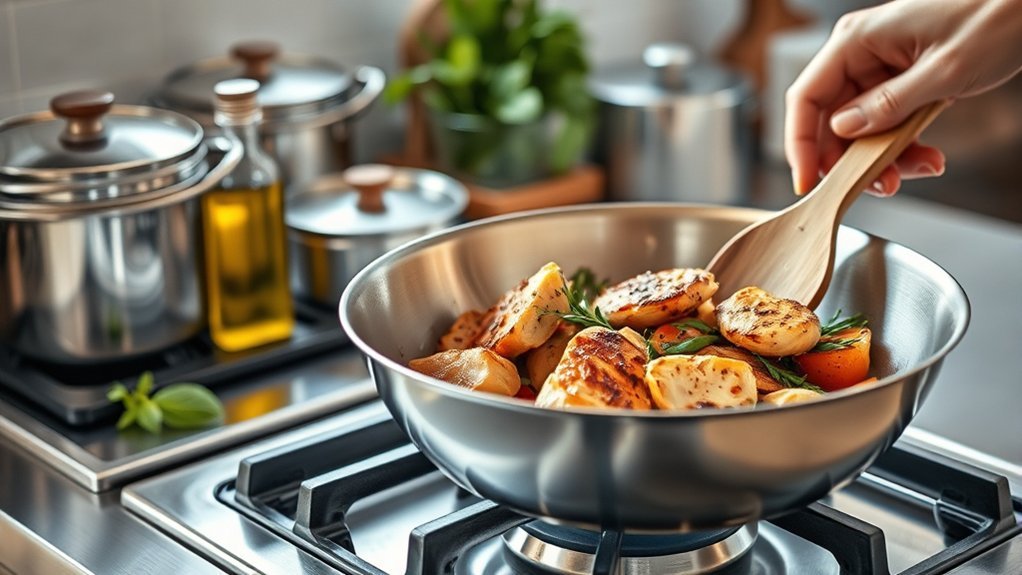
Stainless steel is a durable, versatile choice for everyday cooking when you understand how it behaves. It is excellent for browning, searing, sautéing, deglazing, simmering, and making pan sauces. The cooking surface is corrosion-resistant and generally non-reactive, while good clad construction helps spread heat more evenly. The main learning curve is food sticking, which is usually controlled with moderate preheating, cooking fat, dry ingredients, and patience before turning food.
Quick Answer
Stainless steel cookware is a durable, uncoated choice for everyday cooking, especially searing, sautéing, browning, and pan sauces. Good results depend on moderate preheating, enough cooking fat, dry food, and patience before flipping. Quality clad pans heat more evenly than bare steel, while acidic foods are generally fine for normal cooking.
Key Takeaways
- Preheat stainless steel over low to medium or medium heat rather than blasting an empty pan on high.
- Add oil after preheating, then add dry food once the oil moves easily and begins to shimmer.
- Proteins often stick at first and release more readily after a browned crust develops.
- Clad cookware with an aluminum or copper core distributes heat better than bare stainless steel alone.
- Acidic foods are generally suitable for normal cooking, but people with nickel allergy should consider cookware that does not contain nickel.
- Oven, dishwasher, broiler, and induction compatibility depend on the specific pan, handle, lid, and manufacturer instructions.
At a Glance
| Time Required | About 2–3 minutes to preheat, plus normal recipe cooking time |
| Difficulty | Easy to moderate |
| Tools Needed | Stainless steel pan, suitable cooking oil or fat, and spatula or tongs |
| Cost | No special cost beyond your cookware, ingredients, and cooking fat |
How to Cook With Stainless Steel
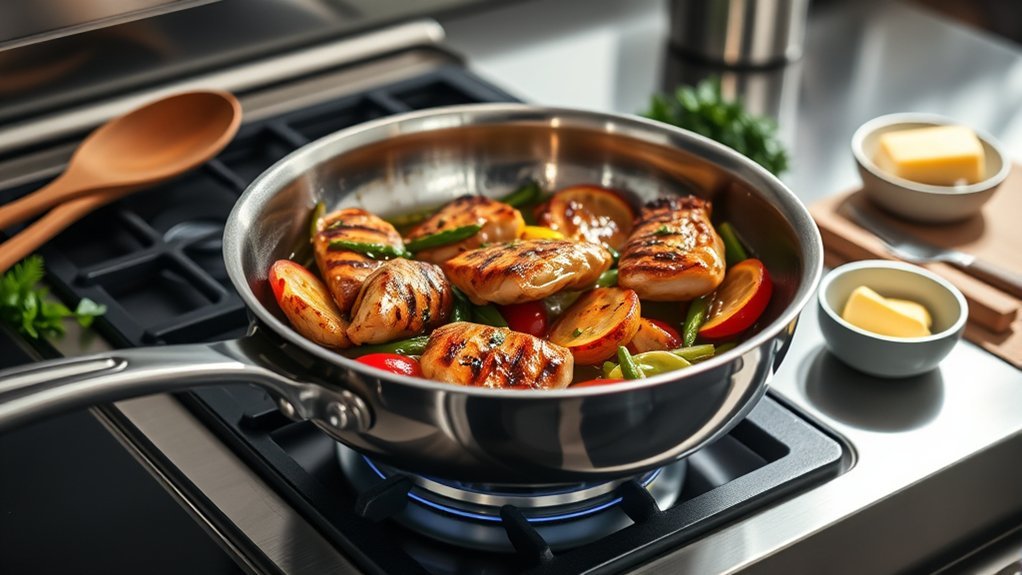
Cooking with stainless steel works best when you control heat, fat, moisture, and timing. Start by placing the empty pan over low to medium or medium heat. Many quality stainless-steel cookware manufacturers recommend roughly one to three minutes of preheating rather than prolonged high heat. All-Clad’s care guidance, for example, recommends low-to-moderate preheating and using the behavior of a few water droplets as an optional readiness check.
If you use the water test, a few droplets should gather and move across the pan instead of immediately sitting and boiling away. Treat that as a visual cue rather than a requirement to reach one exact surface temperature, because pan thickness, burner output, and construction change how quickly cookware responds.
Warning: If you use water to test a hot pan, let the droplets evaporate completely or carefully remove them before adding oil. Water contacting hot oil can splatter and cause burns.
Once the pan is hot, add enough oil or other cooking fat to make a thin, continuous film over the area where the food will sit. The oil should move easily across the pan and may begin to shimmer, but it should not be smoking heavily.
Pat meats, fish, and vegetables dry when possible before they enter the pan. Surface water has to evaporate before strong browning can begin, so wet food tends to steam and can cool the cooking surface.
Avoid crowding the pan. Adding too much cold food at once lowers the surface temperature and creates more steam, reducing browning. If necessary, cook in batches.
After adding meat, poultry, fish, or another protein, resist the urge to move it immediately. Protein can initially grip the stainless surface. As browning develops, it often releases more easily. If a piece of food still feels firmly attached when you try to turn it, give it more time unless it is clearly burning.
Temperature control matters throughout the process. Delicate foods generally need gentler heat, while a steak, pork chop, or chicken thigh may need somewhat stronger heat for browning. High heat is not automatically better; excessive heat can scorch oil, burn residue, discolor the pan, and make sticking worse.
After cooking, stainless steel is especially useful for deglazing. Remove the cooked food, add a suitable liquid such as stock, water, wine, or vinegar, and scrape the browned residue, or fond, from the bottom. Those browned bits can become the foundation of a quick pan sauce.
Pro Tip: For better browning, dry the food before it hits the pan and leave a little space between pieces. Less surface moisture means the pan can spend more time browning instead of boiling away water.
Why Stainless Steel Is Great for Everyday Cooking
Stainless steel earns its place in everyday kitchens through durability, corrosion resistance, versatility, and its ability to create deep browning without relying on an applied nonstick coating. The cooking surface stands up well to routine use and works particularly well for sautéing, searing, simmering, reducing sauces, and deglazing.
One important distinction is that stainless steel itself is not an especially good heat conductor. High-performing stainless cookware usually combines the durable stainless cooking surface with a more conductive aluminum or copper layer. In fully clad cookware, those layers extend through much of the pan; in other designs, a conductive disc is bonded mainly to the base.
| Benefit | Why it matters | Everyday use |
|---|---|---|
| Durability | No conventional nonstick coating to wear away | Frequent cooking |
| Clad heat distribution | Conductive core reduces hot spots | Searing and sautéing |
| Corrosion resistance | Suitable for a wide range of foods | Sauces, vegetables, meat |
| Flexible care | Usually straightforward to wash and restore | Daily kitchen use |
Stainless cookware can also move from stovetop to oven when the specific pan is rated for oven use. Do not assume every stainless-steel pan has the same limit: handles, lids, bonded materials, and coatings can change the maximum safe temperature. Check the manufacturer’s instructions for your model.
Why Cookware Construction Matters
Two pans can both be sold as “stainless steel” while cooking very differently. The food-contact surface may be stainless steel in both, but what sits underneath it controls much of the heating performance.
- Bare or thin stainless steel: Durable but more prone to noticeable hot spots because stainless steel alone does not spread heat as efficiently as aluminum or copper.
- Disc-bottom cookware: Uses a conductive layer bonded mainly to the base. It can work well for boiling, simmering, and many everyday tasks.
- Fully clad cookware: Bonds conductive material between stainless layers across more of the pan, helping heat travel across the base and often up the sides.
Layer count by itself does not guarantee better cooking. The thickness of the conductive material, bonding quality, pan shape, burner size, and overall construction also matter.
Induction compatibility is another model-specific feature. Stainless steel cookware needs a sufficiently magnetic exterior or base to work with an induction cooktop. If you are unsure, check the manufacturer’s specifications; a magnet that strongly sticks to the base can also provide a quick preliminary check.
When Stainless Steel Falls Short
Even reliable stainless steel has limits in the kitchen. Lower-quality or thin cookware may heat unevenly, creating hot spots that weaken cooking performance. Better clad construction reduces that problem but generally adds weight and cost.
Stainless steel is also not naturally nonstick. Eggs, delicate fish, pancakes, and other fragile foods can require more technique and cooking fat than they would in a well-performing nonstick pan. They can still be cooked successfully in stainless steel, but the margin for error is smaller.
Acidic foods deserve a more nuanced explanation. Stainless steel is corrosion resistant and commonly used with tomato, citrus, and vinegar-based recipes. However, laboratory and cooking studies have found that acidity, longer cooking times, new cookware, and stainless-steel grade can affect nickel and chromium migration. A 2013 Journal of Agricultural and Food Chemistry study documented higher nickel and chromium transfer during prolonged tomato-sauce cooking, while a 2017 Contact Dermatitis study found releases from 18/10 stainless cookware under more typical cooking conditions remained below known allergy-triggering thresholds in its experiments.
For most people, normal use of quality stainless cookware remains a practical choice. However, Health Canada advises people who are allergic to nickel not to use cookware containing nickel. Someone with a known nickel allergy may prefer nickel-free cookware or another suitable material.
- Thin or poorly constructed pans can develop hot spots.
- Food can stick when heat, moisture, fat, or timing is wrong.
- Acidic foods can increase nickel and chromium migration, particularly with prolonged cooking.
- Clad cookware can be heavier and more expensive.
- Polished stainless surfaces can show scratches, heat tint, and water spots even when performance is unaffected.
Best Foods for Stainless Steel Pans
Stainless steel pans are especially effective for foods that benefit from strong browning, such as steaks, chicken thighs, pork chops, mushrooms, onions, and many vegetables.
They also perform well with dishes that rely on deglazing, because browned bits left on the surface can be loosened with stock, wine, water, or vinegar to build a flavorful sauce.
For best results, preheat the pan moderately, add cooking fat, avoid crowding, and adjust the burner as the food cooks.
Ideal Foods to Sear
A stainless steel pan is particularly well suited to foods that benefit from a browned crust, including steak, chicken, Brussels sprouts, asparagus, scallops, pork chops, and many firm fish fillets.
These foods respond well to surface browning and careful temperature control. Fish is somewhat less forgiving because its flesh can tear if the pan is too cool, the surface is wet, too little fat is used, or the fish is turned before it releases.
- Meats develop a flavorful crust through Maillard browning.
- Vegetables brown and caramelize instead of simply steaming when the pan is not crowded.
- Scallops and pork chops benefit from an undisturbed first side.
- Firm fish can sear well with enough oil and patient release.
- Avoid overcrowding so excess moisture does not suppress browning.
Best Dishes for Deglazing
When a pan has been used to sear meat or sauté vegetables, it often holds browned bits called fond. Those flavorful deposits are ideal for deglazing.
Stainless steel is well suited to this technique because it allows fond to form visibly on the cooking surface. After removing the food, lower the heat if necessary and add a small amount of stock, water, wine, or another recipe-appropriate liquid.
Use a wooden or heat-safe utensil to loosen the fond. The dissolved browned bits can then be reduced into a flavorful sauce.
This works especially well after pan-roasted chicken, steak, pork chops, mushrooms, onions, and other ingredients that leave caramelized residue behind.
Deglazing turns the residue already in the pan into useful flavor while also making cleanup easier.
How to Prevent Sticking in Stainless Steel
Preventing sticking starts with proper preheating, followed by enough cooking fat, reasonably dry food, and the patience to let food brown before trying to move it.
A thin, even layer of oil reduces direct contact between food and the metal. Different foods need different amounts, so there is no single tablespoon measurement that works for every pan and recipe.
Food should usually be left alone long enough to develop a browned surface. Proteins commonly hold onto the pan early in cooking and release more readily as that crust forms.
Preheat Properly
Place the stainless steel pan over low to medium or medium heat and give it time to warm gradually. For many pans, one to three minutes is enough to begin checking readiness, although heavy cookware may take longer.
A few drops of water can provide an optional visual check. When the pan is sufficiently hot, the droplets may collect and move across the surface rather than simply sitting in place. Do not treat the test as proof that every food should be cooked at one specific temperature.
- Start with moderate heat rather than maximum burner output.
- Do not leave an empty pan heating unattended.
- Avoid overcrowding once cooking begins.
- Lower the burner if oil smokes aggressively or food scorches before browning.
Use Enough Oil
A light, even layer of oil helps stainless steel work with food instead of against it. Preheat the pan, add the oil, and allow it to spread across the cooking area. When it moves easily and begins to shimmer, add the food before the oil starts smoking heavily.
Neutral vegetable oils or refined avocado oil can be practical choices for higher-temperature searing. Butter is useful for flavor but its milk solids brown more quickly, so heat should be controlled carefully.
| Oil situation | What happens | Better approach |
|---|---|---|
| Too little | More direct food-to-metal contact | Use enough to lightly coat the cooking area |
| Moderate amount | Supports browning and release | Add food when the oil moves freely and shimmers |
| Oil smoking heavily | Pan may be excessively hot | Reduce the heat before cooking |
The goal is not to flood the pan with oil. It is to create enough lubrication for the food and cooking method while keeping the heat under control.
Let Food Release
Once a properly preheated pan has a thin layer of cooking fat, let the food cook without constant movement. Proteins often cling at first and loosen as their exterior browns.
If a steak, chicken breast, pork chop, or firm fish fillet resists when you try to lift it, wait a little longer unless the underside is clearly scorching. Forcing it too early can tear the food and leave more residue behind.
Unlike seasoned cast iron or carbon steel, bare stainless steel does not need to develop a permanent natural non-stick surface over time. Its improved food release during cooking comes from the combination of appropriate heat, fat, surface moisture, and browning.
How to Clean and Care for Stainless Steel Cookware
Let the cookware cool before washing. Putting a very hot pan directly into cold water can create rapid thermal stress and may contribute to warping, particularly in lighter cookware.
For normal cleaning, warm water, dish soap, and a non-metal sponge are usually enough. If food is firmly stuck, soak the pan first or add water and gently simmer it to loosen the residue. Le Creuset’s stainless-steel cleaning guidance also recommends allowing pans to cool before cleaning and using non-metal cleaning tools.
Blue, bronze, or rainbow-colored heat tint can appear after overheating. These marks are usually cosmetic. Mineral-rich water can also leave pale spots. Drying the pan after washing helps limit water spotting.
Prevent Salt Pitting
Concentrated salt sitting against stainless steel can contribute to small white pits on the surface. When boiling salted water, a simple precaution is to wait until the water is hot or boiling before adding salt, then stir so the crystals dissolve instead of resting on the bottom. All-Clad specifically recommends this approach to reduce pitting.
Note: Dishwasher compatibility varies by cookware line. Some stainless pans are dishwasher safe, but manufacturers may still recommend hand washing to preserve finish and appearance. Follow the instructions for your exact cookware.
What to Look for in a Stainless Steel Pan
A good stainless-steel pan should match both the way you cook and the equipment in your kitchen. Do not judge cookware only by whether the label says “stainless steel” or by how many layers the manufacturer advertises.
- Construction: Look for a substantial conductive aluminum or copper core if even heat distribution is important.
- Weight: A heavier pan may hold heat well but can be tiring to maneuver.
- Handle: Check comfort, balance, attachment, and oven-temperature limits.
- Lid: Glass and stainless lids can have different oven limits.
- Induction use: Confirm that the base or exterior is induction compatible if needed.
- Care requirements: Check whether the manufacturer recommends hand washing or allows dishwasher cleaning.
Is Stainless Steel Cookware Safe?
For most people, quality stainless-steel cookware is considered a practical choice for everyday cooking. Health Canada’s cookware guidance describes stainless steel as strong, long-lasting, and resistant to rust and staining. Chromium in the alloy forms a thin protective surface layer that contributes to its corrosion resistance.
Stainless steel commonly contains iron, chromium, and, in many grades, nickel. The familiar “18/10” designation generally refers to stainless containing approximately 18% chromium and 10% nickel. Other cookware grades can contain different amounts or little nickel.
Small amounts of nickel and chromium can migrate into food under some conditions. Research indicates that acidity, prolonged cooking, cookware grade, and whether a pan is new or repeatedly used can affect the amount transferred. That finding does not mean normal stainless-steel cooking is broadly unsafe; it means claims of absolutely zero metal transfer are too strong.
The practical safety question is not whether stainless steel can release any metal at all, but whether normal use creates meaningful exposure for the individual using it. Current evidence supports ordinary use for most people while warranting extra care for those with nickel sensitivity.
People with a known nickel allergy should pay particular attention to cookware composition. Health Canada advises people allergic to nickel not to use cookware that contains nickel. Nickel-free stainless grades or another appropriate cookware material may be preferable for them.
Frequently Asked Questions
Is It Healthier to Cook With Stainless Steel?
Stainless steel is a durable, uncoated cookware choice that does not rely on a conventional nonstick coating for food release. It is generally suitable for everyday cooking when used according to the manufacturer’s directions. However, “healthier” depends on the cookware being compared, how it is used, and individual sensitivities such as nickel allergy.
What Are the Downsides of Cooking With Stainless Steel?
The main downsides are sticking, a learning curve with heat control, the weight and price of high-quality clad cookware, and hot spots in thin or poorly constructed pans. Nickel- and chromium-containing stainless can also transfer small amounts of those metals into food, particularly during prolonged acidic cooking. Cleaning burned-on oil or protein can take more work than cleaning a nonstick pan.
What Is the Healthiest Metal to Cook With?
There is no single cookware metal that is universally the healthiest. Stainless steel, cast iron, carbon steel, aluminum-based clad cookware, and other materials all have different strengths and limitations. Stainless steel is popular because it is durable, corrosion resistant, versatile, and does not require a conventional nonstick coating, but people with nickel allergy may prefer a nickel-free alternative.
What Should You Not Cook on Stainless Steel?
There are few foods that absolutely cannot be cooked in stainless steel. Eggs, delicate fish, and other sticky foods are simply less forgiving and need careful heat control and enough fat. Avoid prolonged empty-pan overheating and storing salty or acidic food in the cookware for unnecessary periods. People with nickel allergy should avoid nickel-containing stainless cookware.
Can You Cook Tomato Sauce in Stainless Steel?
Yes, tomato sauce can generally be cooked in quality stainless steel. Stainless is corrosion resistant and commonly used for acidic recipes. Studies show that acidic foods and long cooking times can increase nickel and chromium migration, so people with a diagnosed nickel allergy may prefer cookware that does not contain nickel, especially for prolonged acidic cooking.
Do Stainless Steel Pans Need to Be Seasoned?
Normally, no. Bare stainless steel does not need permanent seasoning like cast iron or carbon steel. Proper preheating, enough cooking fat, dry food, and waiting for a browned crust to form are more important for reducing sticking. Follow the manufacturer’s care instructions if a particular cookware line specifies otherwise.
Sources
- Health Canada — The Safe Use of Cookware and Bakeware — stainless-steel composition, corrosion resistance, and nickel-allergy guidance.
- Kamerud, Hobbie & Anderson, Journal of Agricultural and Food Chemistry — nickel and chromium migration during prolonged acidic cooking.
- Guarneri et al., Contact Dermatitis — nickel and chromium release from 18/10 stainless cookware under common cooking conditions.
- All-Clad Care & Use — preheating, oil use, food release, deglazing, overheating, and salt-pitting guidance.
- Le Creuset — How to Clean Stainless Steel Cookware — cooling, hand cleaning, soaking, and removal of stuck-on food.
Conclusion
Stainless steel remains a dependable kitchen staple: durable, corrosion resistant, versatile, and especially effective for searing, sautéing, browning, and building pan sauces. Its best performance comes from good cookware construction and good technique rather than the steel alone. Preheat moderately, add enough fat, keep food reasonably dry, avoid crowding, and give proteins time to release before turning them.
Quality stainless cookware can handle a wide range of everyday foods, including acidic recipes, although people with nickel allergy should pay attention to the alloy used. Treat oven, dishwasher, broiler, and induction claims as model-specific rather than universal. With sensible heat control and routine care, stainless steel can provide reliable cooking performance for many years.

1 thought on “Is Stainless Steel Good for Cooking? Benefits, Drawbacks & Best Uses”