
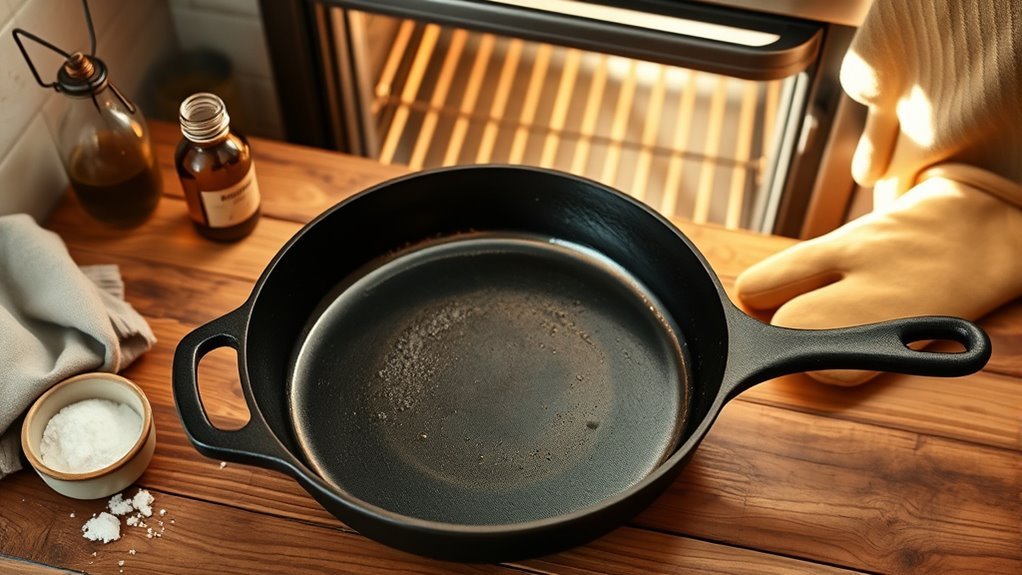
Wondering how long to season cast iron before you start cooking? The right timing helps turn a thin layer of oil into a durable cooking surface. But oven temperature, oil thickness, and cooling time also affect the results. Here’s how to season your skillet correctly, recognize problems, and maintain its protective finish.
Quick Answer
To season cast iron in the oven, bake a clean skillet with a very thin oil coating at 450–500°F (232–260°C) for one hour. Let it cool inside the oven. Some methods use 400°F (204°C) instead. Most factory-seasoned skillets are ready to cook with and don’t need additional seasoning before first use.
At a Glance
| Time Required | 1 hour of baking, plus preparation and cooling |
| Difficulty | Beginner-friendly |
| Tools Needed | Oven, cooking oil, clean cloth or paper towels, brush, aluminum foil, and oven mitts |
What You Need to Know About Seasoning Your Cast Iron
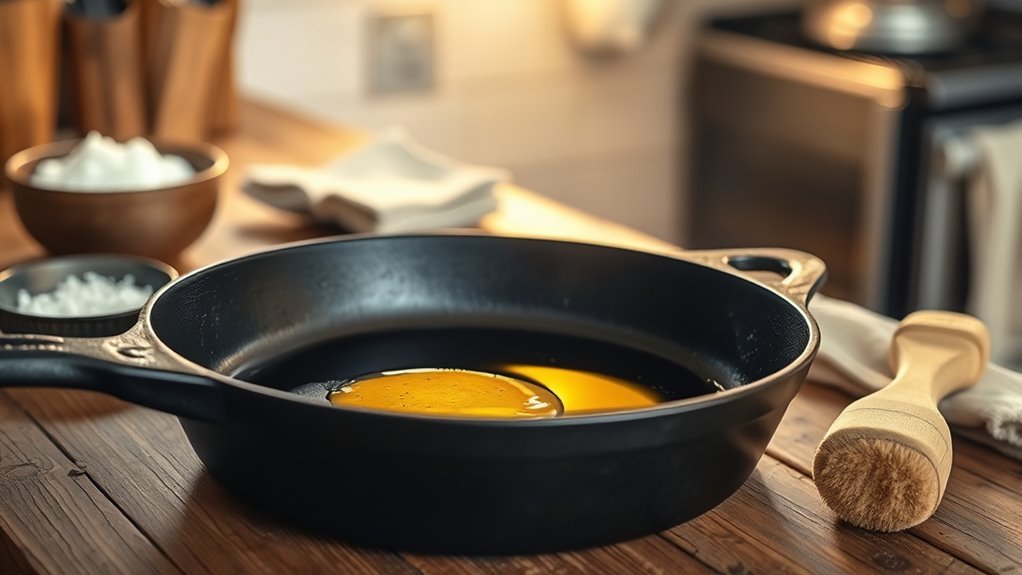
Cast iron seasoning is a protective layer of oil that has been heated until it bonds to the metal. This process, called polymerization, creates a hardened coating that improves food release and helps prevent rust.
Most modern cast iron skillets come pre-seasoned. You can usually wash, dry, and start using them immediately. However, an older, rusty, or stripped skillet may need fresh seasoning.
For a standard oven method, follow the manufacturer’s cast iron seasoning instructions.
How to Season Cast Iron in the Oven
Start with a clean, completely dry skillet. The key is applying an extremely thin layer of oil and giving it enough heat to form a durable coating.
Warning: Seasoning involves very hot metal and may produce smoke. Keep your kitchen ventilated, use oven mitts, and never touch the skillet until it has cooled sufficiently. Do not leave the oven unattended while seasoning.
- Wash the skillet. Use warm water, mild dish soap, and a brush to remove food residue or loose seasoning.
- Dry it completely. Wipe the skillet with a clean towel. If necessary, warm it briefly over low heat to remove remaining moisture.
- Apply a thin oil coating. Rub cooking oil over the interior, exterior, and handle. Then wipe away excess oil until the surface looks almost dry.
- Preheat the oven. Set it to 450°F (232°C). Place aluminum foil on a lower rack to catch possible drips.
- Bake the skillet. Put it upside down on the center rack and bake for one hour.
- Allow it to cool. Turn off the oven and leave the skillet inside until it has cooled enough to handle safely.
- Check the finish. The surface should feel dry rather than sticky. If additional seasoning is needed, repeat with another extremely thin layer of oil.
Season your cast iron pan with a very thin layer of oil and sufficient oven heat to create a durable, easy-release surface.
You don’t need an expensive specialty oil. According to cast iron seasoning oil recommendations, vegetable oil and canola oil are practical choices.
Grapeseed oil is another option. Flaxseed oil is sometimes used, but it can produce a brittle coating that may flake. A neutral oil that works with your chosen seasoning temperature is a sensible choice.
These instructions apply to bare cast iron. Cookware with an enamel coating does not require the same treatment. Follow the manufacturer’s enameled cast iron care instructions instead.
Signs Your Cast Iron Needs Re-Seasoning
Your cast iron needs attention when its protective coating becomes damaged or bare metal is exposed. Rust, loose flakes, and persistent sticky buildup are stronger warning signs than a slightly uneven color.
Look for these common problems:
- Rust spots: Orange or reddish-brown marks suggest moisture has reached unprotected iron. Remove the rust before applying fresh seasoning.
- Sticky or tacky patches: These often result from excess oil that did not fully harden during seasoning.
- Frequent food sticking: A worn coating can reduce food release. However, insufficient preheating or too little cooking oil can also cause sticking.
- Flaking or peeling: Loose black flakes may indicate that layers of seasoning have not bonded properly.
- Exposed gray metal: Bare-looking areas may need fresh oil seasoning to restore protection against rust.
Not every color change means the skillet needs another oven cycle. New cast iron can develop uneven brown and black patches as seasoning builds.
A slightly dull surface after cooking acidic foods is also common. If the pan is clean, dry, and performing well, regular cooking may be enough to improve it.
How Long to Season Cast Iron?
For a typical oven-seasoning cycle, allow one hour at the selected baking temperature. Preparation, oven preheating, and cooling take additional time.
The best temperature depends on the seasoning method and oil. Two established approaches are:
- 450–500°F (232–260°C) for one hour: This is the oven method recommended by Lodge for reseasoning bare cast iron.
- 400°F (204°C) for one hour: This temperature is used in Field Company’s oven-seasoning procedure, which includes earlier heating and drying steps.
Although a 30-minute treatment may be suggested in some guides, the manufacturer methods above call for a full hour at their final seasoning temperature. This gives the thin oil layer more time to form a stable coating.
How Many Times Should You Repeat the Seasoning Process?
A single oven cycle can be enough to refresh a skillet with minor seasoning damage. You don’t automatically need three or four rounds every time you maintain cast iron.
For a stripped or heavily restored skillet, you can repeat the process two or three times if needed. Each round requires another thin oil application and a complete heating cycle.
Check the finish between cycles. If the coating already feels dry and stable, additional oven seasoning may offer little benefit.
Do You Need to Season Cast Iron After Every Use?
No. You don’t need to bake your cast iron in the oven after every meal. Regular cooking with oil or fat helps build and maintain the existing seasoning.
Oven reseasoning is mainly useful when the protective surface has been damaged, stripped, or affected by rust.
Best Practices for Cast Iron Seasoning Maintenance
A well-seasoned cast iron pan needs simple, consistent maintenance rather than frequent oven treatments. Cleaning, thorough drying, and occasional light oiling help protect the surface.
Follow these habits after cooking:
- Wash by hand. Use warm water and a brush or nonabrasive scrubber. Mild dish soap is safe for properly seasoned cast iron.
- Remove stuck-on food. Use a pan scraper or brush rather than aggressively grinding away the seasoning.
- Dry immediately. Wipe away moisture thoroughly to reduce the chance of rust.
- Apply a light oil coating. Rub a small amount over the surface if needed, then buff away excess oil.
- Store in a dry place. Avoid damp cabinets or leaving the skillet wet. A paper towel between stacked cookware can help protect the surface.
These practices match the manufacturer’s cast iron cleaning and maintenance recommendations.
Never leave bare cast iron soaking in water or put it in a dishwasher. Both can damage the seasoning and encourage rust.
Can You Cook Acidic Foods in Seasoned Cast Iron?
Yes, but keep cooking time in mind. Short contact with tomatoes, lemon juice, or vinegar is generally manageable in a well-seasoned skillet.
Long simmering can weaken seasoning and may give food a metallic taste. Lodge’s guidance on acidic foods suggests limiting direct contact with acidic ingredients to about 45 minutes.
For a long tomato sauce or another extended acidic recipe, enameled cookware is a better choice.
How to Fix Common Seasoning Problems
Most cast iron seasoning problems are repairable without replacing your skillet. Identify the issue first, then choose the least aggressive fix that restores the surface.
How to Fix Sticky Cast Iron Seasoning
Sticky seasoning usually means too much oil was applied or the oil did not bake long enough. An overly thick coating can remain gummy instead of forming a hard finish.
- Allow the skillet to cool completely.
- Wipe away any excess surface oil.
- Place the skillet upside down in a 450–500°F oven for one hour.
- Let it cool in the oven and check whether the surface still feels sticky.
If heavy buildup remains, wash and scrub the affected areas before applying a fresh, thinner coating.
How to Fix Flaking or Uneven Seasoning
Flaking often occurs when thick seasoning layers fail to bond securely. Minor uneven coloring alone usually doesn’t require stripping the entire skillet.
Remove loose flakes with a brush or scrubber, then wash and dry the pan. Apply a thin coat of oil and continue cooking. If large sections keep peeling, scrub away the unstable buildup and reseason the affected surface.
How to Remove Rust and Restore Seasoning
Rust forms when moisture contacts exposed iron. Surface rust can usually be removed, allowing the skillet to be seasoned again.
- Scrub rusty areas with steel wool or a suitable rust-removal scrubber.
- Wash with warm, soapy water to remove loosened rust and debris.
- Dry the skillet thoroughly.
- Apply a very thin layer of cooking oil over the cleaned metal.
- Season in the oven using the full one-hour method.
The manufacturer’s cast iron troubleshooting guide provides additional steps for rust, flakes, and gummy buildup.
What if Food Still Sticks After Seasoning?
Sticking doesn’t always mean your seasoning has failed. Cast iron heats gradually, so food may stick if you start cooking before the surface reaches the right temperature.
Preheat the skillet gradually over medium heat, add a little cooking oil, and allow food to develop a crust before trying to move it.
Also, don’t assume that every dark mark on a cleaning towel means damaged seasoning. Small amounts of dark residue can be normal, particularly with newer cookware.
Frequently Asked Questions
Should I Season Cast Iron at 350 or 450?
For the one-hour oven method, choose 450°F (232°C) rather than 350°F (177°C). Lodge recommends 450–500°F, while other makers use 400°F. The right setting depends on your oil and the method you follow. Use a very thin film of oil rather than a thick coat.
Can You Season Cast Iron Too Long?
Yes, excessive heat or prolonged baking can burn a seasoning layer, although a one-hour cycle is normal. A sticky pan more often means too much oil or too little baking time. If it feels gummy after cooling, bake it again using the recommended method.
How Do You Know if Cast Iron Is Seasoned Enough?
A seasoned skillet has an even, dry-feeling surface with no visible rust or loose flakes. It may be dark brown rather than jet black, especially when new. Food should release more easily with proper preheating and a little fat. A perfect glossy finish is not required.
Can I Season Cast Iron at 400 Degrees?
Yes. Field Company recommends an oven method that finishes at 400°F (204°C) for one hour, followed by cooling in the oven. This differs from Lodge’s 450–500°F approach, but both rely on extremely thin oil layers. Follow one complete method rather than mixing temperatures and times.
How Often Should I Reseason Cast Iron?
There is no fixed monthly or yearly schedule. If your skillet is dry, rust-free, and cooking well, routine use and cleaning may be enough. Reseason when you find persistent bare patches, rust, or damaged coating. A new pre-seasoned skillet usually does not need an extra oven cycle.
Does Enameled Cast Iron Need Seasoning?
No. Enameled cast iron has a glass-like coating that does not need an oil seasoning layer, even if the interior is black. Follow the maker’s cleaning directions rather than the bare-cast-iron oven method. If you are unsure which surface you own, check its product care information.
Conclusion
For reliable results, season cast iron for one hour at the temperature recommended by your chosen method, using only a thin layer of oil. Let the skillet cool before checking the finish. Then focus on regular cooking, thorough drying, and proper storage rather than unnecessary oven treatments. With consistent care, your cast iron can remain a dependable kitchen companion for many years.
Sources
- Lodge Cast Iron: How to Season: Supports the 450–500°F oven temperature, one-hour baking time, oil application, and cooling procedure.
- Lodge Cast Iron: Seasoning Oils: Supports recommendations for vegetable and canola oils.
- Lodge Cast Iron: Enameled Cast Iron Care: Confirms that enameled cookware does not require seasoning.
- Field Company: Cast Iron Oven Seasoning Instructions: Supports the alternative 400°F method and thin-coating technique.
- Lodge Cast Iron: How to Clean: Supports guidance on soap, drying, oiling, and avoiding dishwashers.
- Lodge Cast Iron: Cooking Acidic Foods: Supports advice on tomatoes, vinegar, lemon juice, and extended acidic cooking.
- Lodge Cast Iron: Troubleshooting: Supports remedies for rust, sticky seasoning, and flaking.
