
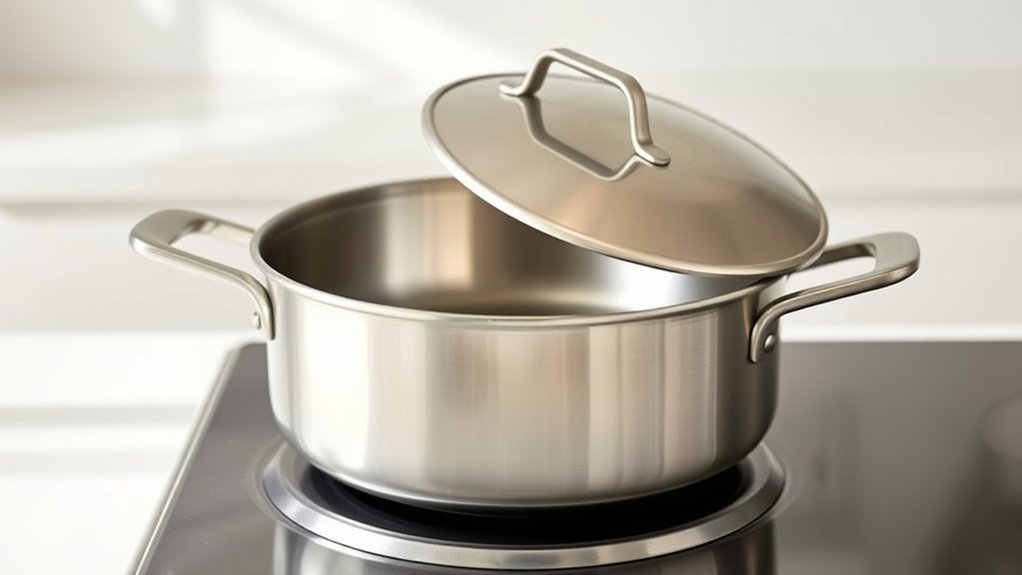
A saucepan is a compact stovetop pan with a round, flat base, relatively tall sides, one long handle, and usually a fitted lid. It is designed mainly for heating liquids and foods that need steady, controlled cooking. Common uses include sauces, rice, oatmeal, soup, custard, boiled eggs, vegetables, and small batches of pasta. Saucepans are commonly sold in capacities of about 1 to 4 quarts, although sizes and dimensions vary by manufacturer.
Quick Answer
A saucepan is a small, deep stovetop pan with a flat base, tall sides, a long handle, and usually a lid. It is best for sauces, grains, soups, reheating, boiling, and other liquid-based cooking. A 2- to 3-quart saucepan is a useful everyday size for many households.
Key Takeaways
- A saucepan has tall sides, a relatively narrow base, one long handle, and usually a lid.
- Common capacities are roughly 1 to 4 quarts, with 2 to 3 quarts being a versatile everyday range.
- Saucepans work especially well for sauces, grains, oatmeal, soups, custards, boiling, reheating, and small batches of food.
- Clad stainless steel, aluminum, nonstick, copper, and enameled cast iron each handle heat differently.
- For induction or oven use, always check the specific pan’s compatibility and temperature rating.
What Is a Saucepan?
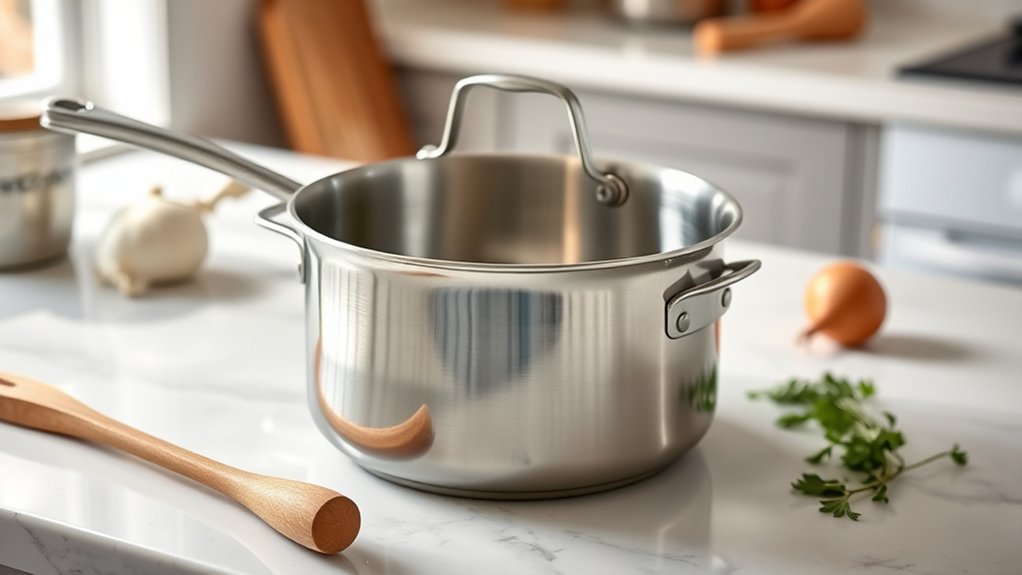
A saucepan is a compact piece of stovetop cookware built with a round, flat base, relatively tall sides, a single long handle, and usually a fitted lid. Unlike a frying pan, which spreads food across a broad, shallow cooking surface, a saucepan is shaped to hold liquids and deeper portions of food.
Its tall sides help contain bubbling liquids and reduce splashing. The narrower opening also exposes less liquid surface than many wide pans, which can help limit evaporation when food is simmering with or without a lid.
The pan’s material and construction determine much of its heating performance. Clad stainless cookware often combines a durable stainless cooking surface with a more conductive aluminum or copper layer. Aluminum responds quickly to heat, while heavier materials such as enameled cast iron generally warm more slowly and retain heat longer.
Because a saucepan is smaller and easier to maneuver than a large stockpot, it is useful for everyday jobs such as warming soup, cooking rice, melting ingredients, making gravy, simmering tomato sauce, or boiling a few eggs.
Saucepan Size, Shape, and Features
Saucepan capacities commonly fall between about 1 and 4 quarts, although specialty pans can be smaller or larger. Physical diameter, depth, handle length, and overall height vary by brand, so capacity is a more useful comparison than relying on one set of dimensions.
Common Saucepan Sizes
| Capacity | Typical Uses |
|---|---|
| 1–1.5 quarts | Small sauces, melted butter, reheating a single portion, or a small amount of oatmeal or grains. |
| 2–3 quarts | Everyday sauces, rice, oatmeal, vegetables, custards, soup, and moderate reheating jobs. |
| 4 quarts | Larger batches of soup, pasta, grains, sauce, or food prepared for several people. |
The tall sides help contain liquid and splatter, while the flat bottom provides stable contact with the cooking surface. Most saucepans have one long handle for lifting and pouring. Larger models may also have a short helper handle on the opposite side.
A fitted lid is valuable when the goal is to retain moisture and heat. Removing the lid allows more steam to escape when a sauce or other liquid needs to concentrate.
Pro Tip: If you want one saucepan for general household cooking, a 2- to 3-quart model gives a useful balance of capacity, control, storage space, and manageable weight.
Common Ways to Use a Saucepan
Saucepans are especially useful for heating, boiling, and simmering liquids. Their depth keeps ingredients contained while leaving enough room for stirring.
Common saucepan jobs include:
- Making tomato, cream, cheese, gravy, and other sauces.
- Cooking rice, quinoa, oatmeal, and other grains.
- Warming soup, stew, milk, or leftovers.
- Boiling eggs and small amounts of vegetables.
- Cooking modest portions of pasta or noodles.
- Preparing custard, pudding, caramel, or melted chocolate with careful heat control.
- Poaching food or steaming vegetables when the pan is paired with a suitable insert.
A saucepan can also reduce a sauce by simmering it uncovered. However, reduction is driven by evaporation rather than by tall walls themselves. A wider vessel exposes more liquid to the air and may reduce faster, while the narrower shape of a saucepan can be useful when the cook wants more controlled evaporation.
When cooking grains or other foods that need retained moisture, a tight-fitting lid helps reduce steam loss. When reducing a sauce, leaving the lid off allows water vapor to escape.
Saucepan Materials and How They Affect Cooking
The material matters because different metals transfer and retain heat differently. The best choice depends on what you cook, how much maintenance you want, and which stovetop you use.
| Material | Strengths | Considerations |
|---|---|---|
| Clad stainless steel | Durable, nonreactive, versatile, and suitable for many cooking techniques. | Look for an aluminum or copper core when even, responsive heating is important. |
| Aluminum | Lightweight and responsive to temperature changes. | May be anodized, coated, or combined with other metals; plain aluminum is generally not induction-compatible. |
| Nonstick | Easy food release and easier cleanup, especially for sticky or delicate foods. | Follow the maker’s heat limits and utensil instructions to protect the coating. |
| Copper | Very responsive to temperature changes. | Usually lined with another cooking surface and often requires more maintenance. |
| Enameled cast iron | Strong heat retention and no seasoning requirement on the enameled surface. | Heavier and generally slower to respond when the heat setting changes. |
There is no single material that is best for every cook. For broad everyday use, fully clad stainless steel is popular because it combines a durable cooking surface with a more conductive internal layer. Nonstick can be useful when easy release matters most, while copper appeals to cooks who want quick temperature response.
Saucepan vs. Stock Pot: Key Differences
Both saucepans and stockpots hold liquids, but they are designed for different quantities and handling needs. A saucepan is compact and usually has one long handle. A stockpot is larger, deeper, and normally has two short loop handles so it can be lifted from both sides.
| Feature | Saucepan | Stockpot |
|---|---|---|
| Capacity | Commonly about 1–4 quarts | Usually larger; capacities vary widely |
| Handles | One long handle; larger models may add a helper handle | Usually two loop handles |
| Best Uses | Sauces, grains, reheating, custards, vegetables, and smaller liquid-based dishes | Stock, soup, pasta water, blanching, and larger batches |
| Handling | Easy to stir, lift, and pour when moderately filled | Two-handed lifting is more practical when heavily filled |
A saucepan is usually the better choice when the recipe calls for a smaller volume and frequent stirring or pouring. A stockpot is more suitable when capacity matters more than one-handed maneuverability.
Saucepan vs. Saucier, Frying Pan, and Sauté Pan
Saucepan vs. Saucier
A traditional saucepan has tall, straight sides with a more defined corner where the base meets the wall. A saucier has rounded or gently sloped sides. The curved interior makes it easier for a whisk or spoon to reach the entire cooking surface, which is useful for custards, risotto, pan sauces, and foods that require frequent stirring.
A saucier also tends to have a wider opening for its capacity, which can encourage faster evaporation. A saucepan is often preferred for boiling, reheating, grains, and other jobs where deeper straight sides are useful.
Saucepan vs. Frying Pan
A frying pan or skillet is broad and shallow, usually with low sloped sides. Its larger exposed cooking surface encourages evaporation and provides more room for browning, frying, and searing.
A saucepan is deeper and better suited to liquids. It can brown a small quantity of food, but its narrow shape is generally less efficient for searing a large batch.
Saucepan vs. Sauté Pan
A sauté pan has a broad flat base and relatively low straight sides. It offers substantially more cooking surface than a saucepan, making it useful for browning, shallow frying, braising, and dishes that combine searing with liquid.
A saucepan sacrifices that broad cooking area in exchange for depth and easier handling of sauces, grains, boiling water, and other smaller liquid-based preparations.
How to Use and Care for a Saucepan
Good saucepan technique depends on both the recipe and the pan’s construction. A few habits improve control and help protect the cookware.
- Match the pan to the quantity. Leave enough empty space above liquids so bubbling food is less likely to boil over.
- Use the lid deliberately. Cover the pan when retaining moisture and heat is useful; uncover it when you want more evaporation.
- Control the heat. Most simmering does not require the highest burner setting. Follow the manufacturer’s guidance, especially with nonstick cookware.
- Stir foods that can scorch. Milk, custard, chocolate, thick sauces, and similar foods often need closer attention.
- Use suitable utensils. Avoid utensils or cleaning tools that can damage a coated cooking surface.
- Let the pan cool appropriately before cleaning. Follow the manufacturer’s care instructions and avoid severe thermal shock.
Warning: Handles, helper handles, lids, and metal knobs can become hot during cooking. Steam escaping from under a lid can also burn skin. Use dry oven mitts when needed, open lids away from your face, and use both hands when a larger saucepan is heavy with hot liquid.
Induction and Oven Compatibility
Not every saucepan works on every cooking surface. Gas and conventional electric cooktops can use many cookware materials, while induction requires a magnetic base.
A simple preliminary check is to place a refrigerator magnet against the bottom of the pan. If it sticks firmly, the pan is generally suitable for induction. Product labeling or the cookware manufacturer’s specifications should still be checked before purchase.
Oven compatibility also varies. The pan body may tolerate a higher temperature than its nonstick coating, lid, handle, knob, or other components. Never assume that a stovetop saucepan is automatically oven-safe. Check the specific manufacturer’s maximum oven temperature before placing it in an oven or under a broiler.
Note: “Stainless steel” alone does not guarantee identical induction performance. Construction varies, so look for an induction-compatible marking or confirm that the base is magnetic.
How to Choose the Best Saucepan
Selecting the best saucepan starts with matching its capacity, material, weight, handle design, and cooktop compatibility to the way you actually cook. For many everyday kitchens, a 2- to 3-quart saucepan offers a useful middle ground.
Choose a medium 2- to 3-quart saucepan when you want a manageable everyday size for sauces, grains, reheating, vegetables, and other small-batch cooking.
- Choose the right capacity. A smaller 1- to 1.5-quart pan works well for small portions, while a 4-quart pan gives more room for soup, pasta, and larger batches.
- Choose material by cooking style. Clad stainless steel is durable and versatile, nonstick makes food release easier, aluminum responds quickly to heat, and heavier materials offer greater heat retention.
- Inspect the handle. It should feel secure and balanced when the pan is empty. A helper handle is useful on larger or heavier saucepans.
- Look for a well-fitting lid. A good lid helps retain moisture when simmering rice, grains, soup, and similar foods.
- Check the pouring edge. A flared rim can make sauces and hot liquids easier to pour cleanly.
- Confirm stovetop compatibility. This is especially important for induction.
- Check oven limits. Verify the maximum temperature for the entire pan, including its lid and handles.
- Consider cleaning requirements. Some cookware tolerates dishwashing, while other finishes last longer with gentle hand washing.
The best choice is not necessarily the most expensive saucepan. A pan that matches your usual batch size, stove, preferred cooking methods, and maintenance habits will normally be more useful than one chosen only for appearance or brand.
Frequently Asked Questions
What’s the Difference Between a Saucepan and a Regular Pan?
“Regular pan” is not a specific cookware category, but if you mean a frying pan or skillet, the main difference is shape. A saucepan is deeper with tall sides and is designed for liquids, sauces, grains, and boiling. A frying pan is wider and shallower, giving food more exposed surface for frying, browning, and searing.
What Can I Use Instead of a Saucepan?
A small Dutch oven, saucier, deep skillet, sauté pan, or another appropriately sized pot can replace a saucepan for many recipes. Choose the substitute according to the volume and technique: a saucier works well for stirred sauces, while a Dutch oven is better for a larger batch of soup or stew.
What Is the Most Common Size of Saucepan?
Saucepans are commonly sold from about 1 to 4 quarts. A 2- to 3-quart saucepan is a particularly useful everyday range because it can handle sauces, grains, oatmeal, vegetables, reheating, and other moderate portions without becoming unnecessarily bulky.
What Does a Saucepan Look Like?
A saucepan looks like a small, deep pot with a round flat base, tall sides, one long handle, and usually a fitted lid. Larger models sometimes add a short helper handle. The exact diameter, depth, finish, and lid design vary among manufacturers.
Can You Use a Saucepan on an Induction Cooktop?
Yes, if the saucepan has an induction-compatible magnetic base. A quick check is to see whether a refrigerator magnet sticks firmly to the bottom. For certainty, confirm the induction symbol or manufacturer’s specifications for the exact pan.
Can a Saucepan Go in the Oven?
Some saucepans are oven-safe, but the maximum temperature depends on the pan’s material, coating, handle, lid, and knob. Check the manufacturer’s temperature rating for the complete saucepan before putting it in an oven or under a broiler.
Conclusion
A saucepan is one of the most useful pieces of cookware for smaller, liquid-focused cooking tasks. Its tall sides, compact base, long handle, and optional lid make it well suited to sauces, grains, oatmeal, soup, custards, vegetables, reheating, and boiling. A 2- to 3-quart model is a versatile starting point for many kitchens, but the right choice ultimately depends on batch size, material, stovetop compatibility, weight, and care requirements.
For the best results, choose a saucepan that matches the way you cook rather than relying on capacity alone. Good construction, a secure handle, a well-fitting lid, appropriate cooktop compatibility, and sensible heat control matter more than decorative features.
Sources
- ENERGY STAR — Electric Cooking Products — induction cooking principles, compatible cookware, and magnet-test guidance.
- University of Kentucky Cooperative Extension — Cooking With Heat — cookware materials, heat conductivity, stainless steel, aluminum, copper, cast iron, and nonstick characteristics.
- All-Clad — Sauce Pans & Sauciers — saucepan construction, common capacities, straight-sided design, saucier differences, and cookware use cases.
- Made In — What Are the Different Saucepan Sizes? — common saucepan capacity ranges and size-selection guidance.