Choosing a saucepan starts with size, material, and cooktop match. A 2–3 quart pan suits sauces and soups, while 3–5 quarts handles larger batches. Stainless steel offers durability, nonstick eases cleanup, and copper or aluminum improve responsiveness. Induction cooktops need magnetic bases, and smooth tops work best with flat, heavy bottoms. A thick base reduces hot spots, while cool, riveted handles improve control. The best choice also depends on cleaning needs and cooking style, with more details ahead.
Key Saucepan Buying Factors
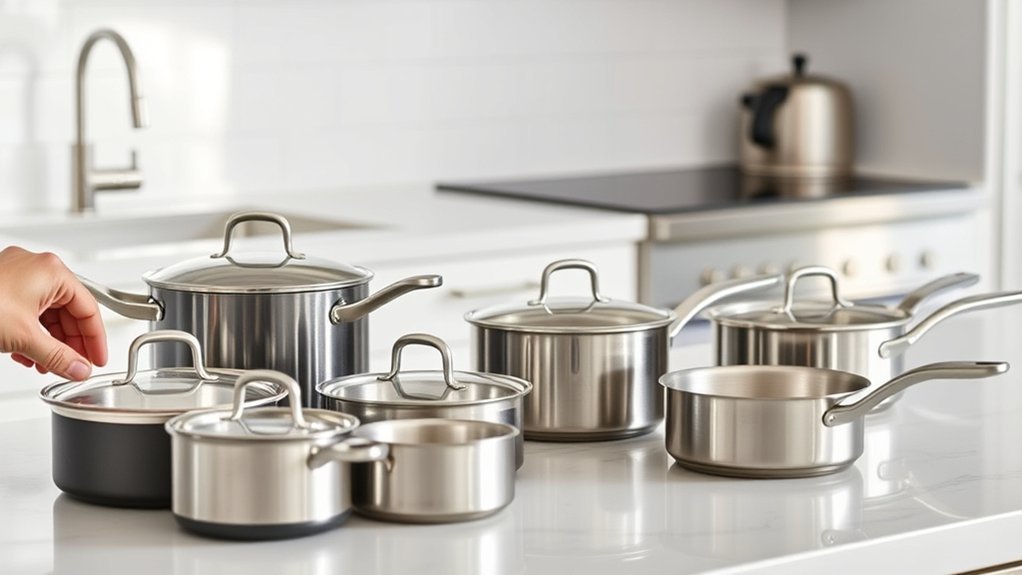
Selecting a saucepan begins with a practical assessment of size, material, construction, and compatibility. A 2–3 quart capacity suits everyday use, giving room for sauces and soups without excess bulk.
The best saucepan materials are stainless steel for durability and reliable heat distribution, or non-stick when easy release matters for delicate foods. A heavy base improves conductivity, reduces hot spots, and resists warping, supporting long-term performance.
Ergonomic handles should feel secure, remain cool when possible, and support safe movement from stove to counter. Cooktop compatibility also matters: induction cooktops require ferrous metals, while other ranges accept a wider mix of materials.
Ergonomic handles and cooktop compatibility ensure safer handling and dependable performance across a range of kitchen setups.
Each factor serves a simple purpose: better control, less waste, and more freedom in the kitchen. Careful selection allows the cook to work efficiently, with tools that match both technique and equipment.
Pick the Right Saucepan Size
Size should match the task at hand, because a saucepan that is too small can boil over while one that is too large can waste heat and feel awkward to use.
For most households, a 2-3 quart saucepan offers the ideal size for sauces, reheating leftovers, and boiling small portions during daily meal preparation. A 3-quart model often delivers 4-6 servings, giving added serving capacity for family meals or batch cooking without becoming cumbersome.
When cooking frequency is high, a 4-5 quart pan increases versatility, handling soups, pasta, and stews with less compromise.
Storage considerations matter as well; the chosen saucepan size should fit available cabinets without crowding other tools. Practical buyers also weigh cooktop compatibility, since smaller pans may not heat evenly on larger burners.
Selecting the right size gives the cook more freedom, reduces friction in the kitchen, and supports efficient, confident meal preparation.
Match Your Saucepan to Your Cooktop
A saucepan should match the cooktop’s material requirements to perform properly, especially on induction surfaces that require magnetic stainless steel or cast iron.
A flat bottom is essential on smooth-top ranges because it maximizes contact, promotes even heating, and reduces the risk of warping.
Checking compatibility before purchase helps guarantee efficient heat transfer and reliable temperature response during cooking.
Cooktop Material Match
Because cooktop type affects both heating efficiency and pan durability, a saucepan should be matched to the surface it will sit on. This cooktop material match favors stainless steel or hard-anodized aluminum for reliable heat distribution on gas and electric units. On an induction cooktop, magnetic properties are mandatory; a quick magnet test confirms compatibility and preserves even heating. A flat bottom supports stable contact on smooth surfaces, while warped cookware wastes energy and cooks unevenly. Heavy-bottomed pans suit glass-top stoves, reducing scratch risk and improving heat retention.
| Cooktop | Best Match |
|---|---|
| Induction | Magnetic steel |
| Gas | Stainless steel |
| Glass-top | Heavy-bottomed pans |
Flat Bottom Necessity
Beyond material compatibility, the shape of the saucepan base determines how effectively it meets the cooktop. A flat-bottom design provides ideal contact on smooth-top and induction cooktops, supporting even cooking and dependable heat consistency.
On induction cooktops, the pan must also have magnetic properties; a level base helps maintain a secure connection so energy transfers efficiently. This same geometry improves stability, lowering the chance of spills and giving the user greater control.
It also helps distribute heat more uniformly on gas and electric ranges, reducing hot spots and preserving performance. A pan that stays flat resists warping, which protects cooking freedom over time by keeping the vessel aligned with the burner and ready for precise, practical use.
Choose the Best Saucepan Material
Saucepan material affects both cooking performance and how well the pan works with a specific cooktop.
Stainless steel, cast iron, copper, aluminum, and nonstick each differ in heat retention, responsiveness, durability, and care requirements.
The best choice depends on balancing these traits against the demands of the burner or hob in use.
Material Performance
Material choice determines how a saucepan performs in real use, affecting heat response, durability, and maintenance.
Material performance depends on how each cookware material supports a cooking style. Stainless steel offers sturdy service and tends to heat evenly, making it reliable for browning and searing, though it may need more oil.
Nonstick coatings favor effortless release for eggs and pancakes, but demand careful handling to preserve performance.
Cast iron delivers strong heat retention for slow cooking and high-heat tasks, yet its weight and seasoning requirements increase upkeep.
Aluminum is lightweight, conducts heat quickly, and suits budget-conscious cooks seeking responsive control.
Copper adds precise temperature changes, but lining is often needed.
Each option grants different freedoms, and the best choice aligns with practical use rather than trends.
Cooktop Compatibility
Cooktop compatibility narrows material choice by matching a saucepan’s base composition to the heat source beneath it. On induction surfaces, ferrous materials are essential, so stainless steel or cast iron becomes the practical route for reliable heating.
Stainless steel offers durability and a neutral cooking surface, while aluminum- or copper-core models improve heat distribution and reduce hot spots. Nonstick options can support low-fat cooking, yet they are less suited to high-heat applications, limiting their freedom in demanding kitchens.
Selection should also consider ergonomic handles that stay secure and comfortable when a pan is full. A tight-fitting lid preserves moisture and energy, helping each saucepan work more efficiently across different tasks and letting the cook choose tools that perform without unnecessary compromise.
Choose a Lid That Fits Your Cooking Style
A well-fitting lid can greatly improve saucepan performance by trapping heat and moisture, which supports faster cooking and better flavor retention.
A matching lid should fit snugly, limiting steam loss and preserving stable heat for recipes that depend on precise timing.
A snug-fitting lid limits steam loss and keeps heat steady for recipes that need precise timing.
Glass lids suit cooks who value monitoring, since they permit progress checks without repeatedly lifting the lid and disrupting temperature or moisture balance.
Material also matters: heavier lids usually hold heat more effectively, while lighter versions can feel easier to manage during busy cooking.
For simmering and boiling, a lid with a vent can reduce pressure, let excess steam escape, and help prevent spills.
The best choice depends on the intended use, but the essential goal remains the same: controlled heat, retained moisture, and practical freedom at the stove.
Choose a Comfortable, Oven-Safe Handle
Once the lid is chosen, attention naturally shifts to the handle, where comfort and safety affect every lift, pour, and move from stovetop to oven. A comfortable, oven-safe handle supports confident cooking and freedom from awkward strain.
- Materials such as stainless steel or silicone should stay cool enough for practical use.
- An ergonomic shape should provide a secure grip, especially when the pan is full.
- Riveted attachment adds strength and stability, which matters when the saucepan’s weight increases.
Handles rated for at least 400°F expand cooking options without forcing a separate tool for oven finishes. A well-made handle also balances the pan, making it easier to guide with control.
In this way, the cook gains flexibility, safety, and a calmer rhythm at the stove, with fewer interruptions and more assured movement.
Why a Thick Base Heats Better
Heat management improves markedly when a saucepan has a thick base, since added mass spreads warmth more evenly across the cooking surface and reduces hot spots. This improves heat distribution, supporting even cooking from center to rim.
A thicker base also retains heat longer, so temperature control stays steadier when ingredients are added or the burner cycles. In practical terms, that steadiness supports precise cooking, where small changes matter.
Materials such as aluminum or copper perform especially well in a thick base because their heat conductivity helps move warmth quickly and uniformly. The result is a pan that responds predictably rather than erratically.
Thick-bottomed saucepans also resist warping better over time, adding durability and preserving consistent performance. Because they need less energy to maintain cooking temperatures, they are often more energy-efficient too.
For users seeking dependable control, a thick base is a clear advantage in everyday kitchen work.
Pick the Best Saucepan for How You Cook
Choosing the best saucepan depends on how it will be used in practice, not just on appearance or price. A careful buyer matches each saucepan to cooking needs, so the choice supports freedom in the kitchen rather than forcing workarounds.
The best saucepan fits real cooking needs, reducing workarounds and making the kitchen more flexible.
For everyday tasks, a 2–3 quart capacity usually handles sauces, grains, and small boils; 3–5 quarts suits larger meals.
- Select the right material: stainless steel offers durability and even heating, while non-stick helps with easy food release.
- Check the handle and lid: a cool handle improves control, and a glass lid lets cooks monitor progress without lifting it.
- Confirm compatibility: induction requires a magnetic base, and smooth-top ranges work best with a flat-bottomed saucepan.
A well-matched saucepan reduces friction, saves time, and keeps cooking precise.
Choose a Saucepan That’s Easy to Clean
Ease of cleaning is another practical filter after the cooking needs have been matched. A saucepan that is easy to clean saves time and reduces the hidden labor of upkeep, which matters in a routine built for freedom.
Nonstick coatings are useful for sticky sauces and delicate dishes because they limit residue and make washup faster. Stainless steel and enameled cast iron are strong choices as well, since they are typically dishwasher-safe and resist staining and odors, supporting low-effort maintenance.
The best surfaces are smooth interiors with seamless construction, because food has fewer places to collect and scratches are less likely. Rounded edges also help by improving pouring and reducing buildup at the rim.
For storage and access in compact kitchens, removable handles or stackable designs can simplify cleaning in tight spaces. In practice, ease to clean is not a luxury; it is a measure of independence.
Frequently Asked Questions
What Should I Look for When Buying Pots and Pans?
One should look for Material types, Handle design, Size options, Heat conductivity, Maintenance tips, Weight balance, Lid features, and Cooking compatibility.
Stainless steel or nonstick suits different tasks; 2–3 quart Size options often cover everyday use. A secure Handle design and balanced Weight balance improve safety.
Strong Heat conductivity guarantees even cooking, while snug Lid features conserve heat.
Flat, induction-ready bases maximize Cooking compatibility, and simple Maintenance tips preserve freedom from hassle.
Which Brand of Saucepan Is Considered the Best?
All-Clad is often judged the best saucepan brand, though kitchens love a good pageant of competing metals and promises. Its stainless steel and heat conductivity earn trust, while Made In and Le Creuset follow closely for performance.
Cuisinart, Calphalon, and others vary by nonstick surfaces, size options, ergonomic handles, brand reputation, price range, and warranty policies. The practical choice depends on cooking style, durability needs, and budget, not advertising.
Which Pans to Stay Away From?
Pans to stay away from include those with damaged non-stick coatings, lightweight builds, and weak handle durability.
Heavy materials usually perform better, while poor heat distribution creates hot spots and uneven cooking.
It is wise to avoid products linked to toxic chemicals, flimsy lids, or excessive maintenance requirements.
Price versus quality should be judged carefully, since low cost often hides weakness.
Brand reputation can signal reliability, but not guarantee safety.
What Are the Best Quality Saucepans to Buy?
Best quality saucepans often balance stainless steel, non stick options, and strong heat conductivity.
They shine in size variations for solo cooking or family meals, with ergonomic handles that steady the hand and the stove.
MasterClass Smart Space Stacking Pans, the Induction Ready Saucepan, and the Heavy Duty Saucepan stand out, while Made In Stainless Clad Saucier offers precision.
Brand reputation, budget considerations, and maintenance tips should guide selection.
Conclusion
Choosing the right saucepan is less about appearance than performance. Size should match recipe volume, material should suit heat response and durability, and the lid, handle, and base should support the way the pan is used. Cooktop compatibility and cleaning ease also matter. In the end, a well-chosen saucepan acts like a reliable bridge between ingredients and results, delivering steady control, even heating, and fewer compromises in everyday cooking.