
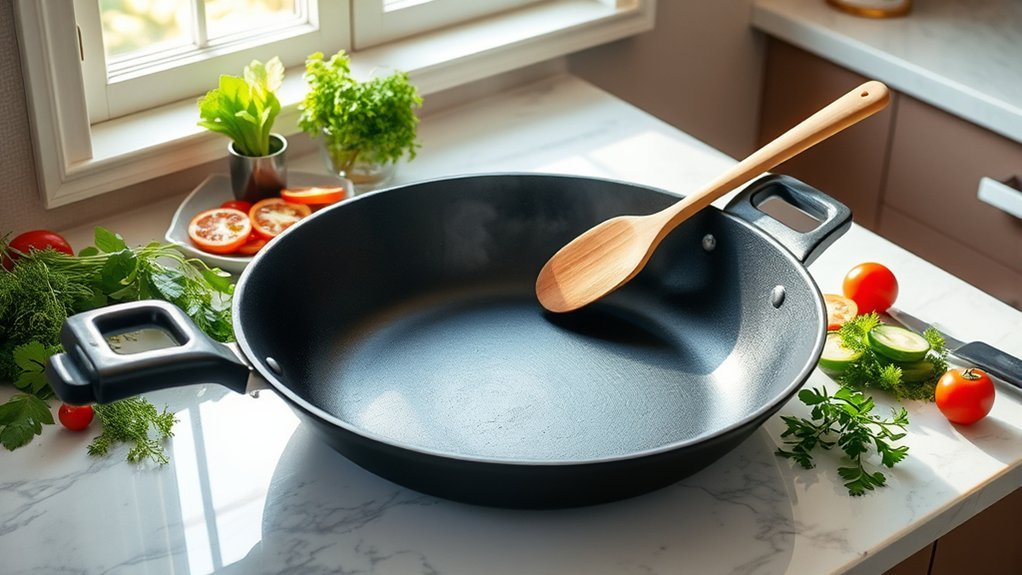
A large skillet gives you more open cooking surface for searing meat, sautéing vegetables, frying, and building one-pan meals without crowding ingredients. In cookware listings, 12 inches is a common starting point for a large skillet, while 14-inch models provide even more room. The best choice depends on material, burner size, weight, oven compatibility, and how you normally cook.
Quick Answer
A large skillet is usually around 12 inches or more across and is best when you need extra room for browning, sautéing, frying, or one-pan meals. Choose a material that fits your cooking style, make sure the base fits your burner, and check induction and oven compatibility before buying.
Key Takeaways
- A 12-inch skillet is a common large size, but there is no universal industry definition.
- Wide cooking space helps reduce crowding, allowing moisture to escape so food can brown instead of steam.
- Stainless steel, carbon steel, enameled cast iron, and nonstick skillets require different heating and care techniques.
- For induction, confirm that the base is magnetic and sized appropriately for the cooking zone.
- A helper handle is especially useful on heavy 12- to 14-inch cookware.
Large Skillet vs. Sauté Pan: Which Should You Buy?
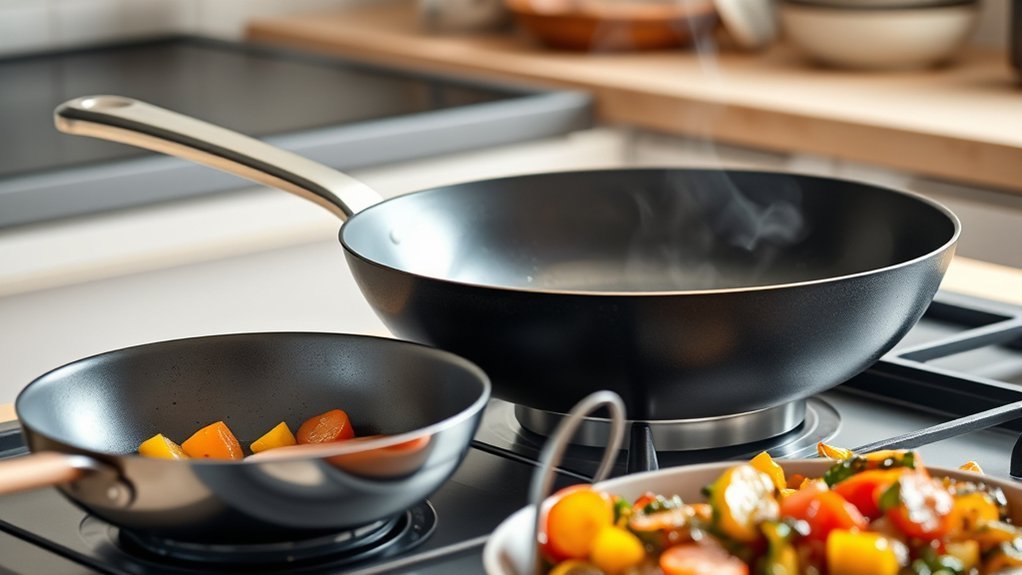
A skillet, also called a frying pan in common cookware terminology, has a broad flat base with relatively low, flared sides. A sauté pan normally has taller, straighter walls and often comes with a lid and helper handle.
The skillet’s sloped walls make it easier to slide a spatula under food, toss vegetables, and let steam escape. That makes a large skillet a strong choice for searing, sautéing, pan-frying, browning, and reducing moisture quickly.
Choose a skillet when you want open surface area and easy evaporation; choose a sauté pan when you need taller walls to contain sauces, braising liquid, or splatter.
A sauté pan can be more convenient for simmering, shallow braising, sauce-heavy recipes, and dishes that need a lid. Its straight sides also give it more usable bottom area than a similarly measured pan with strongly flared walls.
| Feature | Large Skillet | Sauté Pan |
|---|---|---|
| Sides | Low and flared | Taller and straighter |
| Best for | Searing, frying, tossing, quick evaporation | Sauces, simmering, braising, liquid-heavy dishes |
| Tossing food | Easier | Less convenient |
| Containing liquid | Moderate | Better |
What Is a Large Skillet?
A large skillet is a broad, shallow cooking vessel with enough surface area to handle several ingredients without immediately crowding them. There is no formal universal cutoff for the word “large,” but cookware manufacturers commonly place pans around the 12-inch range in their larger size categories.
For example, Hestan currently lists 8.5-inch, 11-inch, and 12.5-inch ProBond skillets as small, medium, and large respectively. That makes about 12 inches a useful shopping reference rather than a strict technical standard.
| Nominal Size | Typical Role | Main Trade-Off |
|---|---|---|
| 10 inch | Everyday smaller meals and side dishes | Can crowd quickly when searing several portions |
| 12 inch | General-purpose large skillet for proteins, vegetables, and one-pan meals | Heavier and needs more burner space |
| 14 inch | Large batches and crowd-sized cooking | May overhang smaller burners and can be difficult to lift |
Remember that the advertised diameter is measured across the upper rim. A skillet with strongly sloped sides has a smaller flat cooking surface than its full rim-to-rim measurement suggests.
Why a Large Skillet Saves Time
A large skillet can reduce cooking time when it lets you prepare several portions in one batch rather than repeating the same step in a smaller pan.
Extra surface area also helps keep meat and vegetables separated. That matters because crowded ingredients release moisture faster than it can evaporate, which encourages steaming. Leaving space around the food gives the surface a better opportunity to brown.
Fewer batches can save prep time, but the real advantage is having enough open surface to keep ingredients from piling on top of one another.
A large skillet also works well for one-pan meals. You can brown a protein, sauté vegetables, deglaze the pan, add other ingredients, and finish the meal without moving everything to another vessel.
Pro Tip: A bigger skillet does not mean you should fill every inch. Leave visible space between pieces when browning meat, mushrooms, or vegetables. If liquid pools around the food, divide the batch.
Best Foods for a Large Skillet
A large skillet is most useful for foods that benefit from broad contact with a hot cooking surface. Good examples include chicken pieces, steaks, pork chops, fish fillets, burgers, mushrooms, potatoes, sautéed vegetables, fried rice, frittatas, and skillet-style pasta dishes.
One-Pan Meals
One-pan meals suit a large skillet because the wide base gives proteins, vegetables, and starches room to cook in stages. You might sear chicken first, remove it briefly, sauté vegetables, build a sauce, and then return the chicken to finish.
Oven-safe models are especially useful for recipes that start on the stovetop and finish under the broiler or in the oven. Always follow the skillet manufacturer’s maximum oven temperature because handles, coatings, lids, and silicone components can lower the safe limit.
The browned residue left after searing can also be loosened with water, stock, wine, or another suitable liquid to create a pan sauce.
Searing and Browning
Searing works best when food makes direct contact with a properly heated surface and enough space remains for moisture to escape. A larger skillet makes that easier when cooking several pieces at once.
Pat wet foods dry before they enter the pan, use an appropriate amount of cooking fat, and avoid moving meat constantly while the first side develops color.
The skillet material matters as much as its diameter. Heavy cast iron retains heat strongly, carbon steel responds more quickly while still supporting high-heat cooking, and clad stainless steel combines a stainless cooking surface with a conductive core.
Big Batch Cooking
A 12- to 14-inch skillet can be useful for larger amounts of vegetables, fried rice, hash, pasta components, or proteins. The extra room may reduce the number of batches needed, but usable capacity depends on the food.
For browning, spreading food into a single layer is usually more important than filling the skillet to its maximum physical volume.
How to Cook in a Large Skillet
Cooking successfully in a large skillet starts with matching the pan to the burner, heating it appropriately for its material, and controlling crowding.
At a Glance
| Time Required | A few minutes to preheat, depending on skillet material, burner, and manufacturer guidance |
| Difficulty | Easy to moderate |
| Tools Needed | Large skillet, heat-safe utensil, cooking fat as needed, oven mitt, and food thermometer for meat or poultry |
| Cost | No extra cost if you already own the cookware and utensils |
Choosing the Right Heat
There is no single preheating rule for every skillet. Use the material and manufacturer’s instructions as your guide.
| Material | Heating Approach | Good For |
|---|---|---|
| Clad stainless steel | Preheat gradually, then add cooking fat as appropriate; medium or medium-high heat handles many searing and sautéing jobs | Browning, searing, pan sauces |
| Carbon steel | Heat gradually to reduce the risk of warping, then add oil | Searing, eggs once well seasoned, stir-frying |
| Enameled cast iron | Start low and increase gradually; avoid heating an empty pan over high heat | Steady browning, oven dishes, heat retention |
| Nonstick | Use the heat range and maximum temperature recommended by the manufacturer; low to medium heat is sufficient for many jobs | Eggs, pancakes, delicate foods, easy cleanup |
Best Large Skillet Techniques
- Match the pan to the burner. A very large base on a small burner can create a hotter center and cooler outer area.
- Preheat according to the material. Avoid applying maximum heat automatically.
- Add the appropriate cooking fat. The amount depends on the food and skillet surface.
- Keep food in a single layer when browning. Leave enough room for steam to escape.
- Adjust heat as cooking progresses. Searing may need more heat than simmering a finished sauce.
- Use an oven mitt when necessary. Metal and cast-iron handles can become extremely hot.
Warning: Skillet handles can become hot on the stovetop or in the oven. Use a dry oven mitt or handle cover when needed. When cooking meat or poultry, verify doneness with a food thermometer; USDA guidance lists 165°F for poultry and 145°F plus a three-minute rest for whole cuts of beef, pork, veal, and lamb.
What to Look for in a Large Skillet
When selecting a large skillet, consider more than the rim diameter. The best pan should fit your stovetop, cooking methods, storage space, and lifting comfort.
- Usable cooking surface: Strongly flared walls can make the flat bottom noticeably smaller than the advertised diameter.
- Burner fit: A 14-inch skillet may be inefficient on a small heating element. Match the flat base to an appropriately sized burner whenever possible.
- Weight: Cast iron and some thick multi-ply pans become heavy once food is added.
- Helper handle: A short second grip makes a full large skillet easier to move safely.
- Oven rating: Check the manufacturer’s maximum temperature, including restrictions for coatings, handles, knobs, and lids.
- Induction compatibility: The base must contain enough magnetic material for an induction element to recognize and heat it.
- Storage: Measure cabinets and drawers before buying an especially wide skillet with a long handle.
Note: To check an existing skillet for induction compatibility, hold a magnet against the bottom. A firm attraction is a useful sign that the base contains the ferromagnetic material an induction cooktop requires.
Best Large Skillet Materials and Sizes to Choose
The right skillet material depends on whether you prioritize low weight, high heat retention, easy maintenance, quick response, or simple food release.
| Material | Strengths | Considerations |
|---|---|---|
| Clad stainless steel | Durable, excellent for browning and pan sauces, no seasoning required | Food can stick if heat and fat are poorly managed; induction compatibility depends on the base construction |
| Carbon steel | Good for high-heat cooking, generally lighter than comparable cast iron, develops a seasoned easy-release surface | Needs seasoning, prompt drying, and protection from rust |
| Enameled cast iron | Strong heat retention, no traditional seasoning required, suitable for many stovetop-to-oven dishes | Heavy and should be heated gradually; enamel can chip if abused |
| Nonstick | Easy release and cleanup, useful for eggs and delicate foods | Coating life and temperature limits vary; follow the manufacturer’s care instructions |
For many kitchens, a 12-inch skillet offers a useful balance between cooking area and manageability. A 14-inch pan can be valuable for larger batches, but only if the stovetop has a sufficiently large cooking zone and the extra weight is comfortable to handle.
As one current example, Hestan’s ProBond line includes a 12.5-inch skillet identified by the manufacturer as its large size. Its clad construction uses an aluminum core, and the manufacturer lists the skillet as induction-compatible and oven safe within its specified temperature limit.
Large Skillet Care and Maintenance
Maintenance depends on the skillet material. Using the wrong cleaning method can strip seasoning, damage a coating, or encourage rust.
Stainless Steel
Let the pan cool before washing. Warm water, dish soap, and a non-damaging scrubber handle normal cleanup. For stuck-on residue, soaking or gently loosening the food is usually better than aggressively gouging the cooking surface. Follow the manufacturer if dishwasher use matters to you.
Carbon Steel
Carbon steel benefits from a simple wash, dry, and lightly oil routine. Do not leave it soaking in water, and avoid the dishwasher unless the manufacturer specifically says otherwise. Dry it promptly to reduce rust risk and maintain the seasoned surface.
Enameled Cast Iron
Allow enameled cast iron to cool before washing. Avoid sudden thermal shock, harsh metal scouring pads, and heating an empty skillet over high heat. Hand washing is a safe default when you want to protect the finish.
Nonstick
Use gentle cleaning tools and follow the manufacturer’s utensil and temperature recommendations. Avoid assuming that every nonstick coating has the same oven limit or metal-utensil tolerance.
When a Large Skillet Is Not the Best Choice
Bigger cookware is not automatically better. A smaller skillet may heat more evenly on a compact burner, require less oil, and be easier to wash when you are preparing only a small portion.
A sauté pan is usually more practical when the recipe includes a large amount of sauce or braising liquid because its taller walls reduce spill risk. A saucepan or stockpot is better for boiling large volumes, and a wok may be easier to handle for some high-volume stir-frying tasks.
If a large skillet noticeably overhangs your heating element, consider moving to a smaller size instead of relying on extreme heat to compensate.
Frequently Asked Questions
What counts as a large skillet?
There is no universal industry cutoff, but a skillet around 12 inches across is commonly treated as a large size. Some manufacturers label models around 12 to 12.5 inches as large, while 14-inch skillets provide even more cooking area.
What does a large skillet look like?
A typical large skillet has a broad flat bottom, relatively low flared sides, and one long handle. Heavier models often add a short helper handle opposite the main handle to make lifting easier.
Is a 10-inch skillet considered large?
A 10-inch skillet is more often treated as a medium everyday size than a large one. It is useful for smaller meals but offers less room between ingredients when you need to sear several pieces at once.
Is a 12-inch skillet large?
Yes. A 12-inch skillet is commonly considered a large general-purpose size. It gives noticeably more cooking area than a 10-inch pan while remaining manageable on many full-size home stovetops.
Is a skillet the same as a frying pan?
In everyday cookware terminology, skillet and frying pan are often used for the same basic pan: a shallow vessel with a flat bottom and flared sides. A sauté pan is different because its walls are typically taller and straighter.
Can a large skillet go in the oven?
Many can, but oven safety depends on the exact skillet. Check the manufacturer’s temperature limit and pay attention to handles, coatings, lids, silicone parts, and other components that may have lower heat limits than the pan body.
Conclusion
A large skillet is a practical workhorse when you need more room for browning, sautéing, frying, or one-pan meals. Around 12 inches is a common large size, while 14-inch cookware suits bigger batches when the burner and storage space can handle it. Choose the material based on how you cook, check weight and helper-handle comfort, confirm induction and oven compatibility, and use heating and cleaning methods appropriate for the skillet’s construction.
Sources
- Hestan Culinary — ProBond Forged Stainless Steel Skillets — supports current size categories, construction, induction compatibility, and oven specifications.
- Made In — Sauté Pan vs. Frying Pan — supports the practical difference between flared skillet sides and straight sauté-pan walls.
- Whirlpool — Induction Compatible Cookware — supports ferromagnetic cookware requirements and the magnet test.
- Lodge Cast Iron — Carbon Steel Cleaning & Care — supports gradual heating and carbon-steel wash, dry, and oil care.
- Lodge Cast Iron — Enameled Cast Iron Cleaning & Care — supports careful heating and enamel-safe maintenance.
- USDA Food Safety and Inspection Service — Safe Minimum Internal Temperature Chart — supports meat and poultry temperature guidance.

1 thought on “What Is a Large Skillet? Meaning, Uses & Key Facts”