
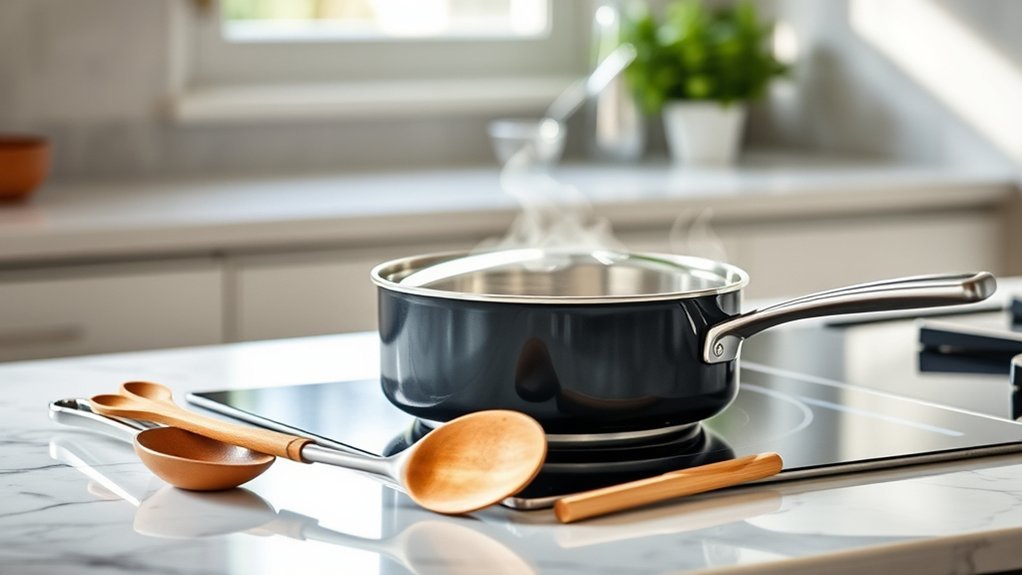
Metal utensils are best avoided on most ceramic nonstick pans unless the manufacturer specifically says the coating is metal-utensil-safe. One accidental scrape usually does not ruin a pan, but repeated contact with hard or sharp metal can scratch the cooking surface and reduce its nonstick performance. For everyday use, smooth silicone, wooden, or heat-safe nylon utensils are the safer choices.
Quick Answer
Avoid metal utensils on most ceramic nonstick pans unless the manufacturer explicitly approves them. A single light scrape usually does not mean the pan must be discarded, but repeated scraping can wear the coating and make food stick. Use silicone, wood, or smooth heat-safe nylon for routine cooking.
Key Takeaways
- Most ceramic nonstick manufacturers recommend silicone, wood, or nylon instead of metal utensils.
- Some specially engineered ceramic coatings are rated for metal utensils, so check the instructions for your exact pan.
- Light scratches usually affect appearance or nonstick performance before they create a reason to discard the pan.
- Peeling, flaking, deep gouges, exposed base material, or structural damage deserve closer attention and may justify replacement.
- Low-to-medium heat, gentle cleaning, and protected storage generally help ceramic nonstick cookware last longer.
Can You Use Metal on Ceramic Pans?
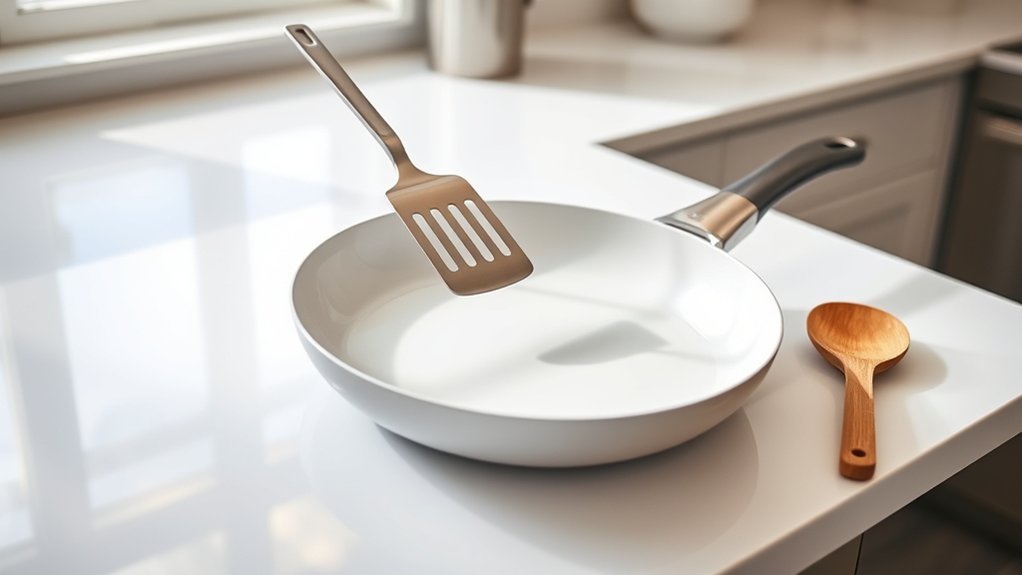
You can make occasional light contact with a metal utensil on many ceramic pans without instantly ruining them, but routine metal-tool use is not recommended unless the manufacturer specifically permits it.
Hard or sharp metal edges can create scratches and surface abrasion when they are dragged, pressed, whisked, or cut across a ceramic nonstick coating. Repeated abrasion can gradually reduce food release and shorten the useful life of the nonstick surface.
Major manufacturers commonly recommend softer utensils. GreenPan’s general care guidance recommends silicone and wood, while Caraway recommends wood, silicone, plastic, or nylon tools instead of rough-edged metal utensils.
There are exceptions. Some newer ceramic nonstick products are specifically engineered and advertised as metal-utensil-safe. That is why the most accurate rule is to check the care instructions for the exact pan rather than assuming every ceramic coating behaves the same way.
Note: “Ceramic cookware” is not one standardized coating formula. Materials, layer structures, abrasion resistance, and approved care methods differ among brands and product lines.
Ceramic-Coated vs. Solid Ceramic Cookware
This article focuses on ceramic nonstick cookware: metal pans, often aluminum or stainless steel, with a ceramic-style nonstick coating. These coatings are commonly produced with sol-gel technology and can contain different ceramic compounds depending on the formulation.
That is different from cookware or bakeware made from solid ceramic material. Solid ceramic products have their own rules for impact, thermal shock, stovetop compatibility, and utensil use. Always follow the instructions supplied with the exact product.
What Happens When Metal Scratches Ceramic?
When a hard metal utensil scrapes a ceramic nonstick pan, the main concern is mechanical wear. The utensil may mark or abrade the coating, and repeated wear can make the cooking surface less smooth and less effective at releasing food.
- Food may begin sticking more readily.
- The pan may require more oil or fat for the same cooking task.
- Cleanup may become more difficult as the release performance declines.
- Repeated scraping can shorten the useful life of the coating.
A 2025 study of commercial sol-gel ceramic nonstick coatings found substantial differences in abrasion resistance and retention of nonstick performance among ceramic formulations. The research reinforces an important point: ceramic coatings are not identical, and physical wear can affect their long-term performance.
The practical problem with repeated metal-utensil contact is usually accelerated coating wear and poorer food release, not instant pan failure after a single light touch.
Are Scratched Ceramic Pans Still Safe?
A lightly scratched ceramic pan does not automatically need to be discarded. The correct response depends on the depth of the damage, the exact coating, and the cookware manufacturer’s instructions.
For example, GreenPan states in its FAQ that scratches, dents, pits, or chips in its coating do not affect the safety or performance of its pans. Other manufacturers take a more conservative position when a coating is visibly chipped, peeling, or flaking. Because coating formulations differ, the guidance for one brand should not be treated as proof about every ceramic pan.
Likewise, do not assume that the word ceramic alone proves that a pan is free of PFAS, PTFE, lead, cadmium, or every other substance of concern. Many major ceramic nonstick brands specifically advertise coatings made without those materials, but chemical-composition claims should be checked for the exact product.
Warning: If the cooking surface is actively peeling or flaking, a deep gouge exposes the underlying metal, or the pan is cracked or badly warped, stop and check the manufacturer’s replacement guidance before continuing to use it.
Scratch Safety Basics
Light surface wear is usually handled differently from major coating failure. Use the following checks after noticing a scratch:
- Wash the cooled pan gently so residue does not hide the condition of the surface.
- Inspect the area under good light.
- Look for peeling, flaking, deep gouges, bubbling, cracks, or exposed base material.
- Switch to silicone, wood, or another manufacturer-approved soft utensil.
- Check the pan manufacturer’s care or warranty instructions if the damage is more than superficial.
If the mark is minor and the manufacturer permits continued use, there is generally no reason to discard the pan solely because it is no longer cosmetically perfect.
Performance Vs. Damage
It helps to separate nonstick performance loss from visible structural damage. A pan can become less slippery without being deeply gouged. Heat exposure, cooking-spray residue, burnt-on oil, abrasive cleaning, and normal coating wear can all contribute to sticking.
If food has started sticking, first follow the manufacturer’s recommended cleaning procedure. A proper cleaning may remove residue that is interfering with release. Cleaning cannot rebuild a coating that has physically worn away, but it can prevent unnecessary replacement when buildup is the real problem.
Surface scuffs with no peeling or exposed substrate are different from deep scratches that cut through the coating. Monitor the pan’s condition rather than treating every visible mark as identical.
When To Replace
A ceramic pan does not need replacement simply because it has one light scratch. Replacement becomes more reasonable when damage is substantial or the cookware no longer works as intended.
Consider replacing the pan, or checking with its manufacturer, when:
- The coating is visibly peeling or flaking.
- Deep gouges expose the underlying metal.
- The cooking surface is cracked, bubbled, or structurally damaged.
- The pan has warped enough to heat or sit unevenly.
- Nonstick performance remains poor after the manufacturer-recommended cleaning procedure.
- The manufacturer’s own instructions say the observed type of damage requires replacement.
Do not try to rebuild a worn ceramic coating by aggressive scrubbing. Ceramic nonstick cookware also does not normally require traditional seasoning after accidental metal contact.
Which Utensils Work Best on Ceramic Cookware?
For most ceramic nonstick cookware, silicone and smooth wooden utensils are excellent everyday choices because they are much less likely to abrade the cooking surface.
Heat-safe nylon can also work well when its edges remain smooth. Replace a nylon utensil if it becomes melted, cracked, or rough enough to scrape the coating.
- Silicone: flexible, coating-friendly, and useful for flipping or scraping bowls and pans.
- Wood: smooth and sturdy for stirring, sautéing, and serving.
- Heat-safe nylon: generally coating-friendly when it is intact and rated for the cooking temperature.
- Metal: use only when the cookware manufacturer explicitly says the exact coating is metal-utensil-safe.
Whatever material you use, avoid cutting food directly in a ceramic nonstick pan with a knife or pizza cutter. Concentrated pressure from a sharp edge can damage a coating far more quickly than gentle stirring.
What Should You Avoid on Ceramic Nonstick?
Care recommendations vary by manufacturer, but several habits are commonly discouraged because they can shorten the life of ceramic nonstick cookware.
- Unapproved metal utensils: scraping and repeated hard contact can abrade most ceramic nonstick surfaces.
- Knives and cutting in the pan: sharp edges concentrate force on a small area of the coating.
- Abrasive pads and harsh scouring: use the cleaning tools recommended by the cookware manufacturer.
- Excessive heat: many ceramic nonstick brands recommend low-to-medium stovetop heat for routine cooking.
- Prolonged empty heating: avoid leaving an empty pan over significant heat longer than the manufacturer permits.
- Sudden temperature changes: allow a hot pan to cool before exposing it to much colder water unless its instructions state otherwise.
- Aerosol cooking sprays when prohibited: several ceramic cookware brands warn that spray residues can build up and hurt release performance.
Dishwasher advice is more product-specific. Caraway recommends hand washing its ceramic cookware, while GreenPan says many of its collections are dishwasher-safe but still recommends hand washing to help the coating last longer. Check your exact model rather than relying on a blanket rule.
How Do You Prevent Scratches in Ceramic Pans?
The easiest way to prevent scratches is to reduce unnecessary hard contact with the cooking surface. Use smooth utensils, clean without abrasives, and prevent other pans or metal objects from rubbing against the coating during storage.
Choose Soft Utensils
For routine cooking, choose silicone, wood, or smooth heat-safe nylon unless your cookware’s instructions allow something different.
- Use wooden or silicone spoons for stirring.
- Use silicone or manufacturer-approved nylon spatulas for flipping.
- Avoid pressing sharp utensil edges into the coating.
- Do not whisk aggressively with metal unless the pan is specifically rated for it.
- Move food to a cutting board before using a knife.
The goal is not to handle the pan delicately at all times. It is simply to avoid repeated abrasion that offers no cooking advantage.
Clean And Store Gently
Allow the cookware to cool according to its manufacturer’s directions before washing it. Warm water, dish soap, and a soft sponge or dishcloth are widely recommended for routine cleaning.
If the pan is dishwasher-safe, machine washing may be permitted, but hand washing is still commonly recommended for maximizing coating life. Do not use steel wool, aggressive scouring pads, or abrasive powders unless the manufacturer specifically approves them.
When stacking cookware, place a pan protector, soft towel, or other non-abrasive layer between pieces so the bottom of one pan cannot grind against the cooking surface of another.
Pro Tip: The easiest scratch-prevention habit is to keep a soft pan protector between stacked pieces. It prevents damage during storage without changing how you cook.
What Should You Do After Using Metal Utensils?
If you accidentally used a metal utensil on ceramic cookware, there is usually no reason to panic. Let the pan cool, clean it gently, and inspect the cooking surface.
- Wash the pan with the cleaning method recommended by its manufacturer.
- Examine the surface under bright light.
- Look for deep gouges, flaking, peeling, bubbling, or exposed base material.
- If the mark is minor, switch to softer utensils and monitor the pan’s performance.
- If damage is substantial, check the manufacturer’s care or warranty guidance before continuing to use the pan.
Do not aggressively scour the scratch in an attempt to smooth it out. That can remove additional coating.
Re-seasoning is generally unnecessary. For example, Caraway’s ceramic-care guidance specifically says its ceramic cookware does not need traditional seasoning. If release performance has declined, use the manufacturer’s recommended deep-cleaning method rather than trying to burn a new layer of oil onto the coating.
How Do You Extend Ceramic Pan Lifespan?
Extending a ceramic pan’s useful life mainly means reducing unnecessary abrasion and heat stress while keeping the surface clean.
- Cook at the heat level recommended for the pan; many ceramic nonstick brands favor low-to-medium heat.
- Use silicone, wood, or another manufacturer-approved utensil.
- Avoid cutting food inside the pan.
- Use cooking oil or fat as directed by the manufacturer and avoid aerosol sprays if the brand warns against them.
- Let the pan cool appropriately before washing.
- Use a soft sponge or dishcloth instead of abrasive scouring tools.
- Hand wash when recommended, even if occasional dishwasher use is technically permitted.
- Store stacked cookware with a protective layer between pieces.
Laboratory research also shows that ceramic nonstick formulations differ in abrasion resistance and how long they retain their release properties. Good care helps, but no nonstick coating should be assumed to last forever.
Frequently Asked Questions
What Should You Not Put on a Ceramic Pan?
Avoid unapproved metal utensils, knives, steel wool, abrasive scouring pads, and excessive heat on most ceramic nonstick pans. Several manufacturers also advise against aerosol cooking sprays because residue can hurt release performance. Dishwasher rules vary, so follow the care instructions for the exact pan.
What Pans Can I Use Metal On?
Bare stainless steel and properly seasoned cast iron generally tolerate metal utensils much better than conventional nonstick coatings. Some specially engineered ceramic or hybrid nonstick pans are also rated for metal utensils. Enameled cookware, tin-lined copper, and ordinary nonstick surfaces need more care, so check the manufacturer’s instructions before using metal.
What Type of Spatula Is Best for Using on Ceramic Pans?
A smooth silicone spatula is an excellent choice for ceramic nonstick pans because it is flexible and unlikely to scratch the coating. Smooth wooden spatulas and heat-safe nylon utensils are also good options. Use metal only when the manufacturer explicitly says the coating is metal-utensil-safe.
Is Dawn Dish Soap Safe for Ceramic Pans?
Standard liquid dish soap such as Dawn is generally suitable when the cookware manufacturer recommends washing with mild dish soap. Use it with a soft sponge or dishcloth rather than an abrasive pad, rinse the pan thoroughly, and follow any product-specific cleaning instructions supplied by the cookware brand.
Conclusion
Metal utensils are best avoided on most ceramic nonstick pans unless the exact cookware manufacturer says otherwise. One accidental light scrape rarely means a pan is finished, but repeated metal contact can accelerate surface wear and reduce nonstick performance. Use silicone, wood, or smooth heat-safe nylon for routine cooking, clean the pan gently, avoid unnecessary high heat, and protect the surface during storage. If the coating begins peeling or flaking, a deep gouge exposes the base, or the pan develops structural damage, check the manufacturer’s guidance and replace it when appropriate.
Sources
- GreenPan Care & Use — utensil, heat, oil, and cleaning guidance for ceramic nonstick cookware.
- GreenPan FAQs — guidance on utensils, dishwasher use, scratches, and cookware care.
- Caraway Care & Cleaning — guidance on metal utensils, low-to-medium heat, hand washing, cooling, and ceramic-coated cookware care.
- Our Place Ceramic Nonstick Care Guide — guidance on utensils, heat, oil, empty heating, cleaning, and coating protection.
- Research in Engineering, 2025: Sol-Gel Ceramic Non-Stick Coatings — laboratory research on ceramic coating composition, abrasion resistance, wear, and retention of nonstick performance.

4 thoughts on “Can You Use Metal on Ceramic Pans? Best Utensils & What to Avoid”