
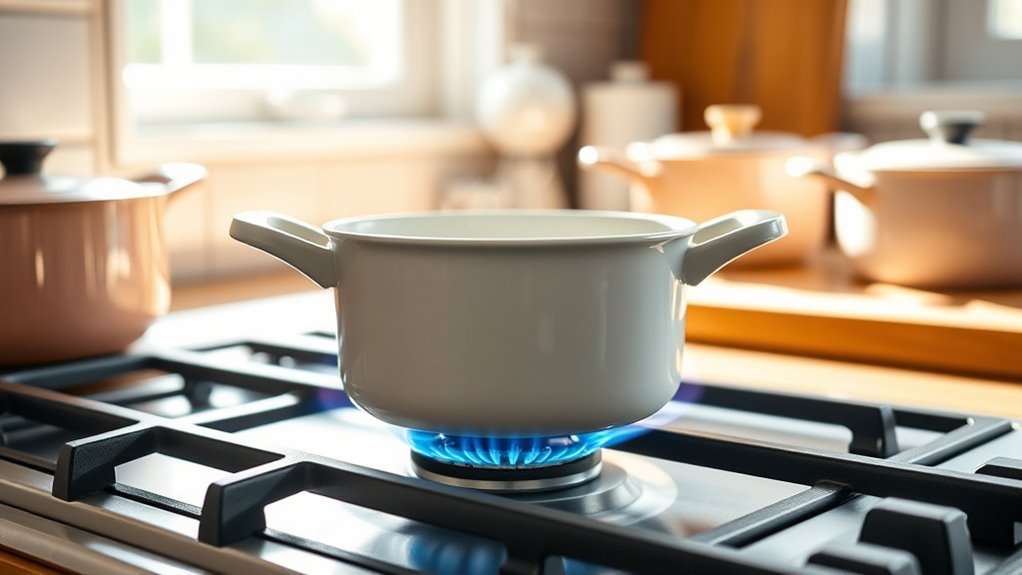
If you’re considering using ceramic cookware on a gas stove, you’re not alone. Many home cooks appreciate its aesthetic appeal and non-stick properties. However, you need to know how to maximize its performance while preventing potential issues. Choosing the right type of ceramic cookware is essential, and there are specific practices that can help you avoid common pitfalls. Curious about what makes ceramic a viable option for gas cooking? Let’s explore.
Understanding Ceramic Cookware and Gas Stove Compatibility
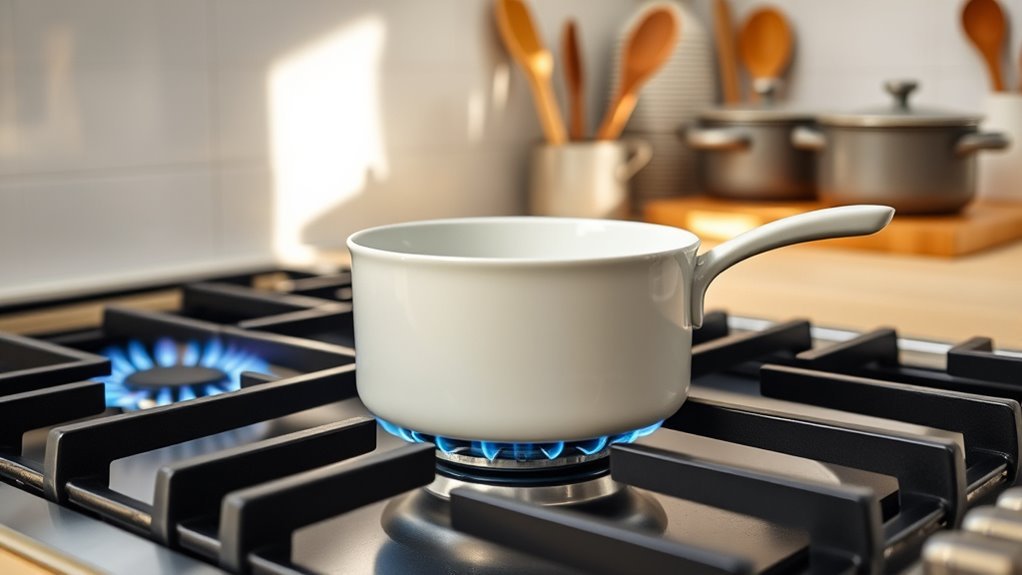
When you’re considering ceramic cookware for your gas stove, it’s crucial to understand their compatibility. Pure ceramic cookware can crack under direct flame, so look for options with a professional-grade, clad metal base.
These hybrid designs, like those from Made In CeramiClad®, feature a five-ply stainless clad base that guarantees even heat distribution and enhances cooking performance.
Using medium heat helps prevent temperature shocks that can damage your cookware, so it’s wise to avoid sudden cooling or heating.
Using medium heat minimizes temperature shocks, protecting your cookware from damage and ensuring a smoother cooking experience.
Additionally, regularly wiping the base of your ceramic cookware will remove carbon buildup, optimizing heat transfer. This attention to detail won’t only prolong the life of your cookware but also enhance your cooking experience on gas stoves.
With the right ceramic cookware, you can embrace the joy of culinary exploration while enjoying the freedom of efficient cooking.
Essential Features of Ceramic Cookware for Optimal Gas Stove Performance
To maximize your cooking experience on a gas stove, it’s vital to choose ceramic cookware that boasts specific features designed for peak performance. Look for pieces with a clad metal base, like stainless steel, to guarantee ideal heat distribution. This prevents the dreaded thermal shock that can crack pure ceramic under direct flame.
For best results, stick to medium or medium-low heat settings; this protects the ceramic coating and enhances cooking efficiency.
Regularly cleaning the base is important to eliminate carbon buildup, which can hinder heat transfer. Additionally, use wooden, silicone, or nylon utensils to safeguard the ceramic surface from scratches, extending the life of your cookware.
How to Safely Use Ceramic Cookware on Gas Stoves?
Using ceramic cookware on gas stoves can elevate your culinary creations, but it’s essential to follow some safety guidelines to guarantee a seamless experience.
First, make sure your ceramic pots and pans have a professional-grade clad metal base for ideal heat distribution. Stick to medium to medium-low heat to protect the ceramic coating and enhance your cooking performance.
Avoid cracking by steering clear of sudden temperature changes; let your cookware cool before washing, and never plunge hot items into cold water.
Regularly clean the bottom of your pans to prevent carbon buildup, which can hinder heat transfer.
Finally, use wooden, silicone, or nylon utensils to maintain the integrity of the ceramic surface, ensuring its longevity.
Avoid These Common Mistakes With Ceramic Cookware
When using ceramic cookware, it’s essential to avoid high heat settings that can warp the material and ruin its non-stick coating.
Sudden temperature changes can also lead to thermal shock, so let your pans cool down before washing them.
Incorrect Heat Settings
While cooking with ceramic cookware on a gas stove can elevate your culinary experience, incorrect heat settings can lead to frustrating mishaps.
Always stick to medium or medium-low heat to protect the ceramic coating from damage. Avoid preheating empty pans; this can cause thermal shock, leading to cracks.
Keep flame control in mind—ensure it doesn’t exceed the edges of the pan to prevent overheating. Gradually adjust heat levels for even cooking and to safeguard the ceramic surface.
Finally, regularly clean the base of your cookware to eliminate carbon buildup, ensuring ideal heat distribution and performance.
Sudden Temperature Changes
Incorrect heat settings aren’t the only pitfalls to watch for with ceramic cookware; sudden temperature changes can be just as damaging. To keep your ceramic pots and pans in top shape, avoid these common mistakes:
- Heating empty pans: Always add a little oil or food before applying heat.
- Starting on high heat: Preheat gently to promote even heat distribution and prevent thermal shock.
- Abrupt cooling: Never place a hot pan in cold water; let it cool gradually to maintain its structural integrity.
- Ignoring cooking temperatures: Stick to medium or medium-low heat to protect the ceramic surface from potential damage.
Why Choose Made In CeramiClad® Cookware?
If you’re looking for cookware that combines durability with exceptional performance, Made In CeramiClad® is an excellent choice. This innovative ceramic cookware features a five-ply stainless clad base, ensuring even heat distribution on your gas stove while preventing warping.
You’ll appreciate the non-toxic ceramic surface, free from harmful chemicals like PFAS and PFOA, promoting healthier cooking practices for you and your family.
Designed for versatility, CeramiClad® can withstand oven temperatures up to 500°F, allowing seamless shifts between stovetop and oven cooking. Its hybrid construction combines a robust metal foundation with a ceramic nonstick surface, delivering impressive durability even under high heat.
Plus, with its ability to maintain stable temperatures and resist thermal shock, Made In CeramiClad® cookware meets the unique demands of gas cooking, giving you the freedom to explore your culinary creativity without compromise.
How to Care for Your Ceramic Cookware on Gas Stoves?
Caring for your ceramic cookware on gas stoves is essential for keeping it in top shape.
To prevent thermal shock, let your pans cool down before washing, and always use wooden or silicone utensils to protect the surface.
Regularly clean your cookware to maintain its performance and enjoy perfectly cooked meals every time.
Prevent Thermal Shock
To guarantee your ceramic cookware remains in top shape while using a gas stove, it’s crucial to prevent thermal shock. Follow these essential tips for peak performance:
- Cool Down: Always let your ceramic cookware cool to room temperature before washing it with cold water.
- Avoid High Heat: Never place empty ceramic pans on high heat; sudden temperature changes can crack the ceramic coating.
- Use Medium Heat: Stick to medium to medium-low heat settings on your gas stove to protect the surface.
- Clean Regularly: Wipe the base of the pan to eliminate carbon buildup, ensuring even heating and reducing stress on the ceramic.
2. Use Appropriate Utensils
While cooking with your ceramic cookware on a gas stove, choosing the right utensils is essential for maintaining its integrity and performance.
Opt for wooden, silicone, or nylon utensils to prevent scratches and preserve the non-stick coating. Metal utensils can damage that delicate surface, leading to peeling and reduced functionality over time.
For ideal heat transfer, regularly clean the bottom of your cookware, removing any food residue.
When it comes to cleaning, hand wash your ceramic cookware using a soft sponge and mild detergent; this will extend its lifespan and keep it performing beautifully.
Finally, store your cookware carefully, avoiding stacking them directly on top of one another to guarantee scratch prevention and maintain their quality.
3. Regular Cleaning Routine
Keeping your ceramic cookware in top shape on a gas stove requires a solid cleaning routine that complements your cooking practices.
Follow these steps to protect your investment and maintain its non-stick properties:
- Cool Down: Allow cookware to cool to room temperature to prevent thermal shock.
- Hand Wash: Use a soft sponge and mild detergent to preserve the ceramic surface and avoid scratches.
- Wipe Base: Regularly clean the base to remove carbon buildup, ensuring effective heat transfer.
- Avoid Dishwasher: Steer clear of the dishwasher, as harsh detergents can damage the coating.
Comparing Ceramic Cookware With Other Materials for Gas Stoves
Have you ever wondered how ceramic cookware stacks up against other materials on a gas stove? Ceramic cookware can certainly shine, especially when it features a high-quality, clad metal base that guarantees even heat distribution.
This hybrid design enhances compatibility with gas stoves, allowing for better temperature management. However, while ceramic is great for delicate cooking, it’s not the best choice for high-heat searing—stainless steel or cast iron often outperform it in those scenarios.
Ceramic cookware requires careful handling to avoid thermal shock, unlike more robust options like cast iron or copper. The five-ply stainless clad base of top-tier ceramic cookware, like Made In CeramiClad®, helps prevent warping under fluctuating heat.
Final Thoughts on Cooking With Ceramic Cookware on Gas Stoves
When you choose ceramic cookware for your gas stove, you’re opting for a blend of style and functionality that can elevate your cooking experience.
This versatile cookware not only looks great but also delivers impressive performance. To make the most of it, keep these tips in mind:
- Preheat Gently: Always allow your ceramic cookware to warm up slowly to avoid thermal shock.
- Use Medium Heat: Cooking on medium or medium-low heat helps protect the non-toxic surface while achieving perfect temperature control.
- Focus on Heat Distribution: Opt for cookware with a durable base for even heat distribution, preventing warping.
- Prioritize Maintenance: Hand wash with a soft sponge and keep the base clean to extend its lifespan.
Frequently Asked Questions
What Are the Downsides of Using Ceramic Pots?
Using ceramic pots has downsides like durability concerns, especially with thermal shock susceptibility.
You might face heat retention issues, leading to cooking performance variability.
Surface scratching risks arise if you’re not careful, and weight distribution problems can affect cooking efficiency.
Plus, non-stick limitations often mean you’ll need oil.
Long-term maintenance can be tricky, with chemical leaching fears and aesthetic appeal considerations making it essential to choose wisely for your kitchen adventures.
What Is the Best Ceramic Pan for a Gas Stove?
When choosing the best ceramic pan for your gas stove, consider Made In CeramiClad®. It boasts excellent heat distribution and durability, minimizing warping.
Users rave about its non-stick properties and colorful options. Plus, maintenance is a breeze—just remember to use wooden or silicone utensils to prevent scratches.
With a price point that competes with lesser brands, it’s a smart investment. Check user reviews to see how it holds up in real kitchens!
What Are the Best Non-Toxic Pots and Pans for a Gas Stove?
For the best non-toxic pots and pans on a gas stove, consider options made from eco-friendly materials like stainless steel or ceramic with a robust metal base.
Look for brands praised in user reviews for their heat retention and cooking performance.
Durability factors are key, so opt for those that withstand wear.
Keep maintenance simple with gentle hand washing and avoid drastic temperature changes.
Balance your budget with design aesthetics for a liberating kitchen experience.
What Type of Pots Are Best for a Gas Stove?
“You can’t make an omelet without breaking eggs.”
For your gas stove, opt for cast iron for its heat retention, or stainless steel and aluminum cookware for excellent heat distribution.
Copper pots, lined with stainless steel, give you precision. Enameled cast options are durable, while nonstick varieties make cleanup a breeze.
If you’re into quick meals, pressure cookers work wonders. Just verify they’re induction compatible for versatility.
Enjoy your culinary freedom!
Conclusion
In conclusion, using ceramic cookware on a gas stove can be a rewarding experience when done right. Remember, “a stitch in time saves nine”—taking care of your cookware guarantees it lasts longer and performs better. By choosing high-quality options like Made In CeramiClad® and following safety guidelines, you can enjoy delicious meals while avoiding common pitfalls. Embrace the versatility of ceramic cookware, and savor the joy of cooking with confidence!
