
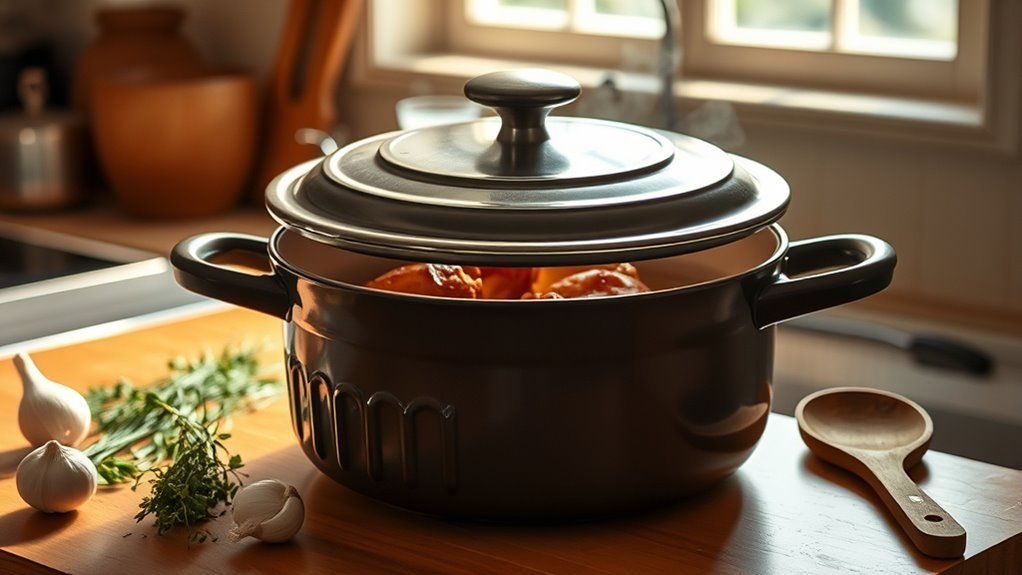
A braiser pan is a heavy, wide, shallow pan with a tight lid, made for browning food and then cooking it gently in a little liquid. The term “braiser” and “braiser pan” mean the same thing. This page is a quick reference for the facts that matter when you shop: materials, sizes, cooktop compatibility and care.
Want the full explanation first? Read what is a braiser. Looking for recipes? See what to cook in a braiser.
Braiser Pan Key Facts
| Question | Quick answer |
|---|---|
| What is it? | A wide, shallow, lidded pan for searing and braising |
| Other names | Braising pan, sauteuse-style braiser (names vary by brand) |
| Typical depth | About 2 to 3 inches, with straight or gently sloped sides |
| Common capacities | Roughly 2 to 5 quarts, with larger models available |
| Most common material | Enameled cast iron |
| Stovetop to oven? | Usually yes, within the maker’s temperature limit for the body, lid and knob |
| Induction? | Yes if the base is magnetic, such as cast iron or magnetic stainless steel |
| Best uses | Searing, braising, simmering, baked one-pan dishes |
| Not ideal for | Deep-frying, large pots of soup, boiling pasta |
Braiser Pan Materials Compared
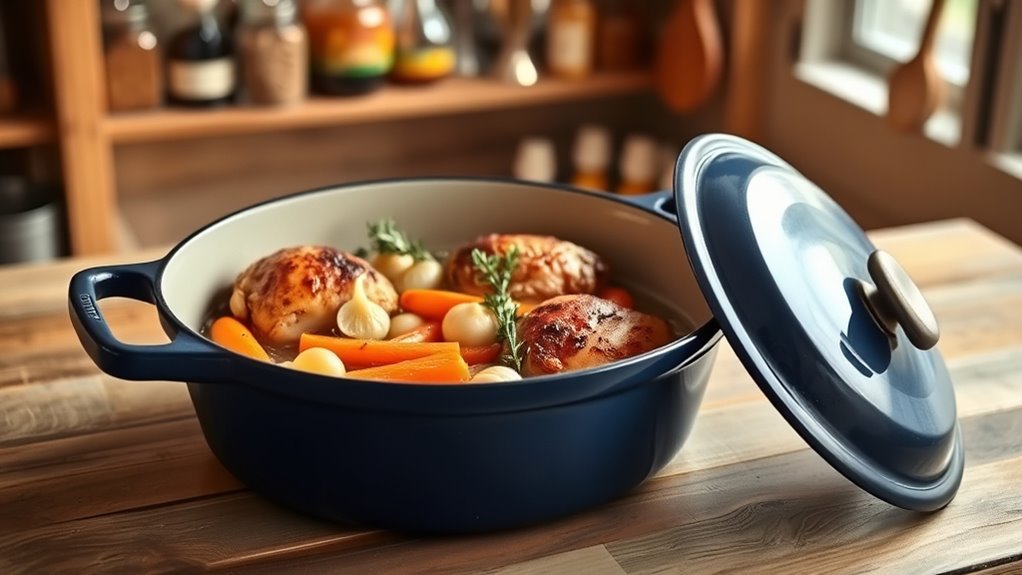
| Material | Pros | Cons |
|---|---|---|
| Enameled cast iron | Holds heat evenly, no seasoning needed, goes to the table | Heavy, enamel can chip, can be pricey |
| Bare cast iron | Very durable, naturally becomes more nonstick with seasoning | Needs seasoning and drying; acidic sauces can dull seasoning |
| Clad stainless steel | Lighter, does not chip, usually dishwasher-friendly | Food can stick without enough fat and heat control |
| Ceramic-coated or nonstick aluminum | Light and easy to clean | Coating wears over time; lower heat tolerance |
For help picking between cast iron and other types, our guides on cast iron cookware and ceramic coating cookware go into more detail.
Braiser Pan Sizes and Who They Fit
Capacities vary by brand and are not measured the same way, so treat the guide below as a rough starting point and compare diameter and stated quarts.
| Capacity | Good for |
|---|---|
| About 2 to 3 quarts | One or two people, side dishes, small batches |
| About 3.5 to 4 quarts | Two to four people, the most popular all-round size |
| About 5 quarts and up | Families, entertaining, batch cooking |
One US quart equals four cups. If you want a refresher on capacity conversions, see how big is 1.5 quarts.
Features Worth Checking Before You Buy
- Lid fit and design: it should sit snug without rocking. Ridges or spikes under the lid help return condensation to the food.
- Handles: large loop handles are easier to grip with oven mitts.
- Oven rating: read the specs for the pot, lid and knob. They can be different.
- Cooktop match: confirm induction, gas and electric compatibility. A flat, smooth base sits best on glass and induction surfaces.
- Interior color: a light interior makes it easier to judge browning. Darker interiors hide stains.
- Weight: cast iron is heavy when full. Check the listed weight.
- Warranty: some makers offer long warranties. Read the terms.
Prices and Brands
Braiser prices vary widely by material, size and brand, so check current listings rather than relying on a number you saw months ago. Enameled cast iron from well-known makers such as Le Creuset and Staub sits at the premium end, and many other brands sell lower-priced braisers. Judge any pan on its specs, warranty and honest customer reviews, not just the name.
How to Care for a Braiser Pan
- Preheat slowly over low to medium heat and avoid heating it empty on high.
- Let it cool before washing, and wash with warm soapy water and a soft sponge or nylon scrubber.
- Avoid heavy-duty steel scouring pads, which can scratch enamel and nonstick coatings.
- Follow the manufacturer’s dishwasher guidance. Even if allowed, hand washing helps the finish last.
- For bare cast iron, dry right away and rub on a thin film of oil. See how to care for a cast iron pan.
- Store with a paper towel or cloth between the pot and lid to protect the rim.
Frequently Asked Questions
Is a braiser the same as a braiser pan?
Yes. Braiser and braiser pan are two names for the same cookware: a wide, shallow, heavy pan with a tight-fitting lid, used for browning food and then cooking it slowly in a small amount of liquid. Some brands also call similar pots braising pans or sauteuse-style pans.
What can I use instead of a braiser pan?
A Dutch oven, a deep lidded skillet or a lidded sauté pan can replace a braiser for most recipes. A Dutch oven works best for deeper liquids, while a wide sauté pan with a lid gives you similar browning space and faster sauce reduction.
Can I use a braiser instead of a skillet?
Yes for many tasks. A braiser sears, sautés and shallow-fries like a skillet, and it adds a lid for covered cooking. It is heavier and slower to heat and cool, so a lighter skillet is better for quick, fast-moving cooking like stir-frying.
Is a braiser pan worth it?
It is worth it if you often cook braises, one-pan dinners and baked dishes and want to serve from the pan. If you already own a Dutch oven and a large lidded skillet, you may not need one. Your cooking habits and storage space should decide.
Conclusion
A braiser pan is a wide, lidded pan that sears and braises in one pot. Pick the size and material that fit your cooktop and household, check oven ratings, and look at current listings for price.
