
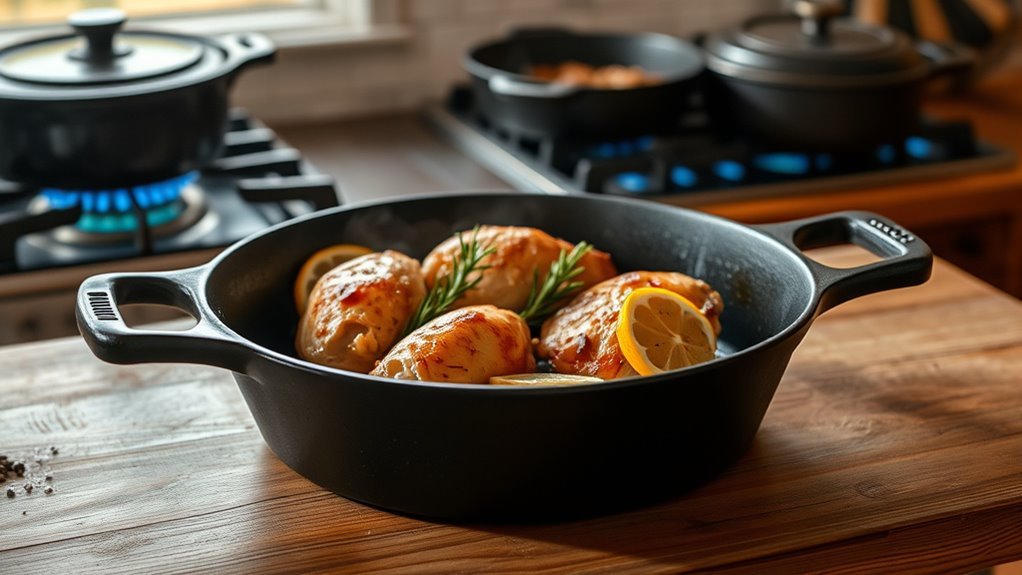
Cast iron cookware is cookware made by pouring molten iron into a mold, giving thick, heavy pieces that hold heat for a long time. The category includes skillets, Dutch ovens, griddles, grill pans, bakeware and more, in either bare (seasoned) iron or enamel-coated versions.
If you are looking for the single pan, read what a cast iron skillet is. This guide covers the whole category: what the pieces are, how bare and enameled iron differ, how cast iron compares with other materials and how to choose.
Cast Iron Cookware at a Glance
| Feature | What to know |
|---|---|
| Material | Iron cast in a mold; bare (seasoned) or coated with enamel |
| Main strengths | Heat retention, browning, durability, oven and stovetop use |
| Main drawbacks | Heavy, slow to heat, bare iron needs drying and light oiling |
| Works on | Gas, electric, induction, oven, grill and campfire (check the maker’s notes) |
| Lifespan | Decades or longer with care |
How Cast Iron Cookware Is Made
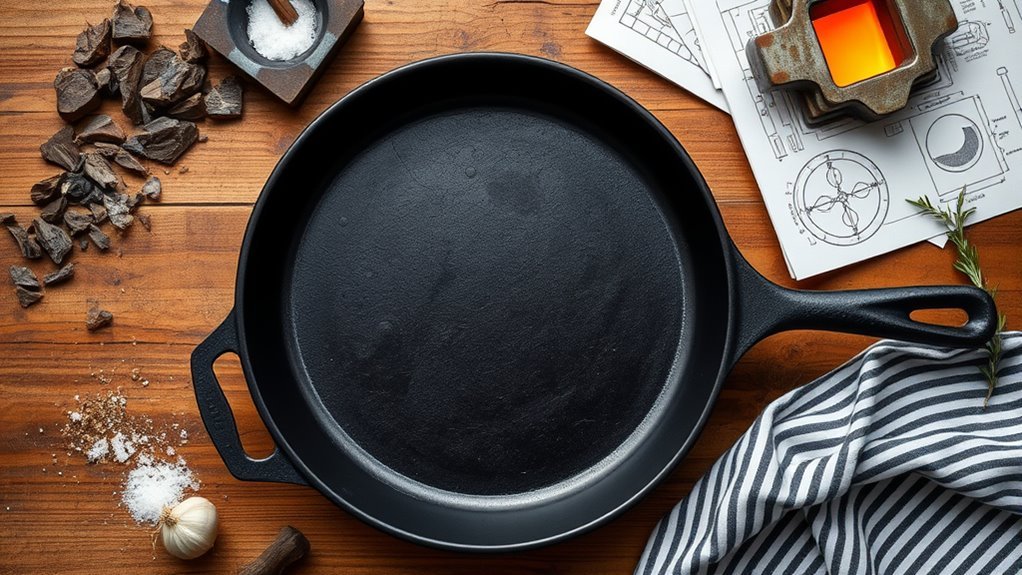
Makers melt iron, pour it into a mold, cool it and then clean up the casting. Bare pieces are usually sold pre-seasoned with baked-on oil so they resist rust and cook with a lower-stick surface. Enameled pieces are given a glass-like coating, often in color, over the iron.
The thick walls are what give cast iron its character. They store a lot of heat, which is great for searing and long, steady cooking, but it also makes the pieces heavy and slow to react when you change the burner setting.
Types of Cast Iron Cookware
| Piece | What it is | Typical uses |
|---|---|---|
| Skillet or frying pan | Shallow pan with sloped sides | Searing, frying, eggs, cornbread, one-pan oven dishes |
| Dutch oven | Deep pot with a tight lid | Braising, stews, soups, bread baking, deep frying |
| Griddle | Flat or reversible plate | Pancakes, flatbreads, grilled sandwiches, bacon |
| Grill pan | Ridged cooking surface | Steaks, burgers and vegetables with grill marks |
| Braiser | Wide, shallow pot with a lid | Braised meats, one-pot dishes, shallow stews |
| Bakeware | Cornbread pans, loaf pans, muffin pans, pizza pans | Baking with crisp bottoms and browned edges |
| Wok, saucepan, kettle | Less common shapes | Specialty cooking, campfire cooking |
If you are curious about the shallow lidded pot, see what a braiser is. For ridged pans, read what a grill pan is used for.
Bare Cast Iron vs Enameled Cast Iron
| Bare (seasoned) | Enameled | |
|---|---|---|
| Surface | Seasoned iron, dark and matte | Glass-like enamel, often colored |
| Seasoning | Needed and maintained over time | Not needed |
| Acidic foods | Short cooking is fine in a well-seasoned pan; long simmers can dull seasoning | Better suited to tomato sauces, wine and citrus |
| High-heat searing | Excellent | Good, but follow the maker’s heat limits |
| Cleanup | Hand wash, dry, light oil | Hand washing is the safest bet; some pieces are labeled dishwasher-safe |
| Weak spot | Rust if left wet | Chipping if knocked or overheated |
| Price | Usually lower | Usually higher |
Many cooks own both: a bare skillet for searing and baking, and an enameled Dutch oven for stews and sauces.
What Cast Iron Cookware Is Good For
- Searing steaks, chops, burgers and chicken thighs
- Frying chicken, bacon, potatoes and eggs
- Baking cornbread, biscuits, skillet cakes and deep-dish pizza
- Braising, stewing and baking bread in a Dutch oven
- Cooking outdoors over a grill or campfire
See what you can cook in a cast iron pan for specific dishes, and oven safety for cast iron for temperature tips.
Cast Iron vs Other Cookware Materials
| Material | Main advantage | Main drawback |
|---|---|---|
| Cast iron | Holds heat, very durable, oven-ready | Heavy, slow to heat, needs care (bare) |
| Stainless steel | Light, non-reactive, easy to clean | Food sticks without technique |
| Nonstick | Easy release, low fat | Coating wears; not for very high heat |
| Ceramic-coated | Smooth release, often colorful | Coating can lose slickness with use |
For a wider comparison, read what the healthiest cookware material is.
Iron in Food and Health: What to Know
Cooking in bare cast iron can add a small amount of iron to food. The amount varies a lot with the food, the age and seasoning of the pan and how long it cooks, and it is not a reliable way to treat low iron.
People with an iron-storage condition such as hemochromatosis should ask their doctor before relying on cast iron. Our guide on whether a cast iron skillet gives you iron goes deeper.
How to Care for Cast Iron Cookware
- Bare iron: Hand wash with hot water and a brush (mild soap is fine), dry fully, then rub on a very thin coat of oil.
- Enameled iron: Wash with a soft sponge, avoid metal scouring, and do not heat an empty pot on high.
- Both: Avoid sudden temperature swings, such as plunging a hot pan into cold water.
Step-by-step instructions are in how to care for a cast iron pan.
How to Choose Your First Cast Iron Piece
- Start with a 10- or 12-inch skillet if you mostly pan-cook (see what size cast iron skillet to get).
- Add a 5- to 7-quart enameled Dutch oven if you braise, make soup or bake bread.
- Check that the piece is comfortable to lift when full.
- Confirm that handles and lids suit your oven use.
Frequently Asked Questions
Is cast iron cookware safe to cook with?
Bare cast iron is a traditional, long-used cookware material and has no synthetic coating. It can add a small amount of iron to food. Enameled pieces are also widely used; follow the maker’s care and heat guidance and stop using pieces with deep chips or cracks.
Does cast iron cookware work on induction?
Yes. Cast iron is magnetic, so bare and enameled cast iron generally work on induction cooktops. Lift heavy pieces rather than sliding them to avoid scratching glass surfaces, and check the maker’s notes for your specific piece.
Is cast iron better than stainless steel?
Neither is better for every job. Cast iron excels at searing, frying and holding heat, while stainless is lighter, reactive-free and better for acidic sauces and quick temperature changes. Many kitchens use both.
How long does cast iron cookware last?
With basic care it can last for generations, and worn seasoning can be restored. Enameled pieces also last a long time, but the coating can chip or craze if it is knocked, overheated or cooled suddenly.
Conclusion
Cast iron cookware covers everything from skillets to Dutch ovens and is built for heat, durability and versatility. Choose bare iron for searing and baking, enameled for acidic or long-simmered dishes, and enjoy pieces that can last for decades.
