
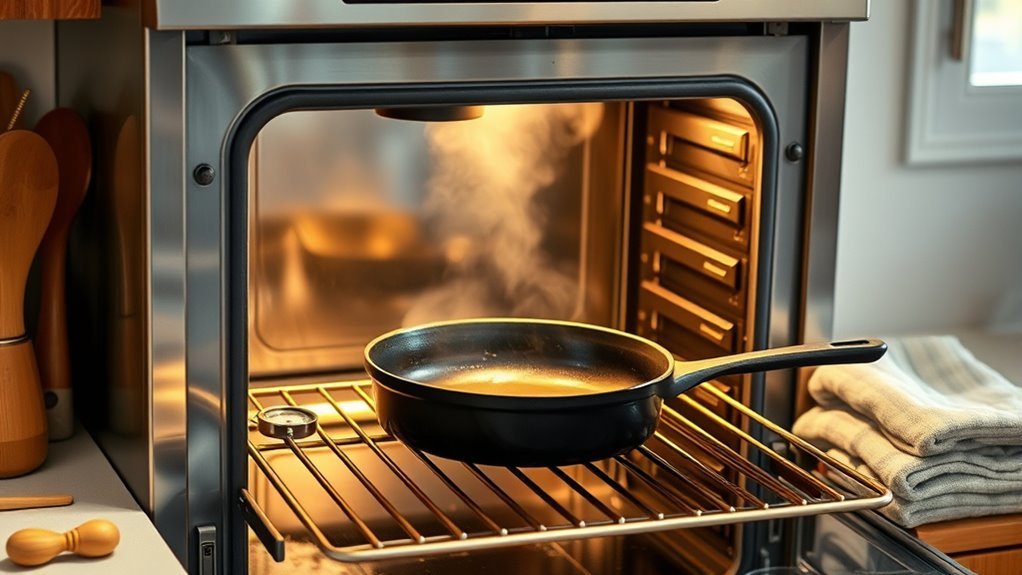
Yes, you can put a cast iron pan in the oven. A bare, all-iron skillet is oven-safe at the temperatures home ovens reach, including under the broiler, as long as nothing on the pan is plastic, wood or another heat-sensitive material.
The caveats are about extras, not the iron: enameled pieces have maker-specific heat limits, lids and knobs can be rated lower than the pot, and handles get very hot. This guide covers temperatures, handle and lid rules and a few habits that keep the pan in good shape.
Is Cast Iron Oven-Safe? Quick Answers
| Type of piece | Oven-safe? | What to check |
|---|---|---|
| Bare cast iron skillet (all iron) | Yes | Seasoning smokes if the oil burns; handle is as hot as the pan |
| Enameled cast iron | Yes, within the maker’s rating | Pot, lid and knob can have different limits |
| Cast iron with a wood handle | No, or only with limits | Remove the handle if it detaches; otherwise skip the oven |
| Cast iron with a silicone sleeve or plastic knob | Only below the rated limit | Check the product page or manual |
| Self-cleaning oven cycle | Not recommended | Extreme heat can damage seasoning or enamel |
How Hot Can You Take Cast Iron in the Oven?
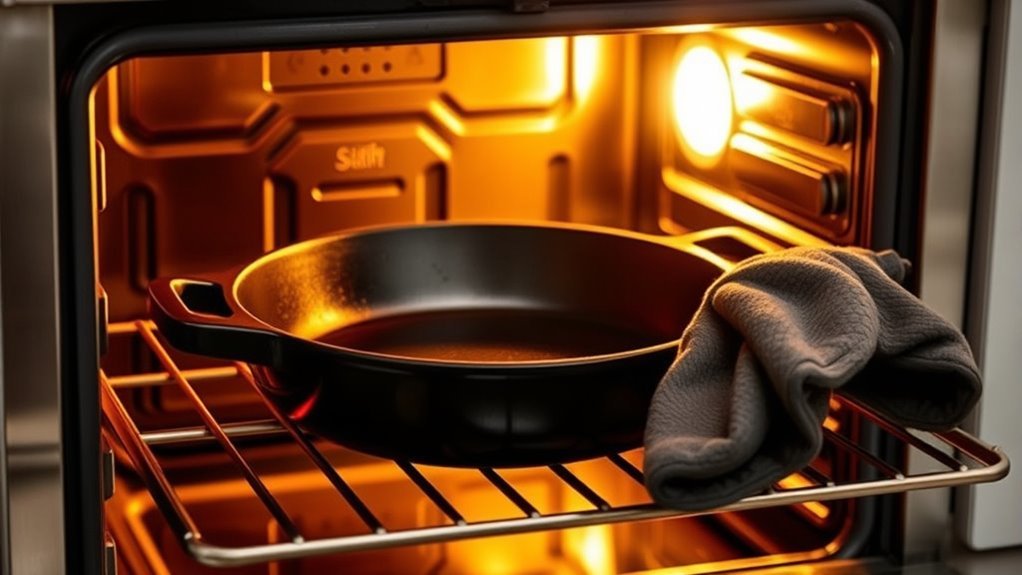
Iron itself is not what limits you. A typical home oven tops out around 500°F to 550°F, and a bare cast iron skillet handles that, so the real limits are the seasoning and any non-iron parts.
Seasoning is baked-on oil. At very high heat, extra oil on the surface can smoke or turn sticky, so wipe the pan so it is only lightly coated. Many cooks keep most oven cooking at 350°F to 450°F, which is plenty for baking and roasting.
Enameled cast iron limits
Enameled pieces vary by brand and line. Some Dutch ovens are rated up to about 500°F, but the lid knob can be lower. For example, one popular brand has used plastic-based knobs rated lower than its stainless steel knobs, so always read the manufacturer’s sheet for the pot, the lid and the knob. If you are unsure, stay at or below 400°F.
Handle and Lid Rules
- All-iron handle: Safe, but it holds the same heat as the pan. Use a thick mitt or a handle cover rated for oven heat.
- Silicone sleeves: Fine for stovetop; remove or check the rating before oven use.
- Glass lids: Usually rated for a lower temperature than iron and can shatter with sudden change.
- Wooden or plastic parts: Can burn or melt. Take them off or skip the oven.
Make it a habit to put a mitt or cloth over the handle after you pull the pan out, so no one grabs it by mistake.
How to Use a Cast Iron Pan in the Oven
- Check the manufacturer’s rating if the pan is enameled or has non-iron parts.
- Place the oven rack where it should be before you heat the oven, so you are not moving a hot pan.
- Preheat the oven. For crispy crusts, put the empty skillet in while the oven heats, then add the batter or food carefully with oven mitts.
- For meat, sear on the stovetop first, then move the whole pan into the oven to finish.
- Cook until done, using a thermometer for meat and poultry.
- Rest the pan on a trivet or heat-proof surface and let it cool gradually before washing.
Oven Temperature Starting Points for Cast Iron
These are common ranges, not rules. Adjust to your recipe and oven.
| Dish | Typical oven temperature |
|---|---|
| Fruit cobbler or skillet cookie | 350°F to 375°F |
| Frittata or baked eggs | 350°F to 400°F |
| Cornbread and biscuits | 400°F to 450°F |
| Roasted vegetables | 400°F to 450°F |
| Chicken thighs or pork chops | 400°F to 450°F |
| Pizza in a skillet | 450°F to 500°F |
For ideas on what to cook, see what you can cook in a cast iron pan.
Mistakes That Damage Cast Iron in the Oven
- Extreme temperature changes: Do not put a hot pan in cold water or on a cold, wet surface.
- Leaving a thick oil film: Wipe the pan so oil does not pool and turn sticky.
- Cooking acidic dishes for a long time: Long, acidic bakes such as tomato sauce can dull the seasoning on bare iron. Use enameled cast iron for these.
- Using the self-clean cycle: Take the pan out first.
- Forgetting the handle is hot: It burns just as quickly as the pan.
Using the Oven to Season Cast Iron
The oven is also how you season bare cast iron. Wash and dry the pan, rub on a very thin coat of oil, bake it upside down at about 450°F to 500°F for an hour, and let it cool in the oven. Put foil or a tray on a lower rack to catch drips. Our guides on whether you need to season a cast iron skillet and how to care for a cast iron pan explain the steps.
Frequently Asked Questions
Can I put cast iron in a 400 degree oven?
Yes. A bare, all-iron skillet handles 400°F easily, and many recipes such as cornbread and roasted vegetables call for 400°F to 450°F. For enameled cast iron or pans with non-metal parts, check the manufacturer’s rated limit first.
Can cast iron go in a 500 degree oven?
Bare cast iron can generally take it, but the seasoning may smoke and oil can burn at that heat. Enameled pieces are often rated around 450°F to 500°F, and knobs or handles can have lower limits, so check your specific piece.
Can I use a cast iron pan under the broiler?
Yes, an all-metal cast iron skillet is commonly used under the broiler to finish steaks, melt cheese or brown a frittata. Leave a gap between the food and the heating element, and use thick oven mitts, because the handle gets very hot.
Can I put a cold cast iron pan in a hot oven?
It is usually fine to put a room-temperature pan into a preheated oven, but extreme jumps are what cause trouble. Avoid taking a very hot pan straight to cold water or a cold stone surface, which can crack or warp it.
Related Cast Iron Guides
- How to cook with cast iron
- What is a cast iron skillet
- Can you put Caraway pans in the oven, for ceramic-coated cookware limits
Conclusion
Cast iron is one of the best oven-going pans. Check the rating on enameled pieces, lids and non-iron handles, avoid extreme temperature swings and use mitts, and your skillet will handle everything from cornbread to a hot broiler finish.
