
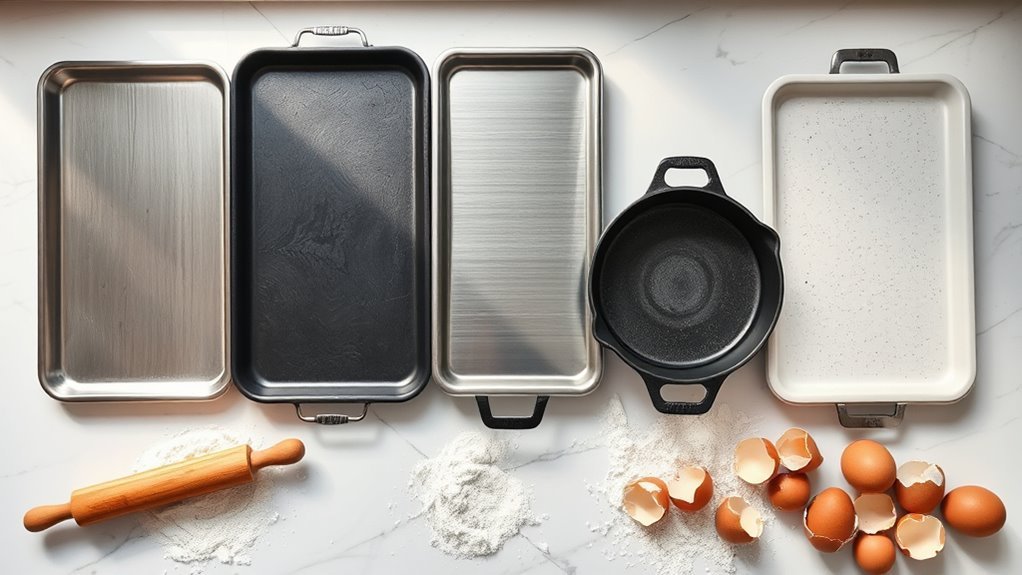
Baking trays can make or break your culinary creations, yet many overlook their importance. You might not realize that the material of a tray greatly impacts heat distribution, food release, and overall baking performance. From metal to silicone, each option has its unique benefits. Understanding these materials will help you choose the right tray for your baking needs and elevate your skills. So, what should you really look for in a baking tray?
Understanding Baking Tray Materials: Overview and Key Features
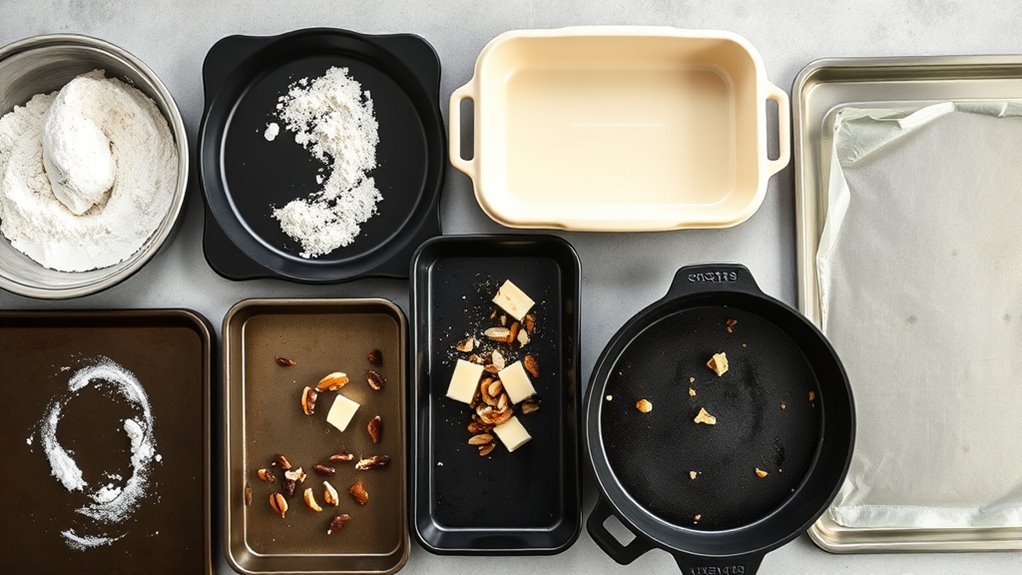
When selecting a baking tray, understanding the materials involved is essential for achieving ideal results in the kitchen.
Baking trays are made from various materials, each with unique benefits. Metal trays, typically aluminum or steel, excel in heat distribution and durability, making them perfect for tasks like roasting and baking cookies.
Baking trays come in diverse materials, with metal options like aluminum and steel offering superior heat distribution and durability for baking and roasting.
Silicone trays offer flexibility and non-stick properties, ensuring easy food release but may lack the even heat distribution of metal.
Stoneware and ceramic trays retain moisture well, providing even heat but are heavier and more prone to damage.
Finally, cast iron trays are renowned for their durability and heat retention, though they require proper seasoning to prevent rust.
Aluminum vs. Stainless Steel Baking Trays: A Comparison
Selecting the right baking tray can greatly impact your culinary outcomes, particularly when choosing between aluminum and stainless steel options. Here’s a quick comparison to help you decide:
1. Heat Conductivity: Aluminum trays heat up quickly and distribute heat evenly, perfect for baking.
Stainless steel takes longer to preheat but maintains temperature well.
2. Durability: Stainless steel is more durable, resisting warping, scratching, and rusting.
Aluminum, while lightweight, can discolor and warp under high heat.
3. Non-Stick Properties: Many aluminum trays come with non-stick coatings for easy food release.
In contrast, stainless steel requires greasing to prevent sticking.
Your choice depends on what matters most: speed and ease with aluminum, or longevity and durability with stainless steel.
Each material offers unique advantages tailored to different baking needs.
Benefits of Non-Stick Coatings in Baking Trays
Non-stick coatings on baking trays offer significant advantages, particularly in food release and ease of cleaning.
You’ll find that baked goods slide off effortlessly, cutting down on frustration and waste.
Plus, the smooth surfaces require minimal effort to clean, allowing you to enjoy your creations without the hassle of scrubbing.
Enhanced Food Release
While traditional baking trays often require greasing to prevent sticking, non-stick coatings revolutionize the baking experience by offering enhanced food release. This means you can enjoy:
- Effortless Removal: Cakes and pastries slide out easily, minimizing the risk of damage.
- Healthier Options: With a smooth surface, you can reduce or eliminate added fats, making your baked goods lighter.
- Durability: High-quality non-stick coatings withstand temperatures up to 500°F (260°C), ensuring consistent performance.
Regular maintenance, like using non-abrasive tools, helps preserve the integrity of the non-stick surface, extending your tray’s lifespan.
Embracing non-stick baking trays not only simplifies your baking process but also liberates you from the hassle of sticking, enhancing your culinary creativity.
Easier Cleaning Process
When you use baking trays with non-stick coatings, cleaning becomes a breeze. The non-stick surface guarantees effortless food release, minimizing the chances of your baked goods sticking and breaking apart.
After baking, you can often just wipe the tray with a damp cloth or give it a gentle scrub with soap and water, making cleanup quick and efficient. Plus, these trays usually require less greasing or flouring, simplifying your preparation process.
Designed to withstand high temperatures, non-stick coatings maintain their effectiveness over time, allowing for repeated use without losing their cleaning ease.
Advantages of Silicone Baking Trays
Silicone baking trays offer impressive heat resistance, handling temperatures up to 450°F (230°C) without losing shape or function.
Their flexible design not only guarantees easy food release but also allows for convenient storage in tight spaces.
With these features, you can enjoy hassle-free baking and maintenance, making silicone trays a smart choice for any kitchen.
Heat Resistance Capabilities
Baking enthusiasts appreciate the heat resistance of silicone baking trays, which can handle temperatures up to 450°F (230°C) without warping or melting.
Their heat resistance capabilities make them ideal for various baking tasks. Here are a few advantages:
- Even Heat Distribution: Silicone trays distribute heat evenly, preventing hot spots that can cause uneven cooking or browning.
- Non-Stick Surface: They’re naturally non-stick, reducing the need for greasing and ensuring easy food release.
- Durability: Resistant to staining and odors, silicone maintains its appearance and functionality over time, even after repeated use.
These attributes not only enhance your baking experience but also offer liberation from the hassles often associated with traditional bakeware.
Flexible and Easy Storage
The flexibility of silicone baking trays provides significant advantages for both storage and usability. Their flexible design allows for easy food release, so you won’t struggle to pop out baked goods.
When it comes to storage, these trays can be rolled or folded, saving precious space in your kitchen compared to bulky, rigid trays. Weighing almost nothing, they’re easy to handle, even when filled with batter or dough.
Plus, most silicone trays are dishwasher safe, making cleaning a breeze for busy bakers. With a temperature tolerance up to 450°F (230°C), they adapt to various baking needs without warping or degrading.
Embrace the freedom of flexible, easy storage with silicone baking trays in your culinary arsenal.
Why Stoneware Baking Trays Are Worth Considering?
Have you ever wondered why stoneware baking trays are gaining popularity among home cooks? Their unique properties make them a fantastic choice for your kitchen. Here are three reasons to take into account stoneware for your baking needs:
- Even Heat Distribution: Stoneware’s dense composition guarantees even heat conductivity, promoting uniform cooking and browning.
- Moisture Retention: These trays excel at retaining moisture, enhancing the texture of hearty dishes like casseroles and bread.
- Versatile Temperature Tolerance: Stoneware can withstand high temperatures (up to 500°F or 260°C), allowing you to explore various baking styles.
Additionally, the naturally non-stick surface reduces the need for excess greasing, making your meals healthier.
Just remember to preheat your stoneware for best results, especially for recipes that require a crisp crust.
With stoneware, you’re not just baking; you’re elevating your culinary experience.
The Reliability of Cast Iron Baking Trays
While stoneware offers impressive benefits, cast iron baking trays bring their own unique advantages to the table. Known for excellent heat retention and even heat distribution, cast iron guarantees reliable baking across all your baked goods.
These trays can withstand high temperatures, making them ideal for everything from bread to casseroles. Their durability means they can last for generations, provided you maintain them with regular seasoning to prevent rust and maintain non-stick properties.
Cast iron baking trays excel in high temperatures, ensuring durability and longevity with proper seasoning for rust prevention and non-stick performance.
Though heavier than other materials, this weight contributes to their sturdiness, guaranteeing consistent performance whether you’re baking at home or in a commercial setting.
The reliability of cast iron baking trays lies in their ability to deliver uniform cooking results, allowing you to focus on perfecting your recipes. With proper care, these trays become a trusted ally in your culinary endeavors, transforming how you approach baking for years to come.
Insulated vs. Air-Insulated Baking Trays: Which Is Better?
Which baking tray design truly elevates your culinary creations: insulated or air-insulated? Both types offer distinct advantages, but the choice often hinges on your baking style. Here’s a quick comparison:
- Heat Distribution: Insulated baking trays feature a layer of insulation, enhancing even heat distribution and reducing cooking time by up to 30%.
- Storage and Bulkiness: Insulated trays can be bulkier, making them a bit challenging to store compared to air-insulated options.
- Baking Results: While both improve energy efficiency, insulated trays excel at preventing over-browning, promoting evenly baked goods.
Ultimately, whether you opt for insulated or air-insulated trays, you’ll benefit from improved heat retention and consistent results.
Your personal preference will guide the best choice for your kitchen adventures.
How to Choose the Right Baking Tray for Your Needs
Choosing the right baking tray for your needs can greatly impact your culinary outcomes. First, consider the type of baked goods you’ll be making. If you’re baking delicate items, a silicone or ceramic tray is ideal, while stone or cast iron trays excel with hearty dishes due to their even heat distribution.
Next, assess the size and shape of the baking sheet; dimensions considerably influence cooking times and results. Look for trays with non-stick surfaces for easier food release, particularly when baking cookies or cakes.
Evaluate the durability and heat resistance of materials; silicone trays can handle up to 450°F (230°C), while ceramic can endure up to 500°F (260°C).
Finally, check manufacturer instructions for maintenance, as some trays are dishwasher-safe while others require hand washing to guarantee peak performance. By considering these factors, you’ll empower your baking experience.
Tips for Maintaining Your Baking Trays for Longevity
Maintaining your baking trays is essential for ensuring their longevity and ideal performance. Proper care not only keeps them functional but also preserves the non-stick coating that makes baking a joy.
Here are three key tips to help you maintain your trays:
- Clean Gently: Regularly wash your trays with warm, soapy water and a soft sponge. Avoid harsh chemicals or abrasive scrubbers to protect the non-stick coating.
- Use Proper Utensils: Stick to wooden or silicone utensils when handling your trays. Metal can scratch and damage the non-stick surface, reducing its effectiveness.
- Store Smartly: Avoid stacking trays directly on top of one another. Instead, use dividers or store them separately to prevent scratches and warping.
Periodically check for signs of wear, such as rust or peeling coating, and replace them as necessary to maintain a safe, effective baking environment.
Frequently Asked Questions
What Is the Healthiest Material for Baking Trays?
The healthiest material for baking trays is ceramic. It offers non-stick benefits without harmful coatings, ensuring your food remains free from toxins.
Ceramic trays are also durable when handled properly, making them a safe choice for your kitchen. They don’t leach chemicals, which means you can bake with confidence.
Plus, they’re versatile for various recipes. When you choose ceramic, you’re prioritizing both health and a reliable baking experience.
Are Aluminium Baking Trays Safe?
Yes, aluminium baking trays are generally safe for use. Their food-grade construction minimizes health risks, but you should be aware of aluminium reactivity.
When acidic foods are involved, there’s potential for leaching, so following the manufacturer’s guidelines is essential. The anodised surface enhances durability and reduces reactivity, ensuring even cooking.
To maintain safety and longevity, avoid harsh scrubbing tools and keep an eye on temperature levels while baking.
What Is the Safest Bakeware That Doesn’t Release Toxins?
The safest bakeware that doesn’t release toxins includes glass, high-quality stainless steel, and food-grade silicone.
These eco-friendly options are non-reactive and can withstand high temperatures without leaching harmful substances.
Ceramic is also a safe choice if it’s free from lead and cadmium.
By choosing these materials, you’re ensuring safe cooking while promoting a healthier environment.
Always check for certifications to guarantee you’re using truly safe bakeware in your kitchen.
What Do Professional Bakers Use for Pans?
Professional bakers wield an arsenal of pans that could conquer any culinary battlefield! They often rely on aluminium for its unbeatable heat conductivity, while heavy-duty steel pans stand as stalwart defenders against warping.
Non-stick coated options, like carbon steel, become indispensable for effortless food release. Silicone mats further elevate their game, ensuring nothing clings to defeat.
Ultimately, baker preferences vary, but these materials are the backbone of any successful baking operation, enhancing every creation.
Conclusion
Choosing the right baking tray is like selecting the perfect tool for a craftsman; each material brings its own unique strengths to the table. Whether you prefer the durability of metal, the flexibility of silicone, or the heat retention of cast iron, understanding these options guarantees your baking endeavors rise to new heights. By considering your needs and properly maintaining your trays, you’ll create delicious results that keep you coming back for more.
