
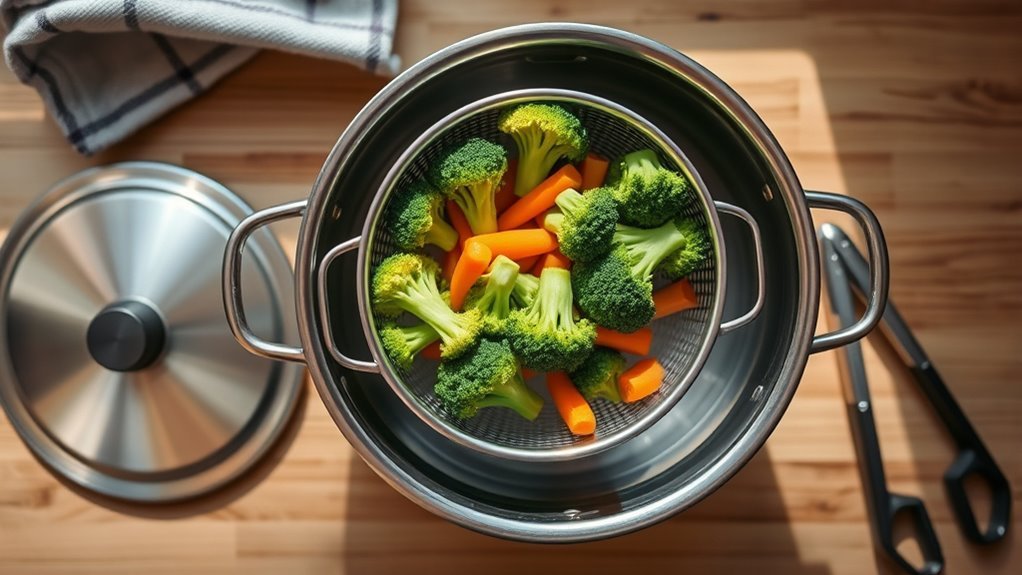
Have you ever wondered if you can create a steamer using just a pot? The truth is, it’s not only possible but also quite simple. With a few basic tools, you can achieve perfectly steamed vegetables and other dishes right at home. Discovering how to set it up effectively can transform your cooking routine. Let’s explore the steps and tips that will elevate your steaming game.
Step-By-Step Guide to Setting Up Your Steamer
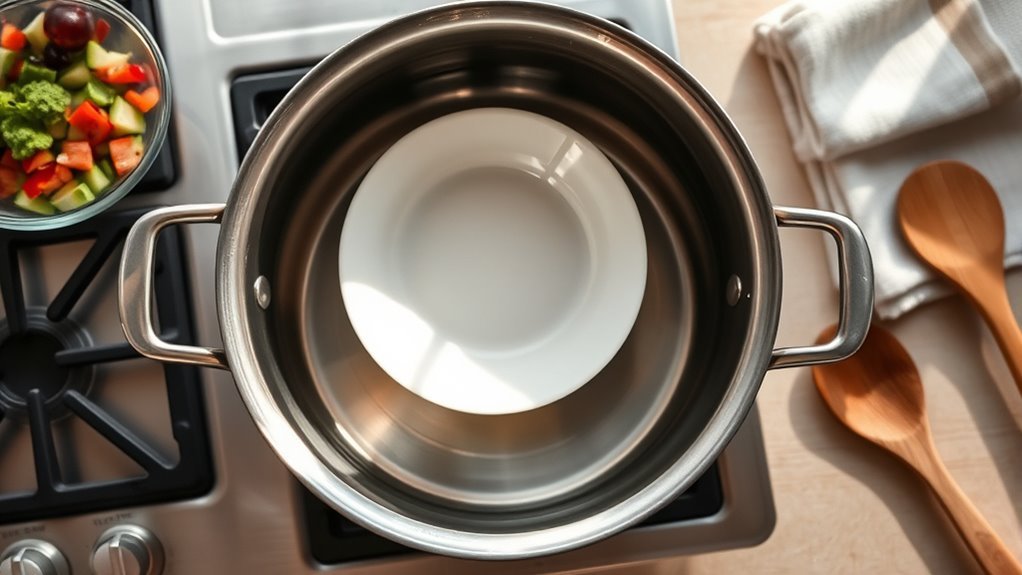
Setting up your steamer is a straightforward process that can yield delicious results, especially when you want to preserve the nutrients in your food.
Start by filling a pot with water, making certain it doesn’t touch the steamer basket or the plate you’ll use to hold the food. Next, place your heatproof plate or dedicated steamer basket snugly inside the pot, allowing steam to circulate freely.
Cover the pot tightly with a lid to trap the steam during cooking, which is vital for effective steaming.
Bring the water to a boil over medium heat, then reduce it to a simmer to maintain steady steam without boiling over.
As your food steams, check periodically for doneness and verify the water level remains sufficient to prevent it from running dry.
With this simple setup, you’re on your way to enjoying healthy, flavorful meals!
Choosing the Right Pot and Accessories for Steaming
Choosing the right pot and accessories for steaming can make all the difference in your cooking experience. Start with pot selection; opt for a pot with a tight-fitting lid to efficiently trap steam.
Make certain it’s deep enough to hold water without touching the food you’ll be steaming. Pair it with a steamer basket, preferably made of stainless steel or silicone, which sits comfortably above the water level, allowing steam to circulate freely.
Consider size carefully; your pot should snugly fit the steamer basket to minimize steam escape. Fill the pot with 1-2 inches of water—enough to generate steam without soaking your food.
Finally, guarantee proper ventilation; a lid with a steam vent will help manage pressure and prevent boil-overs. With the right pot and accessories, you’re well on your way to mastering the art of steaming!
Getting Started With Steaming Food
To get started with steaming food, you’ll need the right equipment to guarantee success.
Grab a pot with a tight-fitting lid and a snug steamer basket, then prepare your ingredients for a flavor-packed experience.
With everything in place, you’re ready to create delicious, perfectly steamed meals in no time.
Essential Steaming Equipment
When you’re ready to plunge into the world of steaming, having the right equipment makes all the difference. Start with a pot that has a tight-fitting lid; this is vital for trapping steam inside.
You’ll need a steaming basket or rack that fits snugly without touching the water—about 1-2 inches is ideal. Opt for a heat-resistant steaming basket made of stainless steel or silicone, as these materials allow steam to circulate evenly around your food.
Remember, using a lid isn’t just a suggestion; it’s essential for cooking quickly and preserving nutrients. Keep an eye on your steaming time, usually between 3 to 15 minutes, depending on what you’re cooking.
Enjoy the liberation of healthy, delicious meals!
Preparing Food for Steaming
Before you plunge into steaming, it’s essential to prepare your ingredients properly. Start by selecting fresh vegetables or proteins, like vibrant broccoli or tender chicken, and cut them into uniform pieces for even cooking.
Wash and trim everything thoroughly to eliminate dirt and pesticides, ensuring both taste and safety. Fill your pot with a few inches of water, but make sure it doesn’t touch the food when placed in a steamer basket or on a steaming rack.
Arrange your ingredients above the water level, then cover the pot tightly with a lid to trap the steam. Monitor the steaming time, typically between 3 to 15 minutes, checking for tenderness along the way.
Enjoy your liberating, healthy meal!
Essential Tips for Perfectly Steamed Vegetables
When it comes to steaming vegetables, choosing the right ones can make all the difference. Stick to fresh, vibrant options like broccoli, carrots, and snap peas for the best results.
You’ll also want to keep an eye on steaming times to guarantee each vegetable reaches that perfect tender-crisp texture without losing its color and nutrients.
Optimal Vegetable Selection
To achieve perfectly steamed vegetables, selecting the right ones is essential. Opt for vibrant, firm choices like broccoli, carrots, and green beans; they’ll retain nutrients and flavor far better than wilted options.
Cut them into uniform sizes to guarantee even cooking—smaller pieces steam faster, while larger ones may need more time. When steaming delicate leafy greens like spinach or kale, keep it brief—just 2-3 minutes—to maintain their texture and color.
Remember, ideal vegetable selection also means avoiding overcrowding in your steamer; this prevents uneven cooking. Use a timer to keep track of steaming times, which typically range from 3 to 10 minutes depending on the vegetable type and size.
Enjoy your delicious, nutrient-rich results!
Ideal Steaming Times
How do you know when your vegetables are perfectly steamed? Understanding ideal steaming times is key.
For delicate veggies like asparagus or spinach, aim for 2-4 minutes to keep their vibrant color and nutrients intact.
Root vegetables, such as carrots or potatoes, need about 8-12 minutes to soften without sacrificing flavor.
Broccoli and cauliflower florets shine at 5-7 minutes, achieving that tender-crisp texture.
Leafy greens like kale or Swiss chard wilt beautifully in just 3-5 minutes, preserving essential vitamins.
Remember, cut your vegetables into uniform sizes and avoid overcrowding the steamer basket; this guarantees even cooking.
With these tips, you’ll master the art of steaming, liberating your meals with fresh, flavorful veggies!
Common Pot Steamer Mistakes to Avoid
Even the simplest steaming technique can go awry if you’re not mindful of common pitfalls. First, always check the water level in your pot; it shouldn’t touch the steamer basket. Too much water leads to boiling instead of steaming, while too little risks burning your food.
Avoid overcrowding your steamer basket, as this hinders steam circulation, resulting in uneven cooking. Pay attention to cooking times; each vegetable has its own ideal steaming duration. Ignoring this can mean mushy veggies that lose their nutrients.
When using your Instant Pot, make certain you’ve got a tight-fitting lid; a loose lid lets steam escape, prolonging cooking time. Finally, don’t neglect to prepare your ingredients. Wash and cut vegetables into uniform sizes for best steaming results.
Delicious Recipes Using Steamed Ingredients
Steaming opens up a world of culinary possibilities, allowing you to create vibrant, flavorful dishes that are both healthy and satisfying.
Imagine a plate of tender steamed vegetables, like broccoli and carrots, bursting with nutrients and color. They’re the perfect accompaniment to a beautifully seasoned steamed fish, drizzled with lemon and herbs for a moist, flavorful bite without excess fat.
For a delightful appetizer, try steaming dumplings or buns; they’ll maintain their texture, delivering that satisfying chew.
And don’t forget about fluffy steamed rice! It pairs wonderfully with any meal, soaking up sauces and flavors.
Incorporate steamed ingredients like asparagus or zucchini into your salads for a pop of color and essential vitamins.
Each bite won’t only nourish your body but also inspire your culinary creativity. Embrace the art of steaming, and transform your meals into healthy, delicious experiences.
Frequently Asked Questions
How to Make a Steamer From a Pot?
To make a steamer from a pot, start by filling it with a little water, ensuring it doesn’t touch your chosen pot alternatives, like a heatproof plate or colander.
Fit it snugly inside, then cover with a lid to trap that precious steam. Heat it to a rolling boil, then lower to a simmer.
Steam your food until it’s done, checking regularly to keep the water level safe. Enjoy your liberating culinary creation!
What Can I Use if I Don’t Have a Steamer?
If you don’t have a steamer, don’t worry! You can explore several steam alternatives.
Did you know that over 50% of home cooks use creative methods for steaming? Place a heatproof colander over boiling water or use a microwave-safe dish with water and a lid.
You can also create a makeshift steamer with a rack in a pot or use parchment paper pouches for veggies.
Enjoy liberating your cooking with these clever techniques!
Can I Make a DIY Steamer in the Microwave?
Yes, you can make a DIY steamer in the microwave! Just fill a microwave-safe bowl with an inch of water, place an upside-down plate on top, and arrange your food on the plate.
Cover it with a microwave-safe lid, leaving a vent for steam. Microwave on high for 3-5 minutes, depending on what you’re steaming.
Remember to practice microwave safety—let it sit before opening to avoid burns. Enjoy your quick and healthy meal!
Can I Use a Plastic Strainer as a Steamer Basket?
Yes, you can use a plastic strainer as a steamer basket, but make sure it’s heat-resistant. Notably, about 65% of plastics used in kitchenware can withstand boiling temperatures if designed correctly.
Check the manufacturer’s guidelines for plastic safety to avoid melting. Position the strainer above boiling water, ensuring it doesn’t touch the water, and keep steaming times short to maintain its integrity.
Enjoy the liberation of creating your own DIY steaming solution!
Conclusion
Now that you’ve transformed your pot into a steamer, you’re ready to reveal a world of vibrant, perfectly cooked dishes. Picture lush green vegetables, their colors bursting like a painter’s palette, retaining all their nutrients and flavor. With a little practice, you’ll master the art of steaming, turning your kitchen into a culinary haven. So, gather your ingredients, embrace the steam, and watch your meals come alive, as if kissed by a gentle cloud of flavor.
