
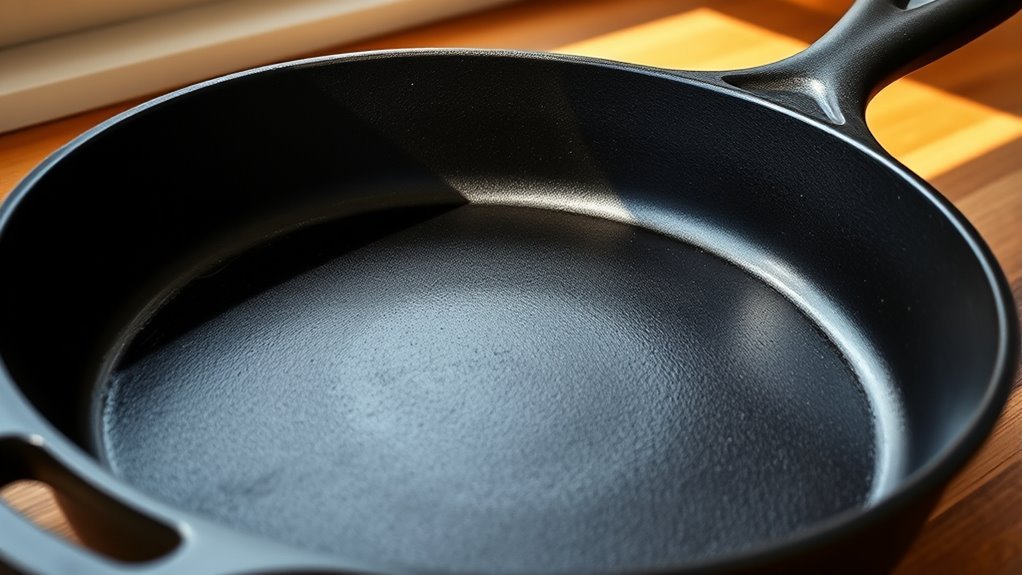
When I lifted an old skillet at a flea market, its firm heft felt like a promise—4.5 pounds of history and use—so you’ll know right away whether it’s genuine. You want smooth, glossy cooking surfaces, crisp bottom markings, an intact handle, and no deep pitting or cracks; those details tell you how well it’s been cared for and whether it’ll cook evenly. Keep going—there’s more to spot that separates a keeper from a throwaway.
Who This Guide Helps: And a Quick Checklist
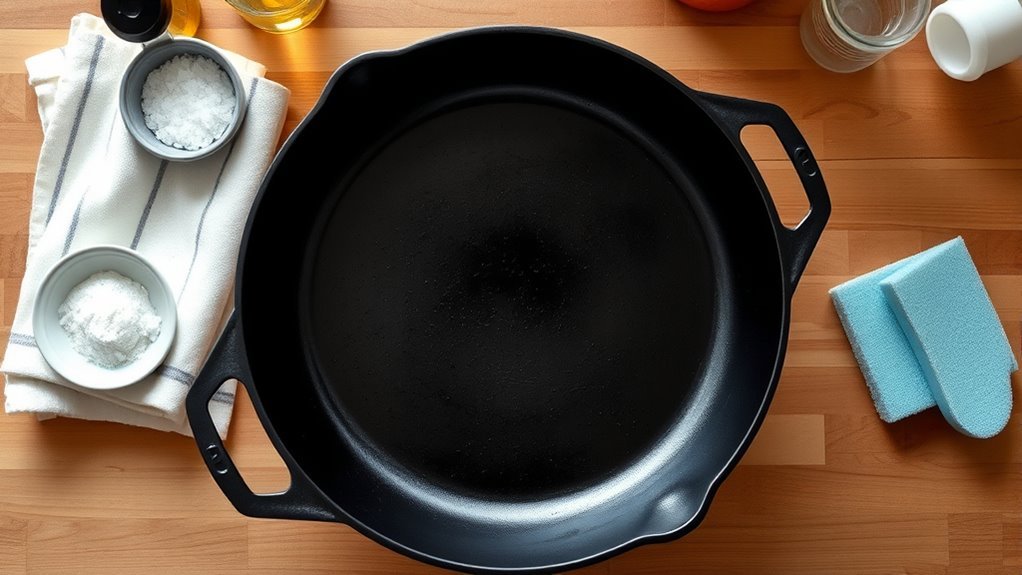
Whether you’re just getting into cast iron or you’ve been collecting for years, this guide helps you quickly separate authentic Griswold and Wagner pieces from imitations. You’ll find this useful whether you want dependable cookware or the freedom to trust your collection.
Start by inspecting casting quality: authentic pieces show smooth surfaces, crisp lettering, and precise handle designs—traits that set genuine cast iron skillets and an old Griswold apart from crude copies.
Inspect casting first—look for smooth surfaces, crisp lettering, and precise handle shapes that signal authenticity.
Check for misspellings, pockmarks, or lumpy casting; those are red flags. Weigh the pan—genuine items often feel heavier because of superior metal.
Use close-up photos of the bottom and logo to compare details, and make sure you clean the piece gently before judging marks.
Keep a mental checklist: smooth casting, clear logo, correct handle shape, correct weight, and no spelling errors. That checklist frees you to buy with confidence and restore authentic pieces responsibly.
How a Well‑Maintained Cast Iron Skillet Should Look and Feel
When you pick up a well‑maintained cast iron skillet you’ll notice a solid, even weight that promises steady heat retention.
Run your hand across the cooking surface and it should be smooth and free of pits, with a dark, glossy seasoning that speaks to regular care and enhances nonstick performance.
Check the handle and markings: they should be crisp and intact, with no rust or flaking to mar the pan’s appearance or function.
Smooth, Glossy Seasoning
Although it’s been used for years, your cast iron should look almost mirror-dark and feel slick to the touch, a sign that many thin layers of oil have been polymerized into a durable, nonstick coating. You’ll recognize a well-seasoned skillet by its smooth, glossy surface, even patina, and absence of rust or flaking. It feels slightly oily — not sticky — because layers of polymerized oil protect the metal and improve with use. This finish frees you from fear of food sticking and rust returning; it’s maintenance as empowerment. Use gentle cleaning, dry thoroughly, and apply light oil to preserve that shine. Small signs of wear add character without compromising performance.
| Appearance | Feel | Maintenance |
|---|---|---|
| Dark, even | Slightly oily, slick | Light oil after use |
| Glossy patina | Smooth under fingers | Gentle cleaning |
| No rust/flaking | Durable surface | Regular use |
Solid, Even Weight
Weight matters: pick up a well‑maintained 10‑inch cast iron and you’ll feel a solid, evenly distributed heft—typically 4 to 6 pounds—that promises stability on the stovetop and even heat across the cooking surface.
You want an object that resists flimsy compromise; that solid, even weight tells you the metal’s thick enough to hold temperature and deliver predictable results.
Look for a smooth, pitted‑free interior and clean, uniform edges—signs of craftsmanship and proper seasoning. A subtle gloss proves layers of seasoning have bonded, improving release and resilience.
Trust your hands and your appetite for freedom: choose cookware that empowers your cooking.
- Check heft: 4–6 lbs ideal
- Inspect surface: smooth, no pits
- Confirm edges: uniform, clean
What Bottom Markings and Logos Reveal About Authenticity
Turn the skillet over and study the bottom: a sharp, well-defined logo and crisp lettering usually mean a genuine piece from makers like Griswold or Wagner.
Check for correct model numbers and clean spelling—odd characters or typos are classic red flags of a fake.
Also note the casting quality and weight; a smooth, even base and solid heft line up with authentic manufacturing standards.
Logo Sharpness And Detail
When you flip a cast iron skillet over, study the logo and bottom markings closely—those sharp, raised letters and crisp numbers tell you more than the pan’s surface finish alone. You want logo sharpness that reads like intent: clean edges, no misspellings, and a smooth field around raised or engraved marks. That precision signals real craft and resists cheap cloning.
- Look for raised or engraved logos with uniform depth and crisp lines.
- Note smooth, even casting around marks—irregular lumps often mean a fake.
- Learn brand-specific traits (Griswold’s distinctive script, for example) to spot authenticity.
With cast iron cookware, clear logos free you from doubt and connect you to honest workmanship.
Correct Model And Numbers
How can the numbers and model stamps on a skillet’s bottom tell you it’s genuine? You learn to read them like a map: crisp model numbers, clear foundry names and locations anchor a piece in time and place, asserting authenticity.
When you spot a common size stamp — say #6 — it reveals production era and helps value the skillet. Smooth, even bases paired with well-defined stamps signal skilled casting; lumpy bottoms or blurred imprints raise alarms.
Details matter: precise logos and correct wording confirm provenance for brands like Griswold and Wagner. You deserve tools that free you from doubt, so use those bottom markings to claim confidence — they’re proof, history, and liberation in iron.
Casting Quality And Spelling
Look closely: the texture and lettering on a skillet’s underside tell you more than its age—they tell you if it’s genuine. You’ll judge casting quality by feel and sight: authentic pieces like Griswold have smooth, even surfaces without lumps, and their logos are crisp.
Misspellings or blurred letters mean a counterfeit. Handle shape and heavier weight further confirm authenticity. Know what to look for and you’ll free yourself from doubt.
- Inspect the underside: even casting, clear lettering, and detailed logos.
- Verify handle design and heft: genuine patterns and solid weight resist imitation.
- Reject misspellings and sloppy marks: they’re the clearest evidence of fakes.
Trust precise inspection to reclaim confident collecting.
Common Red Flags: Fakes, Structural Damage, and Bad Restorations
Why would you pay for an heirloom and end up with a poorly made replica? You deserve tools that liberate your kitchen, not fakes, structural damage hiding behind polished surfaces.
Inspect casting: lumpy, rough pours, blurred logos, or misspelled names signal counterfeit or shoddy manufacture. Seek crisp, well-defined markings and handle designs true to the brand; generic handles often betray impostors.
Turn the skillet over and scan for cracks, deep pitting, or flaking rust—these are structural damage that undermines strength and safety.
Poor restorations mask defects: overly aggressive grinding, uneven surfaces, or fresh welding seams destroy provenance and performance. Don’t be persuaded by glossy coatings that hide underlying problems.
Trust your eyes and touch: authentic pieces feel substantial, details are deliberate, and repairs are honest.
Walk away from anything that forces you to compromise durability or heritage; freedom in the kitchen starts with choosing cookware that respects both form and function.
Quick Checks to See If a Cast Iron Skillet Is Usable: Weight, Flatness, Seasoning
Start by hefting the skillet in your hands—authentic cast iron feels dense and steady, not lightweight or tinny—and trust that weight as a quick indicator of quality. You want a piece that communicates solidity; lighter castings or hollow-feeling pans suggest inferior material or fakes.
Next, run through these fast checks to confirm usability:
- Check weight and balance: it should feel substantial and sit evenly in your palm—imbalance can signal poor casting or hidden damage.
- Inspect the bottom for flatness: place it on a level surface; a warped base means uneven heat and frustrating cooking.
- Examine seasoning and surface integrity: a smooth, dark patina shows care and readiness to cook; watch for cracks, chips, lumps, or rough spots that betray neglect or poor casting.
These steps free you to choose a skillet that’s honest, durable, and ready to serve—no compromise between function and empowerment.
Fast Restoration and Care Steps to Preserve Function and Value
Now that you’ve confirmed a skillet’s weight, flatness, and seasoning, you can move quickly into restoration and routine care to preserve its function and value.
First, thoroughly clean the cast iron with hot soapy water and a stiff scrub brush to remove dust, factory residue, or loose rust so you can honestly assess the metal.
Dry immediately—don’t risk moisture—and inspect for cracks or chips; structural damage changes safety and use.
If the surface is sound, apply a thin layer of oil and bake the skillet upside down at 375°F for one hour to rebuild a resilient seasoning layer.
Let it cool in the oven, then repeat short seasoning cycles if you want extra protection.
Lean on community knowledge and expert advice—especially for Griswold pieces—so your approach matches the skillet’s history.
These quick, deliberate steps keep the pan reliable, enhance its cooking life, and let you reclaim kitchen freedom without sacrificing value.
What It’s Worth and Where to Buy Authentic Cast Iron Skillets Safely
How much a cast iron skillet is worth depends on its brand, condition, and provenance, so you’ll want to assess each piece carefully before buying or selling. Vintage Griswold or Wagner pans in good shape often fetch $80–$200; rarity and markings push value higher. You’ll protect your purchase and financial freedom by buying from trustworthy sources and knowing how to spot fakes.
- Shop trusted retailers (Walmart, Amazon, Lodge Outlet) for guaranteed authenticity and new pieces.
- Hunt estate sales, garage sales, thrift stores for bargains—inspect for maker’s marks, cracks, and excessive pitting.
- Use eBay cautiously: vet seller feedback and request detailed photos before bidding.
Join forums and community groups to learn market trends and identification tips; that knowledge frees you from overpaying.
Whether you’re buying to cook, collect, or resell, deliberate inspection and smart sourcing keep value and integrity intact.
Frequently Asked Questions
Is Cast Iron Supposed to Be Smooth or Rough?
Smooth is ideal, though some gentle texture’s normal. You’ll want a cast iron texture that’s even and free of deep pits or lumps so seasoning bonds and cooking’s consistent.
With skillet maintenance—regular seasoning, wiping, and occasional scrubbing—you’ll refine the surface, improve nonstick performance, and extend life.
Treat the pan as a tool for freedom in the kitchen: keep it cared-for, restore it when needed, and it’ll serve you well.
Should My Cast Iron Be Black When I Wipe It?
Yes — when you wipe your cast iron, a slight black residue shows the seasoning process worked and the pan’s liberated non-stick layer.
If wiping leaves heavy flakes or thick gunk, you’ve over-seasoned or neglected maintenance; strip and re-season.
Use gentle scrubbing, dry thoroughly, and oil lightly after use.
With regular care and these maintenance tips, your skillet will darken beautifully and free you from sticky, restrictive cooking.
When to Throw Away a Cast Iron Skillet?
About 20% of old cookware shows irreversible damage, so throw away a skillet when it’s extensively rusted, cracked, warped, or pitted.
You’ll know it’s beyond repair if deep scratches, persistent metallic smells, or structural failure resist skillet maintenance and rust prevention.
Don’t cling to unsafe gear; replacing it frees you for better cooking.
Maintain liberation: invest in a sound skillet, practice seasoning, and treat replacement as progress, not loss.
What Ruins a Cast Iron Skillet?
What ruins a cast iron skillet? Moisture and neglect cause rust, thermal shock or drops create cracks and chips, and poor seasoning techniques leave a sticky, vulnerable surface.
You’ll also damage seasoning by cooking acidic foods in an unseasoned pan or scraping with metal utensils.
Practice rust prevention, regular seasoning techniques, gentle handling and mindful cooking so you reclaim kitchen freedom and keep your skillet durable, nonstick, and ready for bold meals.
Conclusion
You’ve learned what a genuine cast iron skillet looks and feels like, yet you’ll still find yourself swooning over shiny reproductions and online bargains. Ironically, the truest sign of quality isn’t a pristine logo or perfect heft but the worn, glossy patina earned through use — the very thing bargain hunters often dismiss as “imperfect.” Keep that in mind: care and time create value, so choose wisely, tend patiently, and cook like you mean it.
