When it comes to cleaning pots and pans, you might wonder if the dishwasher is a safe option. While some cookware can withstand a cycle in the machine, others can suffer damage or lose their effectiveness. Knowing which materials are dishwasher safe and which aren’t is key to maintaining your kitchen essentials. Curious about how to protect your investment and what to avoid? Let’s break down the details.
What Does “Dishwasher Safe” Mean for Pots and Pans?
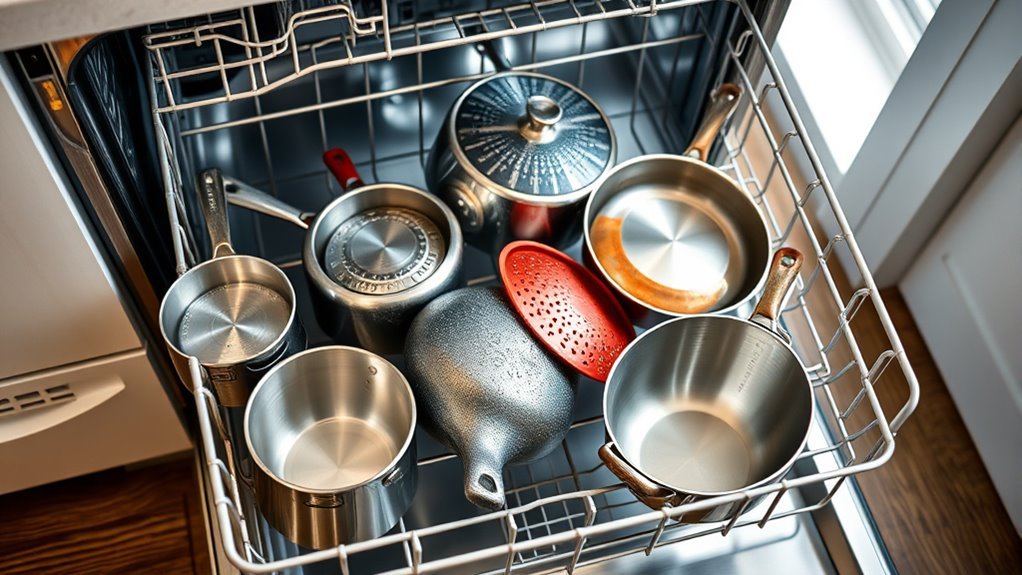
When it comes to pots and pans, “dishwasher safe” means they can withstand the high temperatures, powerful water sprays, and strong detergents used in dishwashers without sustaining damage.
Common materials that are dishwasher safe include stoneware, glass, anodized aluminum, and certain types of stainless steel.
However, it’s essential to remember that not all cookware fits this category. Items labeled as not dishwasher safe, like non-stick cookware, copper pans, and cast iron, should be hand washed to avoid damage.
Not all cookware is dishwasher safe; hand wash non-stick, copper, and cast iron to prevent damage.
To protect your dishwasher-safe items further, consider using short wash cycles and low heat drying.
Always check for a “dishwasher safe” label before tossing your cookware in the machine. This simple step can save you from costly mistakes and help maintain your kitchen arsenal, allowing you to embrace the freedom that comes with easier clean-up.
Which Pots and Pans Are Safe to Wash in the Dishwasher?
How can you guarantee your pots and pans survive the dishwasher? Start with stainless steel cookware, as it usually withstands dishwasher cycles without issue.
Next, anodized aluminum is also safe thanks to its protective coating, making it resistant to chemicals and high heat.
Ceramic pots and pans are fine too, provided they’re not hand-painted or embellished, which can get damaged in the wash.
Glass cookware typically handles the dishwasher well, though be aware it might develop etching or white patches over time.
Finally, if you have non-stick Teflon pots and pans, make sure they’re labeled as dishwasher safe and check care instructions for longevity.
Always Hand Wash These Types of Cookware
Certain types of cookware require hand washing to guarantee their longevity and maintain their quality.
Non-stick cookware, for instance, should always be hand washed to avoid ruining the fragile finish, which can degrade in the dishwasher.
Cast iron pans, known for their seasoning, are prone to rust and need gentle hand washing to preserve their integrity.
Copper pans can become dull and scratched from high-pressure dishwasher cycles, so opting for hand washing is the safer choice.
Additionally, non-anodized aluminum is susceptible to reactions with dishwasher detergents, leading to pitting if not carefully hand washed.
Finally, hand-painted ceramic items may lose their decorative elements in the dishwasher, making hand cleaning essential to keep them looking beautiful.
How to Properly Hand Wash Your Pots and Pans
Hand washing your pots and pans is essential for keeping them in prime condition and extending their lifespan. Start by scraping off any food residue to prevent clogging your sink and guaranteeing effective cleaning.
Next, fill your sink with hot, soapy water, using a gentle dish soap. Grab a non-abrasive sponge and scrub each item thoroughly, focusing on any stuck-on food.
Once cleaned, rinse each pot and pan under hot running water to eliminate all soap suds, ensuring no residue affects your future cooking.
After rinsing, dry your cookware immediately with a clean towel or let it air dry. This helps prevent water spots and maintains the integrity of the materials.
For best care, avoid soaking your pots and pans for extended periods; it can lead to potential damage.
Best Practices for Cleaning Various Cookware Materials in the Dishwasher
Once you’ve mastered hand washing your pots and pans, it’s time to contemplate the convenience of using your dishwasher for various cookware materials. Certain pans can go in without worry.
Anodized aluminum and stainless steel are generally safe, handling high heat and detergents well. Ceramic cookware is also dishwasher-friendly, provided it’s not hand-painted or embellished, as these details might be compromised.
Glass cookware typically withstands the dishwasher, but be cautious of harsh detergents that can cause etching.
Non-stick pans should be hand washed to maintain their delicate finishes, while cast iron and copper cookware should also remain out of the dishwasher to prevent rust and damage.
Common Mistakes When Using the Dishwasher for Cookware?
While using a dishwasher can save you time, it’s easy to make mistakes that could damage your cookware. First, don’t assume all pots and pans can go in the dishwasher. Always check for a ‘dishwasher safe’ label, especially on non-stick and delicate materials like copper or non-anodized aluminum.
Using a dishwasher can save time, but always check for a ‘dishwasher safe’ label to protect your cookware.
Overloading the dishwasher is another common pitfall; it prevents proper cleaning and can lead to residue buildup.
Make certain to rinse off any solid food scraps before loading—this helps avoid clogs and guarantees peak performance.
Also, keep an eye on the detergents you use. Harsh soaps can etch or discolor your glass and ceramic items.
Frequently Asked Questions
What Are 8 Things I Should Never Put in the Dishwasher?
You should never put non-stick cookware, cast iron, or stainless steel pots and pans in the dishwasher. They can lose their finish or rust.
Avoid plastic materials that aren’t heat resistant, as they might warp or melt.
Glass dishes can break, while ceramic items may chip.
Always check care instructions before washing, and hand wash these items to maintain their quality and longevity.
Your kitchen tools deserve the best care possible!
How Do You Know if a Pan Is Dishwasher Safe?
Knowing if a pan’s dishwasher safe is like holding a treasure map—look for the dishwasher labels! These labels indicate it’s built to handle the heat and detergents.
Generally, materials like anodized aluminum and stainless steel are safe, while glass can risk etching. Non-stick pans and copper cookware are best kept out.
If you’re ever unsure, check the manufacturer’s guidelines or choose the handwashing route to keep your cookware shining bright!
What Pans Cannot Go in the Dishwasher?
You shouldn’t put non-stick coatings, cast iron, or copper pans in the dishwasher. Non-stick surfaces can get damaged, while cast iron can rust and lose its seasoning.
Copper pans might dull and scratch. Additionally, avoid washing non-anodized aluminum, as it can react poorly with detergents.
Hand washing these items keeps them in top condition, so you can enjoy cooking with them for years to come. Always prioritize their care!
Can I Wash Pots and Pans in the Dishwasher?
Yes, you can wash many pots and pans in the dishwasher, as long as they’re made from dishwasher-safe materials like stainless steel or anodized aluminum.
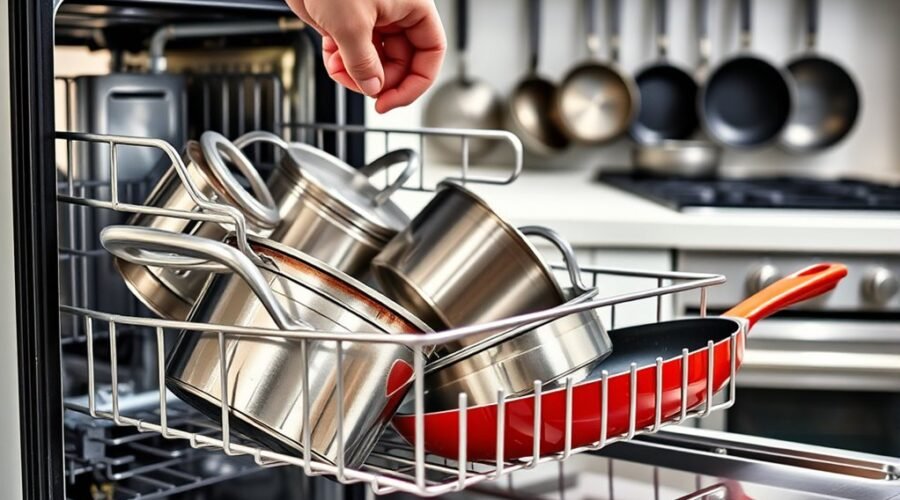
For effective pot cleaning, place them on their side or with the mess-side down on the bottom rack.
Avoid non-stick and cast iron cookware, as they can be damaged.
Always check for a ‘dishwasher safe’ label to verify you’re making the right choice for your cookware.
Conclusion
In the world of cookware, knowing what goes in the dishwasher is like traversing a maze. Stainless steel and anodized aluminum can dance through the cycles, while non-stick and cast iron need gentle hand washing. Keep an eye out for “dishwasher safe” labels, and don’t overload the machine to guarantee every piece gets its moment in the spotlight. By understanding these care tips, you’ll not only protect your pots and pans but also keep them shining like new for years to come.