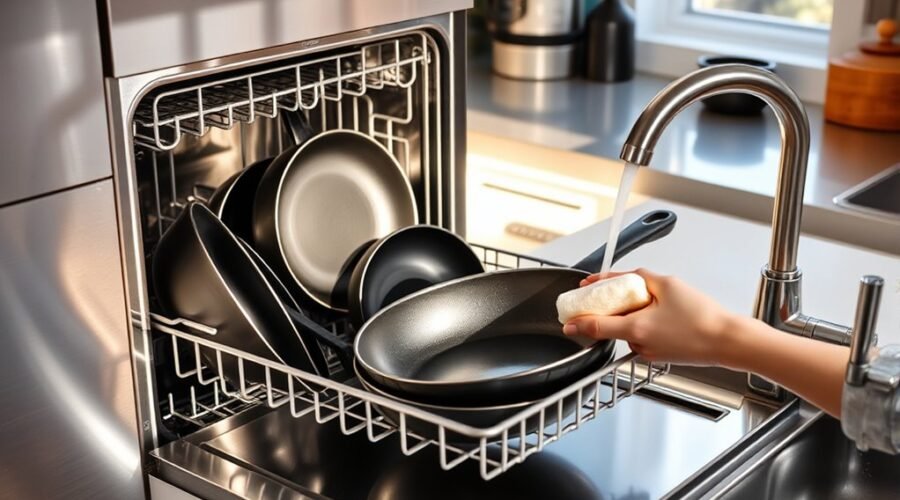
When it comes to cleaning nonstick cookware, you might wonder if the dishwasher is a viable option. While it seems convenient, using a dishwasher can actually harm the nonstick coating over time. High temperatures and harsh detergents can lead to deterioration, affecting performance. So, what’s the best way to care for your nonstick pans? Understanding the proper cleaning methods can greatly extend their lifespan and maintain their effectiveness. Let’s explore those methods next.
Why Hand Washing Nonstick Cookware Is Recommended
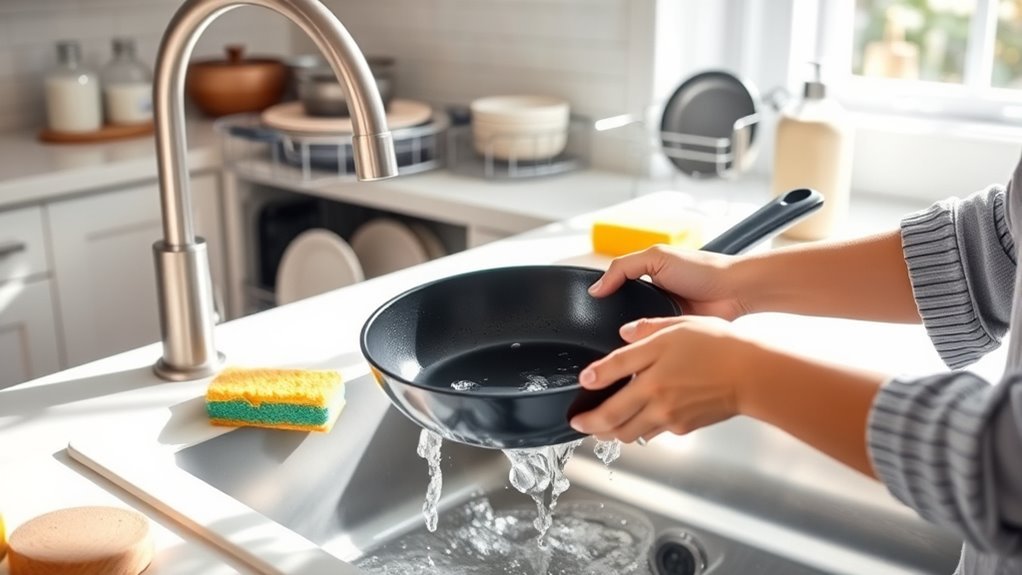
When you choose to hand wash your nonstick cookware, you’re not just being cautious; you’re actively preserving its lifespan and performance.
Dishwashers expose your pans to harsh conditions, leading to flaking and a compromised nonstick surface. Hand washing with mild soap and a soft sponge safeguards the integrity of the coating, ensuring your cookware remains effective.
Using abrasive cleaners or scouring pads can scratch the nonstick surface, diminishing its functionality over time.
High temperatures and strong detergents in dishwashers accelerate deterioration, making hand washing the safer option.
Signs Your Nonstick Cookware Needs Replacement
As you cook, keep an eye out for signs that your nonstick cookware needs replacement.
If you notice scratches, food sticking, or persistent discoloration, it’s time to contemplate investing in new pieces.
Ignoring these issues can affect both your cooking experience and food safety.
Scratched Nonstick Surface
Inspecting your nonstick cookware regularly can save you from culinary headaches down the line. A scratched nonstick surface can lead to food sticking, making cooking and cleanup a hassle.
Look for visible scratches, as they indicate wear that can compromise the effectiveness of your nonstick pans. If you notice flaking or peeling, it’s a clear sign to replace your cookware to avoid ingesting harmful particles.
Frequent use of metal utensils can exacerbate this damage, so stick to gentler options. To prolong the life of your nonstick cookware, always follow the manufacturers instructions and avoid the dishwasher unless specified.
Keeping these tips in mind will guarantee your cooking remains smooth and enjoyable.
2. Food Sticking Issues
A scratched nonstick surface can lead to more than just minor cooking inconveniences; if you find that food consistently sticks to your pans, it’s a sign that the nonstick coating is deteriorating.
Scratches or visible wear on the cooking surface can compromise its effectiveness, making food adhesion more likely. If you’re struggling with stubborn residues that won’t budge even after a thorough cleaning, your cookware has likely lost its integrity.
Additionally, if you notice flaking or peeling, it’s essential to replace your nonstick cookware for both safety and performance.
3. Discoloration and Flaking
Discoloration and flaking on your nonstick cookware are clear signs that it’s time for a replacement. These issues can impact your cooking performance and pose health risks. If you notice any discoloration, it likely means the nonstick coating is breaking down. Flaking can result in harmful particles mixing with your food.
| Sign of Wear | Recommended Action |
|---|---|
| Discoloration | Replace cookware |
| Flaking/Peeling | Replace cookware |
| Reduced food release | Consider replacing soon |
| Sticking/Burning | Time for a new pan |
Continuous exposure to high temperatures and harsh detergents can accelerate this deterioration. For safe cooking and peak performance, don’t ignore these warning signs!
What You Should Know About Nonstick Coatings
Understanding nonstick coatings is essential for maintaining your cookware’s performance and longevity. Nonstick cookware is designed to make cooking easier, but it requires care to guarantee it lasts.
If the manufacturer doesn’t explicitly state that your cookware is dishwasher safe, stick to hand washing. Dishwashers can expose your pans to high temperatures and harsh detergents, leading to flaking and a decline in cooking performance.
To protect your nonstick finish, opt for gentle cleaning methods. Avoid abrasive sponges and harsh chemicals that can worsen wear and tear. Regular hand washing with mild soap and warm water is your best bet for extending the lifespan of your nonstick cookware.
How to Properly Clean Nonstick Pans by Hand
When it comes to cleaning your nonstick pans by hand, using the right tools and techniques is key.
Stick to soft sponges and warm, soapy water to protect that delicate coating.
Don’t forget to air dry your pans completely to keep them in top shape for your next cooking adventure.
Recommended Cleaning Tools
Cleaning nonstick pans requires just a few essential tools to keep them in top shape.
Start with soft sponges or cloths, steering clear of abrasive scrubbers that can scratch the nonstick surface. Warm, soapy water effectively removes food residues without damaging the coating.
Rinse the pan thoroughly after washing to eliminate soap residue, which can impact the nonstick performance. For tough stains, soak the pan in warm, soapy water for a short period before gently scrubbing.
Finally, always dry the pan completely after washing to prevent moisture from affecting the nonstick finish.
Gentle Cleaning Techniques
Maintaining your nonstick pans involves more than just the right tools; it requires gentle cleaning techniques to preserve their longevity and performance.
Start by using a soft sponge or dishcloth with warm, soapy water to clean the surface. Avoid abrasive scrubbers that can damage the nonstick coating.
If you encounter stubborn residue, soak the pan in warm, soapy water for a few minutes before gently scrubbing. Rinse thoroughly with warm water to guarantee all soap residue is removed, as it can hinder nonstick performance.
Also, steer clear of cooking sprays that leave sticky residues.
After washing, always dry your nonstick pans immediately with a soft towel to prevent moisture build-up and potential damage.
Drying and Storage Tips
After washing your nonstick pans, proper drying and storage are essential to keep them in top shape.
Follow these drying and storage tips to maintain your nonstick surface:
- Use a soft towel to gently dry the pan, preventing water spots and preserving its appearance.
- Avoid abrasive cleaners and scouring pads, which can damage the nonstick finish.
- Stack your pans with a soft cloth or paper towel in between to protect the surface from scratches.
- Store in a cool, dry place to avoid moisture buildup, which can affect the nonstick coating.
Why HexClad Is Dishwasher-Safe?
HexClad cookware stands out as a dishwasher-safe option thanks to its innovative design and materials. Its scratch-resistant surface, created through a unique etching process, guarantees it can handle the challenges of a dishwasher without damage. The triple-clad technology assures durability and even heat distribution, making it perfect for your cleaning needs.
| Feature | Description | Benefit |
|---|---|---|
| Scratch-Resistant Surface | Unique etching process protects against wear | Maintains appearance |
| Triple-Clad Technology | Guarantees even heat distribution | Enhances cooking performance |
| Japanese Diamond Coating | Resistant to harsh dishwasher detergents | Preserves nonstick properties |
Unlike many traditional nonstick pans, HexClad cookware is engineered to retain its integrity and nonstick properties even after repeated dishwasher cycles. So, you can enjoy the freedom of easy cleanup without sacrificing quality!
Debunking Nonstick Cookware Myths
Many people believe nonstick cookware can handle the rigors of a dishwasher, but that’s not always true. Using the dishwasher can harm your pans if you ignore the care instructions.
Here are some common myths to debunk:
- Dishwasher-Safe: Nonstick cookware is only dishwasher safe if specified; otherwise, you risk damaging the coating.
- Frequent Use: Regularly washing in the dishwasher leads to flaking, diminishing cooking performance.
- Heat & Detergents: High heat and harsh detergents can break down the nonstick surface, shortening its lifespan.
- Hand Washing: To keep your cookware in top shape, hand wash with mild soap and a soft sponge.
Alternatives to Nonstick Cookware for Dishwasher Use
If you’re looking for alternatives to nonstick cookware that can handle the rigors of the dishwasher, you’re in luck.
Stainless steel cookware stands out as a durable, dishwasher-safe option. It resists warping and keeps its sleek appearance over time, providing a reliable cooking surface.
While cast iron skillets aren’t dishwasher-safe, their seasoned surfaces offer excellent nonstick properties without harsh chemicals.
If you prefer something that’s dishwasher-friendly, consider ceramic cookware, which provides a nonstick surface without harmful substances.
For a modern twist, try HexClad cookware; its hybrid design features a scratch-resistant surface and is also dishwasher-safe.
Although anodized aluminum cookware isn’t recommended for the dishwasher, it still offers a durable, nonstick surface for your culinary adventures.
Embrace these alternatives, and enjoy the ease of cleanup without sacrificing quality!
Frequently Asked Questions
Can I Put Nonstick Pans in the Dishwasher?
You shouldn’t put nonstick pans in the dishwasher unless the manufacturer says it’s dishwasher safe. Doing so can harm nonstick durability, leading to flaking and reduced cooking performance.
Hand washing is your best bet for longevity, as it protects the coating from harsh detergents and high temperatures. Always use a soft sponge to clean your pans carefully.
Taking these steps guarantees you keep your nonstick cookware in top shape for better meals.
What Is the Best Way to Clean a Non-Stick Pan?
To clean a nonstick pan effectively, hand wash it with warm, soapy water using a soft sponge.
Did you know that proper nonstick maintenance can extend the lifespan of your cookware by up to 50%?
Avoid abrasive cleaners and let the pan cool before washing to prevent warping.
After cleaning, consider applying a small amount of cooking oil to restore the coating’s effectiveness and keep your pans in top shape.
What Pans Cannot Go in the Dishwasher?
You shouldn’t put aluminum cookware or pans with ceramic coatings in the dishwasher. The harsh detergents and high heat can cause aluminum to stain and lose its finish, while ceramic coatings may deteriorate over time.
Additionally, cast iron pans and hollow-handled knives also don’t belong in there, as they can be damaged or lose their effectiveness.
Stick to hand washing for these items to keep them in great shape.
How Do You Know if a Pan Is Dishwasher Safe?
To know if a pan’s dishwasher safe, check for the magical “dishwasher safe” label, or consult the manufacturer’s wisdom.
If it’s a nonstick marvel, tread carefully; harsh detergents can be its nemesis. Think of it as a fragile diva—handle with care!
If you’re unsure, embrace the liberation of hand washing to preserve its glory, because who wants to risk a nonstick meltdown in the dishwasher?
Your cookware deserves better, doesn’t it?
Conclusion
To summarize, while it might be tempting to toss your nonstick cookware in the dishwasher for convenience, hand washing is the best way to guarantee its longevity. You might think washing by hand takes too much time, but just a few minutes with mild soap and a soft sponge can save you from costly replacements down the line. By taking these simple steps, you’ll maintain your cookware’s nonstick performance and enjoy delicious meals for years to come.