The six best bottle filling stations for offices in 2027 focus on convenience, hygiene, and lower waste. Models from Elkay, Oasis, and Global Industrial stand out for touchless use, durable builds, and built-in filtration. Some offer ADA compliance and refrigerated water, while others suit tighter spaces or outdoor settings. Yet the real difference often comes down to a few details that are easy to overlook at first.
Elkay ezH2O Bottle Filling Station & ADA Cooler
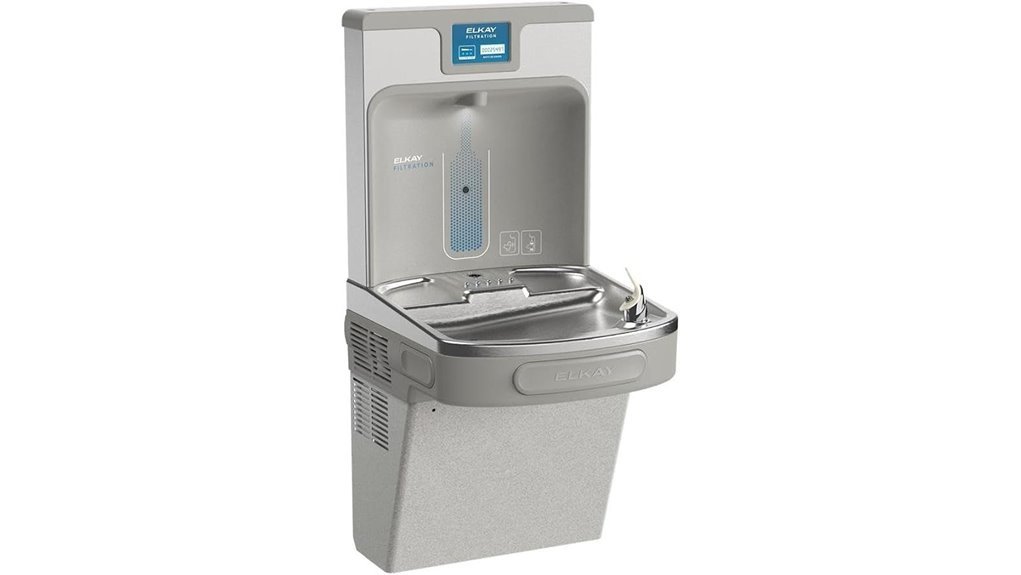
The Elkay LZS8WSLK ezH2O Bottle Filling Station & Single ADA Cooler is a strong choice for offices that want a space-saving, wall-mounted unit with both a touchless bottle filler and a traditional bubbler in one compact design. Its refrigerated, hermetically sealed system delivers chilled water, while the 1.1 GPM laminar flow supports clean refills. A real drain helps prevent standing water, and the LED indicator with Fillsafe recognition simplifies filter changes. The 3,000-gallon filter is NSF 42 and 53 certified, supporting better water quality and reduced plastic waste.
Best For: Offices, schools, and commercial spaces that need a space-saving, wall-mounted water cooler with both a touchless bottle filler and a traditional bubbler.
Pros:
- Combines a bottle filling station and ADA cooler in one compact unit to save space.
- Touchless sensor operation and 1.1 GPM laminar flow make refills clean and convenient.
- Filter monitoring and NSF 42/53 certified filtration help support better water quality.
Cons:
- Wall-mounted installation may require more setup than a standard plug-in dispenser.
- At 74 pounds, the unit is relatively heavy and may be harder to install.
- Higher upfront cost and maintenance compared with simpler non-refrigerated water dispensers.
Elkay Filtered Bi-Level Fountain & Bottle Filler
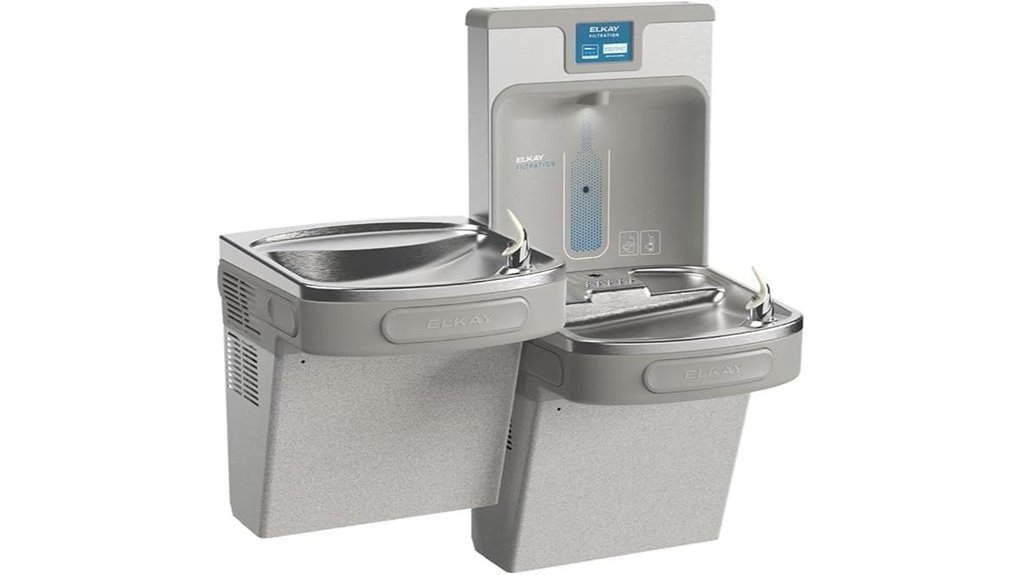
Ideal for busy offices seeking hygienic, ADA-compliant hydration, the Elkay LZSTL8WSLK stands out with touchless bottle filling and a push-bar bubbler. Its bi-level, wall-mount design saves space while serving users efficiently. Chilled water dispenses at 1.1 GPM through laminar flow, helping guarantee a clean fill. A real drain system prevents standing water, and the LED filter monitor tracks status through fillsafe recognition. Certified NSF 42 and 53, the 3,000-gallon filter reduces lead, chlorine, taste, odor, and particulates. Light gray steel, stainless steel, and ABS construction supports durability and sustainability.
Best For: Busy offices, schools, and commercial spaces that need a hygienic, ADA-compliant, space-saving hydration station with filtered chilled water and touchless bottle filling.
Pros:
- Touchless bottle filler improves hygiene and convenience.
- NSF 42 and 53 certified filtration reduces lead, chlorine, taste, odor, and particulates.
- Bi-level, wall-mount design is space-efficient and ADA compliant.
Cons:
- Requires 120V power and professional wall-mount installation.
- Higher upfront cost and maintenance than a basic fountain.
- 87-pound unit may be difficult to handle during installation.
Elkay ezH2O Bottle Filling Station, Refrigerated Stainless Steel
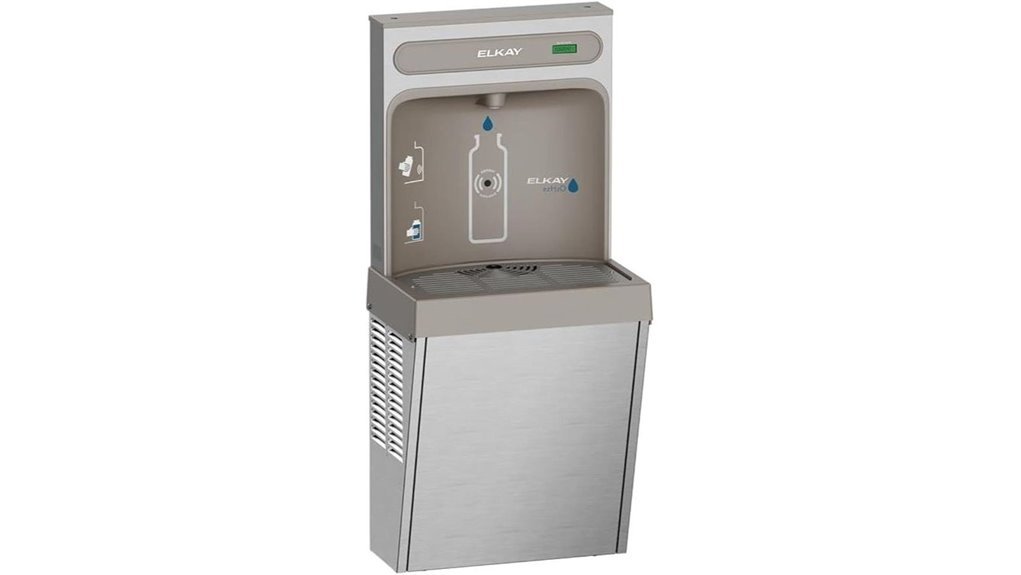
With touchless, sensor-activated filling and chilled water, Elkay’s ezH2O suits busy offices prioritizing hygiene. The EZ8WSSSMC refrigerated surface-mount unit delivers up to 8 gallons per hour through a hermetically sealed cooling system, while the 20-second automatic shut-off helps limit waste. Its stainless steel body, hands-free grate, and removable parts support easier cleaning. The wall-mounted design and reduced 12-inch projection make it practical where space is tight. At 60 watts and corded electric power, it offers a sustainable alternative to disposable bottles in compact workplace settings.
Best For: Busy offices, schools, and compact workplace settings that need a touchless, refrigerated bottle filling station for hygienic, space-saving water access.
Pros:
- Touchless, sensor-activated operation with a 20-second automatic shut-off for better hygiene and reduced water waste
- Refrigerated system delivers up to 8 gallons per hour of chilled water
- Stainless steel construction with a reduced 12-inch projection makes it durable and suitable for tight spaces
Cons:
- Requires corded electric power, so installation must be near an electrical source
- Wall-mount setup may not suit all spaces or retrofit situations
- Manufacturer warranty details are not clearly listed and may require contacting customer service
Oasis VersaCooler Wall-Mount Water Fountain with Bottle Filler
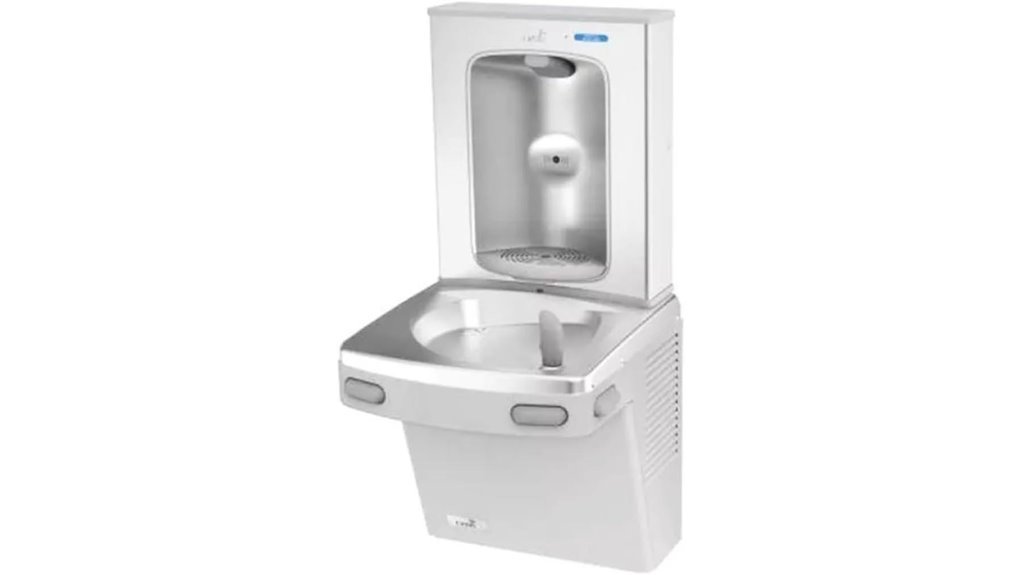
Designed for busy offices, the Oasis VersaCooler combines a wall-mounted fountain with an electric bottle filler. The Oasis OPG8EBFGST VersaCooler II measures 18 by 18 by 38 inches and uses a greystone stainless steel finish on a powder-coated galvanized steel frame. Its chilled system delivers up to 8 gallons per hour through a hands-free push-pad, while an external adjustment refines flow. A 3/8-inch direct connection and 100-micron strainer support installation. UL-listed, NSF compliant, and ADA-ready, it suits high-traffic workplaces and helps reduce plastic waste. Easy-access drainage simplifies maintenance.
Best For: Offices, schools, gyms, and other high-traffic spaces that want a durable wall-mounted drinking fountain with a bottle filler and chilled water access.
Pros:
- Combines a traditional fountain with an electric bottle filler for versatile hydration.
- Hands-free push-pad operation and external flow adjustment make it easy to use.
- UL-listed, NSF compliant, and ADA-ready for safety and accessibility.
Cons:
- Wall-mounted installation may require professional setup and proper plumbing.
- Higher-end commercial construction may be more than needed for small or low-use spaces.
- Chilled water output is limited to 8 gallons per hour, which may not suit very high demand.
Global Industrial Outdoor Drinking Fountain with Bottle Filler
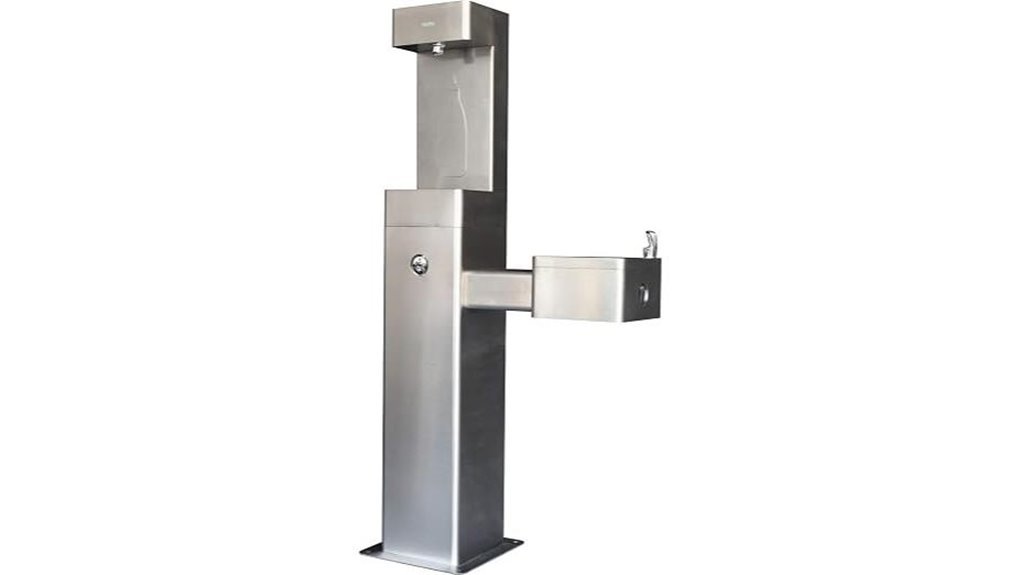
The Global Industrial Outdoor Drinking Fountain with Bottle Filler suits offices needing a durable, ADA-compliant outdoor hydration station. Built from 316 stainless steel with a silver finish, it measures 30-7/8 inches wide, 10-1/4 inches deep, and 60-1/4 inches high. The freestanding, manual unit includes one bubbler fountain and one bottle filling station with push-button activation. No electrical power is required, which simplifies placement in office complexes, recess grounds, summer camps, golf courses, and similar outdoor areas. Its 112-pound industrial construction supports long-term use, while the included funnel aids filling.
Best For: Offices, campgrounds, golf courses, and other outdoor facilities needing a durable, ADA-compliant, freestanding drinking fountain with a bottle filler.
Pros:
- Made from 316 stainless steel for strong outdoor durability and corrosion resistance
- Includes both a bubbler fountain and a bottle filling station with push-button activation
- No electrical power required, making installation simpler in remote or open-air locations
Cons:
- Heavy 112-pound unit may make handling and installation more difficult
- Freestanding design may require a suitable mounting area and secure placement
- Higher-end stainless steel construction may be more expensive than basic outdoor fountains
Global Industrial Outdoor Drinking Fountain with Bottle Filling Station
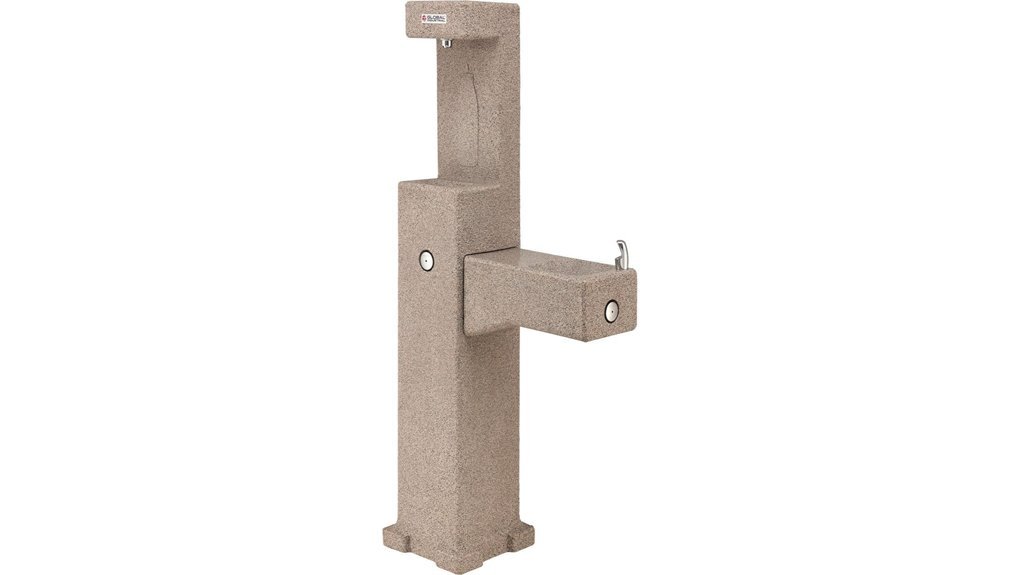
Global Industrial’s outdoor fountain suits offices needing durable, low-maintenance hydration in shared outdoor spaces. The unit measures 28 inches wide, 10 inches deep, and 60-1/4 inches high, with high-density polyethylene construction and a rotocast granite finish. At 114.6 pounds, it balances sturdiness with manageable handling. It combines a drinking fountain with a vandal-resistant bubbler and a bottle filling station, helping reduce disposable bottle use. No electrical power is required, which simplifies installation and upkeep. An anchor kit is included, making it suitable for office complexes, campuses, recreational areas, and golf courses.
Best For: Offices, campuses, recreational areas, and golf courses that need a durable, low-maintenance outdoor hydration station.
Pros:
- Durable high-density polyethylene construction with a rotocast granite finish
- Combines a drinking fountain and bottle filling station to help reduce plastic waste
- No electrical power required, simplifying installation and maintenance
Cons:
- Heavy at 114.6 pounds, which may make handling and placement more difficult
- Outdoor installation may require proper anchoring and plumbing setup
- Granite-style finish is attractive, but may not suit every site’s design aesthetic
Factors to Consider When Choosing Bottle Filling Stations for Offices, Schools, and Gyms in 2026
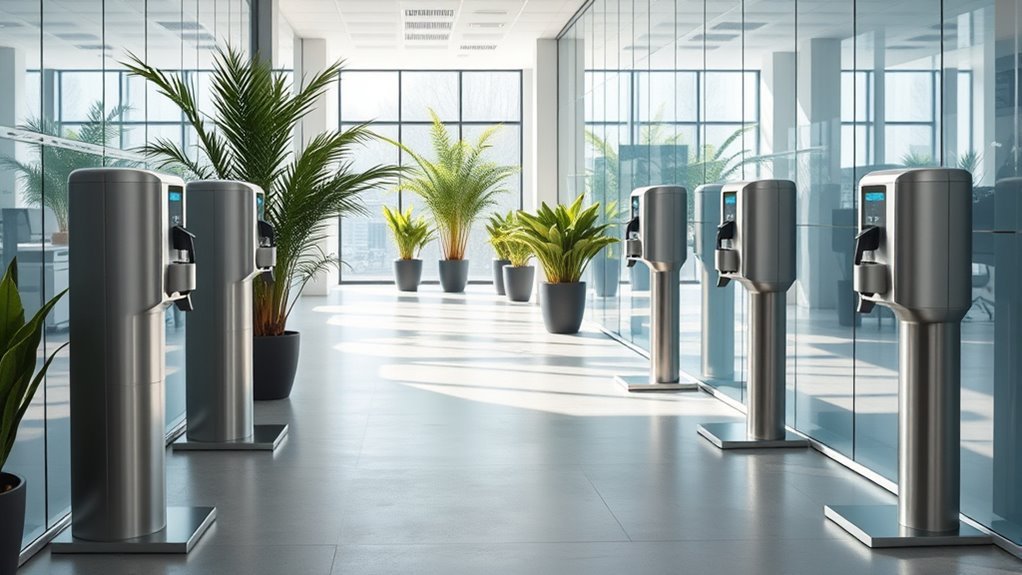
When selecting bottle filling stations for offices, schools, and gyms in 2026, key factors include water output rate, touchless activation, ADA compliance, filtration quality, and chilling performance. These features help determine how efficiently the unit serves high-traffic users while supporting hygiene and accessibility. The best choice typically balances fast refills, clean water, and reliable operation in daily use.
Water Output Rate
Water output rate is a key spec to check in bottle filling stations for offices, schools, and gyms, especially in high-traffic areas where speed matters. Measured in gallons per minute, it often sits near 1.1 GPM in efficient models, supporting fast refills without long queues. In busy offices and schools, a stronger rate can improve user satisfaction by cutting wait times. Capacity also matters; some stations can dispense up to 8 gallons per hour, which helps serve larger groups throughout the day. Laminar flow can improve fill quality by producing a smooth stream and reducing splash. Monitoring output rates over time is useful, since falling performance may signal maintenance needs and affect water quality.
Touchless Activation
Beyond fill speed, touchless activation is becoming a major factor in selecting bottle filling stations for offices, schools, and gyms in 2026. By reducing physical contact, sensor-based systems support better hygiene in busy environments where many users share the same fixture. They also improve convenience, since bottles can be filled with minimal effort and little interruption to daily routines. Many touchless models deliver water at about 1.1 gallons per minute, helping users refill quickly without creating bottlenecks. Automatic shut-off timers add another practical advantage by limiting overfilling and reducing waste. In high-use spaces, these features make touchless stations a strong choice for operators seeking cleaner operation, efficient performance, and a smoother experience for frequent visitors throughout the day.
ADA Compliance
ADA compliance is a key consideration when selecting bottle filling stations for offices, schools, and gyms in 2026, because accessible design helps guarantee equal use for people with disabilities. To meet standards, units should be installed with clear wheelchair access and at least 30 inches by 48 inches of unobstructed floor space. Controls must be reachable, generally between 15 inches and 48 inches above the floor, so users of different heights can operate them without strain. Push buttons or sensors are preferred when they can be used with one hand and do not require tight grasping, pinching, or wrist twisting. Regular inspection and maintenance help preserve compliance over time, supporting reliable access in shared environments and reducing the risk of barriers.
Filtration Quality
Filtration quality is another major factor when selecting bottle filling stations for offices, schools, and gyms in 2026, since accessible equipment should also deliver safe, appealing water. Effective systems should be certified to NSF standards, including NSF 42 and 53, to help remove contaminants such as lead, chlorine, and particulates. Capacity also matters, and a high-quality filter may process up to 3,000 gallons before replacement, lowering maintenance demands and helping facilities manage costs. Real-time monitoring, such as LED status indicators, can alert staff when service is needed, supporting consistent water quality. Strong filtration technology also improves taste and odor, which encourages hydration and reduces bottled water use. Regular filter replacement remains essential for preserving performance, meeting health expectations, and maintaining dependable water service.
Chilling Performance
Chilling performance is an important consideration when selecting bottle filling stations for offices, schools, and gyms in 2026, especially in high-traffic settings where a steady supply of cold water improves user satisfaction. Performance is commonly measured in gallons per hour, and units delivering up to 8 GPH can better sustain demand during busy periods. Reliable refrigeration depends on hermetically sealed mechanisms that help hold low water temperatures consistently. Fill speed also matters; stations offering about 1.1 GPM reduce wait times while preserving a smooth bottle refill process. A laminar flow stream supports clean, splash-resistant dispensing. Visual LED indicators for filter status add oversight, helping maintain water quality and supporting long-term cooling efficiency as usage increases.
Installation Type
Installation type is a key factor when choosing bottle filling stations for offices, schools, and gyms in 2026, because wall-mounted units save floor space and suit high-traffic areas, while freestanding models can be placed more flexibly without wall access. Wall-mounted units usually need electrical and plumbing connections, so they work best where infrastructure is already available. Freestanding models, including manual options, often require only basic assembly and can fit in more locations. The installation area should be measured carefully to confirm adequate clearance and easy movement around the unit. Accessibility also matters, since the chosen setup should meet ADA requirements for all users. Wall-mounted stations often include drainage systems, which can simplify upkeep, whereas freestanding units may demand more frequent cleaning and maintenance.
Durability Materials
Durability starts with the right material choice. Stainless steel remains a leading option because it resists corrosion, tolerates heavy use, and presents a surface that stays visually consistent in busy offices, schools, and gyms. For locations exposed to impact or vandalism, high-density polyethylene can provide a lighter but still resilient alternative. Outdoor stations often benefit from powder-coated galvanized steel, which is better suited to harsh weather and helps preserve long-term performance. Material weight also matters, since heavier builds can improve stability in crowded, high-traffic settings. Smooth, robust finishes further support dependable use by reducing visible wear and helping the station hold up under repeated daily demand.
Maintenance Needs
Maintenance requirements play a major role in how well a bottle filling station performs over time, especially in busy offices, schools, and gyms. Regular upkeep typically includes filter replacement after about 3,000 gallons or once a year, depending on usage. Units with visual LED filter monitors make this task easier by signaling when service is due, helping protect water quality. A real drain system also reduces standing water, which limits cleaning demands and supports sanitation. Touchless activation can improve hygiene, though sensors still need occasional calibration and cleaning to stay responsive. Stainless steel models usually require less long-term maintenance than plastic versions because they resist wear and are easier to clean. Choosing low-maintenance features can reduce downtime and improve reliability.
Frequently Asked Questions
Which Bottle Filling Station Is Best for High-Traffic Offices?
For high-traffic offices, a refrigerated bottle filling station with rapid-fill capability, touchless sensors, and a durable antimicrobial finish is usually the best choice. It handles frequent use efficiently, reduces wait times, and supports hygiene in busy environments. Models with high daily capacity and easy filter replacement are preferred. A unit from a reputable commercial brand is typically most reliable, especially when backed by strong service support and warranty coverage.
How Often Should Bottle Filling Station Filters Be Replaced?
Bottle filling station filters should generally be replaced every 6 to 12 months, though heavy use may require more frequent changes. A high-traffic office often benefits from checking manufacturer guidelines and monitoring water flow, taste, and odor. Some models use filter-life indicators to simplify scheduling. Regular replacement helps maintain water quality, reduce contaminants, and preserve system performance, making routine maintenance an important part of dependable office hydration.
Can Bottle Filling Stations Reduce Plastic Waste in Offices?
Yes, bottle filling stations can reduce plastic waste in offices by making reusable bottles more convenient than single-use plastics. When employees have easy access to filtered water, they are less likely to buy disposable bottles throughout the day. Over time, this lowers waste generation and supports sustainability goals. The effect is greatest when stations are placed in high-traffic areas and paired with policies encouraging reusable drinkware use consistently.
What Maintenance Do Office Bottle Filling Stations Need?
Office bottle filling stations need regular filter replacement, nozzle and sensor cleaning, drip tray sanitizing, and periodic inspection for leaks or clogged drains. Their cooling systems, if present, should be checked for performance, while internal parts may require descaling in hard-water areas. Exterior surfaces benefit from routine wiping to maintain hygiene. Scheduled professional servicing helps confirm water quality, electrical safety, and consistent operation over time.
Do Bottle Filling Stations Work With All Bottle Sizes?
Bottle filling stations do not work with all bottle sizes. Most are designed for standard reusable bottles, typically medium to large diameters, and may struggle with very narrow, tall, or unusually shaped containers. Clearance under the spout and sensor placement can also limit compatibility. A detached evaluation would note that users should check the station’s dimensions and bottle-filling area before assuming universal fit for every office bottle.
Conclusion
These six bottle filling stations stand like quiet guardians in the office, each one a polished promise of cleaner habits and less waste. From touchless convenience to durable stainless steel, they symbolize a workplace where health, efficiency, and sustainability flow together. As offices look ahead, choosing the right station is more than a purchase—it is a small but lasting commitment to better days, refreshed teams, and a lighter footprint on the world.