
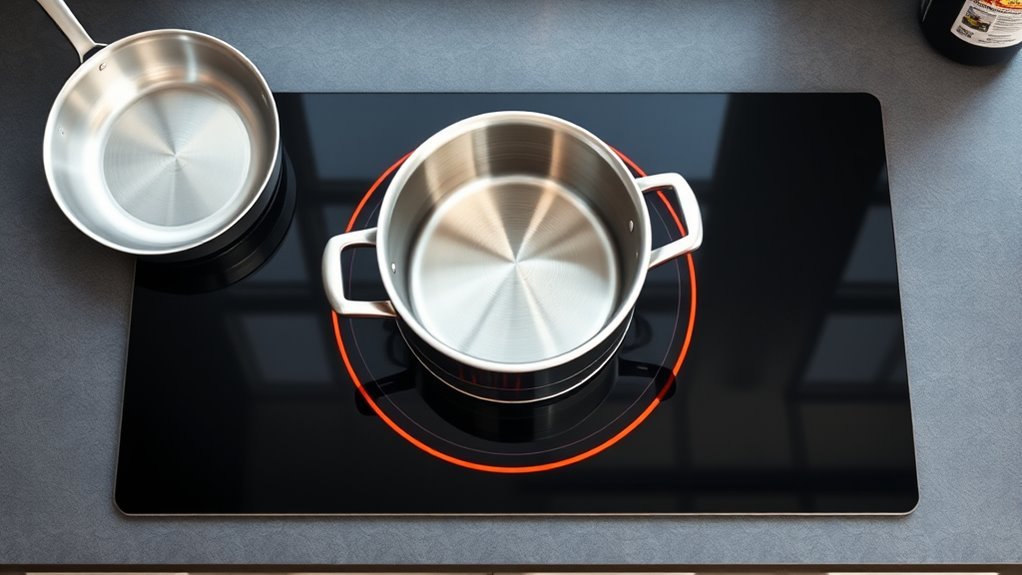
Induction-ready cookware is essential if you want to harness the efficiency of induction cooking. Its magnetic base, often made from cast iron or magnetic stainless steel, is key to this process. When you place it on an induction cooktop, a magnetic field generates heat directly in the pot or pan, ensuring quick and precise cooking. Curious about how to test your cookware for compatibility or the best materials to choose? Let’s explore further.
Why Is Magnetic Compatibility Important?
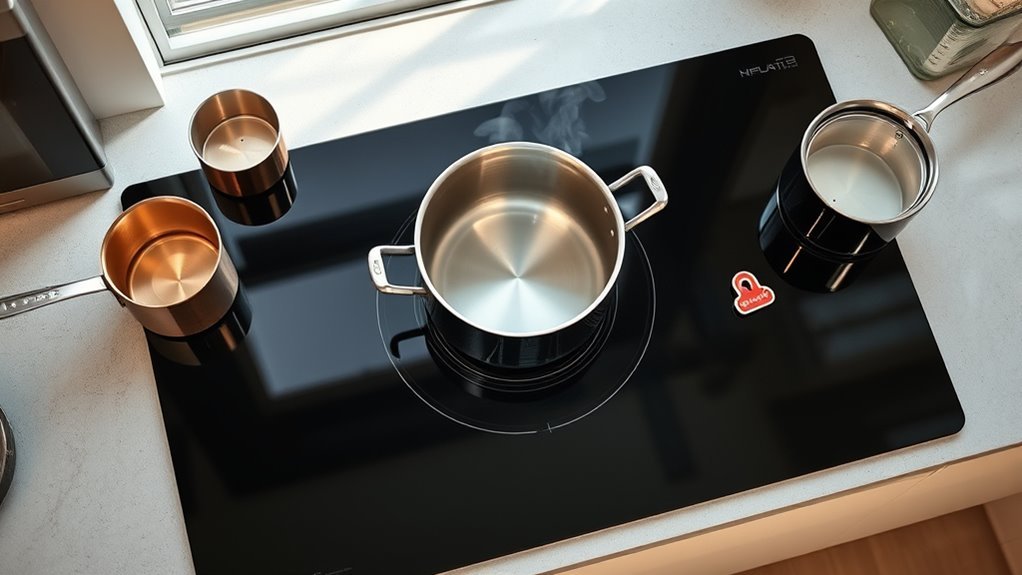
Have you ever wondered why magnetic compatibility is essential for induction cookware? It’s all about how induction cooking works. Cookware needs a ferromagnetic base—like cast iron or magnetic stainless steel—to interact with the electromagnetic fields generated by induction cooktops.
Magnetic compatibility is vital for induction cookware, ensuring efficient heating through ferromagnetic materials like cast iron and magnetic stainless steel.
This interaction allows your pots and pans to heat directly, creating efficient cooking that traditional methods can’t match.
To check if your cookware makes the cut, just do a simple magnet test; if the magnet sticks, you’re good to go! Non-magnetic materials like aluminum or glass won’t heat up, leaving you frustrated at the stove.
Proper magnetic compatibility guarantees even heat distribution, so your meals cook uniformly and quickly. Embracing induction cookware means stepping into a domain of culinary freedom, where precision and efficiency reign supreme.
With the right tools, you’ll transform your cooking experience into something truly liberating.
How Does Induction Cooking Work?
How does induction cooking create such rapid and efficient heat? It all starts with a magnetic field generated by a coil beneath the cooktop. This innovative technology directly heats your induction-compatible cookware, making it the heat source itself. Here’s how it works:
- Electromagnetic Energy: The coil generates electromagnetic energy, creating a magnetic field.
- Heat Distribution: This field induces heat directly within the cookware, ensuring even cooking.
- Precise Temperature Control: You can instantly adjust heat levels for perfect results, every time.
- Safety in the Kitchen: The cooktop surface stays cool, reducing burn risks.
- Energy-Efficient: Induction cooking converts up to 90% of energy into heat, far surpassing traditional gas methods.
With induction cookware, you experience rapid temperature changes and energy savings while enjoying a safer cooking environment.
Embrace this modern cooking method and liberate your culinary skills!
Testing Your Cookware for Induction Compatibility
Wondering if your cookware can handle the demands of induction cooking? Testing is simple! Grab a magnet and place it on the bottom of your pots or pans. If it sticks, you’ve got a winner.
Induction-compatible cookware needs a magnetic base made from ferromagnetic materials like cast iron or magnetic stainless steel. Remember, non-magnetic items such as aluminum, glass, and pure copper won’t generate heat on an induction cooktop, leaving you in the lurch.
For ideal heat transfer, verify the entire base is flat and makes full contact with the cooktop.
Before you make a purchase, always check cookware labels for “induction compatible.” This step can save you from the frustration of buying items that won’t work with your induction setup.
Embrace the liberation of efficient cooking by confirming your cookware meets these essential criteria!
Best Materials for Induction-Ready Cookware
When it comes to choosing the best materials for induction-ready cookware, you’ll want to focus on options that guarantee efficient cooking and lasting performance. The right cookware materials are vital for achieving even heating and ideal results.
Here are some top choices to take into account:
Here are some excellent materials to consider for your induction-ready cookware.
- Cast Iron: Known for excellent heat retention, it’s a classic choice.
- Carbon Steel: Lightweight yet durable, perfect for versatile cooking.
- Stainless Steel: Look for specific grades with a magnetic base layer for induction compatibility.
- Induction-Compatible Aluminum: Confirm it has a bonded magnetic layer for effectiveness.
- Flat Bottom Designs: Fundamental for maximizing contact with the cooktop, ensuring efficient heat transfer.
Remember to perform the magnet test; if the magnet sticks, you’re in the clear!
This way, you’ll enjoy a seamless and liberating cooking experience with your induction-ready cookware.
Top Common Mistakes When Using Induction Cookware
Using induction cookware can elevate your cooking experience, but many people make common mistakes that hinder its performance. Understanding these pitfalls can help you enjoy seamless cooking.
| Mistake | Explanation | Solution |
|---|---|---|
| Assuming all stainless steel is induction-compatible | Only cookware with a magnetic base works effectively. | Check for a magnetic base. |
| Preheating empty pans on high heat | This can lead to thermal shock, damaging both cookware and cooktop. | Always add oil or food first. |
| Using oversized cookware on small zones | This causes uneven heating and hot spots. | Match pan size to induction zones. |
Ignoring the flatness of cookware can further exacerbate uneven heating. Confirm your pans maintain proper contact with the induction zones to maximize efficiency. Avoid sliding heavy pans to prevent scratches that compromise your cooktop’s integrity. Embrace these tips for a flawless induction cooking experience!
Caring for Induction Cookware
Caring for induction cookware is essential to assure its longevity and peak performance, so you’ll want to adopt a few best practices. By following these tips, you can make certain your cookware remains in top shape:
- Hand wash instead of using a dishwasher to maintain surface integrity and prevent damage.
- Avoid abrasive scrubbers that can scratch and affect cookware performance.
- Make sure to thoroughly dry cookware after washing to prevent water spots and rust, particularly with cast iron or carbon steel.
- Store cookware properly by using felt protectors or towels between pieces to prevent scratches and dings.
- Be cautious of sudden temperature changes to avoid thermal shock, which can warp or crack your cookware, especially if it has glass or nonstick features.
With proper care, you’ll keep your induction cookware looking great and performing brilliantly for years to come!
Benefits of Using Induction Cooktops
Switching to induction cooktops means you’ll enjoy impressive energy efficiency, turning up to 90% of energy into heat, which saves you money on bills.
Plus, with surfaces that stay cool, you can cook safely without the worry of burns.
You’ll also appreciate the fast cooking times and precise temperature control, making your culinary adventures both quick and consistent.
Energy Efficiency Advantages
Although many cooking methods waste energy, induction cooktops stand out for their remarkable efficiency. With innovative technology, they convert up to 90% of energy into heat, minimizing heat loss. This means faster cooking times and lower energy consumption.
Here’s what makes induction cooktops a smart choice:
- Precise temperature control for instant adjustments
- Direct heating through an electromagnetic field for quick results
- Cooking speed that can boil water over twice as fast as gas stoves
- A cooler cooktop surface that reduces the need for extra cooling or ventilation
- Less energy consumption, making your cooking experience eco-friendly
Experience the liberation of energy-efficient cooking and enjoy the benefits of induction-compatible cookware in your kitchen!
Enhanced Safety Features
Induction cooktops not only excel in energy efficiency but also prioritize safety in the kitchen. With enhanced safety features, they considerably reduce the risk of burns since the surface remains cooler to the touch. The immediate cessation of heat when you remove cookware prevents ongoing cooking, minimizing fire hazards. Plus, induction cooking eliminates gas leaks, making your cooking environment safer.
Here’s a quick overview of these features:
| Feature | Benefit | Impact on Home Cooks |
|---|---|---|
| Cooler Surface | Reduces risk of burns | Safer cooking experience |
| Instant Heat Cessation | Prevents overcooking | Precise control |
| No Open Flames | Healthier indoor air quality | Reduces airborne pollutants |
| Magnetic Material | Compatible with cookware for induction cooking | Efficient energy usage |
Embrace the liberation of a safer kitchen!
Fast Cooking Times
Cooking with induction cooktops can dramatically transform your kitchen experience by cutting down cooking times considerably.
Using induction cookware, you’ll enjoy remarkable speed thanks to how magnetic fields heat pans directly, often reducing boil times by up to 50%. This energy-efficient method converts about 90% of energy into heat, making it perfect for quick meal prep.
Plus, with precise temperature control, you can adjust heat instantly, enhancing both speed and accuracy.
- Boil water in as little as 2 minutes
- Surface stays cool to the touch
- Multitask safely while cooking
- Reduce energy waste considerably
- Enjoy faster, more enjoyable cooking experiences
With induction-compatible cookware, you’re set for a liberating culinary adventure!
Frequently Asked Questions About Induction Cookware?
When it comes to induction cookware, you might’ve some burning questions about compatibility and care tips.
Understanding what materials work best and how to maintain your pots and pans can make all the difference in your cooking experience.
Let’s tackle these common concerns to guarantee you get the most out of your induction setup.
Common Compatibility Issues
Understanding the common compatibility issues with induction cookware can save you time and frustration in the kitchen. Here are key points to take into account:
- Test compatibility: Use a magnet to check if your cookware has a magnetic base.
- Non-magnetic materials: Aluminum, glass, and pure copper require a bonded magnetic layer to work.
- Flat-bottomed cookware: Essential for effective heat transfer; curved pans may not make proper contact.
- Oversized cookware: Using large pans on small induction zones can lead to uneven heating.
- Warped cookware: Can cause hotspot damage and reduce cooking efficiency, so maintaining flat surfaces is vital.
Maintenance and Care Tips
Maintaining your induction cookware is essential for ensuring its longevity and peak performance.
Always hand-wash your pots and pans with gentle sponges to protect their surface integrity and non-stick coatings. Allow them to cool completely before washing to prevent warping from sudden temperature changes.
When you store cookware, use felt protectors or soft towels to avoid scratches and keep them looking sharp.
For cast iron or carbon steel pieces, lightly oil them after cleaning to ward off rust and enhance their non-stick properties.
Finally, steer clear of abrasive scrubbers; they can scratch and damage your induction cookware.
Following these maintenance tips will keep your kitchen gear in prime condition for years to come.
Frequently Asked Questions
Can You Use Induction Ready Cookware on a Regular Stove?
Yes, you can use induction-ready cookware on a regular stove.
These versatile pieces, often made from cast iron or magnetic stainless steel, guarantee good heat distribution and compatibility with various cooking surface materials.
While you’ll enjoy efficient cooking, note that energy consumption may differ compared to induction.
Pot weight and handle design can impact cooking time and safety, so consider these factors for peak performance.
Induction vs gas? You’ll appreciate the flexibility!
What Cannot Be Cooked on Induction?
You can’t cook with non-magnetic cookware materials like pure aluminum or glass on induction cooktops.
Traditional woks or unevenly shaped pots also struggle with heat distribution, affecting cooking efficiency.
If a magnet doesn’t stick to your cookware, it lacks the necessary magnetic properties.
Stick to induction-compatible brands to guarantee safety features and energy consumption efficiency.
For maintenance tips, keep your surfaces clean to enjoy a liberating cooking experience!
How Do I Know if My Pots and Pans Are Induction Ready?
To know if your pots and pans are induction ready, grab a magnet. If it sticks, you’re in luck!
Check the cookware material compatibility; ferromagnetic materials like cast iron or magnetic stainless steel work best.
Explore induction-friendly brands, but don’t forget weight and surface durability factors.
For ideal heat distribution efficiency, read cooking performance reviews.
A little maintenance goes a long way, plus price comparison analysis can help you invest wisely in your kitchen.
What Are the Disadvantages of Induction Pots?
Induction pots have their drawbacks. You might face price differences, as they often cost more due to specialized cookware materials.
Weight considerations can make handling challenging, especially when pouring. While induction efficiency offers fast cooking speed, it requires a magnetic base, limiting versatility with certain traditional pots.
Plus, the risk of surface scratches can be a concern. Ultimately, keep in mind that energy consumption relies on electricity, which can be unreliable during outages.
Conclusion
In your culinary journey, embracing induction-ready cookware opens up a world of efficiency and precision. Picture a sleek pot dancing over a glowing cooktop, heat swirling beneath like a magician’s trick, transforming ingredients into delicious masterpieces. With the right tools in hand, you’ll not only whip up meals faster but also savor the safety of a cool surface. Immerse yourself in this innovative cooking method, and let each dish be a tribute to the magic of induction!
