
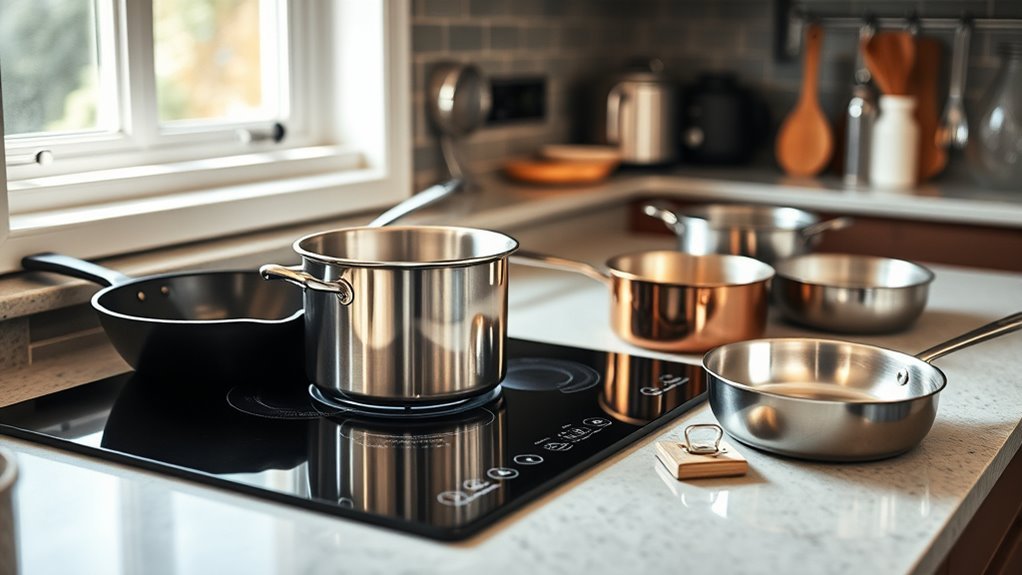
Induction capable cookware is cookware that an induction cooktop can heat, because its base contains magnetic (ferromagnetic) metal. You will also see it called induction ready, induction compatible or induction suitable. This page explains what the term means and how the technology works. For which pots to buy, see our main guide to cookware for induction cookers.
What Does Induction Capable Cookware Mean?
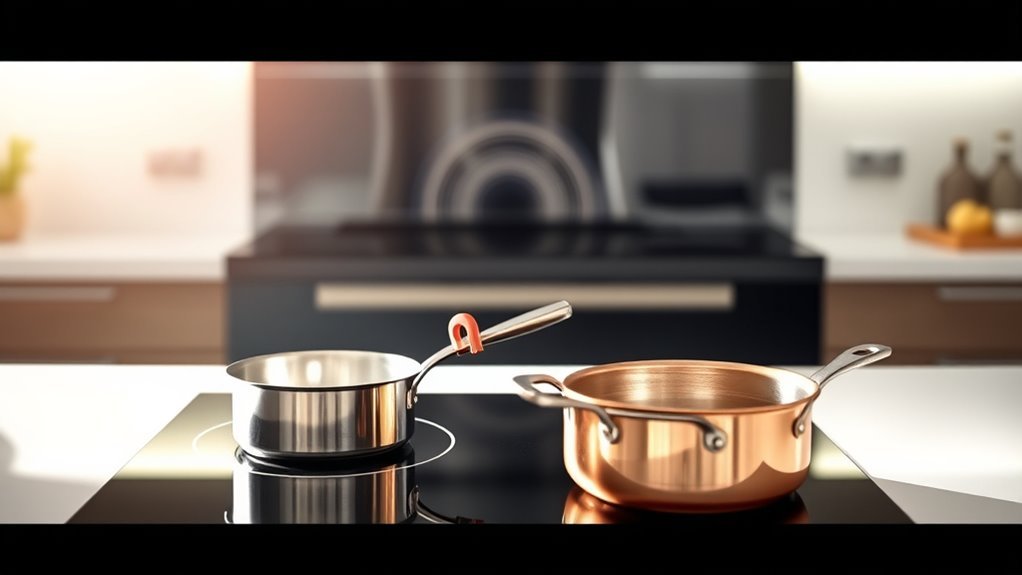
It means the pot or pan responds to the magnetic field of an induction cooktop and turns it into heat inside the pan itself. Nothing else about the cookware matters for the label: the shape of the pan, the coating, the handle and the lid can all vary.
The label says the pan is capable of being heated on induction. It does not say that the pan is oven-safe, dishwasher-safe, or healthier. Those are separate features, covered in what “induction safe” means.
How Induction Heating Works
- A coil under the glass carries an alternating electric current.
- That current creates a rapidly changing magnetic field above the cooktop.
- When a pan with a magnetic base sits in the field, electric currents are induced in the metal, and the metal’s resistance and magnetic properties turn them into heat.
- The pan heats directly. The glass is warmed only by contact with the hot pan.
Because the pan is the heat source, induction reacts fast. Turning the power down lowers the heat almost right away, and turning the cooktop off stops new heating. Most cooktops only switch on when they detect a suitable pan on the zone.
Why Magnetic Metal Is Needed
Iron and many steels are ferromagnetic, so they respond strongly to the field and heat efficiently. Aluminum and copper are not magnetic. They conduct electricity so well that a standard induction cooktop produces little heat in them, and most cooktops will not run for them. That is why a plain aluminum or copper pan is not induction capable, but the same pan with a steel plate bonded to the bottom is.
Types of Induction Capable Cookware
| Type | How it becomes induction capable |
|---|---|
| Cast iron and enameled cast iron | The whole pan is ferromagnetic iron |
| Carbon steel | The whole pan is magnetic steel |
| Stainless steel | A magnetic stainless layer or disc in the base |
| Aluminum or copper core pans | Magnetic stainless outer layer or bonded steel plate |
| Nonstick or ceramic-coated pans | Magnetic base layer under the coating |
Not sure which is which? Our guide to telling if a pot is induction ready has a step-by-step magnet test.
Benefits and Drawbacks
Benefits
- Fast, responsive heat that you can adjust quickly.
- A cooktop surface that is cooler than a gas flame or electric element, although it still gets warm from the pan.
- Works on gas and electric stoves too, so you are not locked in.
- Induction is generally more energy-efficient than gas or standard electric cooking, because less heat is lost around the pan.
Drawbacks
- Some pieces are heavy, especially cast iron.
- Thin or cheap bases can heat unevenly or buzz.
- Round-bottom or warped pans do not make good contact.
- Switching may mean replacing a few non-magnetic pans.
Caring for Induction Capable Cookware
Clean the base so food residue does not scratch the glass or interfere with contact. Lift pans instead of sliding them. Follow the maker’s care instructions, since induction capability says nothing about the dishwasher. For brand-specific examples, see whether stainless steel can go in the dishwasher.
Frequently Asked Questions
What does induction capable mean?
Induction capable means a pot or pan can be heated by an induction cooktop. In practice it has a base made of, or lined with, magnetic metal such as iron or magnetic stainless steel. Labels such as induction ready, induction compatible and induction suitable mean essentially the same thing.
Is induction capable cookware different from regular cookware?
The difference is the base. Regular cookware can be made of any material, while induction capable cookware has magnetic metal in the base. Many everyday pieces, such as cast iron and enameled steel, are already induction capable, and induction capable pans also work on gas and electric stoves.
Can I use induction capable cookware on other stoves?
Yes. Induction capable cookware works on gas, electric coil and glass-top electric stoves as well. The reverse is not true: cookware made only for gas or electric, such as plain aluminum or copper, may not work on induction. Check the base before you switch.
What are the disadvantages of induction capable cookware?
The main drawbacks are that some pieces are heavy, such as cast iron, and that cheaper pans can heat unevenly or buzz. Cookware must also have a flat base and fit the cooking zone. Induction capable pans can cost more than basic aluminum pans, depending on the brand.
Do I need to replace all my cookware for induction?
Not necessarily. Test each pan with a magnet. Pieces that stick firmly will work. Many households already own enough cast iron, enameled cast iron or stainless steel to start cooking on induction, and only need to replace non-magnetic aluminum, copper or glass pieces.
Conclusion
Induction capable cookware has a flat base containing magnetic metal, so an induction cooktop can heat it directly. If a magnet sticks to the base, you are most likely set.
