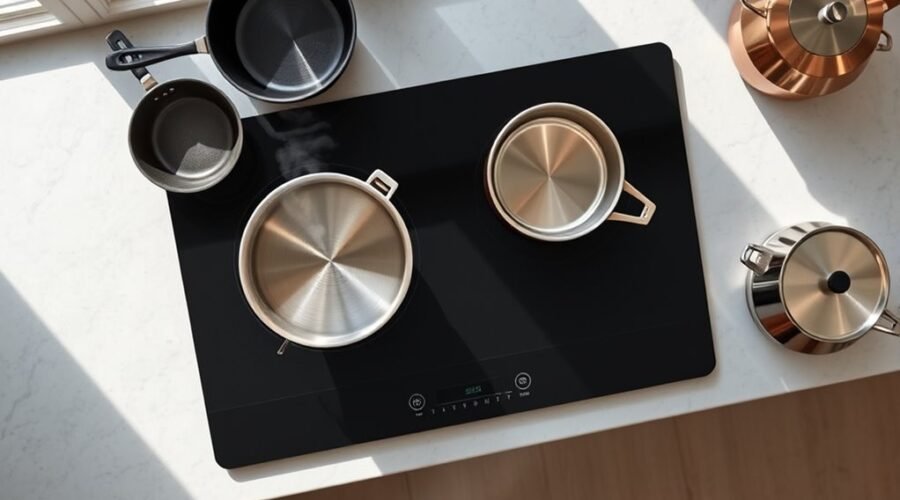
You might not realize that not all pots work on induction cookers, even if they look sturdy. Induction cooking relies on magnetic fields, so the materials of your cookware matter. If you’re unsure about your options, knowing which pots are compatible can save you time and frustration in the kitchen. Let’s explore the best materials and cookware to guarantee your induction cooking experience is both efficient and enjoyable.
Best Induction Cookware Options
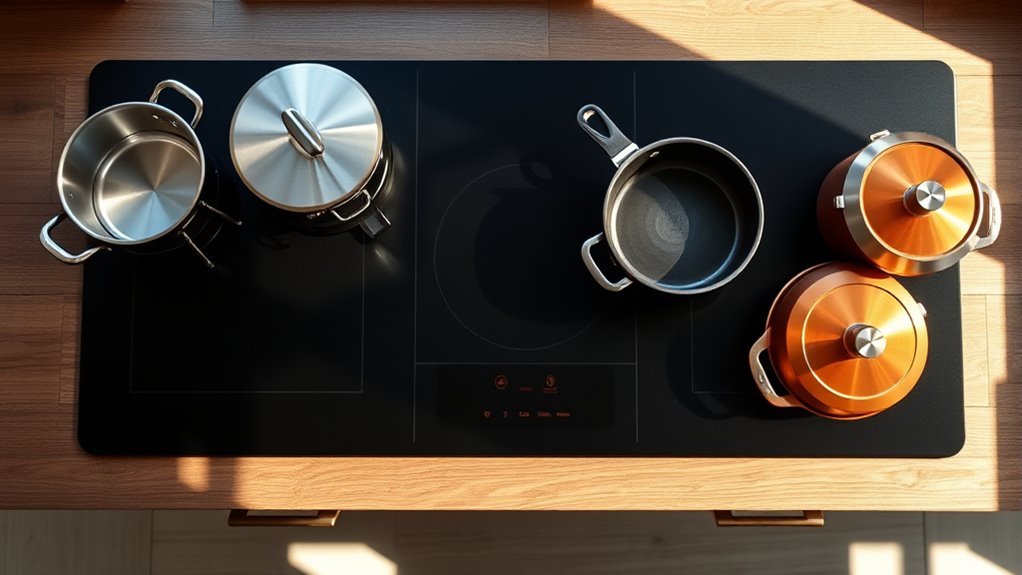
When you’re choosing the best induction cookware, what should you look for? First and foremost, make sure it’s made of magnetic stainless steel or other ferrous materials; this guarantees compatibility with induction cooktops. A simple magnet test can confirm this—if the magnet sticks firmly, you’re set!
High-quality stainless steel options, especially those with multi-ply constructions, offer excellent heat distribution, making them perfect for even heat while cooking. Consider carbon steel pans too; they’re not only quick to heat but also provide a natural nonstick surface, enhancing your cooking experience.
Look for cookware with a flat, heavy base to improve contact with cooking surfaces, guaranteeing peak performance. This combination will elevate your culinary adventures, delivering the best cooking results and liberating you from the frustration of uneven heat.
With the right induction cookware, you’re ready to whip up your favorite dishes effortlessly!
Essential Materials for Induction Cookware
Choosing the right materials for your induction cookware is essential to achieving ideal cooking results.
To guarantee compatibility with induction cooktops, focus on materials that can effectively interact with magnetic fields. Here are four key materials to take into account:
- Magnetic Stainless Steel: Durable and resistant to corrosion, it offers excellent heat conductivity.
- Cast Iron: Known for its heat retention, it’s perfect for slow cooking and searing.
- Carbon Steel: Lightweight and versatile, it provides quick temperature control, ideal for high-heat cooking.
- Tri-Ply Cookware: This multi-layer construction enhances even heating, reducing hot spots and improving overall cooking performance.
Identifying Induction-Compatible Pots?
Understanding how to identify induction-compatible pots can make a significant difference in your cooking experience.
To harness the power of induction, look for pots made from ferrous materials like cast iron, carbon steel, or magnetic stainless steel. A quick magnet test can save you time: if the magnet sticks firmly to the pot’s base, you’re good to go!
Confirm the pot has a flat bottom for ideal contact with the cooking surface, enabling efficient heat transfer. Be cautious with stainless steel; many traditional grades, like 304 or 316, aren’t magnetic and won’t work. Instead, choose 400 series stainless steel.
If you’re eyeing non-ferrous materials like aluminum or copper, remember they need a magnetic layer added to their base to be induction-compatible.
Top Recommended Cookware for Induction Cooking
Induction cooking opens up a world of possibilities with the right cookware. To elevate your culinary experience, consider these top recommended options:
- Cast Iron Skillets: Known for exceptional heat retention, they’re perfect for low and slow cooking, though they’re heavier.
- Carbon Steel Pans: These versatile steel pans heat quickly and develop natural nonstick properties, ideal for various cooking techniques.
- Magnetic Stainless Steel: Durable and dishwasher-safe, these pans don’t react with acidic foods, making them great for daily use.
- Hybrid Non-Stick Pans: Featuring a magnetic outer layer, they offer induction compatibility, though their lifespan might be shorter than cast iron or carbon steel.
Each piece in your cookware set should be induction compatible, ensuring that you can sauté, sear, and simmer with ease.
Embrace your culinary freedom and explore the endless possibilities!
Pros and Cons of Induction Cookware Materials
When it comes to selecting cookware for induction cooking, knowing the pros and cons of different materials can make all the difference.
Magnetic materials like cast iron, carbon steel, and magnetic stainless steel are compatible with induction cooktops.
Cast iron boasts incredible heat retention and durability, but its weight and slower heating can be a hassle for quick meals.
Cast iron offers remarkable heat retention and lasting durability, but its heft and slower heating can complicate quick meal prep.
In contrast, carbon steel is lighter and heats up quickly, developing a natural nonstick surface over time, making it a favorite among many cooks.
Magnetic stainless steel is dishwasher-safe and resists corrosion, perfect for acidic foods, though it may not retain heat as effectively as cast iron.
Nonstick cookware is convenient for delicate dishes but lacks durability under high temperatures, degrading faster on induction surfaces.
Choose wisely to balance your cooking needs with the right material!
Tips for Maximizing Induction Cooking Performance
To get the most out of your induction cooktop, it’s essential to choose the right cookware and use it effectively. Here are some tips to enhance your induction cooking experience:
- Select compatible pans: Make sure your cookware has a magnetic base, like cast iron or magnetic stainless steel, to work seamlessly with the induction stove.
- Choose flat, heavy bases: This improves contact with the induction surface, ensuring even use and better heat distribution.
- Match base diameter: Opt for pans that closely match the hob zone to maximize efficiency and energy use during cooking.
- Mind the heat settings: Avoid using non-stick pans at high heat; medium settings are usually sufficient for most cooking methods.
Frequently Asked Questions
What Kind of Pots Are Safe to Use on an Induction Cooktop?
You can safely use induction cookware made from magnetic material types like cast iron, carbon steel, and magnetic stainless steel.
Look for pots with good thickness for better heat distribution efficiency and energy savings potential.
Explore various pot shape variations for different cooking tasks. Brands like All-Clad and T-fal are excellent choices.
How Do I Know if My Pots Are Induction Compatible?
To know if your pots are induction compatible, you can’t judge a book by its cover—do the Magnetic Test!
Check cookware labels for an induction symbol, and remember, material matters. Pots made from ferrous materials like cast iron work best.
Look at the bottom thickness; a flat, smooth base improves heat distribution and cooking performance.
Brand recommendations help, but always test the pot. Your cooking experience should be seamless and efficient!
Which Cookware Is Compatible With Induction?
For induction cooking, focus on induction cookware materials like cast iron, carbon steel, and magnetic stainless steel.
These options guarantee excellent heat distribution efficiency. Check the magnetic properties; a magnet should stick to the base.
When choosing, consider weight and balance for easy handling, along with design aesthetics that match your kitchen.
Look for cost-effective options and check user reviews for insights on brand recommendations to make an informed choice.
What Pots Not to Use on Induction?
You shouldn’t use non-magnetic materials like aluminum cookware, glass pots, ceramic dishes, or copper pans on induction cookers.
Old pots, especially warped ones, won’t make proper contact, leading to poor heat distribution.
Even some stainless steel isn’t compatible unless it’s labeled for induction.
Stick to cast iron or specifically designed induction cookware to guarantee efficient cooking.
Conclusion
To summarize, choosing the right cookware for your induction cooker can transform your cooking experience. Imagine whipping up a perfect sear on a juicy steak in a cast iron skillet, the heat evenly distributed for an unbeatable crust. By selecting pots made from ferrous materials, like magnetic stainless steel or carbon steel, you’ll maximize efficiency and flavor. Embrace the convenience of induction cooking, and enjoy the culinary results that come from the right tools in your kitchen!