
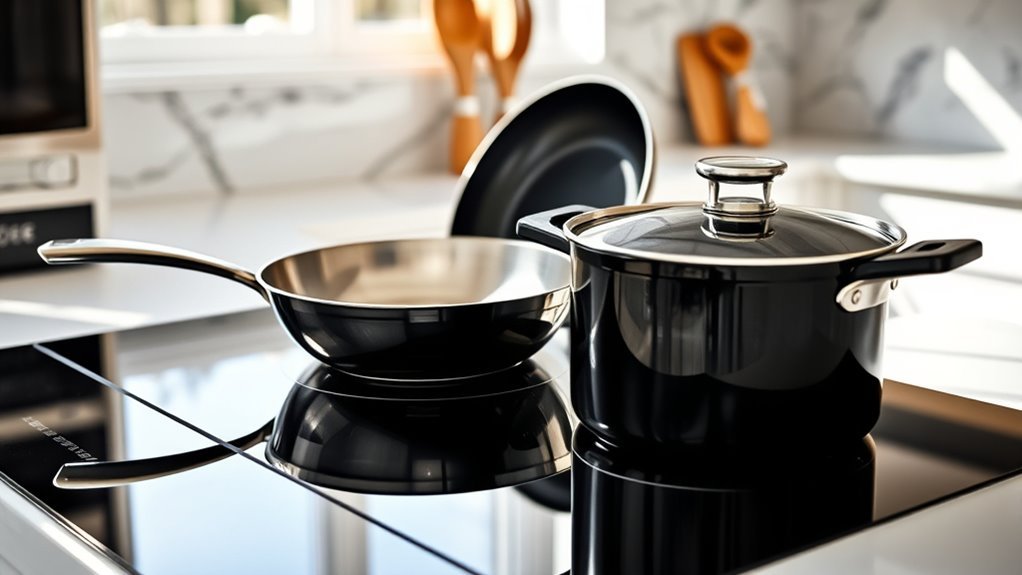
Induction compatible pans are pans with a flat base made of or containing magnetic metal, so an induction cooktop can heat them directly. Cast iron, carbon steel, enameled steel and magnetic stainless steel pans qualify, as do nonstick and ceramic-coated pans that have a magnetic base. This page focuses on how to choose the right pan, not just which materials work.
For the full materials overview, see what cookware to use for an induction cooker.
What Makes a Pan Induction Compatible?
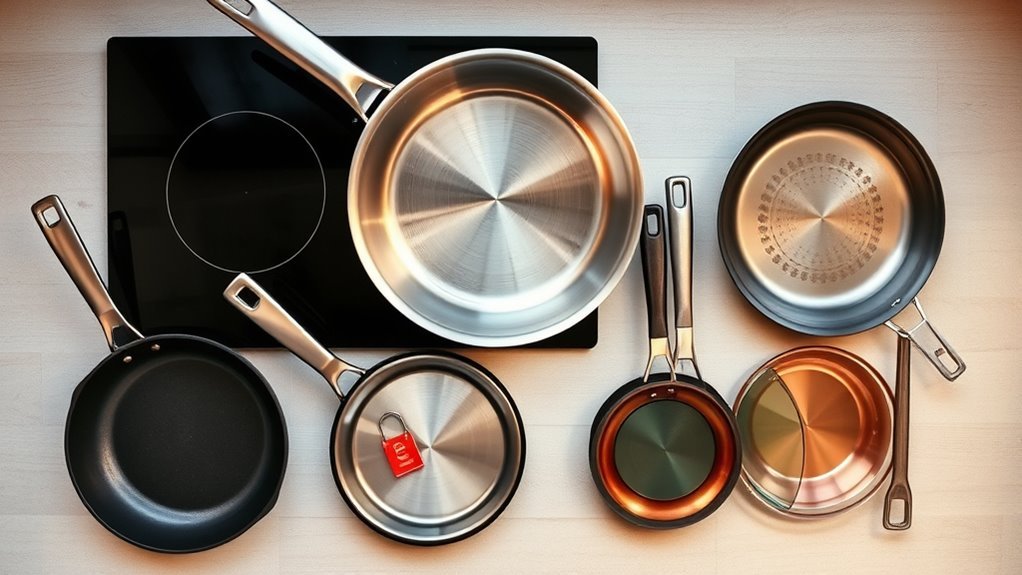
Three things decide whether a pan works well on induction:
- Magnetic base. A magnet should stick firmly to the bottom.
- Flat contact. The pan should sit fully on the glass without rocking.
- Suitable size. The magnetic base should match your cooking zone. Cooktops have minimum, and sometimes maximum, pan sizes listed in the manual.
The coating, handle and lid do not decide compatibility. Only the base does.
Which Pan for Which Job?
| Pan type | Best induction-compatible choice | Why |
|---|---|---|
| Frying pan or skillet | Cast iron, carbon steel, or clad stainless | Strong heat for searing; carbon steel is lighter |
| Nonstick pan | Nonstick with a magnetic base | Eggs, fish, delicate foods at medium heat |
| Saucepan | Clad stainless steel | Fast response for sauces and simmering |
| Sauté pan | Clad stainless with straight sides | Large flat base, even heating |
| Wok | Flat-bottom carbon steel | Round-bottom woks do not work on flat induction |
| Dutch oven or braiser | Enameled cast iron | Steady heat for slow cooking |
| Grill pan | Cast iron | Ridged surface; heavy and magnetic |
How to Choose Induction Compatible Pans
Check the base, not just the label
Even if a pan says induction compatible, a quick magnet test confirms it. Some sets mix compatible and non-compatible pieces, so test each one.
Look for a flat, thick base
A thicker base spreads heat more evenly and resists warping. Very thin bases can hot-spot, hum or bow over time. Layered bases, such as stainless around an aluminum core, are common for this reason. See which stainless ply is best for what to expect.
Match the size to your zone
The magnetic base diameter matters, not the rim width. A wide, flared pan can have a much smaller flat base than its top suggests. A base that is too small for the zone may heat poorly or not be detected at all.
Consider weight and handles
Cast iron is heavy; carbon steel and clad stainless are lighter. Choose handles you can grip comfortably. If you use the oven, check the maker’s oven-safe rating. Induction and oven ratings are separate, and so is dishwasher safety. See whether nonstick can go in the dishwasher.
Choose a coating that fits your cooking
Nonstick and ceramic-coated pans are convenient but wear faster than bare metal. Learn more in what ceramic coating cookware is. Use medium heat with coated pans, as induction can heat quickly.
Fixing Common Problems With Induction Pans
- Pan not detected: use a larger flat base and center it on the zone.
- Uneven heating: use a thicker or clad base and preheat on a lower setting.
- Buzzing: try a lower power setting or a different pan.
- Scratched glass: lift heavy pans instead of sliding them, and keep bases clean.
- Warped pan: avoid heating an empty pan on high, and let it cool before cleaning with cold water.
Frequently Asked Questions
How can I tell if a pan is induction compatible?
Place a magnet on the bottom. If it sticks firmly, the pan should work on induction. You can also look for the word induction or a coil-shaped symbol on the base or packaging, and check that the base is flat and a good size for your cooking zone.
What pans should you not use on induction?
Skip pans made only of aluminum, copper, glass, ceramic or stoneware, because they are not magnetic. Also avoid pans with warped or rounded bottoms, since they will not sit flat. A pan that fails the magnet test will not heat on a standard induction cooktop.
Why is my induction compatible pan not heating?
The base may be too small for the cooking zone, off-center, warped, or only weakly magnetic. Try a pan with a larger flat base, center it, and check the magnet grip. If the cooktop shows an error or pan-detection message, see your manual for what it means.
Why do induction pans make a buzzing sound?
A light hum or buzz is common with induction, especially at high power and with multi-layer pans, because the layers vibrate slightly in the magnetic field. It is usually harmless. Lowering the power, using a pan with a flat base, or trying a different pan often reduces it.
Are nonstick pans induction compatible?
Only if the pan body has a magnetic base. The nonstick coating itself does not affect induction. Many nonstick pans are labeled for induction, but plain aluminum nonstick pans are not. Check the listing or test the base with a magnet before you rely on it.
Related Induction Guides
Conclusion
Choose pans with a flat, thick, magnetic base that fits your cooking zone, and test each one with a magnet. Match the pan type to the job and you will get fast, even heat.
