
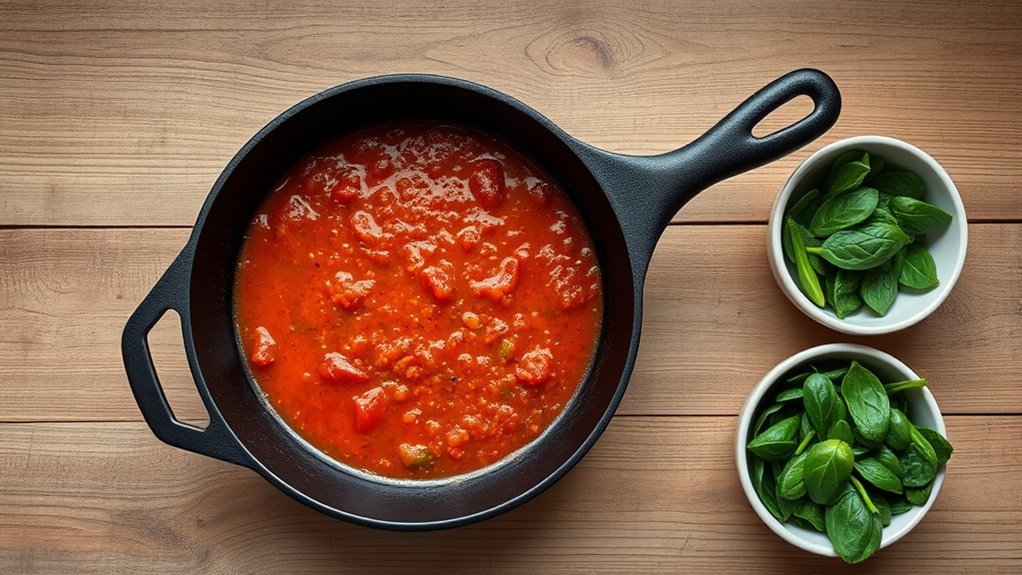
Did you know cooking with cast iron can add 1 to 5 mg of iron to your meals? This boost can be particularly beneficial for those with iron deficiencies, especially when using acidic ingredients like tomatoes. However, it’s important to take into account the potential risks, especially for individuals with certain health conditions. Understanding the balance between benefits and safety is essential. What should you know about iron transfer and its implications for your cooking habits?
What Is Iron Transfer in Cast Iron Cooking?
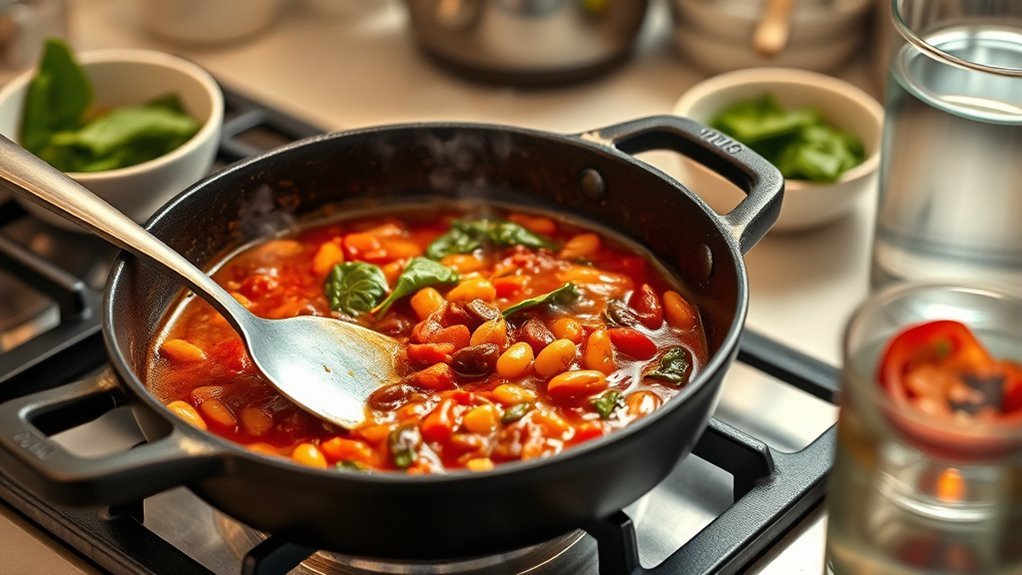
Iron transfer in cast iron cooking refers to the process where small amounts of iron leach into your food during the cooking process.
When you use cast iron pans, especially with acidic foods like tomatoes or citrus, you can greatly enhance the iron content of your meals. Studies indicate that cooking in these pans may increase iron leaching by up to 20 times, depending on factors like cooking time and the seasoning of the pan.
This transfer can offer notable health benefits, particularly for those with iron deficiencies, helping to boost dietary iron intake. Generally, the iron transfer from cast iron cookware is safe for most people.
However, if you have conditions like hemochromatosis or iron overload, you should monitor your intake closely.
Embracing cast iron cooking can be a liberating choice, blending tradition with health advantages while enriching your culinary experience.
How Cast Iron Contributes to Iron Intake
When you cook with cast iron, you’re not just preparing a meal; you’re also enhancing its nutritional profile. Using cast iron cookware can greatly increase the iron content of your food, especially when you’re cooking acidic foods like tomatoes.
These foods can leach iron from the pan into your dish, boosting your iron intake. Studies show that individuals using cast iron may absorb notable amounts of dietary iron, which is especially beneficial for those with iron deficiencies.
However, the amount of iron transferred varies based on cooking time, heat level, and the type of food. Longer cooking periods typically result in higher iron leaching.
While regular use of cast iron cookware can support your overall iron intake, it’s essential to balance it with your dietary needs. Excessive iron consumption can lead to health issues, particularly for those with conditions like hemochromatosis.
Benefits of Cooking With Cast Iron Pans
Cooking with cast iron pans offers numerous advantages that enhance your culinary experience. These versatile tools not only improve the flavor of your meals but also contribute to your overall health.
Cooking with cast iron pans enhances flavor and promotes health, making them an invaluable addition to your kitchen.
- Increased Iron Content: Cooking with cast iron can boost the iron content of your food, beneficial for those with deficiencies.
- Durability and Sustainability: With proper care, cast iron pans can last for generations, making them a cost-effective choice.
- Excellent Heat Retention: These pans provide even heat distribution, perfect for searing meats and roasting vegetables.
The non-toxic nature of cast iron allows for safe cooking at high temperatures, preserving the nutritional value of your meals.
Plus, regular use enhances the natural non-stick surface, reducing the need for excess fats. Embracing cast iron can truly elevate your cooking game while promoting healthier meal preparation.
Is Iron Transfer Safe When Cooking?
When cooking with cast iron pans, you might notice an increase in the iron content of your food, especially with acidic ingredients.
While this can be beneficial for those with iron deficiency, it’s important to balance your intake, as excessive iron isn’t ideal for everyone.
Health Benefits of Iron Transfer
While many people enjoy the benefits of cast iron cookware, the health advantages of iron transfer during cooking are particularly significant. Cooking with cast iron can boost the iron content of your meals, which is especially helpful if you have iron deficiency.
Here’s what you should know:
- Iron transfer can contribute 1-5 mg to your daily iron intake.
- The amount leached varies based on food acidity, cooking time, and moisture.
- Regular use of well-seasoned pans guarantees a safe, non-toxic cooking surface.
These health benefits make cast iron an excellent choice for enhancing your meals while addressing dietary needs.
Just remember, if you have conditions like hemochromatosis, you should monitor your iron levels closely.
Cooking With Acidic Foods
Although cast iron pans are popular for their durability and heat retention, using them with acidic foods raises important considerations regarding iron transfer.
Cooking with acidic foods like tomatoes and citrus can increase iron levels in your meals, which may benefit those with iron deficiency. However, the extent of this transfer depends on the food’s acidity and cooking time.
If your pan isn’t well-seasoned, you might leach more iron than intended. While moderate iron intake can be advantageous, excessive consumption may lead to health issues.
To maintain seasoning cast iron and prevent over-leaching, it’s best to limit prolonged cooking of highly acidic foods. Balancing iron intake with safety is key for your health and well-being.
Balancing Iron Intake
Balancing iron intake is crucial for maintaining overall health, especially when using cast iron cookware. Cooking with cast iron can greatly increase the iron content in your meals, particularly when preparing acidic foods.
However, it’s important to be aware of your individual needs.
- Iron transfer rates vary based on cooking time, temperature, and food acidity.
- Regular use can help address iron deficiency but be cautious of excess intake.
- Individuals with conditions like hemochromatosis should limit cast iron use.
Foods That Boost Iron Leaching in Cast Iron Cooking
Have you ever wondered how certain foods can enhance iron leaching from your cast iron pans? Cooking acidic foods, like tomatoes and citrus, considerably boosts iron transfer, potentially increasing the iron content in your meals. Research shows that using a cast iron skillet can raise iron levels in food by 20% to 40%, making it a beneficial choice for those with iron deficiency.
Additionally, foods high in moisture, such as stews and soups, promote iron leaching due to their prolonged cooking times, allowing for greater interaction with the pan’s surface.
The amount of iron you leach into your food varies with cooking time and temperature; longer durations at higher temps yield better results. Regularly using cast iron cookware not only enhances your meals but also contributes to your daily iron intake, empowering you to boost your dietary iron naturally.
Risks of Excess Iron Consumption When Cooking With Cast Iron?
How can cooking with cast iron pans pose risks for some individuals? While cast iron can boost iron intake, it can also lead to iron overload, particularly for those who already have high iron levels. This is especially concerning when cooking acidic foods, which can leach more iron from the pan.
Increased dietary iron intake can rise by 20% to 40% with prolonged cooking.
Individuals with conditions like hemochromatosis should avoid excessive iron to prevent serious health risks.
Regular monitoring of iron levels through blood tests is essential for frequent cast iron users.
If you’re cooking with cast iron, be mindful of your overall iron intake. Balancing your meals and keeping an eye on your iron levels can help you enjoy the benefits of cast iron without the potential downsides of iron overload.
Best Practices for Safe Cast Iron Cooking
While cooking with cast iron can be a great way to enhance your meals, following best practices guarantees both safety and peak performance.
Start by ensuring proper care through regular seasoning maintenance. This not only boosts your pan’s non-stick properties but also minimizes unwanted iron transfer into your food. Use cooking oils that can withstand high heat to maintain the seasoning layer effectively.
Be cautious with acidic foods like tomatoes and citrus; these can break down the seasoning, leading to increased iron leaching. If you have an iron deficiency, cast iron can be beneficial, but keep your meals balanced.
Always clean your pan appropriately to prevent rust and prolong its lifespan. By embracing these practices, you’ll enjoy the culinary benefits of cast iron while safeguarding your health.
Maintaining Cast Iron for Best Results
To maintain your cast iron pan for peak performance, regular seasoning and proper cleaning are essential.
Seasoning creates a durable non-stick layer while protecting against rust, so make it a habit to reapply oil after each use.
Additionally, always dry your pan immediately and avoid harsh detergents to preserve its integrity.
Proper Seasoning Techniques
Proper seasoning techniques are essential for maintaining the performance and longevity of your cast iron pan. To properly care for your pan, follow these steps:
- Apply a thin layer of cooking oil to the entire surface.
- Bake the pan upside down at 450-500°F for one hour to create a durable non-stick surface.
- Regularly re-season after cleaning, especially if rust is forming or the surface appears dull.
This process not only enhances the pan’s cooking performance but also develops a classic black patina that improves flavor.
Effective Cleaning Methods
Maintaining the seasoning of your cast iron pan requires effective cleaning methods that guarantee its longevity and performance.
Start by using hot water and a plastic scraper to clean; avoid harsh soaps, as they can strip away the seasoning.
After cleaning, dry your pan immediately to prevent moisture retention, which can lead to rust.
Re-season as needed by applying a thin layer of cooking oil and baking it upside down in the oven at 450-500°F for an hour.
Store your cast iron cookware in a dry place, using a paper towel inside to absorb moisture.
Regularly inspect for rust or damage, addressing issues promptly to maintain ideal cooking performance and care for your beloved cast iron pan.
Conclusion: Is Cooking With Cast Iron Right for You?
Is cooking with cast iron the right choice for you? If you’re looking to boost your dietary iron intake, cast iron pans can be a valuable addition to your kitchen. Here are some key points to evaluate:
- Iron Content: Cooking with cast iron can increase the iron content of your meals, especially when preparing acidic foods.
- Safety: Cast iron cookware is generally safe, non-toxic, and can handle high temperatures without leaching harmful substances.
- Monitoring: If you have conditions like hemochromatosis, you should monitor your iron levels, as cast iron can contribute to excess iron accumulation.
Ultimately, the benefits of using cast iron can be significant, particularly for those with iron deficiency.
However, it’s crucial to weigh these benefits against any potential risks. Embrace the health advantages of cast iron while staying informed about your individual needs!
Frequently Asked Questions
What Are the Downsides of Using a Cast Iron Pan?
Using a cast iron pan has downsides, like weight considerations—these heavy pans can be hard to manage.
You also need to pay attention to rust prevention and proper cleaning methods; harsh detergents can strip the seasoning.
If you neglect seasoning techniques, the surface can become rough, making food stick.
While they excel in heat retention, improper care can lead to frustrating cooking experiences.
Balancing these factors is key for enjoyable use.
Why Did People Stop Using Cast Iron?
People have gradually moved away from cast iron due to evolving cooking trends and the allure of lighter material alternatives.
The historical context shows that as convenience became a priority, the perceived maintenance challenges of cast iron led many to explore non-stick and stainless steel options.
Health misconceptions about iron leaching into food further fueled this shift, prompting cooks like you to seek easier, more versatile cookware that fits modern lifestyles.
Is It Healthier to Cook in a Cast Iron Skillet?
Yes, cooking in a cast iron skillet can be healthier. The cast iron benefits include excellent heat retention, allowing for even cooking with less fat.
To maximize flavor, use seasoning tips like oiling your pan after use. Regular maintenance practices, such as proper cleaning and seasoning, can enhance its non-stick properties.
What Should Never Be Cooked in a Cast Iron Pan?
You should avoid cooking acidic foods like tomatoes and citrus in cast iron pans, as they can strip the seasoning and impart a metallic taste.
Delicate proteins, such as fish and eggs, are challenging due to sticking issues unless your pan’s perfectly seasoned. Starchy dishes like pancakes can also stick without the right preparation.
Finally, high-fat recipes with strong flavors may not yield the best results, so consider alternatives for these types of dishes.
Conclusion
To sum up, cooking with cast iron pans can be a game-changer for your iron intake—like adding rocket fuel to your meals! While this method can boost your iron levels considerably, it’s essential to know your health needs. If you’re struggling with iron deficiency, embrace your cast iron skillet; just be cautious if you’ve got conditions like hemochromatosis. Proper care and awareness make it easy to enjoy the delicious benefits of cast iron cooking without the worries of excess iron!