
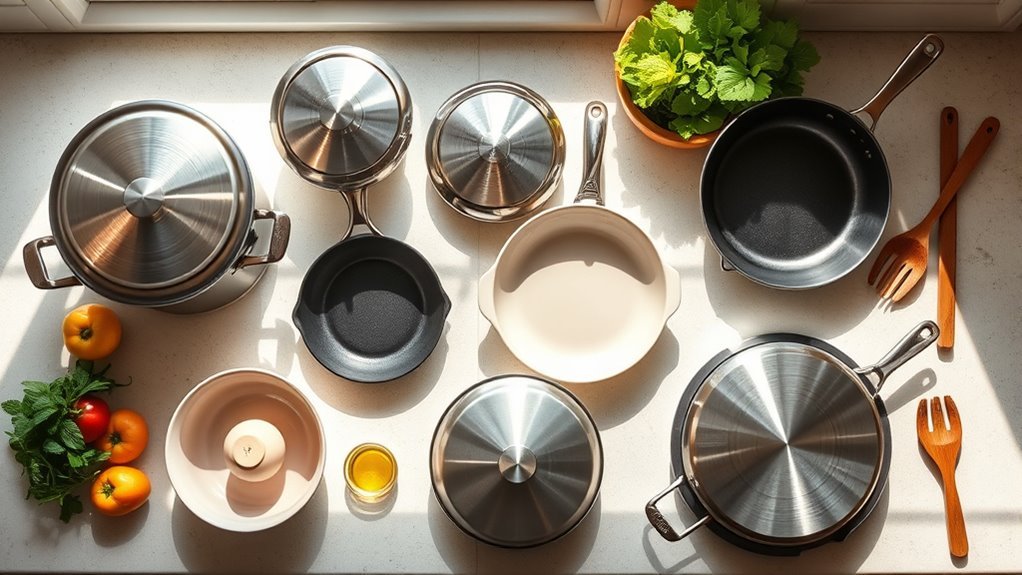
If you want cookware that’s both safe and durable, focus on materials that won’t leach or degrade—think stainless steel and glass—while avoiding flaky nonstick coatings. You’ll learn practical ways to judge construction, when alternatives like ceramic or enameled cast iron make sense, and what real risks—heavy metals, overheating, worn finishes—look like in everyday use. Keep these basics in mind as you consider what to buy and how to keep it safe.
Quick Answer: Best Healthy Cookware (Stainless Steel & Glass)
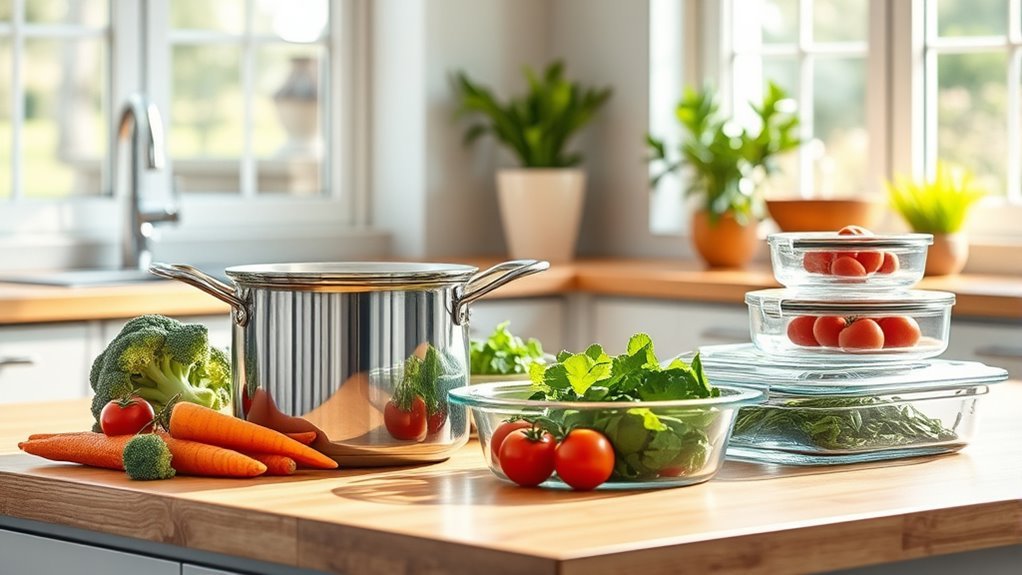
While many options exist, stainless steel and glass stand out as the healthiest everyday cookware because they’re durable, chemically inert, and free from PFOA and PTFE.
Stainless steel handles high-heat techniques like searing without leaching flavors, and glass provides a truly inert, visible surface ideal for baking and roasting.
You’ll find Stainless Steel Cookware praised for its non-reactive nature, resisting acid and alkaline foods so flavors stay true and contaminants don’t migrate.
Glass Cookware gives you chemical-free contact with food and lets you monitor progress without disturbing heat.
Both materials support healthier cooking practices: they avoid persistent, potentially harmful coatings and last longer than many alternatives, reducing waste and dependence on replacements.
Experts recommend these options for long-term safety and versatility across stovetop and oven use.
Choosing them helps you reclaim control of your kitchen, aligning daily habits with liberation and durability without sacrificing performance or food integrity.
5 Easy Ways to Judge Cookware Safety
Now that you know why stainless steel and glass are top picks for healthy cookware, you’ll want a simple checklist to evaluate any pot or pan before you buy.
1) Check the cookware material: prefer non-reactive stainless steel or glass; they won’t leach and resist corrosion.
2) Inspect the non-stick surface: ask what it’s made of and avoid PTFE/PFOA coatings that degrade at high heat.
3) Verify temperature tolerance: buy pans rated for the temperatures you’ll use; high-quality stainless steel and titanium options hold up and stay inert.
4) Research ceramic cookware brands for heavy metal presence: credible testing and transparent certificates reduce risk of lead or cadmium leaching.
5) Consider long-term integrity: choose constructions that resist scratches and coating breakdown, since degraded surfaces increase exposure risk.
Apply this checklist so you can confidently choose cookware that supports health and autonomy without relying on marketing claims.
When to Choose Ceramic, Titanium, or Enameled Cast Iron (Use Cases)
When you want a genuinely non-toxic non-stick for low-fat cooking, choose quality ceramic—its PTFE/PFOA-free surface releases food easily at moderate temperatures and keeps added oils to a minimum.
You’ll prefer ceramic cookware when you want quick, light sautés, eggs, or delicate fish without chemical concerns; verify brand safety to avoid heavy-metal contamination.
- Titanium cookware: pick this for daily durability and scratch resistance. It’s non-reactive and corrosion-resistant, so you can cook a wide range of dishes and expect long-term performance; confirm whether a coating is present if you want truly uncoated metal.
- Enameled cast iron: choose this when you need excellent heat retention and even distribution for braises, stews, and tomato-based sauces—its non-reactive enamel handles acidic foods without seasoning.
- Mixed-kitchen strategy: liberate your cooking by using each material where it excels—ceramic for low-fat nonstick, titanium for everyday rugged use, enameled cast iron for slow, flavor-developing methods—supporting healthy cooking choices.
Risks: Nonstick Coatings, Heavy Metals, and Overheating
If you regularly use nonstick pans or low-cost ceramic pieces, pay attention: overheating and poor-quality coatings can turn convenient cookware into a source of contaminants.
You should know that PTFE-based non-stick pans release toxic fumes when overheated, posing acute health risks to people and pets. Repeated overheating also degrades coatings, increasing the chance that chemical fragments enter food over time and contribute to long-term concerns.
Low-quality ceramic coatings sometimes contain heavy metals that can leach during cooking, especially if the glaze chips or the surface is scratched.
Brands vary widely in formulation and durability, so product research matters; some coatings resist scratching and breakdown better than others.
To protect your body and your freedom to choose healthy habits, prioritize cookware materials without synthetic coatings or metal-laden glazes.
Experts point to stainless steel and glass as safer options because they avoid these specific health risks and reduce reliance on fragile nonstick technologies.
How to Buy, Use, and Care for Cookware for Long-Term Safety
Start by prioritizing cookware made from non-reactive materials like stainless steel and glass, since they don’t leach chemicals into food and stand up to years of regular use.
When choosing cookware, include Cast Iron cookware for durable, naturally non-stick seasoning, but monitor the cooking surface for rust or pitting.
Research brands and materials before purchase to confirm coatings are free from PFOA/PTFE and heavy metals; prefer titanium or ceramic finishes if you want a non-stick option.
- Inspect: check for scratches, chips, or worn coatings—damage can release particles into food and undermine long-term safety.
- Maintain: follow manufacturer cleaning and care instructions; proper washing and seasoning extends lifespan and preserves the cooking surface.
- Replace: retire cookware with compromised integrity or persistent damage to avoid contamination risks.
You deserve cookware that supports freedom and health—make informed choices, care consistently, and replace when safety is no longer certain.
Frequently Asked Questions
What Is the Safest Cookware for Your Health?
The safest cookware for your health is stainless steel or glass, with cast iron as a strong option for added iron and heat retention.
You’ll favor ceramic coatings only if brands prove metal-free.
Avoid traditional nonstick; seek nonstick alternatives like titanium or ceramic-based coatings.
You’ll choose high-quality, minimally coated pieces made with transparent safety standards so you can cook freely, confidently, and without unnecessary chemical exposure.
What Cookware Is 100% Non-Toxic in the USA?
No cookware is guaranteed 100% non-toxic, but you can choose nearly inert options: ceramic cookware benefits include low reactivity, while cast iron advantages offer durable, chemical-free cooking if seasoned properly.
Glass cookware safety is strong for baking and roasting, and eco friendly options include fully uncoated stainless or pure ceramic pieces certified PFOA/PTFE-free.
You’ll need verified brands and certifications to ascertain the cleanest, least risky cookware.
What Material to Avoid in Cookware?
Avoid non-stick dangers and aluminum risks—steer clear of scratched PTFE pans and bare aluminum that can leach into food.
Watch ceramic concerns too; low-quality coatings may contain heavy metals.
Don’t rely on plastics for heat. Instead, choose options with proven safety: seasoned cast iron benefits include longevity and minimal leaching when maintained, and stainless steel offers inert, durable cooking surfaces that free you to cook confidently and sustainably.
Is It Unhealthy to Cook in Stainless Steel?
Worried it’s unsafe to cook in stainless steel? You’re fine: stainless steel benefits include non-reactivity and durability, so it won’t leach into most foods.
Still, stainless steel drawbacks include nickel in cheaper alloys that can bother sensitive people.
Follow cooking safety tips—avoid overheating and use proper utensils—and practice stainless steel maintenance like gentle cleaning to protect surface integrity.
You’ll cook freely and confidently while minimizing risk.
Conclusion
Think of choosing cookware like picking a reliable map: when I switched to stainless steel and glass, my meals stopped taking detours from weird flavors or scratched coatings. Stainless and glass are nonreactive, durable, and backed by safety data—no PFOA/PTFE worries—so you’ll cook at high heat without chemical risk. Use the five safety checks, pick suited alternatives for specific dishes, and maintain your pans to keep meals healthy and predictable for years.